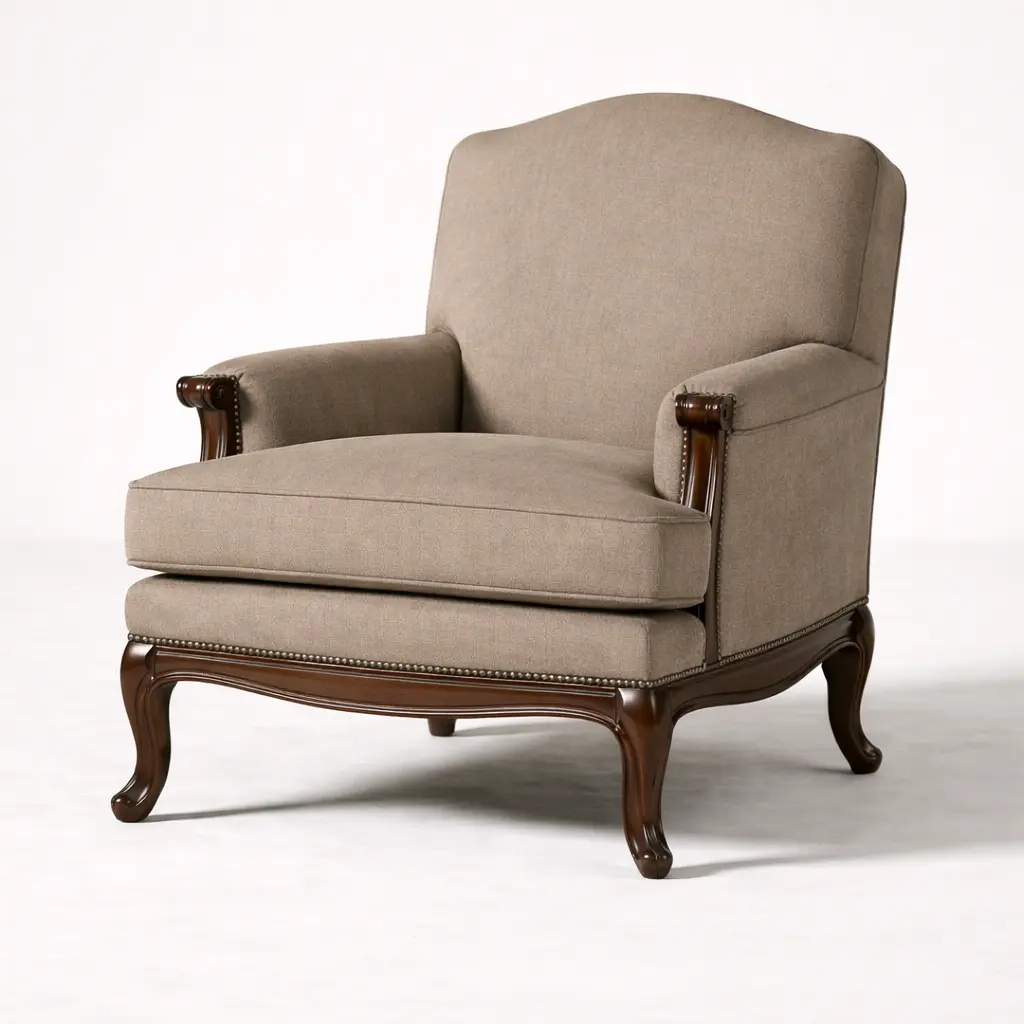
The Bergère Chair Guide
A study in French form: recognizing the architectural silhouette, understanding its history, and placing the classic bergère with intention.
The bergère chair is one of those pieces people recognize before they can name. It reads as quiet structure—an upholstered seat held inside a visible wood frame, arms that feel enclosed and protective rather than open and decorative. In a room, it behaves like architecture. It gives posture to a sitting area without raising its voice.
Understanding it fully requires a slight shift in how we think about furniture categories. The bergère is not simply "an upholstered chair." It is a specific construction language with a lineage traceable to the workshops of early-eighteenth-century Paris, a form that has remained essentially unchanged for three hundred years precisely because it was right from the beginning.
A Brief History of the Form
The bergère emerged in France sometime in the early 1700s, during the reign of Louis XV, as a more relaxed evolution of the formal fauteuil. Where the fauteuil maintained a certain ceremonial erectness, the bergère was unambiguously domestic. It was designed for reading, for conversation at close range, for the kind of sitting that lasts for hours.
By the nineteenth century, the form had traveled well beyond France. English makers produced their own interpretations. American cabinetmakers adapted the silhouette. What survived every translation was the essential logic: an exposed frame, upholstery set into it, and an arm profile that encloses rather than opens.
How to Identify a Bergère
Three features define the form. First, an exposed solid-wood frame visible along the seat rail, arm posts, and legs. Second, enclosed arms with upholstered panels. Third, a loose seat cushion resting inside the frame.
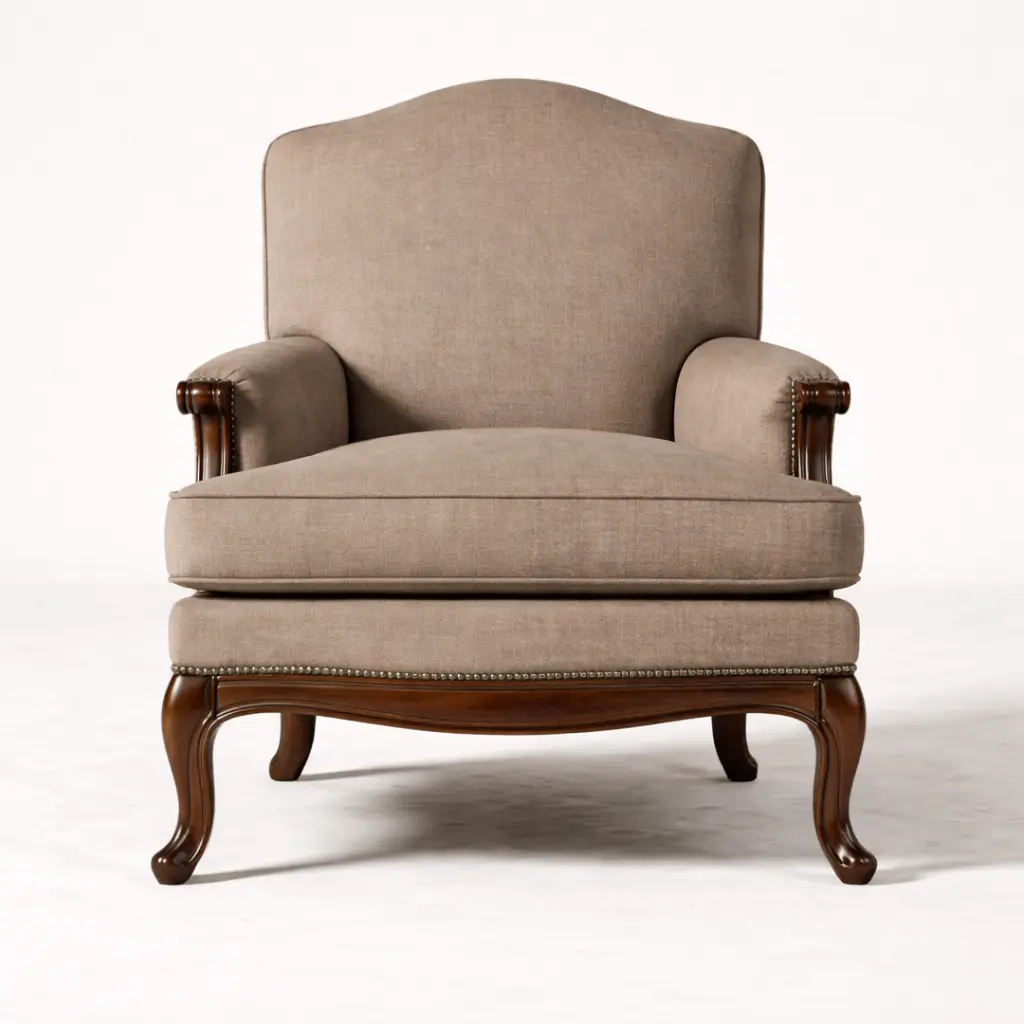
The front-facing silhouette: enclosed arms and upholstered panels held inside a carved mahogany frame. This relationship between wood and fabric defines the bergère form.
Materials and Craft That Age Well
This form only works when the fundamentals are sound. Poorly joined frames creak. Shallow carving reads as decorative noise. Upholstery that puckers at the seams betrays the tailoring the form requires.
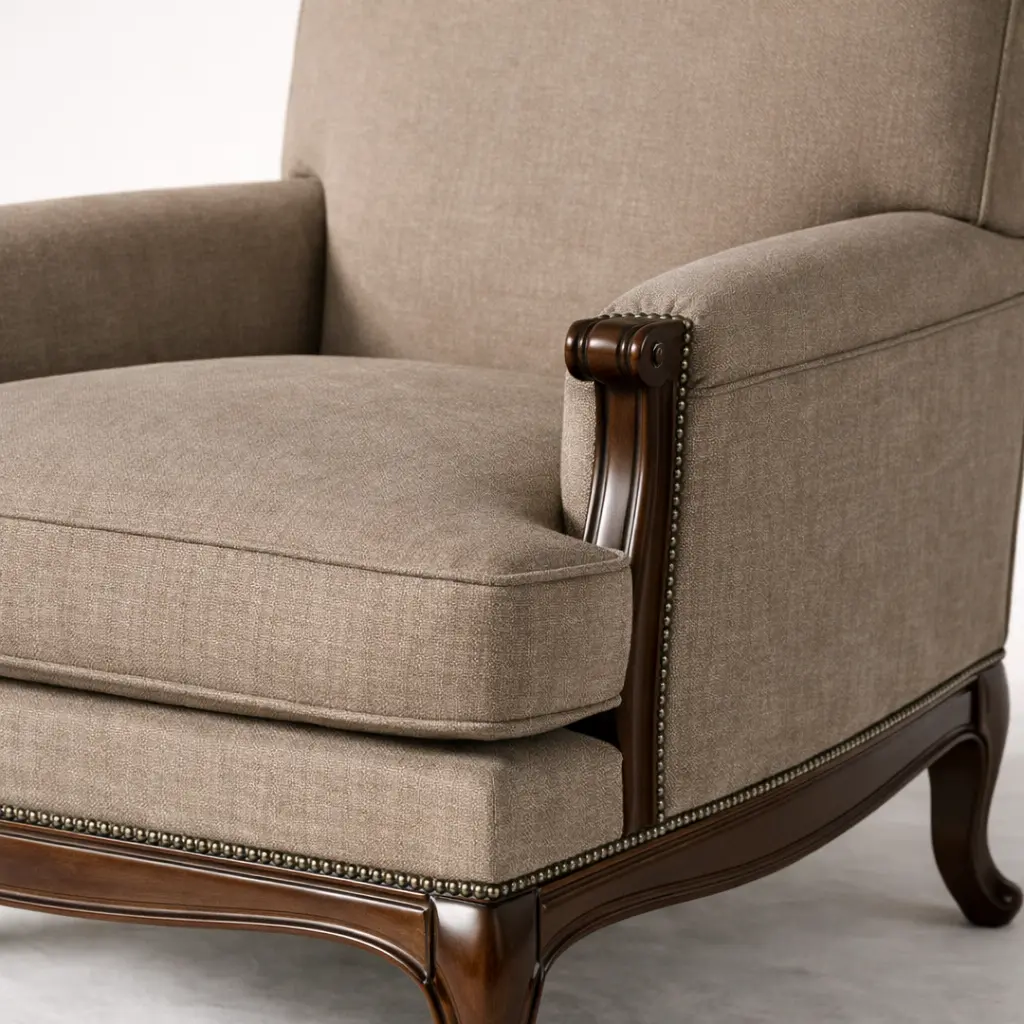
The junction of carved wood and tailored upholstery is where quality declares itself first. A well-executed bergère arm looks inevitable; a poorly executed one looks assembled.
Technical Specifications
| Specification | Detail |
|---|---|
| Dimensions |
32"W × 34"D × 38"H
Seat Height: 19" | Arm Height: 25"
Confirm measurements with showroom for product accuracy.
|
| Frame | Solid Mahogany Workshop-crafted joinery designed for long-term structural stability. |
| Finish | Heritage Finish Options Low-luster finish specified for depth rather than surface shine. |
| Upholstery | Tailored Upholstery Loose seat cushion with structured fill for supportive comfort. |
| Craft | Workshop-Crafted Carving, upholstery, and finishing executed to maintain crisp frame lines. |
Where a Bergère Belongs
The bergère earns its place in rooms that need to feel settled: a library corner, a formal sitting room, a bedroom reading area, a conversation grouping opposite a sofa. It suggests the room was designed to be inhabited, not simply photographed.
- Conversation group: A pair opposite a sofa introduces symmetry and weight without rigidity.
- Bedroom: A single bergère reads as dressed and composed.
- Study: The exposed mahogany frame complements traditional casegoods.
- Modern interior: A classical chair anchors the room in time.
The Rear View Matters More Than People Admit
A bergère is often placed away from walls. The back is not a detail; it’s part of the room. A fully finished back panel and consistent frame line are the difference between “considered” and “compromised.”
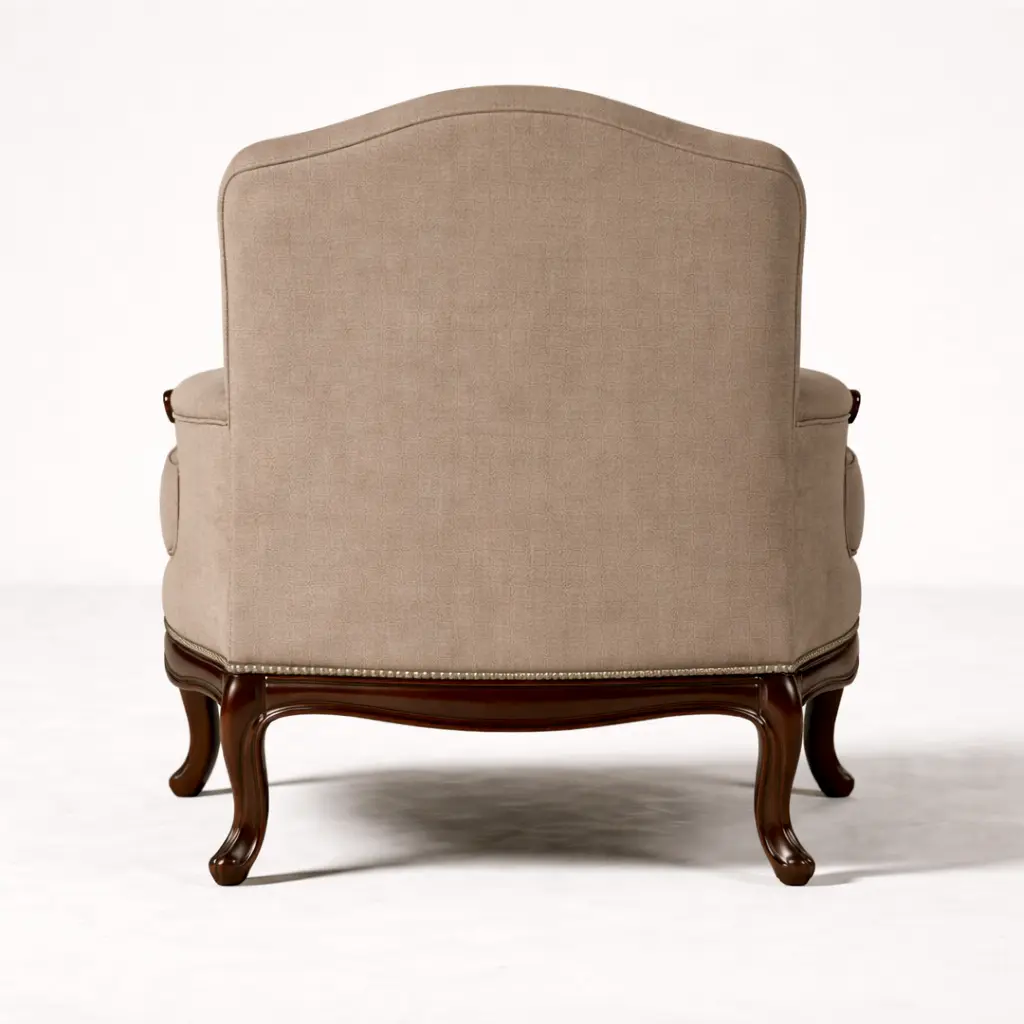
A fully finished back allows the chair to sit confidently away from walls. In open-plan rooms, it’s not optional.
A Note on Rugs and Balance
A composed chair placed on an inadequate rug reads like architecture set on unfinished ground. The proportional logic is simple: front legs on the rug, the rug large enough to feel structural, and enough visual weight to anchor the chair.
For the fuller logic of rug selection beside traditional seating, see Stories Woven in Motion.
Conclusion
The bergère is not trendy, and that’s why it lasts. When selected with attention to frame quality, upholstery tailoring, and the finishing of the back panel, it becomes the kind of piece a room organizes itself around. Not styled. Simply right.
Frequently Asked Questions
What is a bergère chair?
A bergère is a French armchair form with an exposed solid-wood frame and upholstered panels set inside the structure at seat, back, and arms. The frame stays visible, giving the silhouette its architectural quality.
What is the difference between a bergère and a fauteuil?
A fauteuil has open arms; a bergère has enclosed, fully upholstered arms that create a more sheltering silhouette, typically with a deeper, more enveloping seat.
How do you identify a genuine bergère chair?
Look for an exposed wood frame, enclosed arms with upholstered panels, and a loose seat cushion resting inside the frame. Upholstery is set into the frame, not pulled over it.
Where should a bergère chair be placed in a room?
Library corners, formal sitting rooms, bedroom reading areas, and conversation groupings opposite a sofa. Because it’s finished front-to-back, it can float away from walls without looking incomplete.
REEVA SETHI HOME is a Saratoga-based studio and showroom serving Saratoga, Los Gatos, Monte Sereno, and Cupertino with heritage furniture and architectural rugs. RS Studio supports furniture selection, rug curation, and interior guidance for homes designed to last.