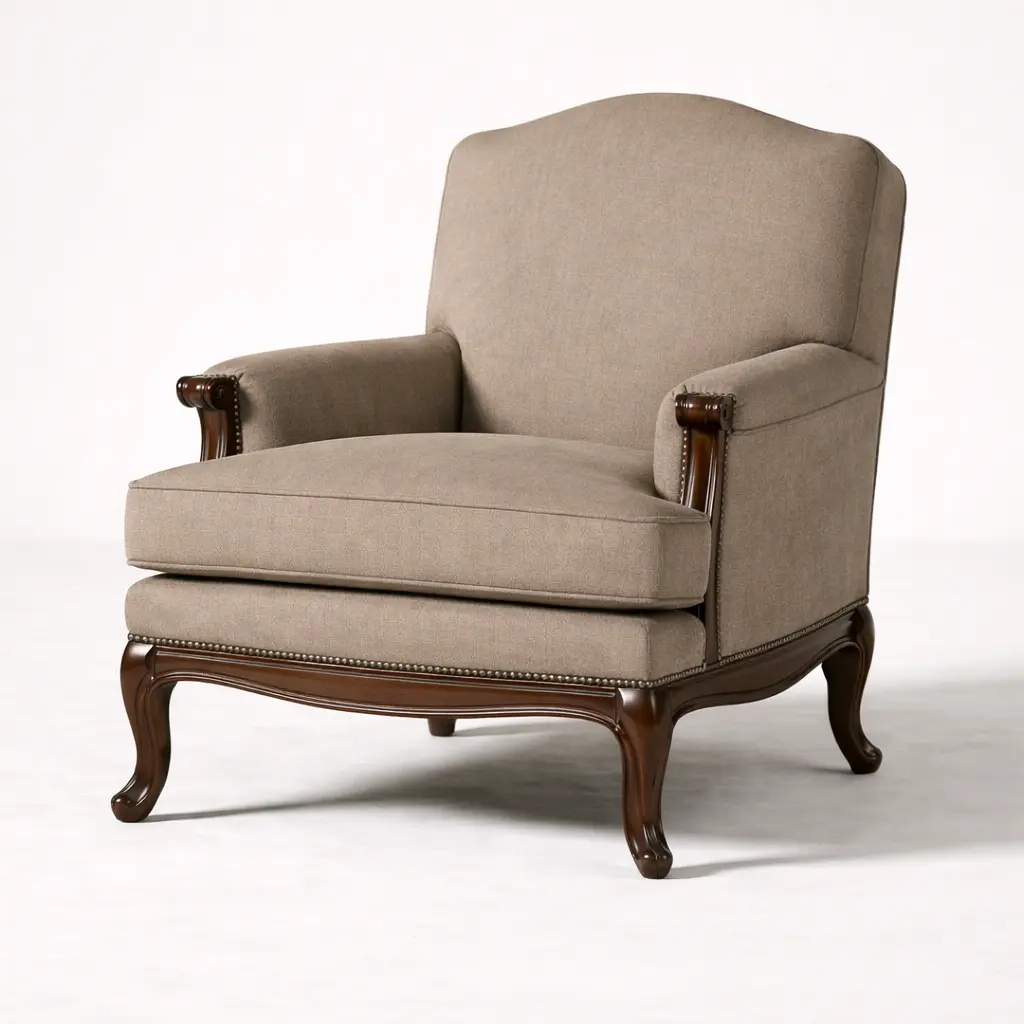
What Is a Bergère Chair?
A French seating form recognized for its exposed frame, enclosed arms, and architectural silhouette.
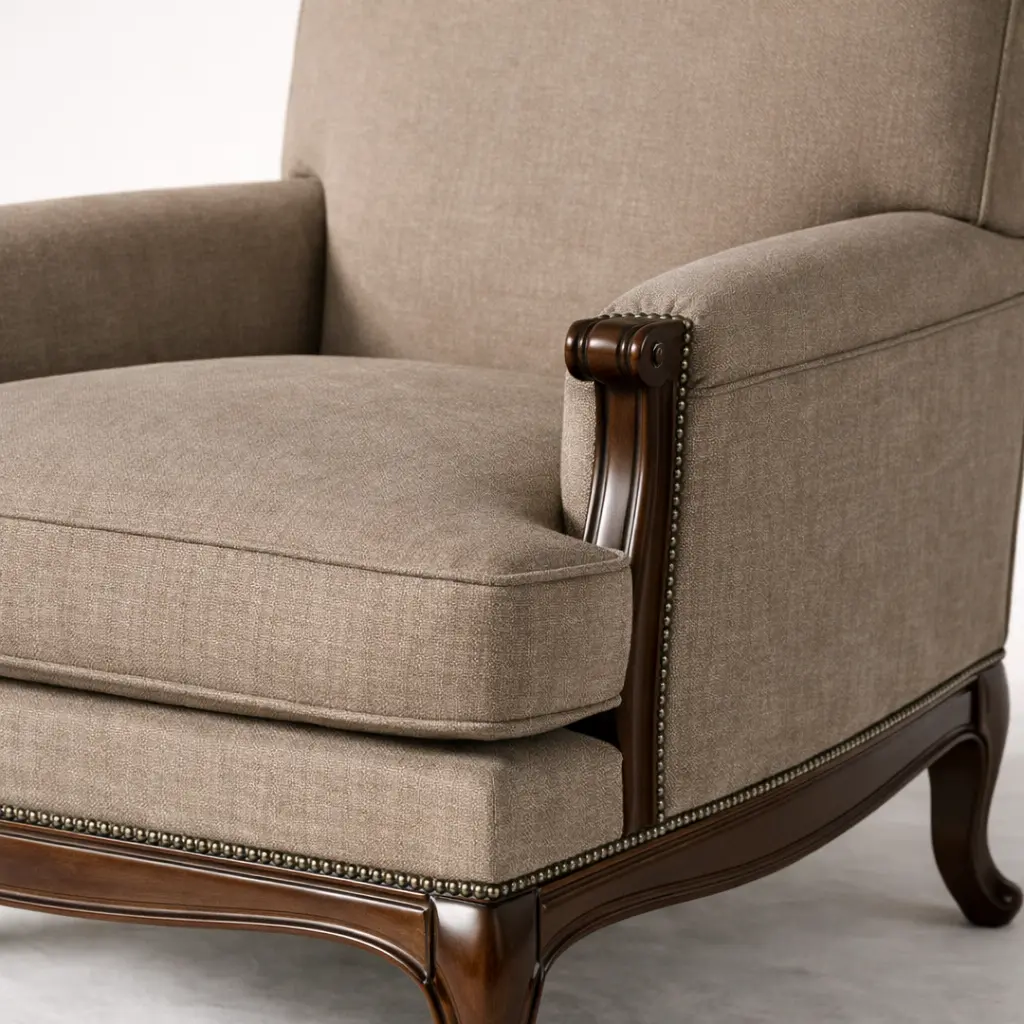
Craft is usually revealed where materials meet.
The bergère is one of those pieces people recognize before they can name. It reads as quiet structure — an upholstered seat held inside a visible wood frame, arms that feel enclosed and protective rather than open and decorative. In a room, it behaves like architecture. It gives posture to a sitting area without raising its voice.
Understanding it fully takes a slight shift in how we think about furniture. The bergère is not simply an upholstered chair. It is a specific construction language with a lineage traceable to early-eighteenth-century Paris — a form that has remained essentially unchanged for three hundred years because it was right from the beginning.
History of the Bergère Chair
The bergère emerged in France during the reign of Louis XV, in the early 1700s, as a more relaxed evolution of the formal fauteuil. Where the fauteuil maintained a certain ceremonial erectness, the bergère was unambiguously domestic. It was designed for reading, for conversation at close range, for the kind of sitting that lasts for hours.
By the nineteenth century, the form had traveled well beyond France. English makers produced their own interpretations. American cabinetmakers adapted the silhouette. What survived every translation was the essential logic: an exposed frame, upholstery set into it, and an arm profile that encloses rather than opens.
How To Identify One
Three features define the form. First, an exposed solid-wood frame visible along the seat rail, arm posts, and legs. Second, enclosed arms with upholstered panels set inside the frame. Third, a loose seat cushion resting within the structure rather than sewn onto it.
The relationship between upholstery and frame is the easiest tell. On a bergère, the fabric is contained by the wood; on most other upholstered armchairs, the fabric covers the wood. Once the eye learns that distinction, the form is unmistakable.
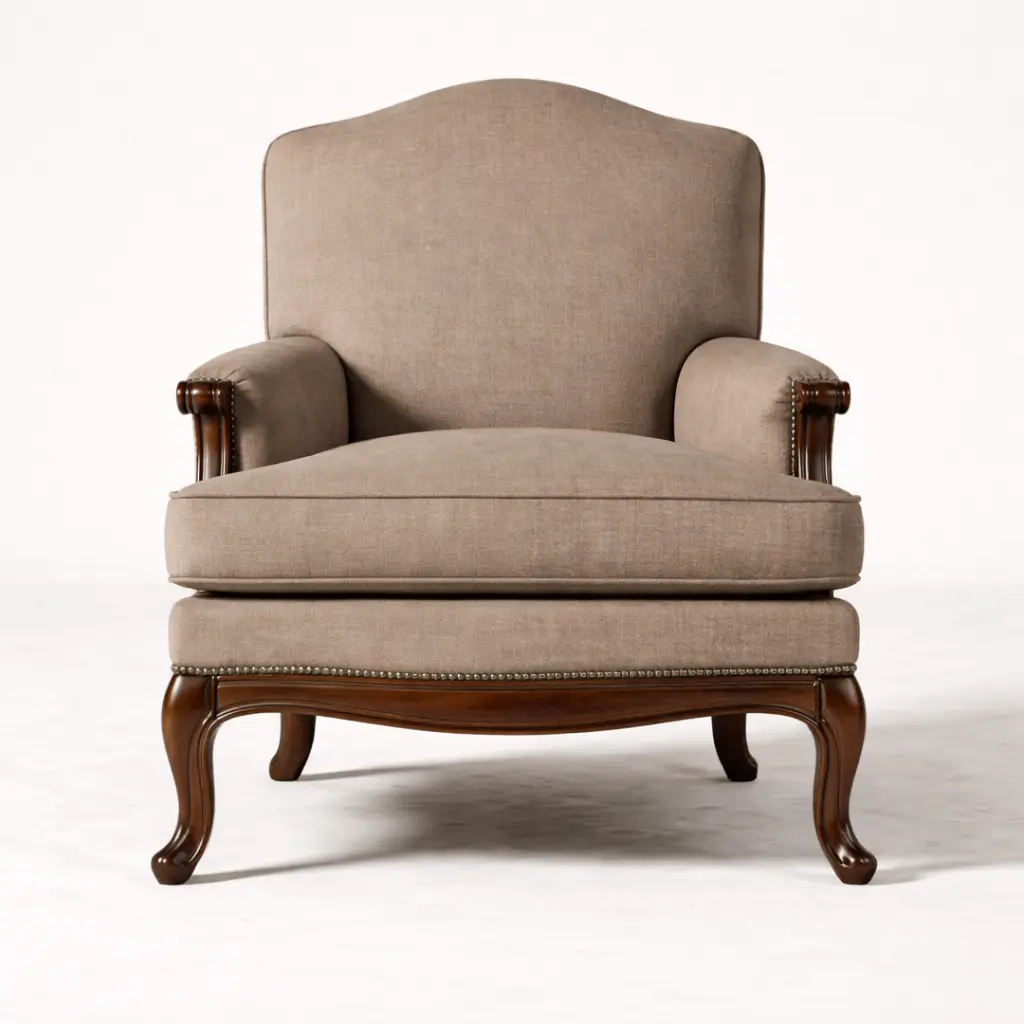
Bergère vs Fauteuil
The fauteuil and the bergère are siblings, often confused. Both are French armchairs with exposed wood frames. The difference is in the arms.
A fauteuil has open arms — bare wood arm rests with empty space between the arm and the seat. A bergère has enclosed arms — fully upholstered panels filling the space, creating a sheltering silhouette. Bergères also tend to sit deeper, with a loose seat cushion designed to be sunk into. A fauteuil feels formal and upright; a bergère feels considered and inhabited.
Bergère vs Club Chair
Although both are designed for comfort, a bergère exposes its wooden frame and relies on architectural lines, while a club chair conceals its structure entirely beneath upholstery. A bergère tends to feel lighter and more formal; a club chair heavier and more enveloping.
The two are not interchangeable. A bergère anchors a room with line and posture. A club chair anchors a room with mass. They solve different problems and rarely belong in the same role within a space.
Materials That Age Well
The form only works when the fundamentals are sound. Poorly joined frames creak. Shallow carving reads as decorative noise. Upholstery that puckers at the seams betrays the tailoring the form requires.
The frame should be solid hardwood — traditionally beech, walnut, or mahogany — with proper mortise-and-tenon joinery rather than dowels or staples. The finish should have depth rather than shine; a low-luster surface lets the wood read as material, not as decoration. Upholstery should be tightly tailored where it meets the frame, with seams that follow the structure rather than fight it.
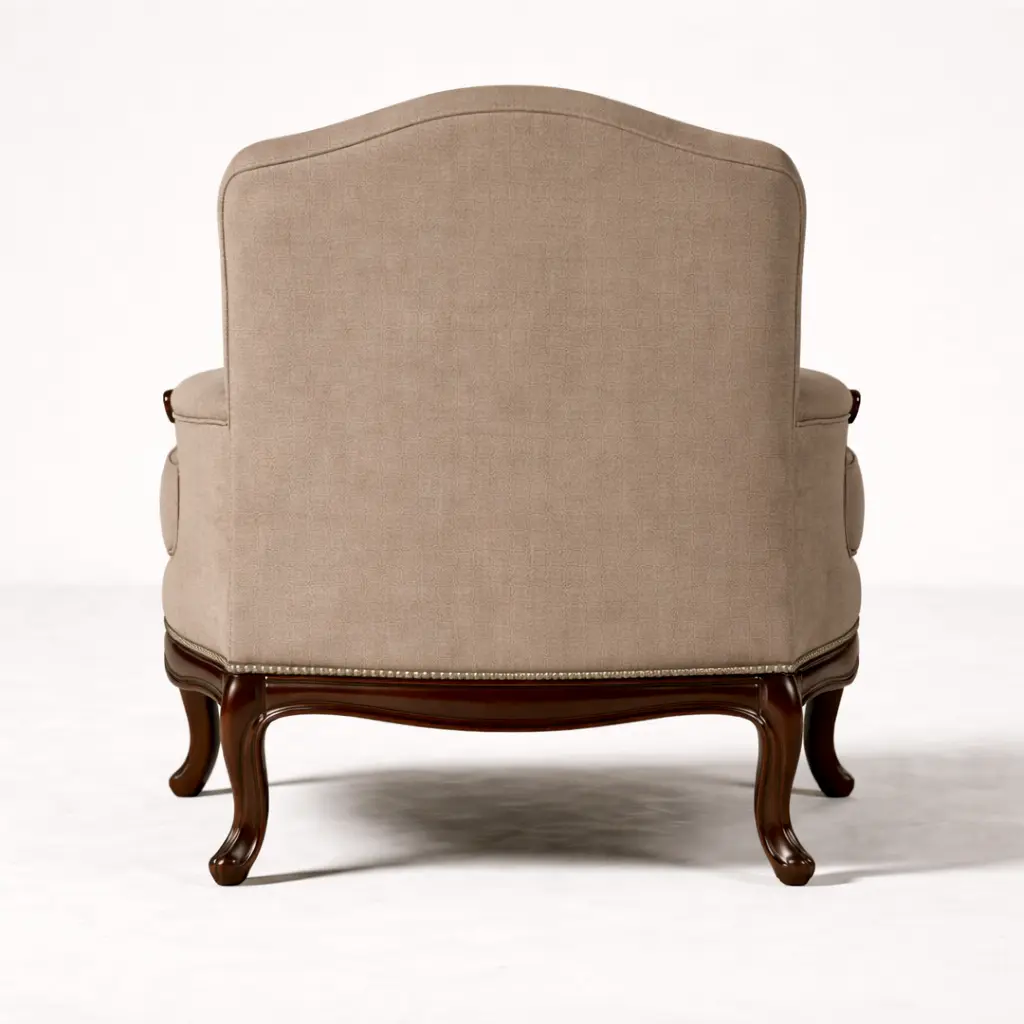
Where It Belongs In A Room
The bergère earns its place in rooms that need to feel settled — a library corner, a formal sitting room, a bedroom reading area, a conversation grouping opposite a sofa. It suggests the room was designed to be inhabited, not photographed.
- Conversation grouping. A pair facing a sofa introduces symmetry and weight without rigidity.
- Bedroom corner. A single bergère beside a low table reads as dressed and composed.
- Study. The exposed mahogany frame complements traditional casegoods and bookshelves.
- Open-plan room. Because it’s finished front to back, it can float away from walls.
Common Mistakes People Make
The bergère is unforgiving in the way every architectural object is unforgiving — small failures show. A few are common enough to call out:
- Buying on silhouette alone. The form photographs well even when the joinery is poor. Inspect the seat rail, the arm posts, and the seam where upholstery meets frame before deciding.
- Ignoring the back. A bergère is often placed away from walls. A flat or carelessly finished back panel reads as compromise the moment someone walks behind it.
- Anchoring it on too small a rug. A composed chair on an inadequate rug looks like architecture set on unfinished ground. Front legs on the rug at minimum; the rug itself large enough to feel structural.
- Treating it like a club chair. The bergère is not a chair for sinking into. Pair it with a low table and a reading lamp, not a wide ottoman.
Selected with attention to frame quality, upholstery tailoring, and the finishing of the back panel, the bergère becomes the kind of piece a room organizes itself around. Not styled. Simply right.
Typical Bergère Chair Dimensions
Although dimensions vary by maker and period, most bergère chairs fall within these ranges:
- Width: 28–34 inches
- Depth: 30–38 inches
- Seat height: 17–19 inches
- Overall height: 34–42 inches
Proportions matter more than absolute size. A bergère should feel supportive rather than oversized.
What To Look For When Buying A Bergère Chair
Not all bergère chairs are built equally. Look beyond silhouette. Examine whether the frame is solid hardwood, whether the upholstery follows the structure cleanly, and whether the carving feels integrated rather than applied.
- Solid hardwood frame. Mahogany, walnut, or beech.
- Mortise-and-tenon joinery. Avoid staples and lightweight assembly methods.
- Tailored upholstery. Seams should follow the frame cleanly.
- Finished back panel. Essential if the chair will float in a room.
Frequently Asked Questions
What is a bergère chair?
A bergère is a French armchair distinguished by an exposed wood frame and upholstered panels set within the structure at seat, back, and arms. Developed in the eighteenth century, it remains one of the most enduring seating forms in furniture design.
What is the difference between a bergère and a fauteuil?
A fauteuil has open arms; a bergère has enclosed, fully upholstered arms that create a more sheltering silhouette. Bergères also typically have a deeper, more enveloping seat with a loose cushion.
What is the difference between a bergère and a club chair?
A bergère exposes its wooden frame and relies on architectural lines; a club chair conceals its structure beneath upholstery. A bergère feels lighter and more formal, a club chair heavier and more enveloping.
How do you identify a genuine bergère chair?
Look for an exposed wood frame along the seat rail and arm posts, enclosed arms with upholstered panels, and a loose seat cushion resting inside the frame. Upholstery is contained by the frame, not stretched over it.
Where should a bergère chair be placed in a room?
Library corners, formal sitting rooms, bedroom reading areas, and conversation groupings opposite a sofa. Because it’s finished front to back, it can float away from walls without looking incomplete.
What are common mistakes when buying or placing a bergère?
Choosing on silhouette alone without inspecting frame joinery and upholstery tailoring; ignoring the back panel when the chair will sit away from a wall; pairing it with a rug too small to anchor it; and treating it like a fully upholstered club chair, which it isn’t.
At Reeva Sethi Home in Saratoga, we often see bergère chairs used in libraries, reading corners, and layered living rooms where exposed wood furniture and hand-knotted rugs create a quieter, more architectural feeling.
Written from RS Studio at Reeva Sethi Home in Saratoga, California. RS Studio supports furniture selection, rug curation, and interior guidance for homes designed to last.