Most people recognize a calm room before they can name why it works. You step in, and without effort, you understand where to stand, where to sit, and where your eye can rest. Nothing competes. Nothing asks to be noticed first. It reads as composed rather than styled.
That feeling isn't precious, and it isn't a trend. It's your nervous system registering the absence of friction: glare that catches the eye, furniture that interrupts movement, objects placed as punctuation instead of belonging. The best rooms lower the shoulders because they remove the small stresses we've learned to tolerate.
You've likely noticed busy rooms make you scan. Calm rooms let you land. If your eye keeps ricocheting around the space, that's not your attention span. It's visual vibration.
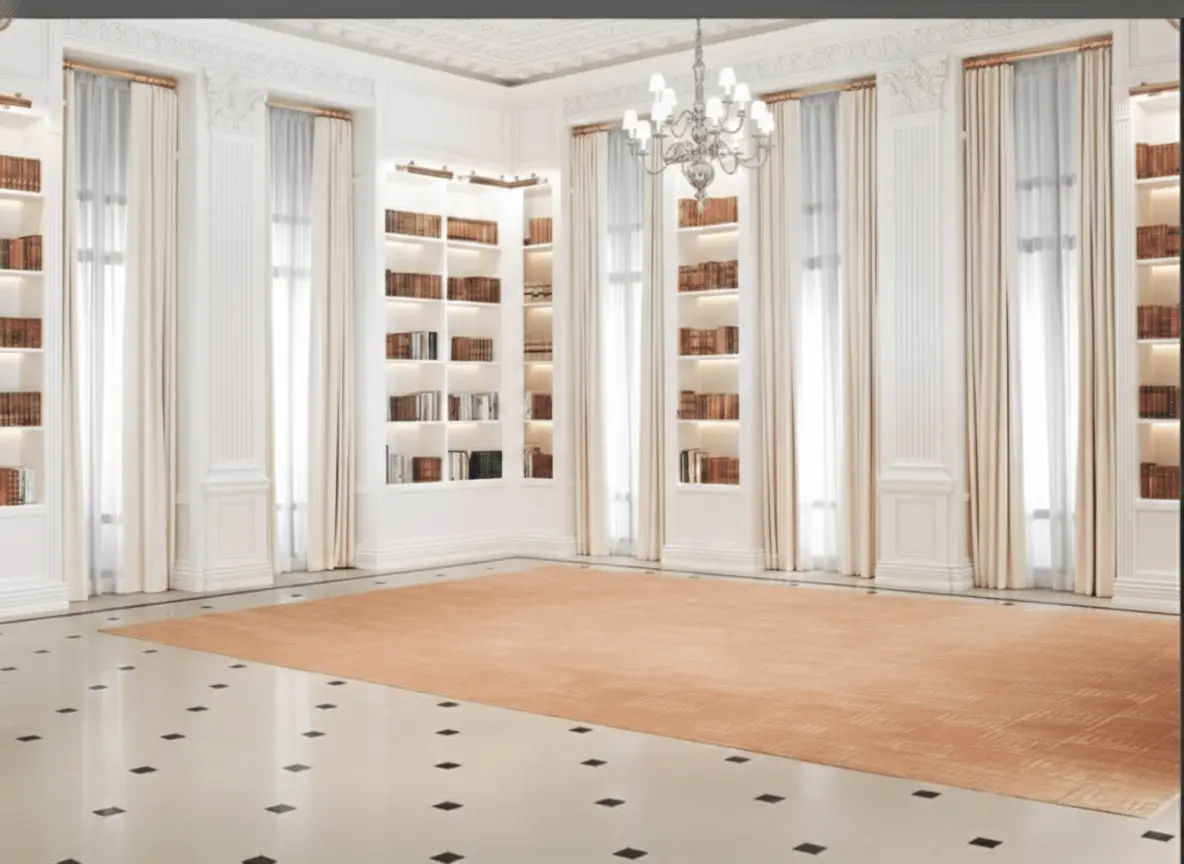
Some rooms feel architectural, while others feel merely furnished. The difference is rhythm. Seasoned interiors are built on the relationship between solids — the visual weight of furniture — and voids, the negative space that lets a room breathe. When these are in balance, the eye moves without interruption. The brain relaxes because it can predict the room.
Proportion is also restraint. It's the confidence to leave a wall quiet, to avoid crowding the perimeter, to choose one anchoring piece rather than three substitutes. A calm room is rarely missing something. It's protected from excess.
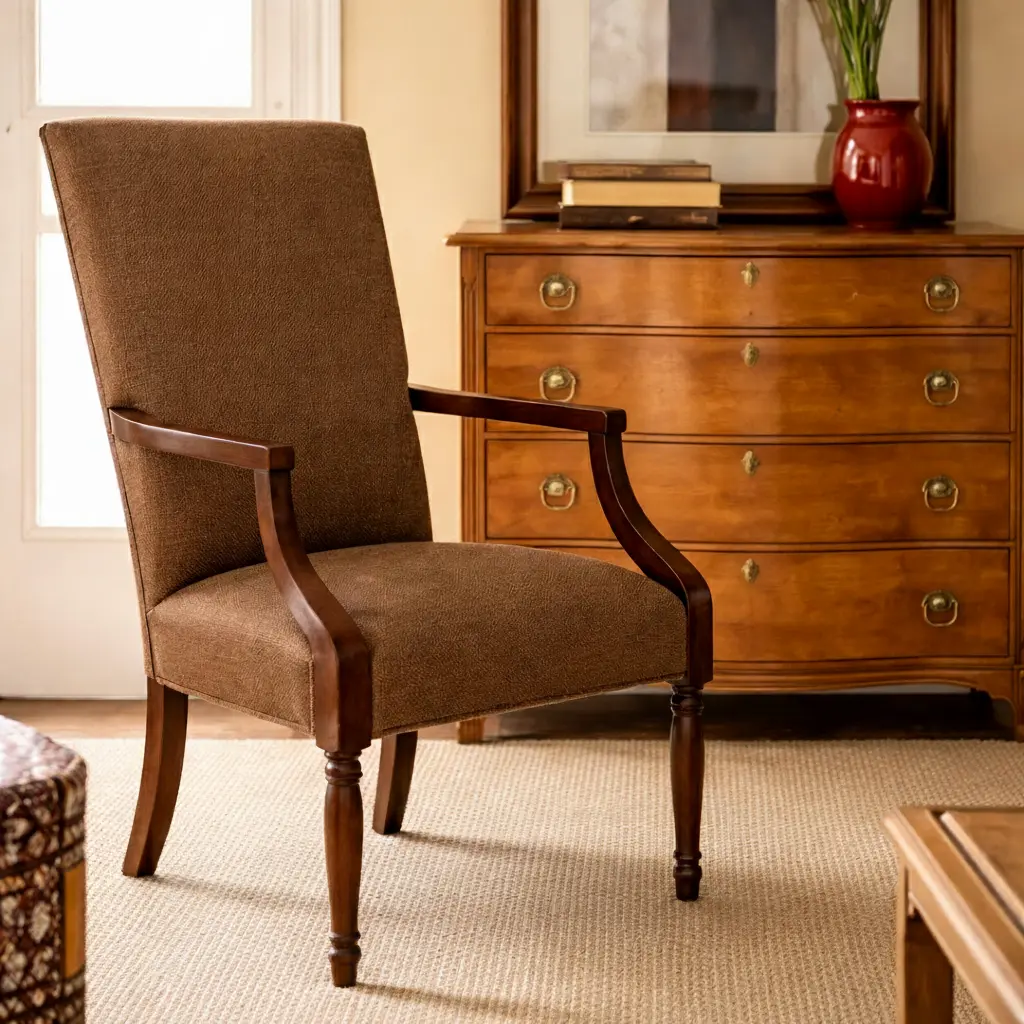
The rooms people remember often look slightly inevitable, as if they were assembled over time and then left alone. That sense of permanence is not nostalgia. It's a practical kind of comfort. When a room isn't trying to prove itself, you're free to inhabit it.
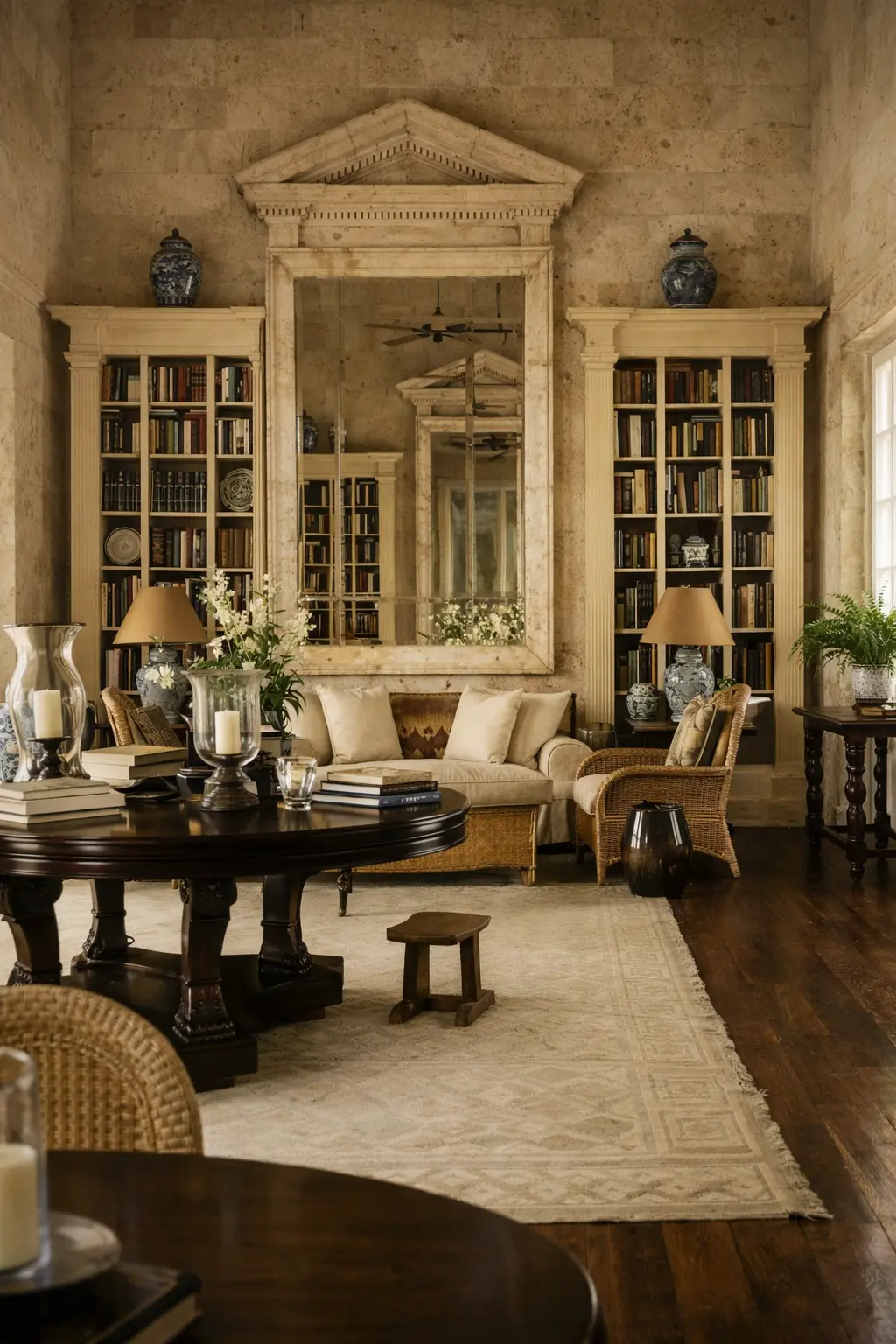
In truly settled homes, the envelope carries the authority: trim that holds shadow, walls that take color softly, wood that isn't trying to shine. Within that structure, objects are allowed to be quiet. They don't need to audition. You can feel the difference between newly finished and lived-in, even if you can't name it in the moment.
This is why the best traditional rooms rarely chase novelty. They rely on hierarchy and integrity: weight placed where the body expects it, light controlled instead of fought, and materials chosen for how they age. The room becomes a background that supports life, not a foreground that interrupts it.
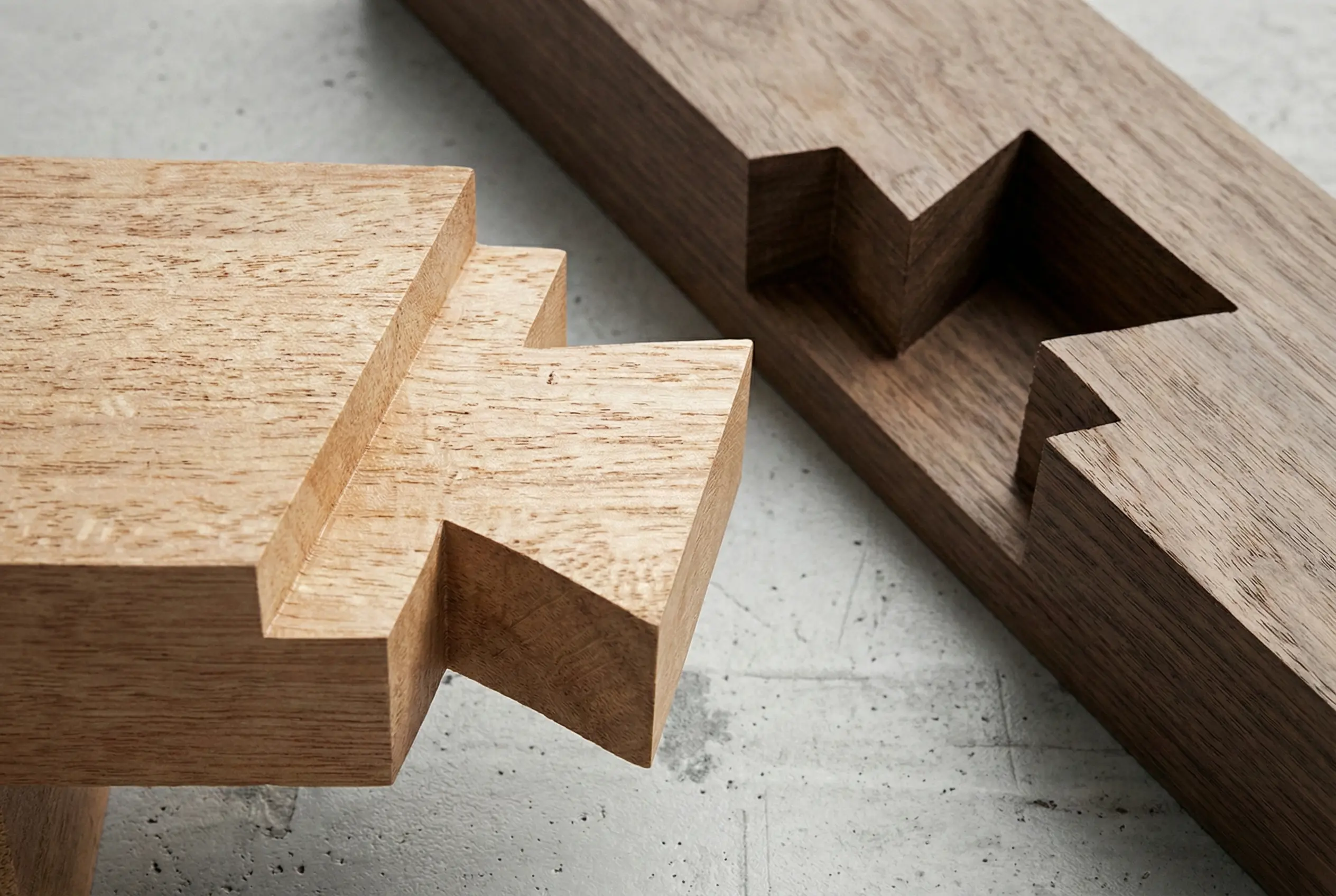
Calm has a physical temperature. Stone, steel, and glass provide structure, but they can feel emotionally cool when they dominate. To restore equilibrium, heritage rooms lean on the organic warmth of hand-finished wood, natural linen, wool, and aged leather. These materials don't just look better with time. They make time visible in a reassuring way.
Low-luster finishes matter more than people realize. When surfaces absorb light rather than reflect it, the room stops sparkling. It starts resting. The sensation is subtle but unmistakable — especially in Northern California light, which is generous enough to expose every surface that hasn't been considered.
| Sightlines | Single Focal Points A clear place for the eye reduces scanning and cognitive fatigue. |
| Light | Controlled Glare Diffused light, shaded windows, and matte surfaces lower visual friction. |
| Materiality | Low-Luster Surfaces Honed stone and waxed wood absorb light and quiet the room. |
| Proportion | Human Scale Placement that matches natural movement, not perfect symmetry. |
| Spacing | Breathing Room Negative space signals safety and lets architecture read clearly. |
The best rooms quietly guide you: where to sit, where to look, where to rest your hands. They don't overwhelm you with choices. They don't ask you to notice them. They simply support you — which is why they feel personal without being busy.
Calm is not the absence of character. It's the absence of friction. When a room is composed with restraint and material intelligence, you arrive fully, without explanation. The room holds you. You do not have to perform for it.
RS Studio is the editorial and design philosophy imprint of Reeva Sethi Home — a Saratoga-based showroom and studio serving the Bay Area with heritage furniture, architectural rugs, and considered interiors. RS Studio publishes on design philosophy, material culture, and the discipline of rooms built to last.