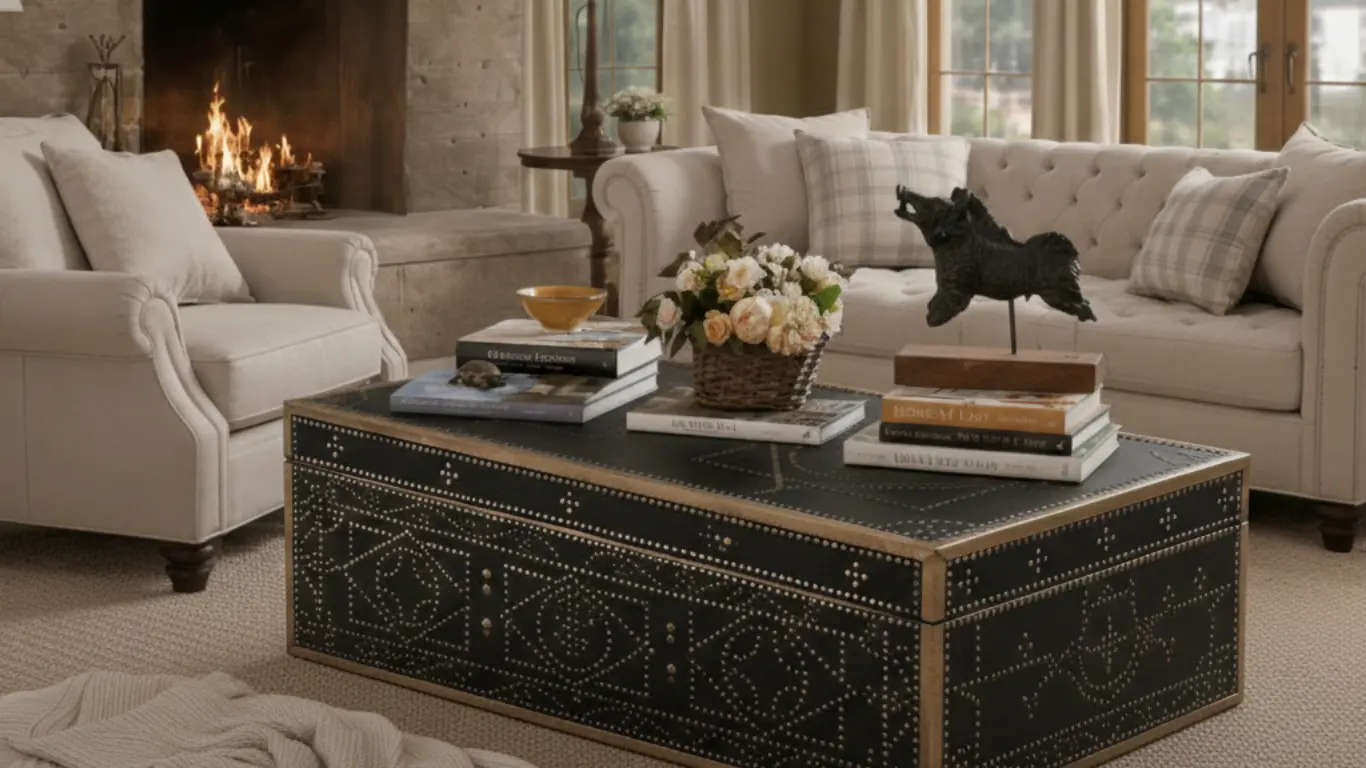
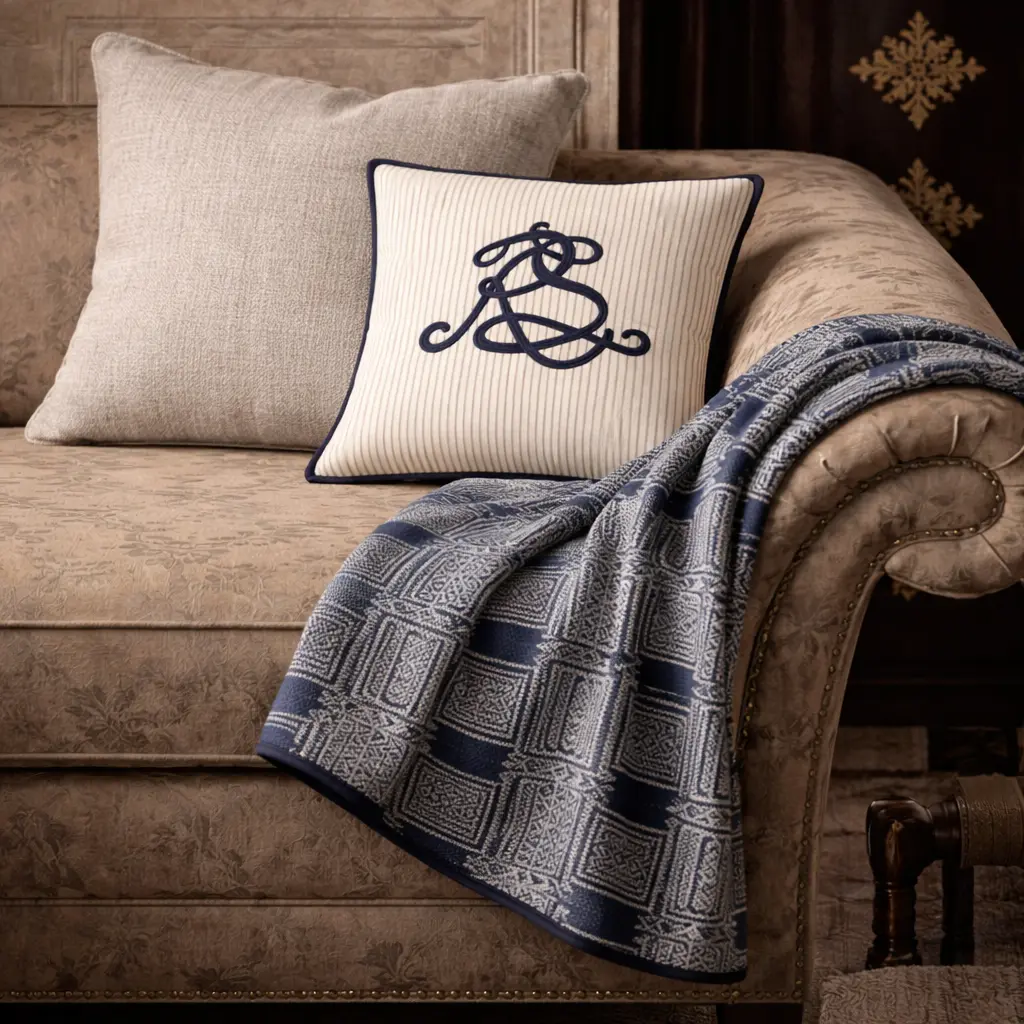
Designers and private clients seeking bespoke furniture Saratoga, custom handmade furniture Saratoga CA, and bespoke upholstery Bay Area will find our showroom equipped for trade-grade sourcing, tailored commissions, and fabric consultation. We also carry a considered selection of antique rugs Los Gatos and luxury furniture Saratoga clients built rooms around — chosen scale first, pattern second, color third.
The rooms that endure — that appear in the background of family photographs for fifty years without embarrassment — are never the result of a decorating budget. They are the result of a method. Correct scale. Honest materials. Restraint applied at the moment most clients want to add more. At Reeva Sethi Home, we have built a collection around that method: luxury furniture in Saratoga drawn to the proportions of the best English and Continental workshops, antique rugs sourced for the Bay Area that set a plan before a single piece of furniture is chosen, designer fabrics in Saratoga that hold their character long after the moment passes, and handwoven tapestries that give a room the quality of age without clutter. If you are searching for the best interior design store in the Bay Area, or simply where to buy luxury furniture in Saratoga that you will not tire of in three years, start with first principles.
This is how we think about rooms. Not a formula — a point of view, built over years of working with clients who wanted spaces that would hold their nerve long after the moment passed. For the full editorial archive and design philosophy, visit World of RS .
The Five Convictions Behind Every Room We Build
Plan the Architecture Before You Buy a Single Object
Every room that fails aesthetically fails at the plan. The furniture was placed before the room was understood. Before a single piece is acquired, a designer answers three structural questions: where do people arrive, where do they pause, where do they gather? When those three answers are correct, the furniture can almost choose itself.
This is the standard we apply to every commission: furniture selected by silhouette and scale before the upholstery conversation begins. It is why interiors from this collection avoid the most common luxury mistake — beautiful individual pieces assembled into a chaotic room.
The Rug Is Not a Finishing Touch. It Is the Foundation.
The single most common error in decorating expensive rooms is treating the rug as an afterthought. The rug sets the emotional temperature of the space before any furniture enters. It establishes scale, rhythm, and the palette that everything above it must respect. This is why the best designers — without exception — begin with the floor.
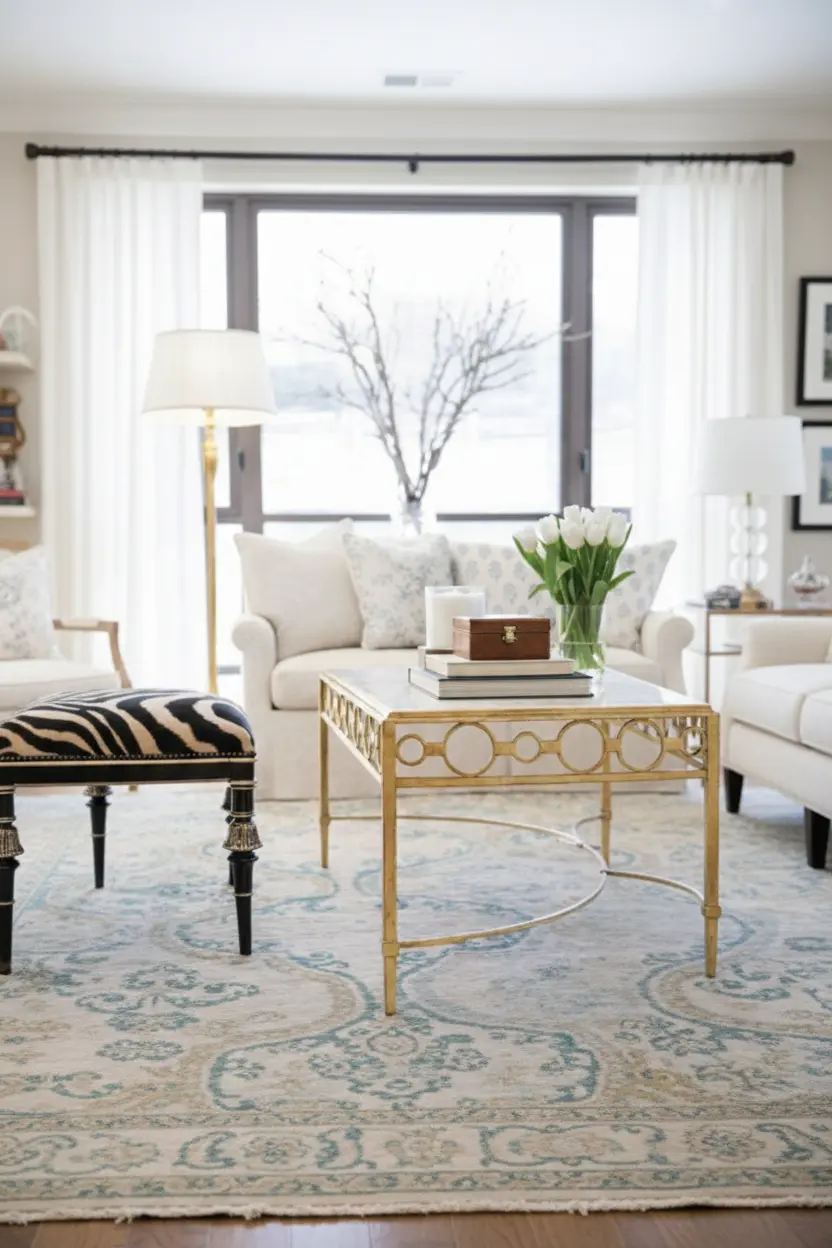
The standard for living rooms: an antique rug large enough for the front legs of every primary seating piece to rest on it comfortably. When that rule is observed, everything above the floor line reads as composed, intentional, and worthy of the space. When it is ignored, no amount of furniture quality will compensate.
Palette Is an Architectural Decision, Not a Decorating One
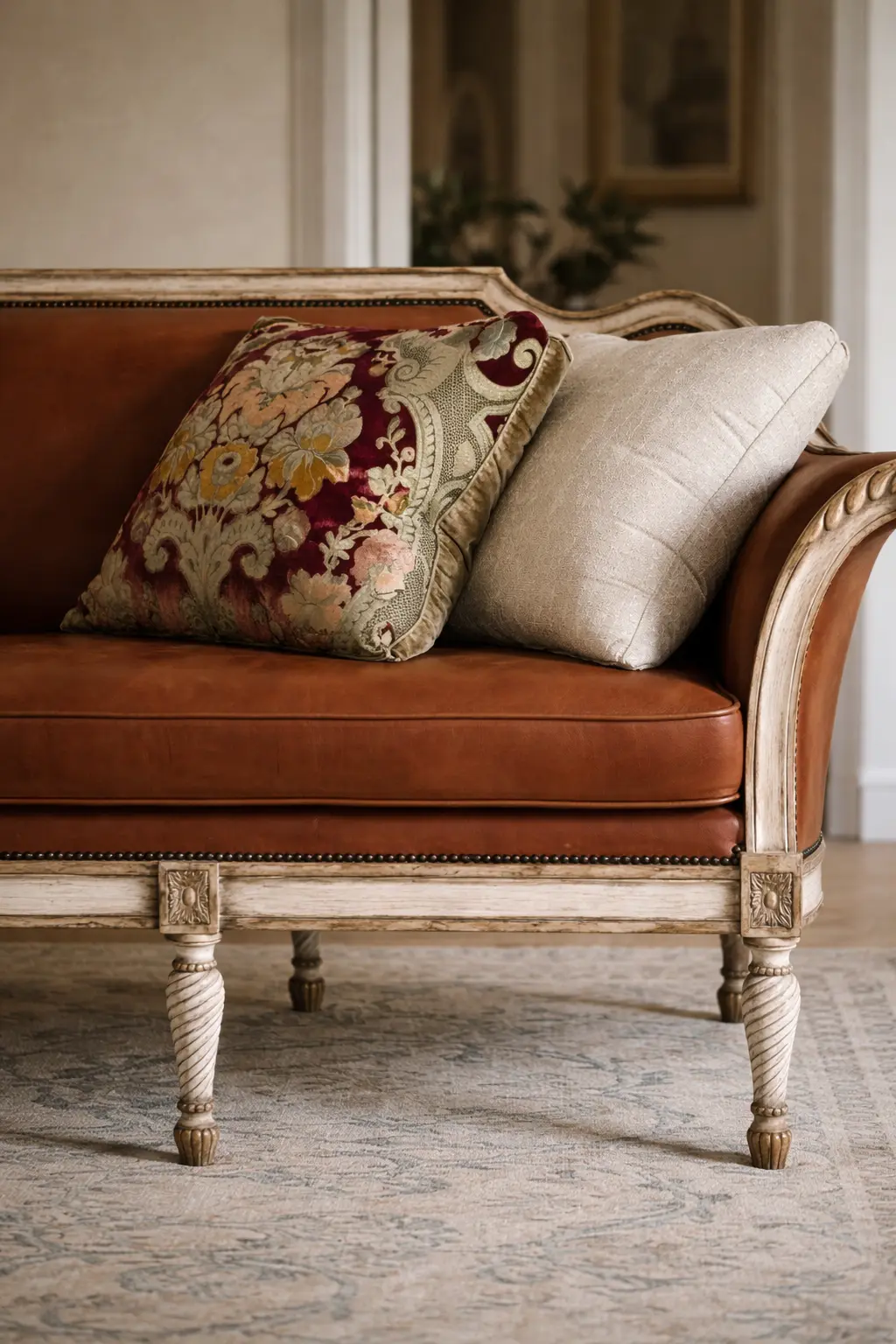
Rooms that look expensive share one structural characteristic: the palette was designed, not assembled. One dominant neutral. One supporting neutral. One restrained accent — repeated no fewer than three times. Think in materials and undertones: stone, dark-oiled wood, unbleached linen, vegetable-dyed wool. When those materials align, the room holds a visual authority that no individual statement piece can create alone.
This is the standard behind every piece in our furniture collection: the proportions and finishes are drawn to work within a controlled palette, not against it. The rooms that result do not need to announce themselves. They simply hold the eye.
Texture Is the Difference Between a Room and a Photograph of a Room
Flat rooms look correct in photographs and feel sterile in person. The missing quality is always tactility. Texture is not decorative. It is structural: it gives the eye something to settle into, the hand something to trust, and the room its sense of being fully inhabited rather than merely arranged. This is where designer fabrics earn their specification. A disciplined mix of hand-woven wool, stone-washed linen, and cotton canvas will outlast every trend in novelty textiles and grow better with age.
The most effective single change in most interiors: replace synthetic flat textiles with natural woven ones. The room immediately reads as richer, quieter, and more resolved — without a single piece of furniture moving. This is the principle behind every fabric we carry.
Tapestry: The Wall Treatment That Functions Like Architecture
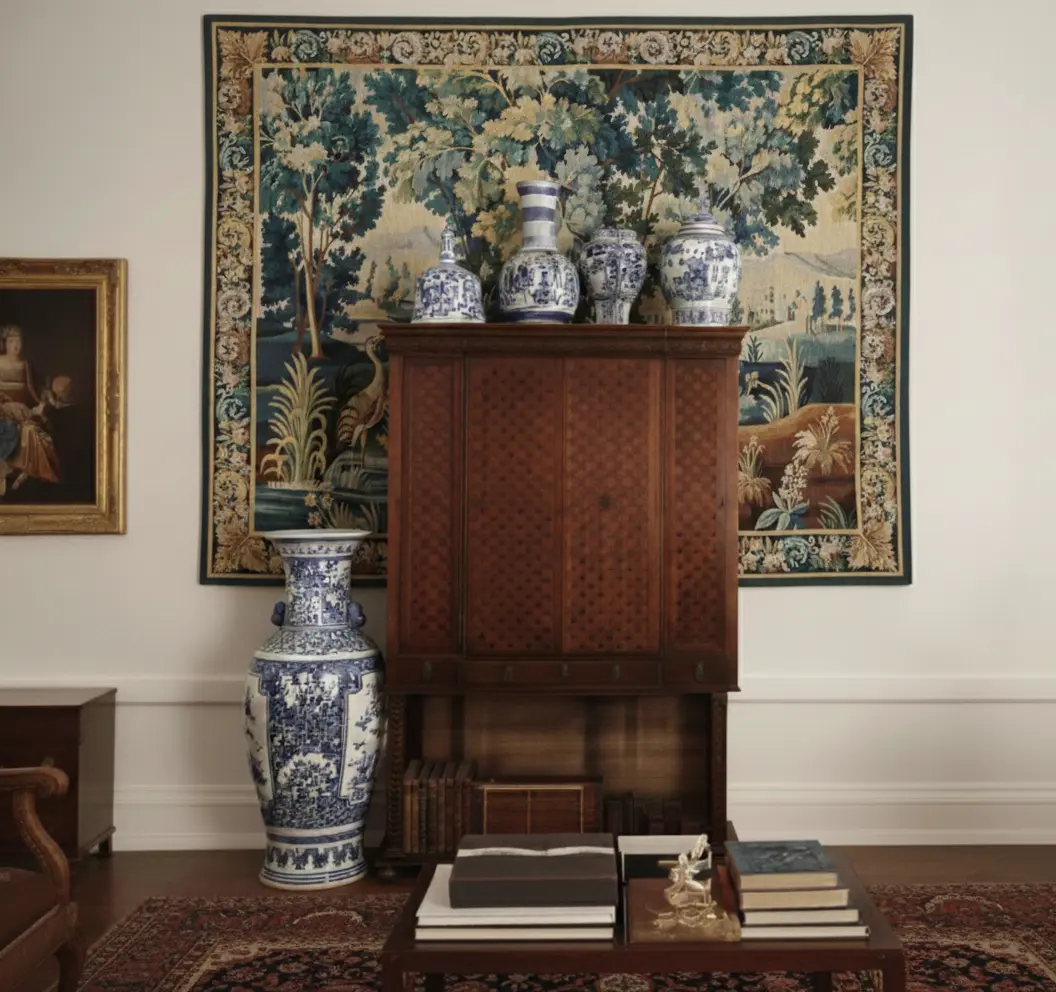
A significant textile on a wall does something paint and paneling alone cannot: it brings warmth, human scale, and evidence of time. A handwoven tapestry gives a room the quality of inherited depth — the sense that the space has been accumulated rather than decorated. It occupies vertical architecture, creates acoustic softness, and introduces pattern with a complexity that no printed fabric or wallcovering replicates.
Explore tapestries as a structural method, not a theme: the right piece works in a classically proportioned library, a contemporary loft, and everything between. The condition is always the same — the palette must be controlled before the tapestry is introduced.
The Sequence: Foundation, Proportion, Texture, Restraint
Foundation first. Proportion second. Texture third. Then the discipline to stop.
1) Establish the foundation — anchor every plan with antique rugs sized to the architecture, not the furniture.
2) Commit to silhouette — select luxury furniture by proportion and line before upholstery is considered.
3) Specify materials that earn their age — layer designer fabrics chosen for character over novelty.
4) Introduce architectural depth — place a significant tapestry where a wall needs weight and history.
5) Edit until nothing is performing — the room is finished when every element is necessary and nothing is announcing itself.