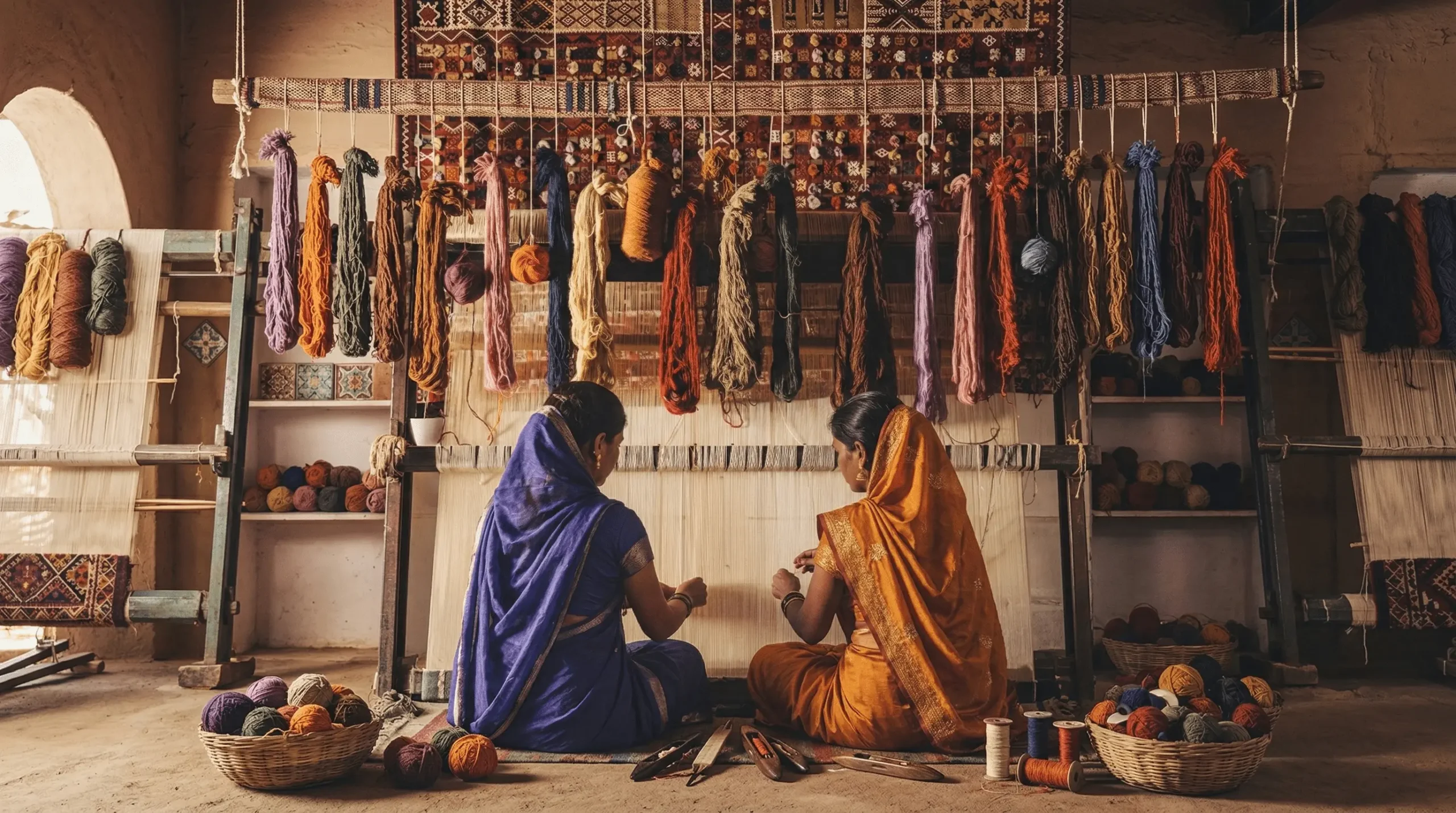
Three natural fibers dominate the market for residential rugs: jute, sisal, and wool. They are often marketed as equivalents — natural, sustainable, beautiful. They are not equivalents. The difference between them is not just aesthetic. It is structural, measurable, and directly affects how many years a rug is likely to perform well before it shows visible wear.
Why NaturalFibers Age Differently
Jute and sisal are plant fibers. Wool is an animal fiber. That distinction matters because the way they age, wear, and respond to traffic is fundamentally different. Understanding why requires looking at what each fiber is before it becomes a rug.
Jute: The Soft Entry
Jute fiber comes from the jute plant, harvested and processed into thread. It's soft to the touch, warm underfoot, and relatively inexpensive to produce. Jute feels good when new. The problem is not how it feels. The problem is what happens over time.
Jute is a bast fiber, which means it's made of relatively short cellulose strands held together by lignin. Lignin can weaken when exposed to moisture, friction, and sustained wear. When you walk on a jute rug repeatedly, you are not simply wearing the surface. You are stressing the structure that holds it together. This is why jute is generally better suited to lower-traffic rooms than to heavily used daily living spaces.
Sisal: Stronger, But Still Limited
Sisal comes from the agave plant and is mechanically stronger than jute. The fibers are longer, the surface is harder, and sisal generally performs better under abrasion. A sisal rug will usually last longer than jute. But longer is still finite. The structural issue remains: plant fibers gradually break down under repeated use, especially in active rooms.
Sisal also has a particular weakness: surface roughening, fuzzing, and visible wear. As the top fibers fray under traffic, the rug can begin to look dry, coarse, or tired. This can sometimes be managed, but not reversed.
Wool: The Resilient Fiber
Wool is different at every level. It comes from sheep, is made of protein structures called keratin, and is naturally suited to compression, insulation, and repeated stress. Wool fibers tend to compress and recover far better than most plant-based fibers. This is the core property that makes wool fundamentally different from jute and sisal in long-term residential use.
More importantly, quality wool generally ages more gracefully. A hand-knotted wool rug used daily for many years can develop patina, softness, and visual depth rather than simply looking exhausted. That does not mean wool is indestructible. It means that, when the construction is good and the rug is properly cared for, wear tends to look more like maturity than failure.
Jute and sisal tend to show structural wear sooner under daily use. Quality wool handles compression and repeated traffic far more gracefully.
— RS Studio · Materials AnalysisHow Many YearsWill It Last?
| Fiber | High-Traffic Lifespan | Medium-Traffic Lifespan | Low-Traffic Lifespan | Key Failure Mode |
|---|---|---|---|---|
| Jute | 2–3 years | 3–5 years | 5–8 years | Fiber degradation, shedding, matting |
| Sisal | 5–7 years | 7–12 years | 12–15 years | Surface wear, roughening, color loss |
| Hand-Knotted Wool | 15–25+ years | 25–40+ years | 40+ years | Gradual wear over time, highly dependent on quality and care |
These numbers are directional, not absolute. Actual lifespan depends on construction quality, room use, sunlight, maintenance, pets, and cleaning practices. But the broad pattern is consistent: jute tends to wear out first, sisal usually lasts longer, and quality hand-knotted wool generally performs best over the long term in real homes.
High-traffic rooms are living rooms, dining rooms, and entryways where the rug receives foot traffic multiple times daily. Medium-traffic is bedrooms, home offices, and guest rooms with regular but not constant use. Low-traffic is rarely-used rooms, formal living spaces, or rooms with mostly sitting activity and minimal walking. If you cannot honestly categorize your room, assume high-traffic.
The Cost EquationThat Doesn't Work
Jute rugs often cost less. Sisal usually costs more. Hand-knotted wool rugs typically require the largest initial investment. On first purchase, jute can look like the rational choice. The math changes when you factor in lifespan.
The Real Cost Per Year
A $500 jute rug lasting 4 years = $125/year. A $1,500 sisal rug lasting 10 years = $150/year. A $5,000 wool rug lasting 30 years = $167/year. The cost per year of ownership can end up surprisingly close. The difference is what you're living with at year 8, year 15, and year 25.
At year 8: the jute rug may already have been replaced. The sisal rug may be showing visible decline. The wool rug, if well made and well maintained, may still be settling into the room and gaining character. Over the long term, durability changes the economics.
Buy a rug for its lifetime cost, not only its purchase price. The initial number matters less than how long the rug performs well.
— RS Studio · Economics of DurabilityWhat Breaking DownActually Costs
The purchase price is not the only cost. There are hidden costs to lower-durability rugs that show up over time.
Replacement Labor and Disposal
Every time a rug fails, it must be removed, disposed of, and replaced. For a standard 9×12 rug, this can mean time, labor, and disposal expense. Over years of repeated replacement, those secondary costs begin to matter.
Maintenance and Cleaning
Jute and sisal can shed and break down more visibly. This means more frequent vacuuming and more caution with moisture. Professional cleaning options are also more limited because plant fibers are sensitive to water and staining. Wool generally gives you more flexibility and better long-term recoverability when cared for properly.
Opportunity Cost of Instability
Every time you replace a rug, the room is disrupted. Furniture shifts. Proportions change. The visual continuity breaks. With a durable rug, your room design is more stable. That has practical and aesthetic value, even if it does not appear on a receipt.
The Right Fiberfor Your Room
Choose Jute When:
- •The room is very low-traffic — a guest bedroom, formal living room, or reading nook with no foot traffic beyond a few steps.
- •You accept that the rug will be temporary — you expect to replace it in a few years anyway.
- •Budget is the absolute priority and durability matters less.
- •You value the aesthetic of jute — its color, softness, or style — enough that planned replacement is acceptable.
Choose Sisal When:
- •The room is low to medium-traffic — a bedroom, home office, or space with moderate use.
- •You want something more durable than jute but are cost-conscious about hand-knotted wool.
- •You plan to replace the rug in time and are comfortable with that cycle.
- •Sisal's texture or appearance is specifically what you want for the room's design.
Choose Hand-Knotted Wool When:
- •The room is medium to high-traffic — a living room, dining room, or heavily-used family space.
- •You want the rug to be a lasting part of your home rather than something you expect to replace frequently.
- •You appreciate materials that age with character rather than simply wearing out.
- •The rug is the foundational piece of the room and needs to be architecturally sound — it should anchor the furniture and define the space.
- •You want something with genuine long-term value and heirloom potential.
In architectural terms, the floor is one of the most consequential surfaces in a room. It's touched with every step. It affects acoustics, comfort, and the felt warmth of a space. If a rug is going to live in your room for decades, it should be made of something that can age well rather than quickly deteriorate. In most cases, wool is the strongest long-term answer.
What ActuallyMatters When Buying
Not all wool rugs are equal. Mass-produced wool is often processed and treated to look perfect in the short term, which can affect long-term character and performance. Hand-knotted wool is a different category entirely. Here's what to look for.
Fiber Source
Wool from different regions has different properties. Merino wool is fine but soft — good for clothing, less ideal for rugs. Lanolin content matters. Lanolin is the natural oil that contributes to wool's resilience and water resistance. Heavily processed wool may have less of it. Minimally processed wool often retains more of this protective quality.
Knot Density
For hand-knotted rugs, knot density helps determine structural durability and detail. A rug with 100 knots per square inch will generally hold up better than one with 50, assuming comparable wool and construction quality. Persian and Turkish rugs can run much higher, which helps explain their longevity. Density is not the only variable, but it is an important one.
Dye and Color
Natural dyes often age beautifully. They tend to soften gradually and can create a richer patina over time. Some synthetic dyes also perform well, but lower-grade synthetic color can fade unevenly or shift harshly. Traditional hand-knotted rugs from weaving centers often use dye practices that support better visual aging. Ask about dye source when you buy.
Construction and Backing
The backing of a hand-knotted rug should be made of natural material — typically cotton or jute. Synthetic backing can deteriorate independently from the knot structure. The selvage, or finished edge, should be well executed. In durable goods, weak joints and weak edges are often where failure begins. Better construction means fewer failure points.
A hand-knotted wool rug is not a commodity. It's a long-term architectural layer in the room. Buy based on construction, not color or pattern alone.
— RS Studio · The Long ViewWhich OneActually Lasts?
In most real residential settings, quality wool lasts longest. A well-made hand-knotted wool rug can perform for decades in normal conditions and age more gracefully than jute or sisal.
Sisal can be useful, especially where the look is right and the traffic is moderate. Jute has its place too, especially in softer, lower-traffic rooms. But both are fundamentally more temporary choices in heavily used spaces.
This is not merely a matter of preference. It comes down to the structure of the fibers, the way they respond to pressure and abrasion, and how they age under daily living.
Choose wool when you want long-term performance. Choose sisal or jute when you understand the tradeoff and are comfortable with a shorter lifespan.
RS Studio carries hand-knotted wool rugs woven to specification — the kind meant for lasting use. All are sourced with attention to fiber quality, natural dyes, and construction durability. For more on how materials endure, or to consult on rug selection for your home, visit the showroom in Saratoga.