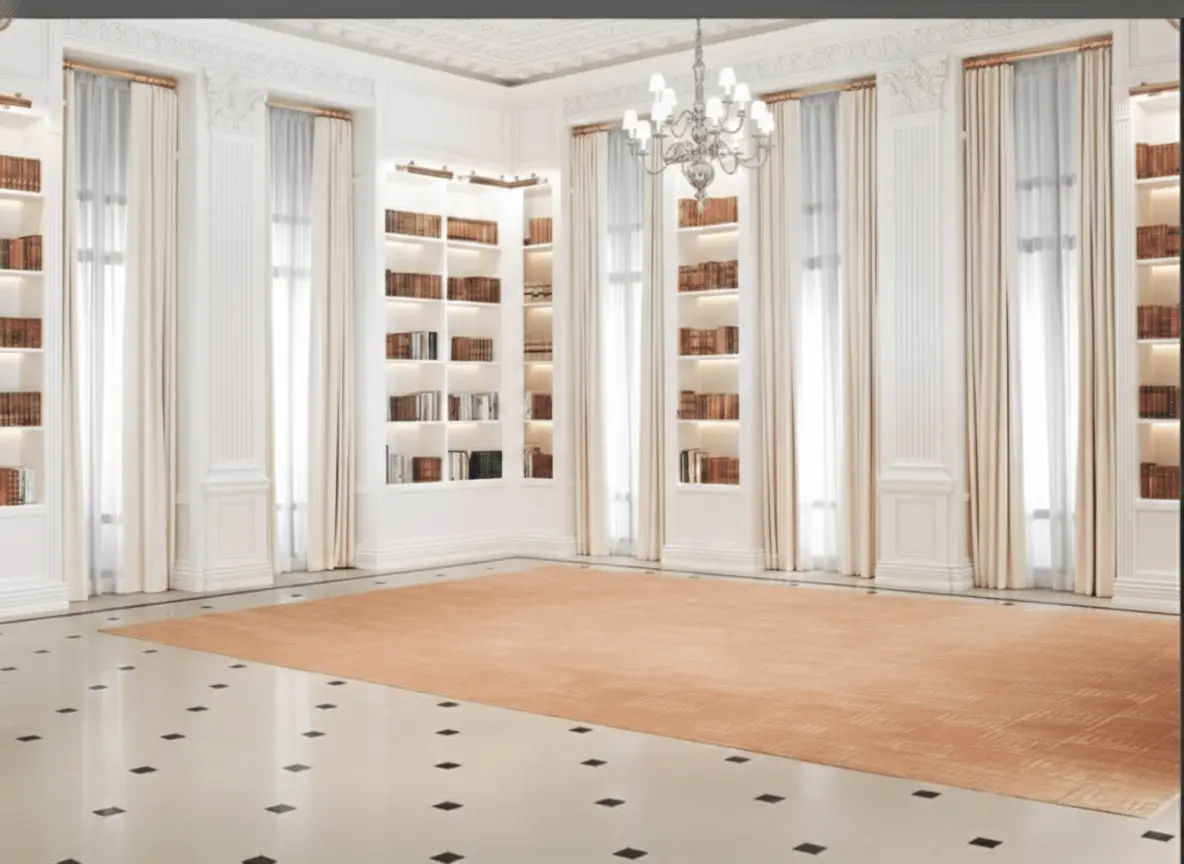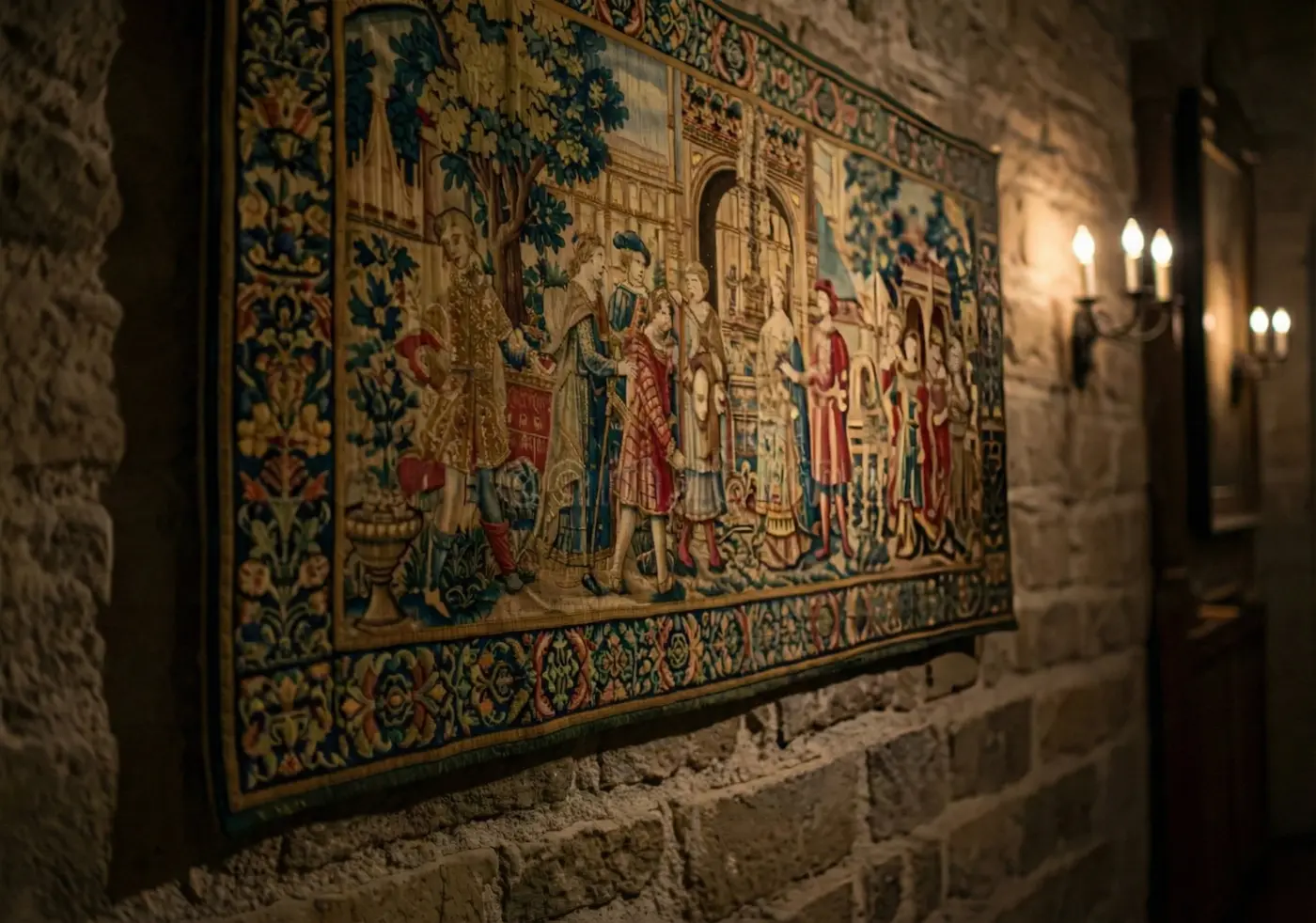
There are surfaces in a home that ask for more than paint. Stone walls echo. Long corridors feel unresolved. Large rooms, though beautiful, can sound hollow. For centuries, the solution to these architectural challenges has been the antique tapestry—a design element that existed long before the concept of "wall décor" ever emerged. Unlike transient trends, quality tapestries represent a considered investment in permanence and craft.
A tapestry was never meant to decorate. It was meant to belong. Woven textiles once lined the halls of estates and libraries not as embellishment, but as architecture made soft. They held warmth against cold masonry, absorbed sound, and introduced narrative into spaces too large for framed art alone. This functional elegance is precisely why quality tapestries remain relevant—and increasingly valuable—across generations.
Unlike artwork that announces itself immediately, a tapestry reveals slowly. Its imagery unfolds with time and distance. Colors deepen as light moves across the surface. Texture becomes visible only when the room settles. This restraint is precisely what allows woven wall hangings to age so well—and why collectors value them across decades.
A well-maintained antique or heirloom tapestry often increases in value as craftsmanship becomes rarer. The density of weaving, the depth of natural dyes, and the integrity of structure are markers of authenticity that both collectors and designers recognize and reward. This is why discerning homeowners view tapestries not as expenses, but as capital investments in their living spaces.
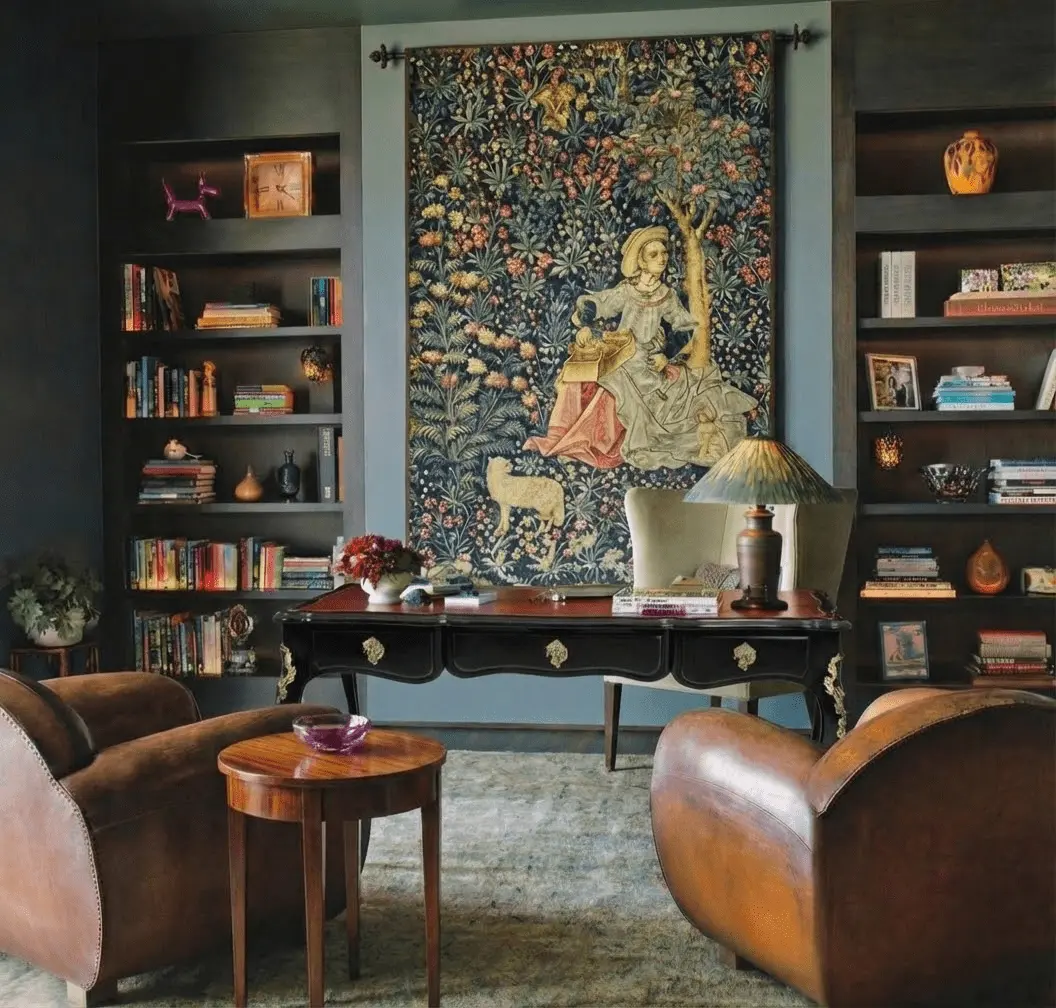
In contemporary homes, especially those with open layouts and higher ceilings, tapestries perform functions that justify their investment:
-
They restore proportion. Large walls require scale. A tapestry anchors the architecture rather than floating against it, fundamentally improving how a room feels and functions.
-
They soften acoustics. Dense fibers absorb reverberation, lending warmth and intimacy to stone, glass, or concrete environments. This acoustic benefit is difficult to replicate through other means.
-
They introduce permanence. Scenes drawn from classical imagery or pastoral life create depth and meaning that cannot be replicated through prints or mass-produced wall décor.
This is why quality tapestries command investment pricing. They solve real architectural problems while elevating design—a combination of function and form that few other décor options achieve.
Five Reasons to Invest in Quality Tapestries
Authentic tapestries improve with age. Natural fibers patina gracefully, deepening in character while maintaining structural integrity for decades and beyond.
Quality tapestries are recognized by designers and buyers as legitimate design investments. Well-curated pieces contribute measurably to property appeal and resale value.
Unlike passive décor, tapestries improve acoustics, control temperature perception, and create visual harmony. They solve real architectural problems while elevating design.
Hand-woven and authentic pieces become more valuable as industrial production dominates. Collectors actively seek quality tapestries, ensuring continued demand.
Tapestries have been central to interior design for 500+ years. This permanence means your investment won't look dated—it will look considered and refined.
A quality tapestry becomes part of your home's narrative. It's an inheritance piece—something you'll pass to the next generation with genuine value attached.
Not all wall hangings deserve the name. A true antique or quality tapestry reveals itself through construction, not imagery alone. When evaluating tapestries as an investment, look for:
-
Fiber authenticity. Wool or wool-blend fibers hold structure and age gracefully. Synthetic blends degrade and become brittle over time, destroying investment value.
-
Weave density. Dense weaving preserves detail and prevents slippage. Loose weaves unravel and deteriorate, particularly in high-traffic visual spaces.
-
Color authenticity. Layered, complex color resulting from natural dyes indicates age and quality. Sharp, uniform color suggests modern production and lower longevity.
-
Craftsmanship markers. The irregular hand of a historic loom creates variations in texture and tension that modern machinery cannot replicate. These imperfections are markers of authenticity.
-
Provenance. When available, documented history increases value. Tapestries with known ownership or historical significance command premium pricing.
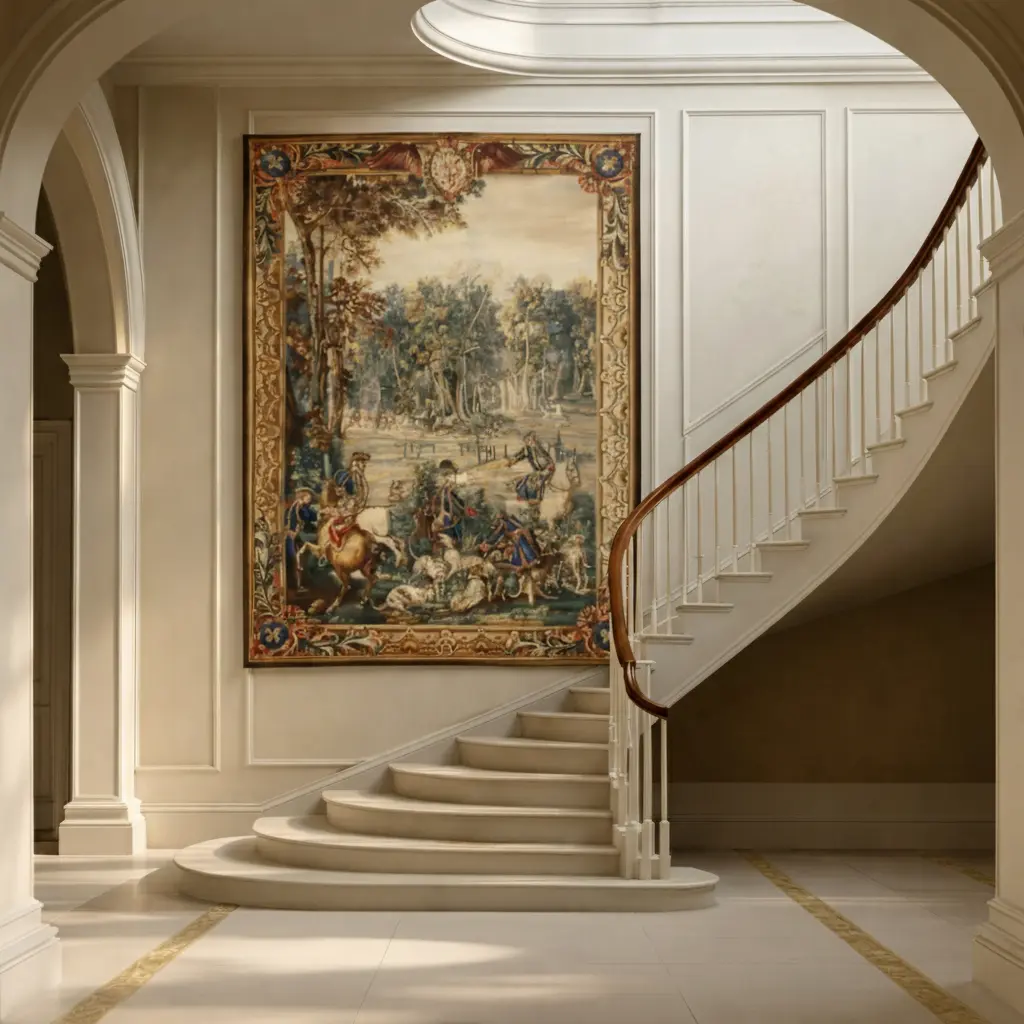
Why Tapestries Appreciate
Quality home furnishings often outperform traditional investments in terms of enjoyment and utility. But the financial case is also sound:
- A well-maintained tapestry typically lasts 40-60+ years with proper care, versus 5-7 years for average wall décor
- Authentic pieces appreciate 3-8% annually as craftsmanship becomes rarer and collector demand increases
- Design-forward homes with quality textiles command 5-15% higher resale premiums in competitive markets
- One quality investment piece often eliminates the need for frequent redecorating, saving thousands over decades
This is why discerning homeowners and interior designers view tapestries not as expenses, but as capital investments in their living spaces.