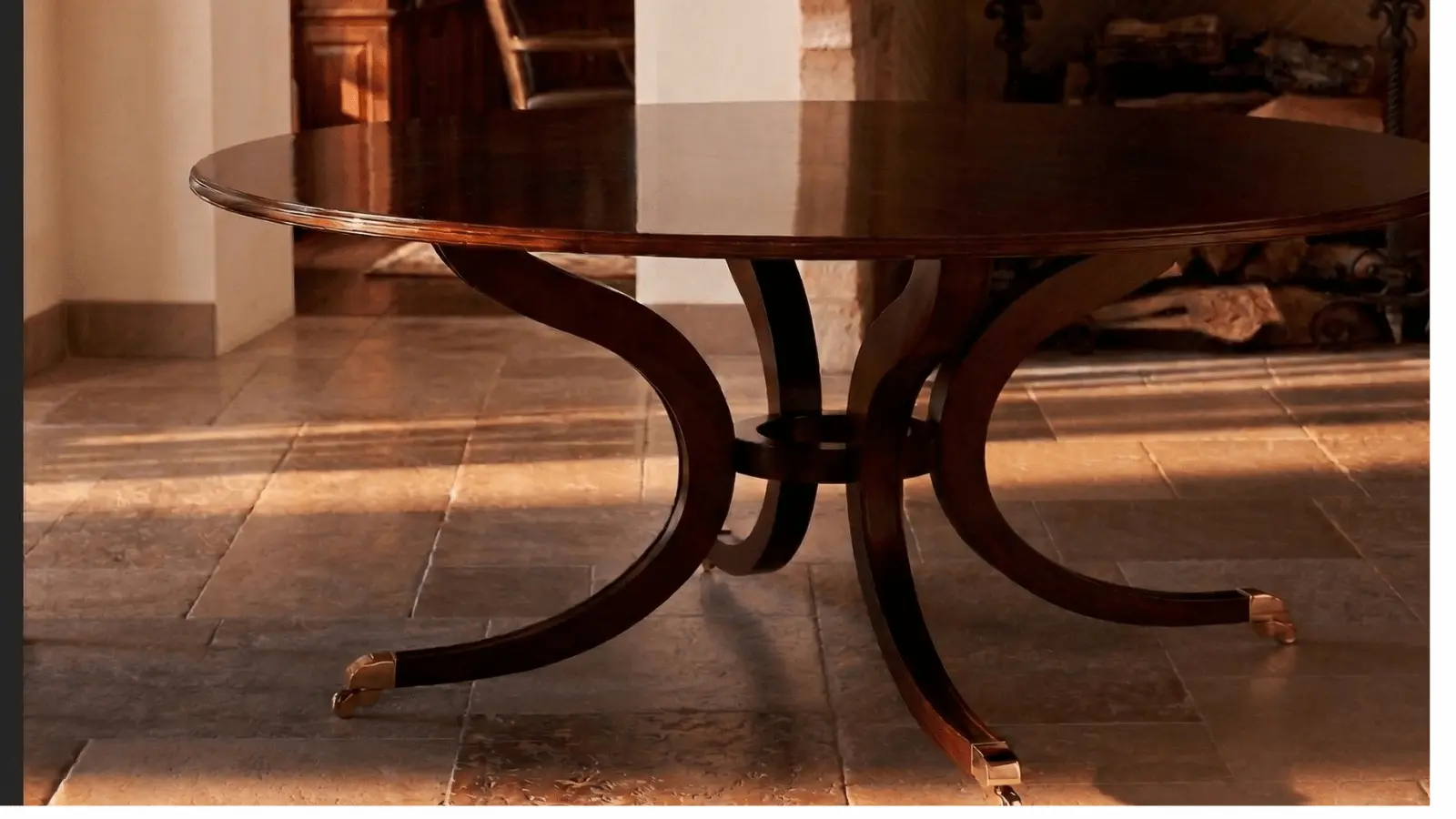
The word heirloom is used loosely in furniture retail. It appears in product descriptions alongside terms like investment-grade, hand-crafted, and timeless, a cluster of language that signals aspiration rather than fact. But heirloom furniture is not a marketing category. It is a physical outcome. A piece either has the construction, materials, and finish to survive a century of daily use and arrive in better condition than it started, or it does not. The difference is not subtle, and it is not determined by price.
It is determined by four decisions made at the workbench: the species of wood selected, the method used to join the parts, the nature of the finish applied to the surface, and the honesty of the material throughout, meaning whether every structural component is what it appears to be. These are the variables that interior designers have always evaluated and that any buyer, with the right knowledge, can assess in a showroom in under ten minutes.
This article covers all four in the depth they deserve. If after reading you want to apply these tests to a specific purchase decision, see our guide to solid wood furniture vs veneer. And if your question is which furniture brands actually apply these standards, Best Furniture Brands: What Actually Separates Them is the fastest filter we have written.
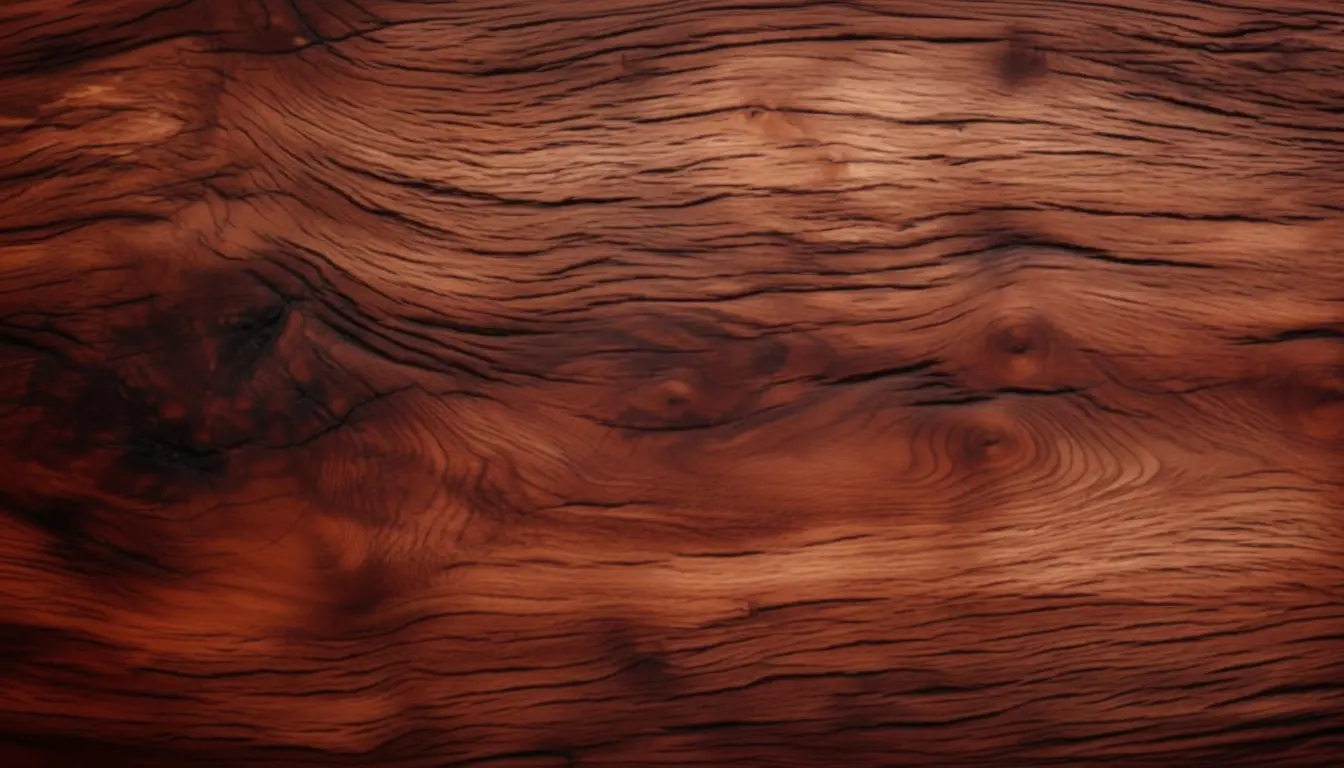
Wood is not a uniform material. The species selected for a piece of furniture determines its density, its resistance to seasonal movement, its capacity to hold joinery under load, and the quality of finish it will accept and develop over time. The Janka hardness rating is one useful reference point, but it is not the full story. Grain structure, cut (rift/quarter/flat), moisture content, and how the piece is engineered matter just as much.
For heirloom furniture, two species have proven themselves across centuries of use: mahogany and teak. Both are stable hardwoods with long track records in fine furniture. Both accept finishing methods that can be maintained and renewed without stripping the piece. Both develop rather than deteriorate with age when cared for correctly.
Four species commonly used in heritage furniture, and what each actually offers
Mahogany
Heritage standardTeak
Self-protective, durableWhite Oak
Strong, expressive grainWalnut
Visually richWhat tables like this never show is growth rate. Slow-grown timber typically has tighter grain and better structural behavior than fast-grown stock of the same species. A serious maker can discuss cut (rift/quarter), seasoning, and how panels are stabilized. Retail copy almost never will.
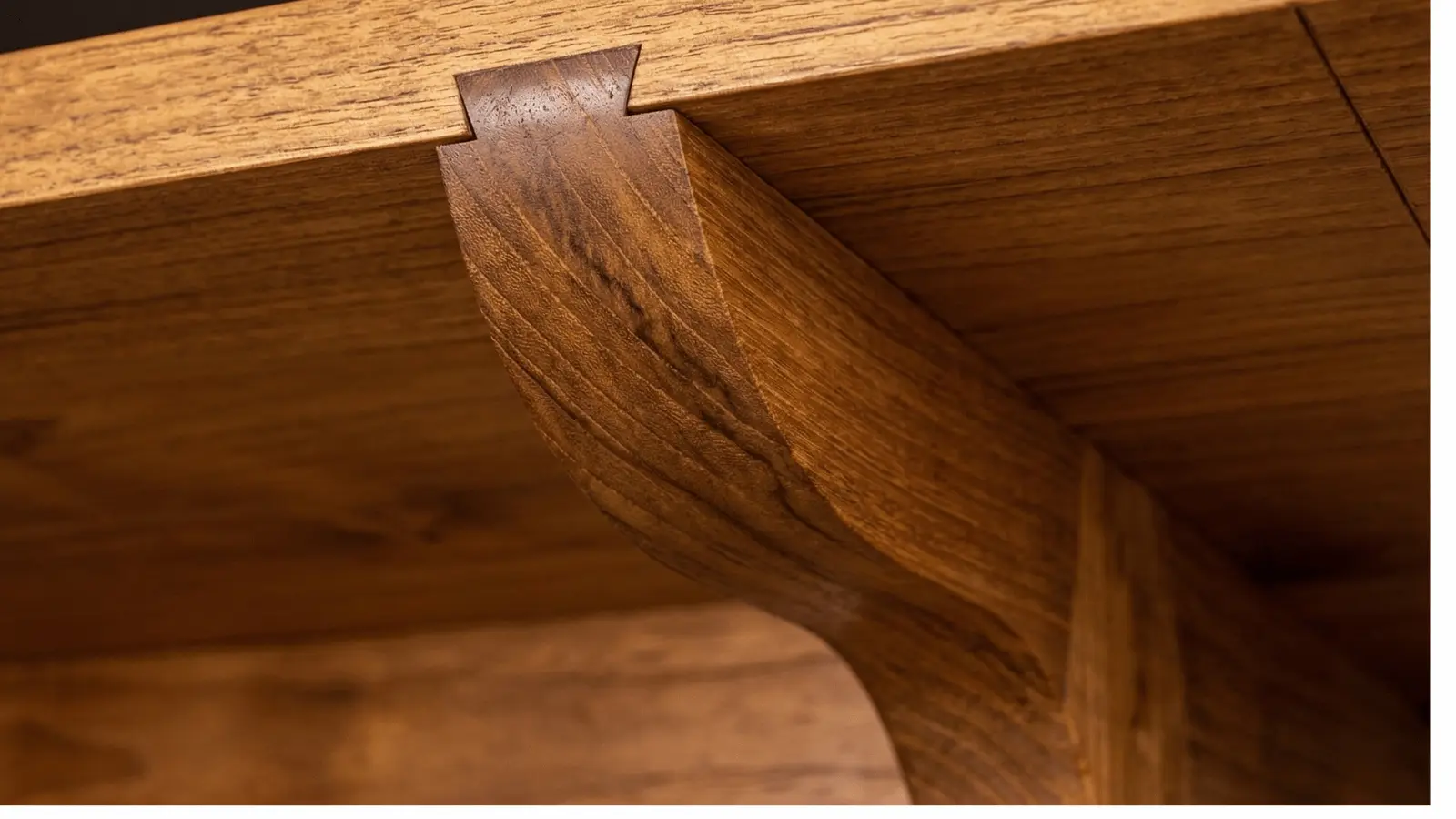
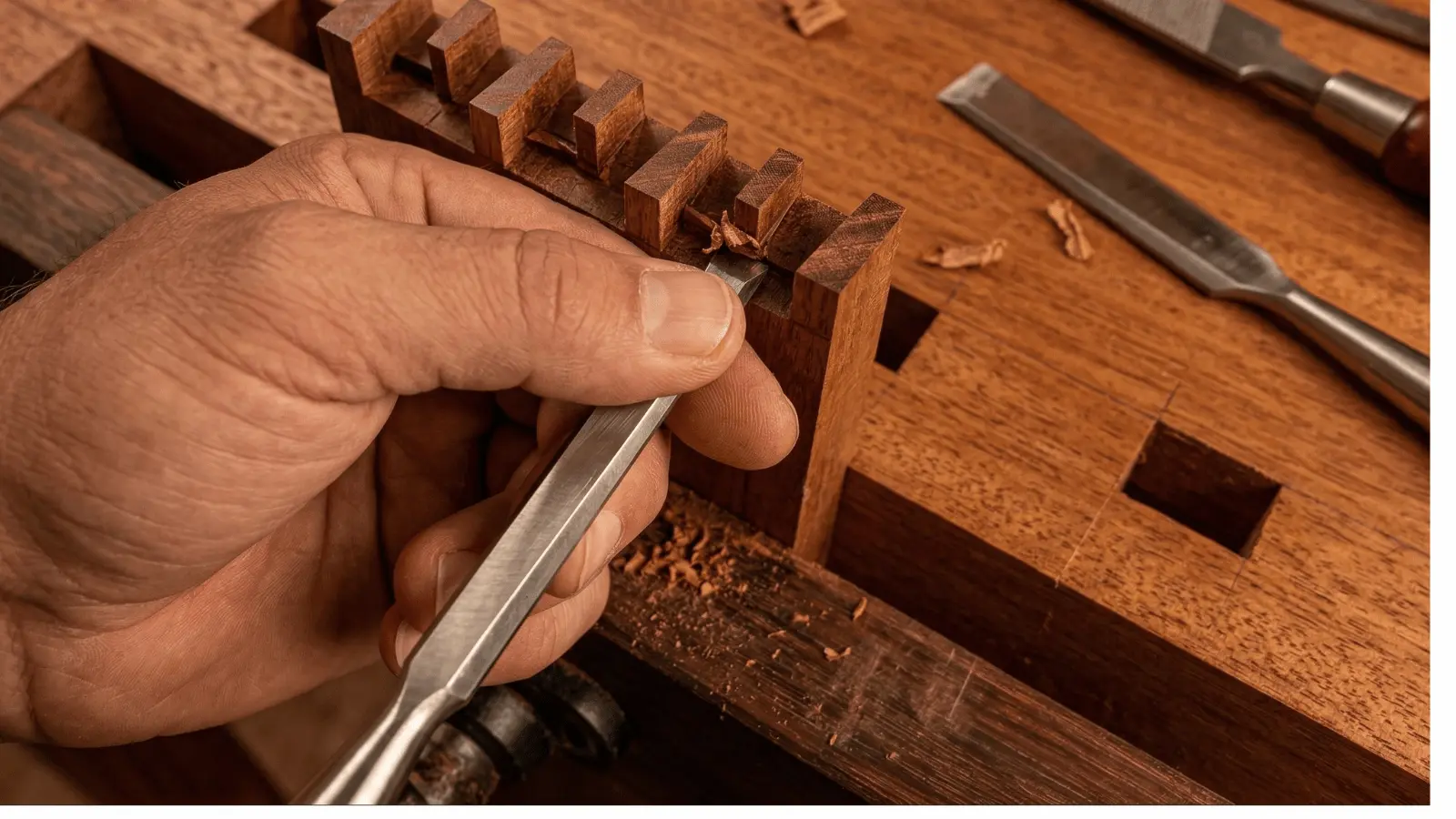
Joinery is the method by which wood is connected to wood. It is almost entirely invisible in a finished piece, which is why it is the variable most frequently compromised. The joinery method determines whether a chair holds its shape under daily load, whether drawers still run correctly after years of use, and whether a table stays rigid or begins to rack.
Integral joinery uses the wood itself, shaped and fitted so the joint is self-reinforcing under load. Mechanical joinery relies on hardware in pre-drilled holes. Mechanical methods can be appropriate in non-structural situations, but when they show up in structural joints, longevity is almost always the first casualty.
Mortise & Tenon
A tenon fits into a mortise. Under load, a properly cut joint tightens rather than loosens. This is the standard for chair legs, table aprons, and structural frame connections.
How to identify: Ask directly. A maker using it will answer cleanly.
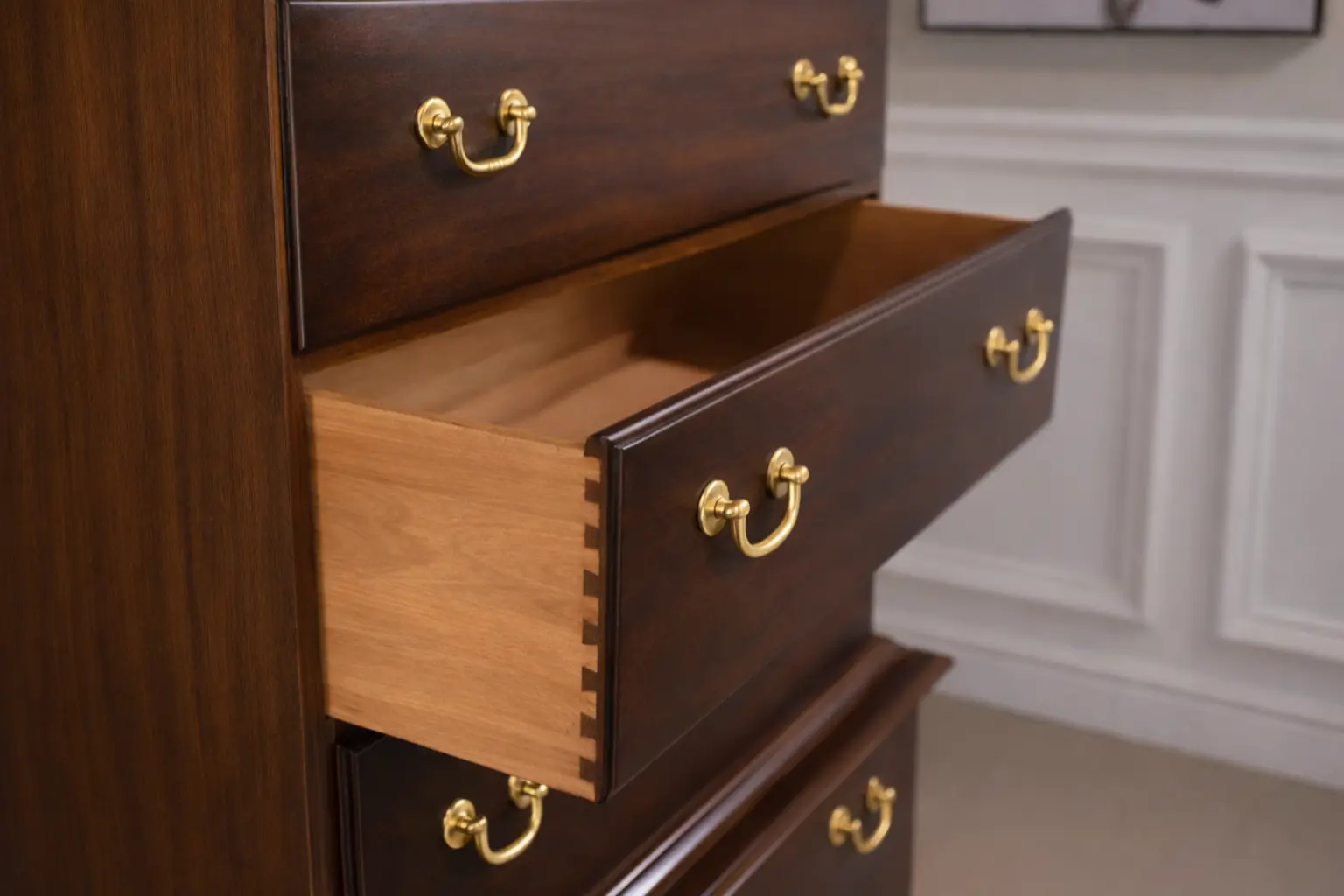
Dovetail (Hand or Machine)
Interlocking geometry resists pull and shear. In drawers, dovetails are one of the clearest signals that construction mattered.
How to identify: Pull a drawer out and inspect the front corners for interlocking “teeth.”
Corner Blocks
Triangular wood blocks in the inside corners of seating frames distribute stress and reduce racking over time.
How to identify: Turn the piece over and check the inside corners.
Cam-Lock & Basic Dowel Assembly
Fast assembly methods that rely on friction and the tightness of initial fit. Under repeated load and seasonal movement, these joints are far more likely to loosen in structural positions.
How to identify: Circular caps/plugs near joints or visible cam hardware are a structural red flag.
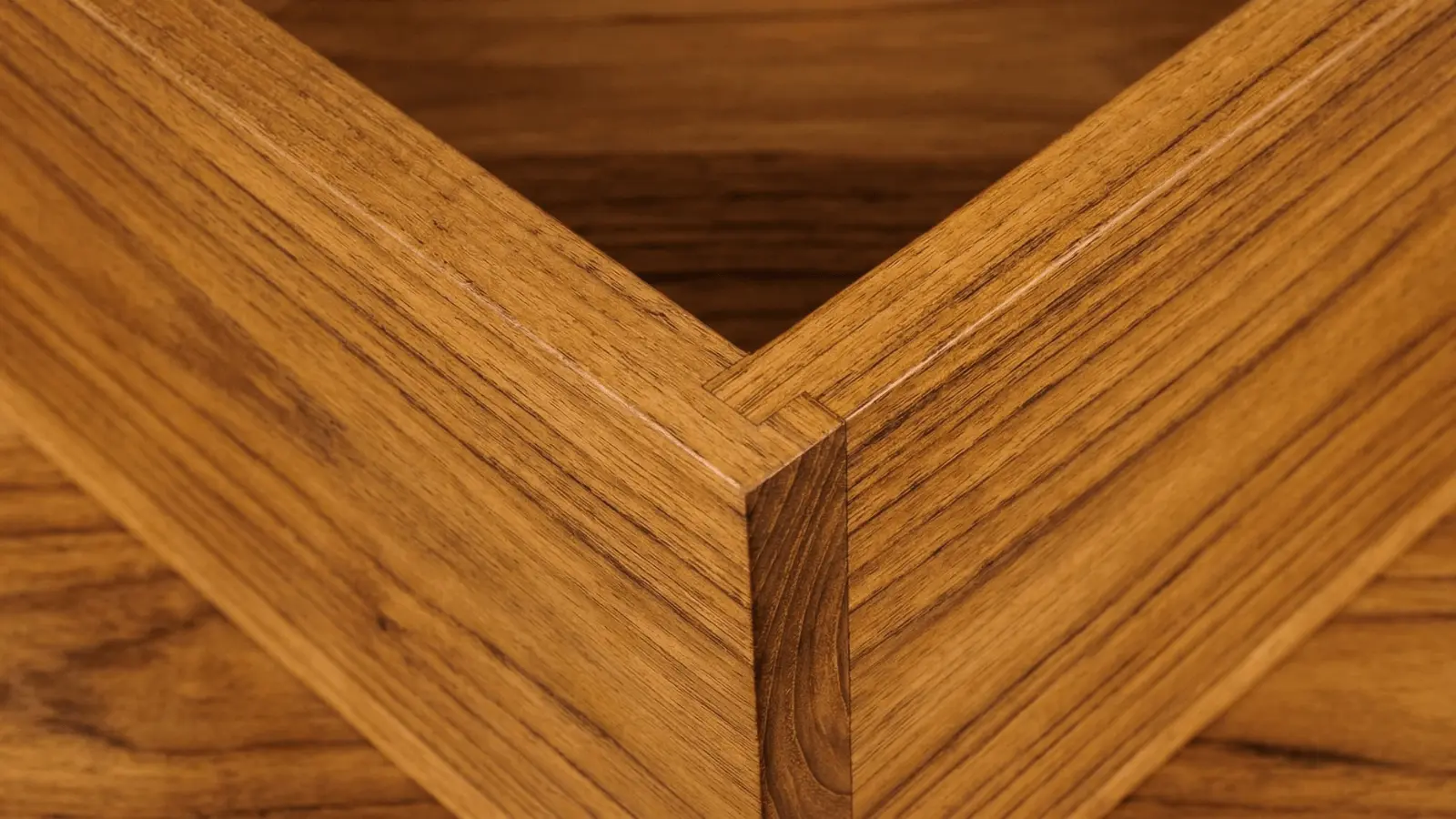
Finish is not cosmetic. It determines how the surface handles daily contact, and whether it can be maintained without stripping the entire piece. A finish that cannot be spot-repaired eventually forces a full refinish. A finish that can be refreshed locally keeps a piece looking correct for decades.
What an heirloom finish looks like across a lifetime of use
A penetrating finish can improve as it’s lived with. A film finish tends to stay perfect, until it doesn’t.
Grain reads clearly. Surface is not plastic-coated; it looks like wood because it is.
Contact points deepen slightly. The piece looks more settled, not “worn out.”
Patina becomes visible across the surface. Depth increases. Character becomes specific to the home.
The piece becomes irreplaceable, not because it’s rare, but because it now carries a history that cannot be manufactured.
Penetrating oils, waxes, and shellac are maintainable when properly applied. Industrial film finishes can be very durable too, but when they fail, they tend to fail visibly and require invasive refinishing. The practical question is not “which is luxury,” it’s “which can be maintained without turning the piece into a restoration project.”
Want to see these standards on real pieces? The Saratoga showroom is open Monday through Saturday.
Book a VisitMaterial honesty is simple: are structural parts made from what they appear to be made from? This is the question behind solid wood vs veneer, but it extends to drawer boxes, cabinet backs, internal framing, and hidden rails.
Veneer itself is not the villain. Veneer on a proper substrate is traditional and durable. The problem is veneer used to disguise weak cores and short-life construction in load-bearing areas. The practical test is unglamorous: inspect the back, the underside, and the inside.
Designers already know the variables. The challenge is language that holds up when a client is comparing a correctly built piece with something that looks similar at half the price. These frames work because they are concrete.
Framing the standard for clients who are comparing on price
Heirloom-quality furniture available in person, near Los Gatos, Los Altos, and Palo Alto.
The furniture collection at Reeva Sethi Home is built to the standard described in this article: solid mahogany and teak, integral joinery, and maintainable finishes chosen to age correctly. The showroom is at 20430 Saratoga–Los Gatos Road in Saratoga, California and serves Los Gatos, Los Altos, Palo Alto, Menlo Park, Cupertino, Campbell, and greater San Jose.
Saratoga, CA 95070
Call for current hours
Palo Alto · Menlo Park · Cupertino
What makes furniture heirloom quality?
Four variables: wood species, joinery method, finish, and material honesty. The heirloom standard is simple: durable structure, maintainable surfaces, and no “hidden downgrade” where it matters.
What wood species are best for heirloom furniture?
Mahogany and teak are two of the most proven. Both have long track records in fine furniture and age well when properly built and maintained.
How can I tell if joinery is heirloom quality in a showroom?
Pull a drawer and look for dovetails. Turn seating over and look for reinforcement. Ask if frames use mortise-and-tenon joints. Clear answers and visible reinforcement are good signs. Vague answers and cam-lock fittings in structural positions are not.
Where can I find heirloom-quality furniture in the Bay Area?
Reeva Sethi Home is located at 20430 Saratoga–Los Gatos Road, Saratoga, CA 95070. Call +1 408-797-5283 for visiting details and current availability.