It is a reasonable confusion. Both terms get used loosely in showrooms, online listings, and interior design articles that prefer atmosphere to precision. But the distinction is not subtle once you understand it — and it matters when you are trying to solve a real problem in a room. At RS Studio, we write about these distinctions because getting them wrong costs money and time.
What Is an Accent Chair?
An accent chair is any chair chosen primarily for visual interest. It can be low-backed, armless, upholstered, wooden, modern, or traditional. It follows no strict structure or silhouette. Its role is decorative first — it exists to introduce color, pattern, or a contrasting form into a space.
Because “accent chair” is a category rather than a form, almost any chair qualifies. A curved velvet tub chair is an accent chair. A rattan occasional chair is an accent chair. A tailored linen wingback chair is also, technically, an accent chair — though it is far more than that.
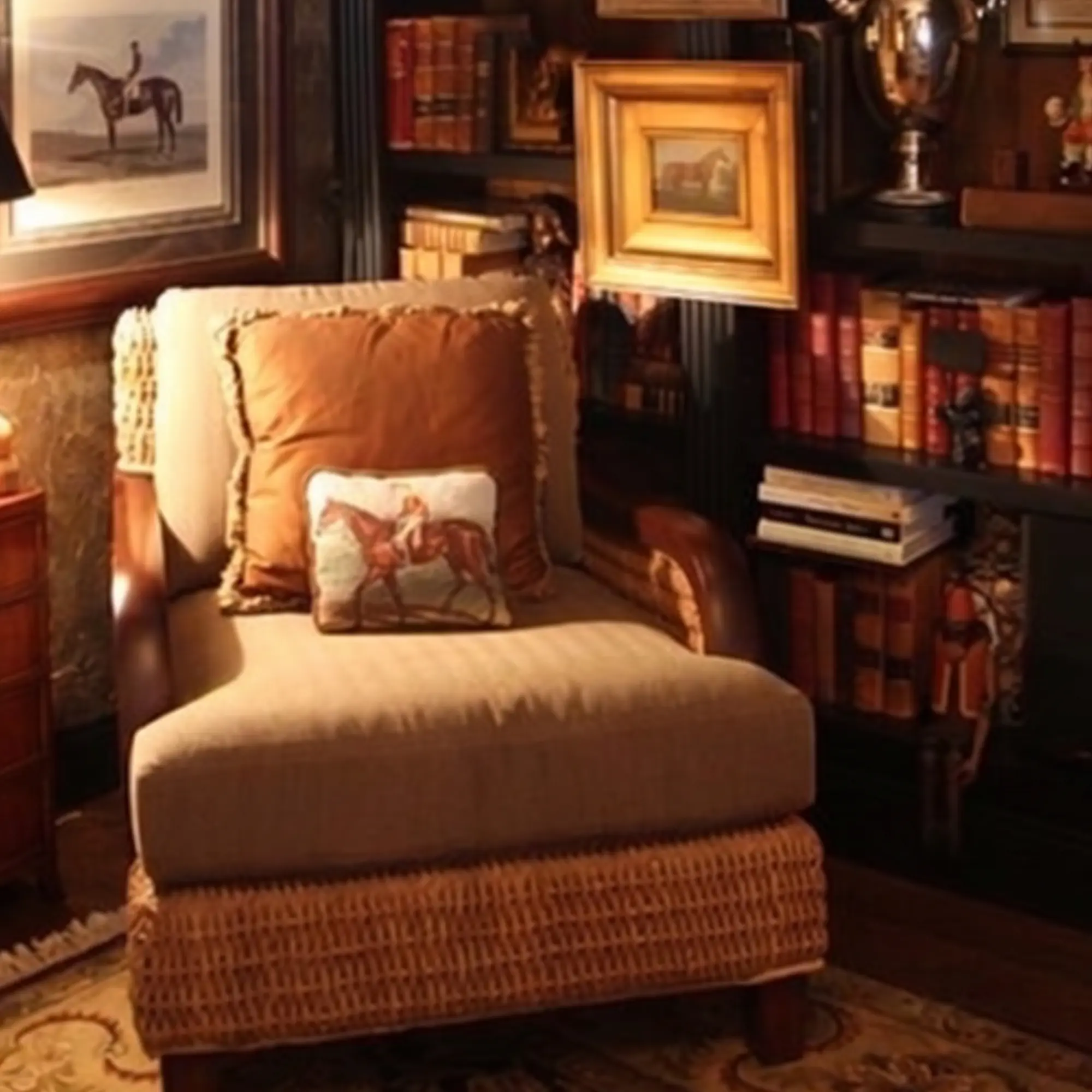
Accent chair — lower profile, open form, used to layer visual interest without anchoring the room.
What Is a Wingback Chair?
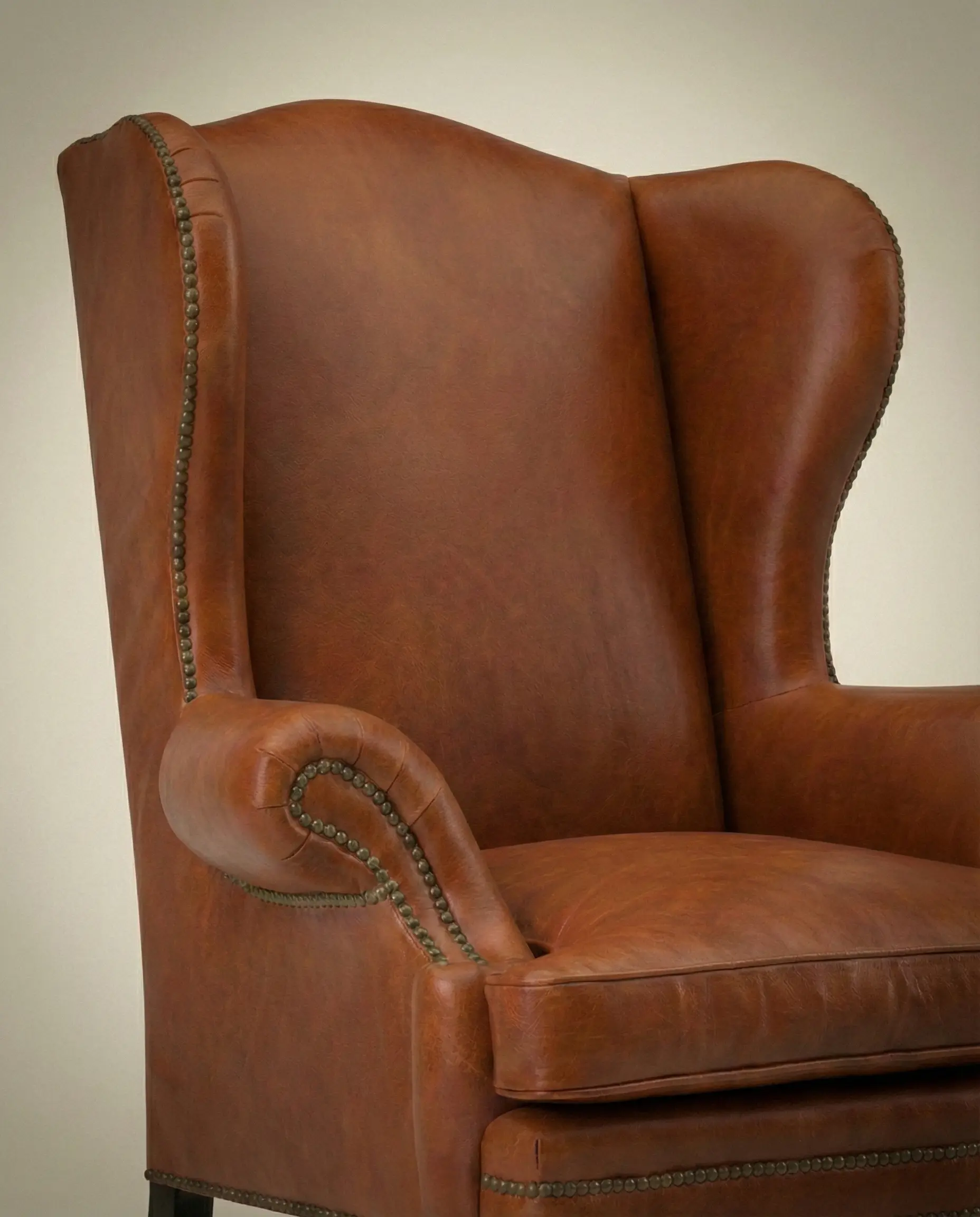
A wingback chair is a high-backed upholstered armchair with projecting side wings at the upper back. It has a defined and consistent form, regardless of period or style. The wings were originally designed to block drafts and retain warmth near a fireplace. Today they serve a different function: they introduce height, enclosure, and architectural presence into a room.
For a full account of its history, types, and dimensions, read our complete wingback chair guide. If you’re evaluating construction quality, see our guide to solid wood vs veneer before buying.
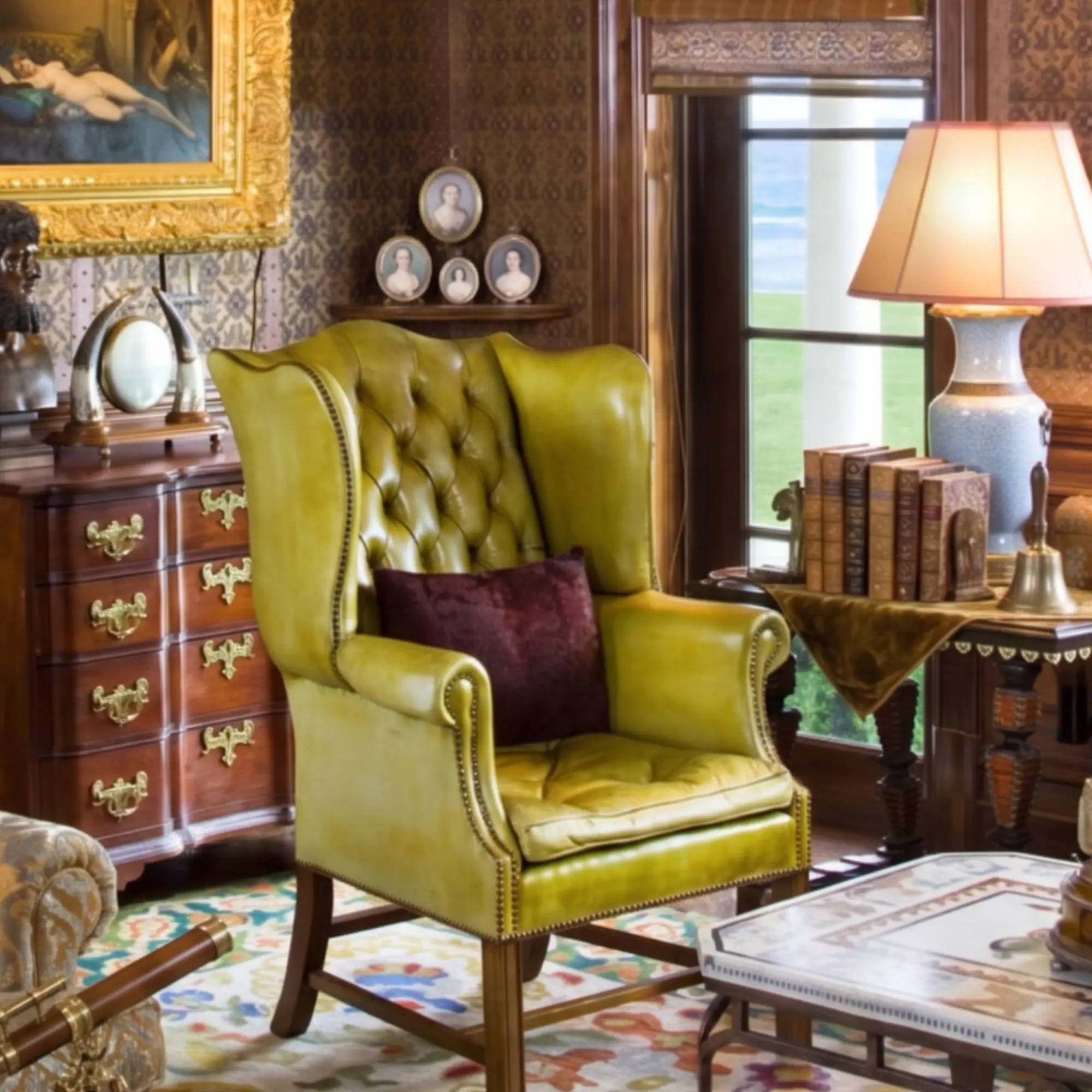
Wingback chair — high back and side wings create height, enclosure, and architectural presence.
Key Differences
The distinction comes down to structure, purpose, and what the chair asks of the room around it.
Here is a direct comparison between a wingback chair and an accent chair across structure, scale, and purpose.
When to Choose Each
Choose a wingback when…
- A room needs height and vertical presence
- Seating should feel intentional, not incidental
- Placed near a fireplace or in a reading corner
- Balancing lower sofas or ottomans
- One piece needs to anchor the entire composition
Choose an accent chair when…
- A smaller space needs a lighter visual footprint
- Layering multiple seating pieces
- Flexibility or variety matters more than structure
- Adding color or pattern without architectural weight
- The room already has strong vertical elements
Is a Wingback Chair Better Than an Accent Chair?
It depends entirely on what the room needs. Neither is objectively superior — they solve different problems.
A wingback chair is the stronger choice when a room needs a structural anchor: something with height, presence, and permanence. It is a long-term decision. The form has survived three centuries because it solves a compositional problem that never goes away.
An accent chair is the stronger choice when the room is already anchored and needs a complementary piece — something that fills, layers, or introduces contrast without competing for authority.
The question is not which is better. It is which one your room is actually asking for.
The Real Decision
A wingback chair is chosen when you want the room to feel grounded. An accent chair is chosen when you want the room to feel filled. The difference is not price or style — it is intent.
If you are trying to solve a compositional problem — a room that feels flat, unresolved, or lacking hierarchy — a wingback will do more work than most accent chairs. Its height and enclosing form create a focal point that lower seating simply cannot produce.
If the room is already well-anchored and you need a complementary piece, a well-chosen accent chair is the more flexible option.
See wingback seating in person
Scale and proportion read differently on the floor than on a screen. Visit the Saratoga showroom to compare seating, height, and material quality directly.
What is the difference between a wingback chair and an accent chair?
A wingback chair is a specific form — high-backed with projecting side wings — designed to anchor a room with height and architectural presence. An accent chair is a broad category that includes any chair chosen for visual interest, regardless of form. All wingback chairs can function as accent chairs, but the reverse is not true.
Can a wingback chair be used as an accent chair?
Yes. A wingback functions as an accent chair when placed to introduce height and visual weight into a room. The distinction is that a wingback brings structural presence that most accent chairs do not — it anchors rather than simply fills.
When should I choose a wingback over an accent chair?
Choose a wingback when you need the room to feel grounded — near a fireplace, in a reading corner, or to balance low seating. Choose an accent chair when you want flexibility, lower visual weight, or are working within a smaller space.
Where can I see wingback chairs in the Bay Area?
Reeva Sethi Home in Saratoga carries traditional and heritage-inspired seating including wingback silhouettes. Call 408-797-5283 or book a showroom visit.
REEVA SETHI writes RS Studio as a journal of proportion, material truth, and interior permanence. Read the full wingback chair guide or explore the RS Studio archive →