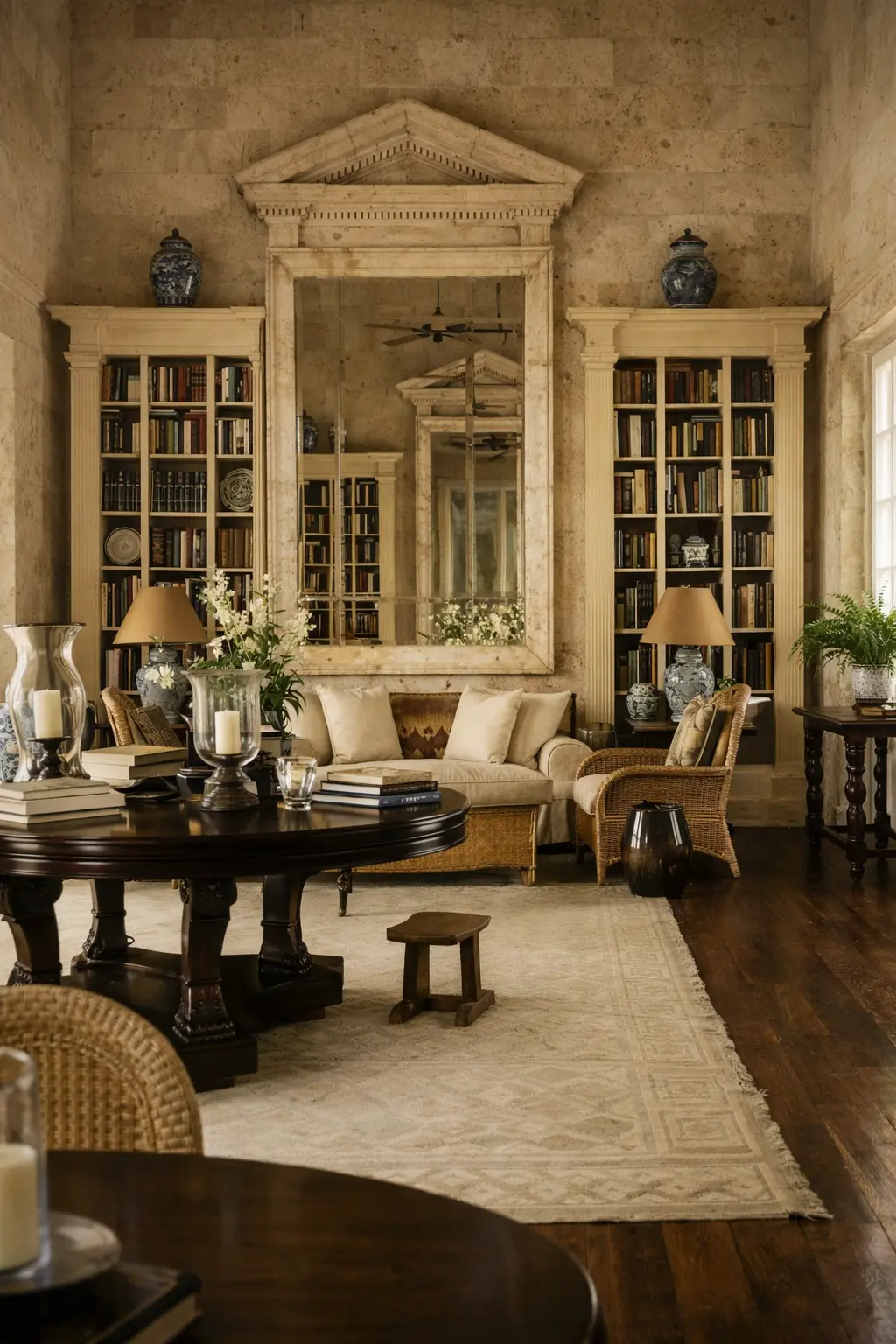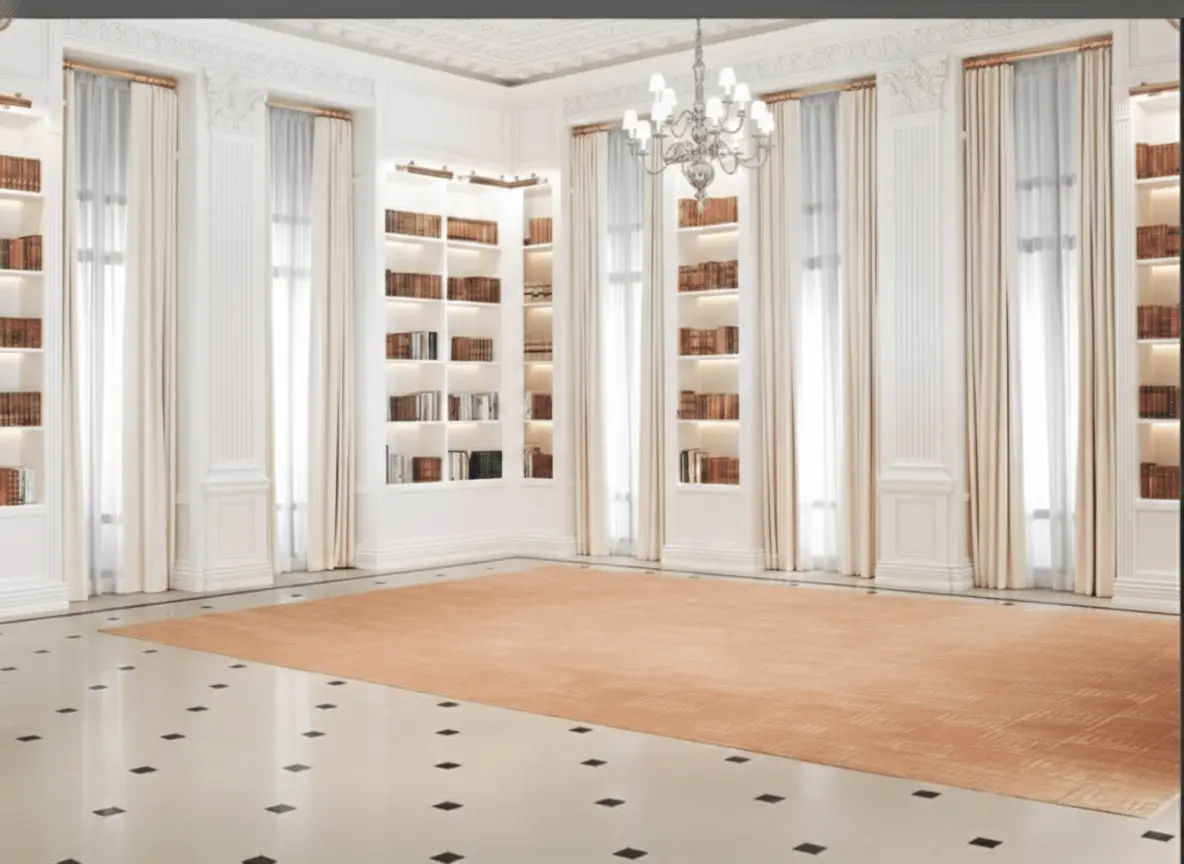
There is a particular kind of room that designers recognize immediately and clients rarely can explain. The furniture is fine. The pieces are even good. And yet the room does not cohere. It sits there, slightly unresolved, like a sentence that ends without a full stop. The sofa was chosen first — chosen well, in fact — and everything else was arranged around it in a series of accommodations that now read, collectively, as compromise.
This is not a problem of taste. It is a problem of sequence.
Most people approach a room the way they approach a blank page: they reach for the largest object first. The sofa anchors. The chairs respond. The tables fill. The rug arrives last, cut to fit what remains, and art goes on the walls wherever space allows. This sequence feels logical. It is, in practice, almost precisely backwards — and understanding why changes everything about how a room gets made.
Before any object enters a room, a designer reads the light. Not the artificial light — that comes later — but the natural light: the quality of it at different hours, the angles it travels, the walls it favors, the corners it abandons entirely. This is not a poetic exercise. It is structural information. A room with northern light will read cooler, and its materials must compensate. A room with strong afternoon western light can sustain darker walls and denser textures that would suffocate a north-facing space.
A sofa chosen before this reading is a guess. It may be a good guess, and sometimes good guesses hold. But the room built around a guess always retains a quality of improvisation — a sense that the objects arrived before anyone knew quite what the room was for.
Light also determines where furniture should not go. The chair placed directly in front of a west-facing window becomes a silhouette at the hour when the room is most alive. The dining table positioned to catch afternoon light will glare uncomfortably by six o'clock. These are not decorating considerations. They are spatial facts, and you can only see them if you read the room before you fill it.
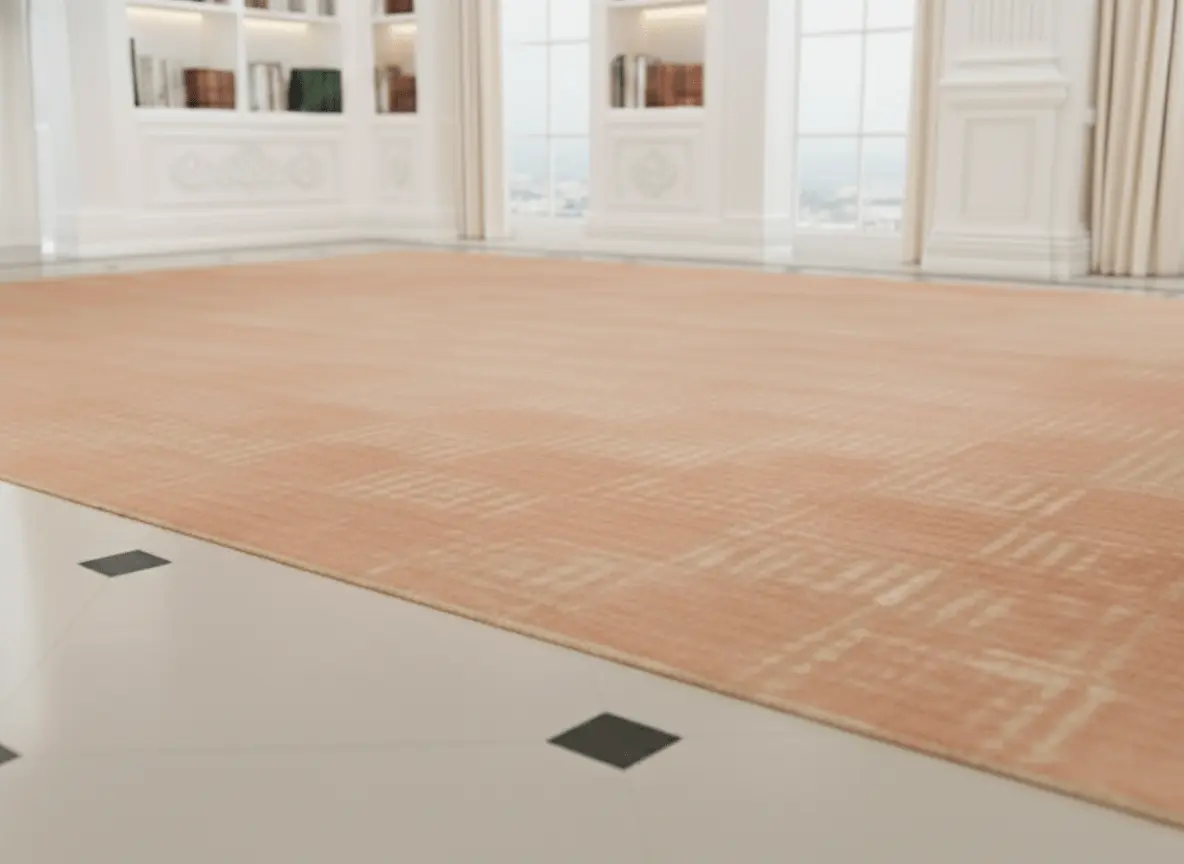
The rug is the single most consequential decision in a room, and it is almost universally made last. People treat it as the ground beneath furniture, chosen to harmonize with objects already in place. This misunderstands what a rug actually does.
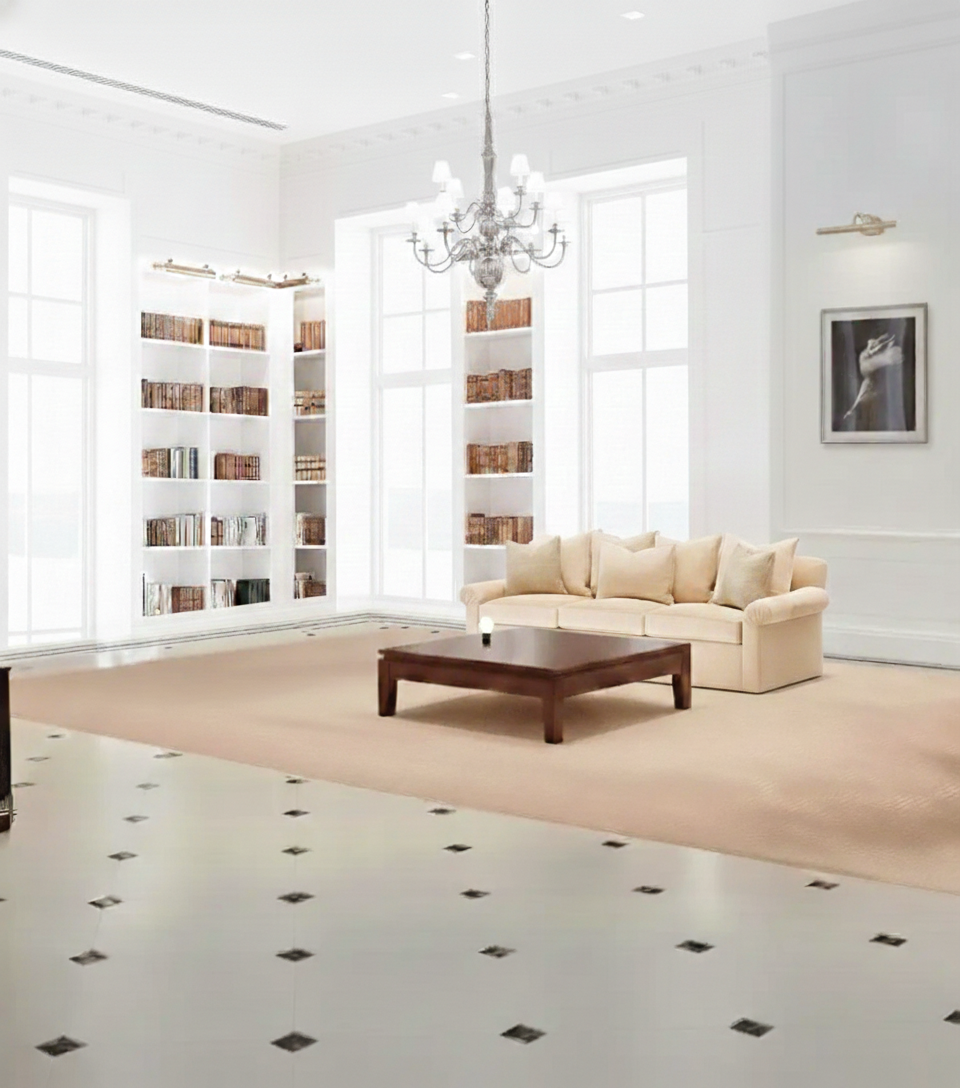
A rug defines the room's proportions. It draws a boundary — this is where the conversation happens, this is where dinner is taken, this is the reading corner — and everything placed within that boundary becomes architecture rather than furniture. A sofa on a rug occupies a room. A sofa without a rug leans against a wall.
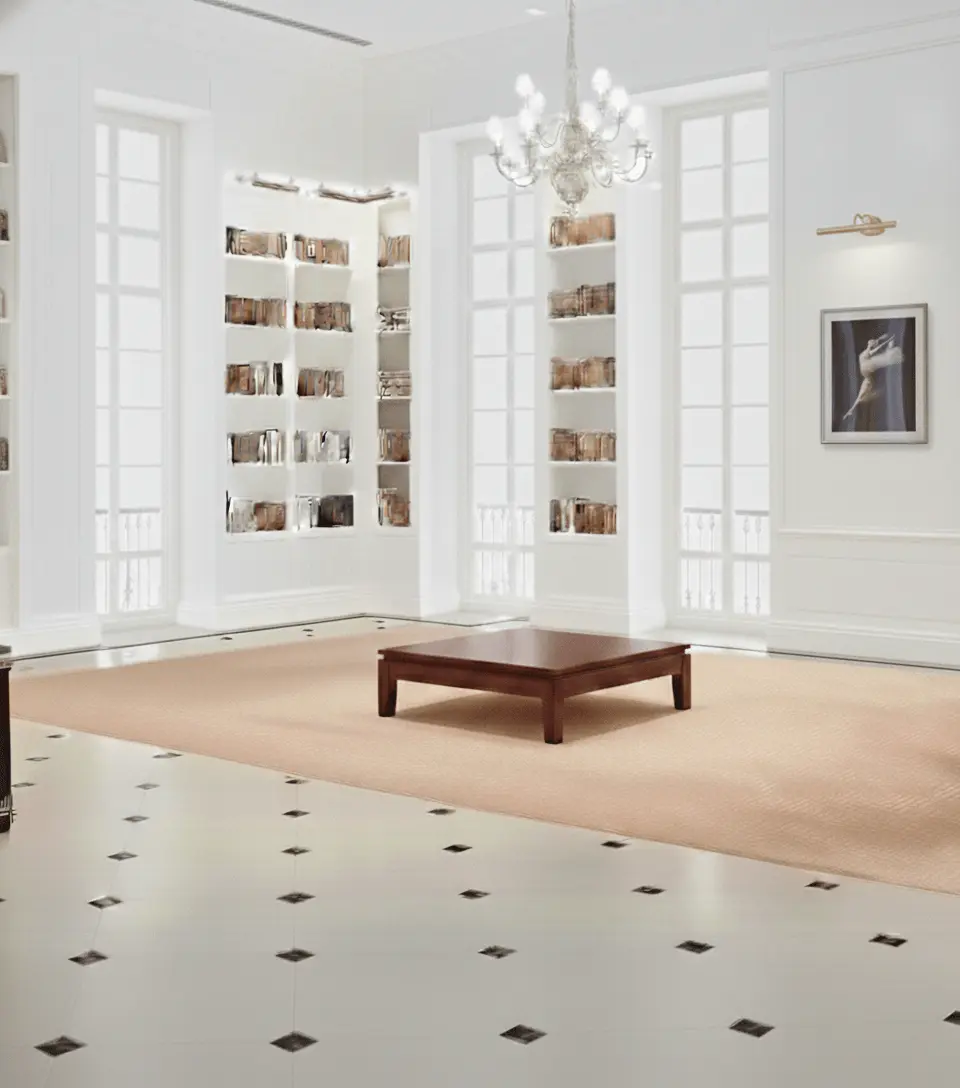
When the rug arrives last, cut to fit what the furniture allows, the room's geometry is determined by accident. The rug is always too small, because the furniture has already staked its claim. A rug that extends beneath the front legs of every piece in a conversation group — not beside them, beneath them — pulls the arrangement into a coherent field. A rug that the furniture merely approaches creates a series of isolated objects that happen to share a floor.
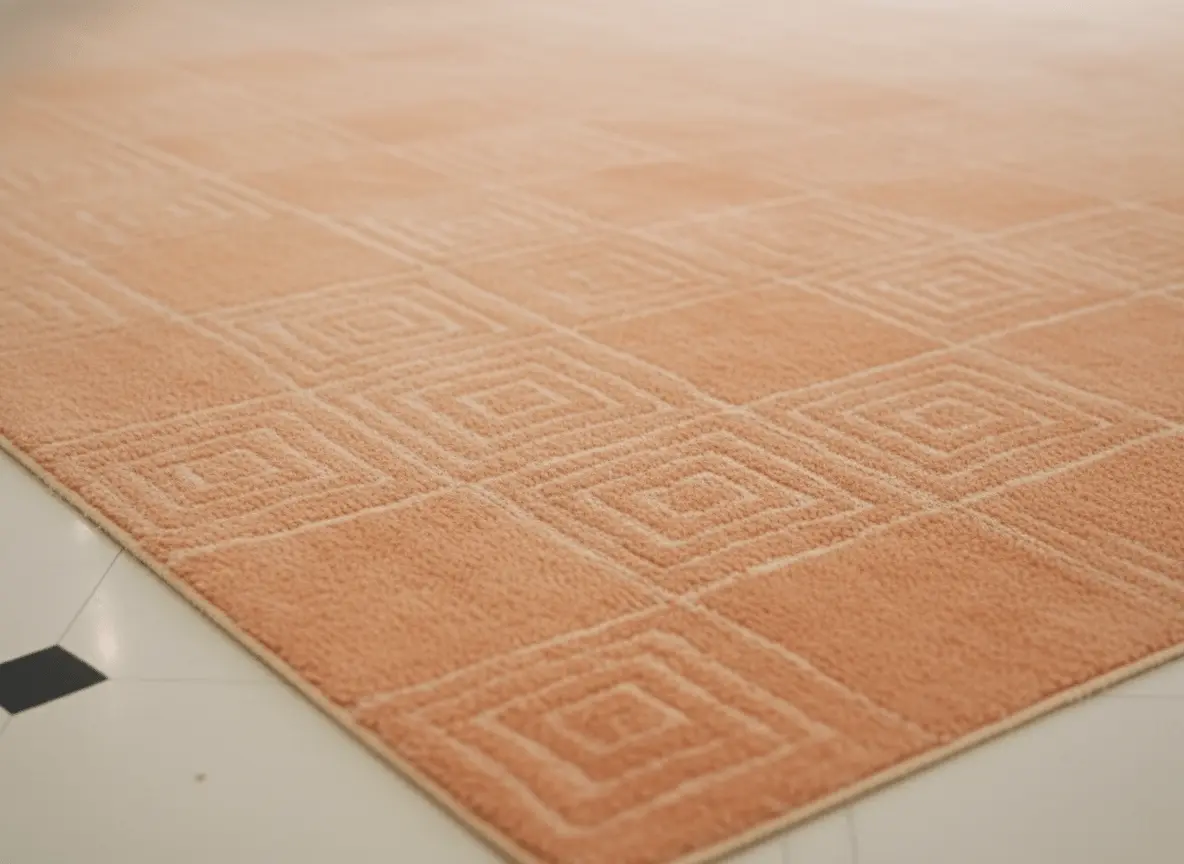
This is also why a hand-knotted rug or a significant flatweave carries a room in a way that a neutral wall-to-wall carpet cannot. The rug with presence — pattern, depth, a history of making — gives the room a visual anchor before a single piece of furniture is placed. The furniture then responds to it. This is the correct relationship.
Art placed after furniture is art accommodated. It fills the space above the sofa, bridges the gap between two windows, corrects the nakedness of a wall that no chair reached. This is not curation. It is repair.
The rooms that carry genuine authority — the kind you find in the great private homes, in the houses that have been lived in for generations rather than recently renovated — treat art as architecture. A significant painting or an important object is chosen first, and the room is organized around it. The sofa faces it. The light falls on it at the right time of day. The colors of the room relate to it rather than merely tolerating its presence.
This is not a hierarchy that requires expensive art. It requires art chosen with conviction rather than selected to coordinate. A room built around a single work chosen with genuine feeling will always surpass a room where six pieces were hung to balance the furniture below them. The first room has a point of view. The second room has inventory.
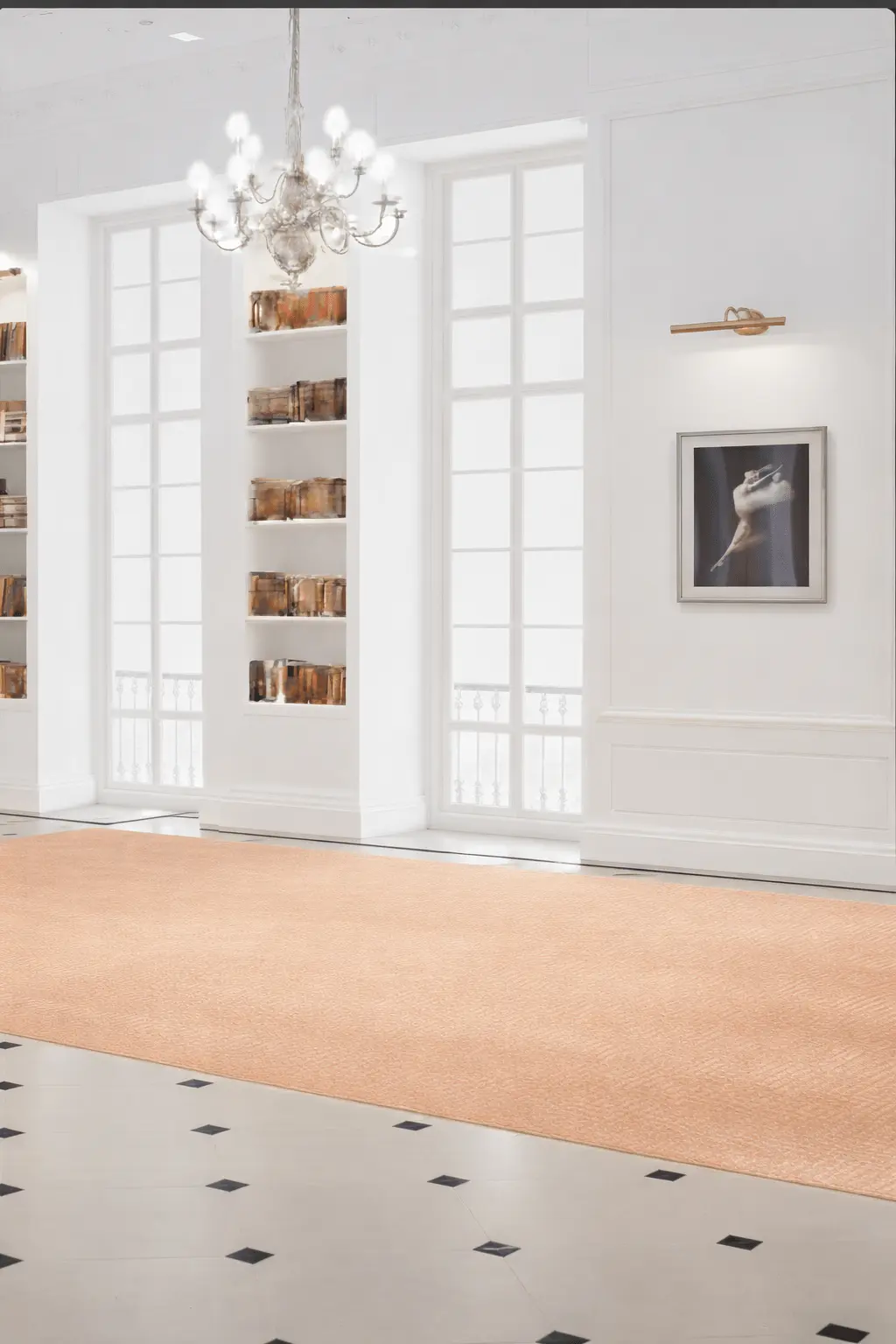
The practical instruction here is simple and almost never followed: before you choose your sofa, know what will hang above it. This single discipline — knowing the art before you finalize the seating — will determine the room's palette, its emotional register, even its scale. A large horizontal canvas calls for a long sofa. A vertical work of intimacy calls for a chair, a reading lamp, a corner that asks to be inhabited by one person at a time.
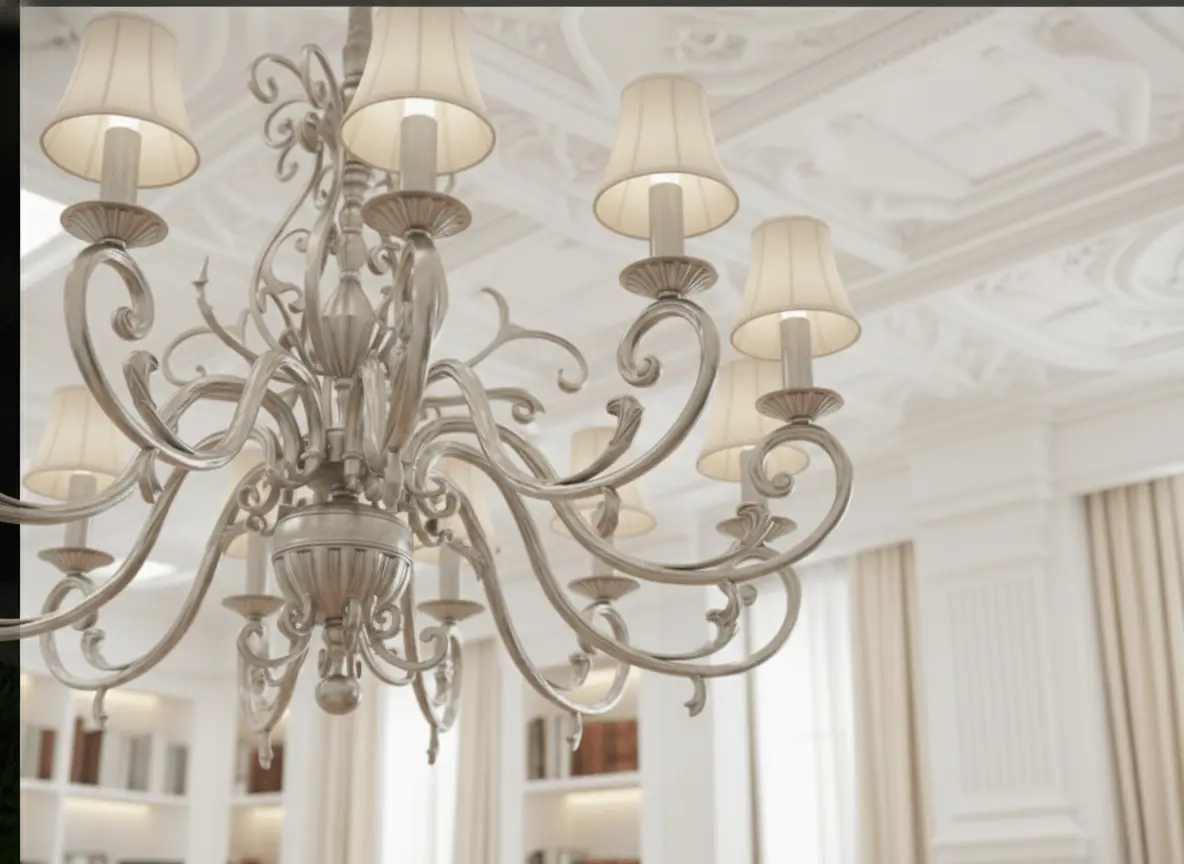
Lighting is the last discipline most people apply and the first thing that transforms a room from day to evening. A room lit only from above — from ceiling fixtures selected for convenience — is a room that has never asked itself what it wants to feel like at eight o'clock at night.
The correct sequence: decide what the room should feel like in darkness, and plan the artificial light before the furniture is placed. Where does the light need to fall for a book to be read comfortably? Where should it be warmest, and where should it recede? A table lamp at the level of a seated person creates intimacy. Overhead light creates utility. Rooms that live well at night have decided, deliberately, that intimacy is worth more than convenience.
A significant lamp — one with scale, material, and presence of its own — is furniture. It occupies space. It casts a personality as well as a light. When you choose it before the sofa and chairs, you choose it as a collaborator rather than an accessory. When you choose it after, you choose it to fill a table that arrived before the lamp was considered, and the room carries that contingency in its atmosphere every evening.
By the time you arrive at the sofa, the room has already made most of its decisions. The light has been read. The rug has defined the territory. The art has declared the room's emotional subject. The lighting plan has determined the evening atmosphere. The sofa's job is now entirely clear: it must be the right scale for the rug beneath it, the right proportion for the art above it, the right material for the light that falls on it.
This is not a constraint. It is freedom. The room tells you what it needs, and you fulfill the brief. A sofa chosen this way — chosen last, in full knowledge of everything around it — arrives in the room with a sense of inevitability. It looks as though it could never have been anything else. This is the quality that distinguishes a room that was made from a room that was filled.
The chairs follow from the sofa. The tables follow from the chairs. The objects — the books, the vessels, the things that carry personal history — arrive at the very end, placed by instinct in a room that now knows how to hold them. Nothing is accommodated. Everything belongs.
The rooms we admire most — the ones that stay in memory, that feel both inevitable and personal — were made this way. Not quickly, and not by beginning with the largest purchase. They were made by people who understood that a room is an argument, and that an argument requires a premise before it can reach its conclusion.
Read the light before you place a single object. Let the rug define the ground. Let the art establish the room's point of view. Shape the atmosphere with lighting once the room knows what it wants to feel like.
Then — and only then — choose the sofa.
You will know exactly where it belongs.