Walk into almost any furniture retailer and you will see pieces described as “solid wood,” “real wood,” “wood construction,” “engineered wood,” or “hardwood veneer.” These are not synonyms. They describe different materials, different construction methods, and very different long-term outcomes. The industry benefits from that blur. Buyers usually do not.
At Reeva Sethi Home, RS Studio approaches furniture through the lens of material honesty: what the piece is, where it will live, how it will be used, and whether it will still make sense in ten or twenty years. The collection includes solid hardwood furniture where structural integrity matters most, along with carefully executed veneer work where veneer is the right solution and honestly described. That distinction matters. A lot. Furniture does not need slogans. It needs correct specification.
There are four primary material categories behind most wood-look furniture: solid timber, veneer, MDF, and plywood. None is inherently evil. None is interchangeable. The real issue is whether the right material has been chosen for the job, and whether the description is honest.
Four materials. One honest description of each.
Solid timber means the piece, panel, leg, rail, or top is made from real wood through its thickness rather than being a thin decorative skin over another core. This is the most repairable and most enduring form of wood construction for tables, visible case pieces, and furniture expected to age well. It can be refinished, repaired, and maintained over time. In the Reeva Sethi Home furniture collection, this is the standard where structure, touch, and long ownership matter most.
Veneer is real wood, just not all the way through. A thin slice of timber is applied over another substrate, often plywood or MDF. Veneer is legitimate when used well and described honestly. It allows figured grain, stable large panels, and efficient use of valuable timber. The problem is not veneer itself. The problem is veneer being sold as though it were solid hardwood, or used in places where deep repairability matters more than surface appearance.
MDF is flat, stable, and useful in some interior applications, especially painted work, some cabinetry, and places where a perfectly smooth surface matters. It is not the material you choose when you want the visible depth, repairability, and long-term aging of real hardwood. It is vulnerable to moisture and edge damage, and once it fails, there is very little romance or repair left in the matter. Humans keep trying anyway.
Plywood is a serious construction material, not a cheap trick. Good plywood is stable, strong for panel work, and often an intelligent choice for cabinet carcasses, drawer boxes, and some structural components. It does not behave like MDF, and it should not be discussed as though it does. It is still different from a solid timber top, leg, or face panel, but used honestly it can be excellent.
The practical questions are straightforward: Can it be repaired? Does it tolerate moisture? Can it be refinished? Is it appropriate for daily family use? These are the questions that matter far more than whether the showroom lighting flatters it for twelve minutes.
| Question | Solid Timber | Veneer on Core | MDF | Plywood |
|---|---|---|---|---|
| Contains real wood? | Yes, through the part described | Yes, at the surface | Not as timber | Yes, in plies |
| Can be refinished? | Usually yes, multiple times | Sometimes, lightly | No | Depends on face construction |
| Handles moisture well? | Best when species is appropriate | Variable, depends on edge protection and use | Poor if exposed repeatedly | Better than MDF, still application-dependent |
| Holds fasteners reliably? | Yes | Depends on core | More limited over time | Usually yes |
| Repairable by a furniture restorer? | Most repairable | Sometimes, case by case | Limited | Moderate |
| Expected domestic lifespan | Often decades | Variable, depends on use and build quality | Usually shorter-term | Often strong if well made |
| Acquires patina gracefully? | Yes | At the surface only | No, it tends to look tired rather than aged | Depends on exposed face |
| Best for daily-use dining table? | Generally yes | Sometimes, with care and the right build | Not ideal | Useful structurally, less ideal as the final visible top |
RS Studio favors material honesty: solid hardwood where it matters most, veneer and plywood where they are appropriate and truthfully described. Browse the collection →
Identifying solid wood versus veneer versus MDF is not difficult. It just requires looking in the right places and ignoring the theatrical language printed on the tag.
How to tell what a piece of furniture is made of
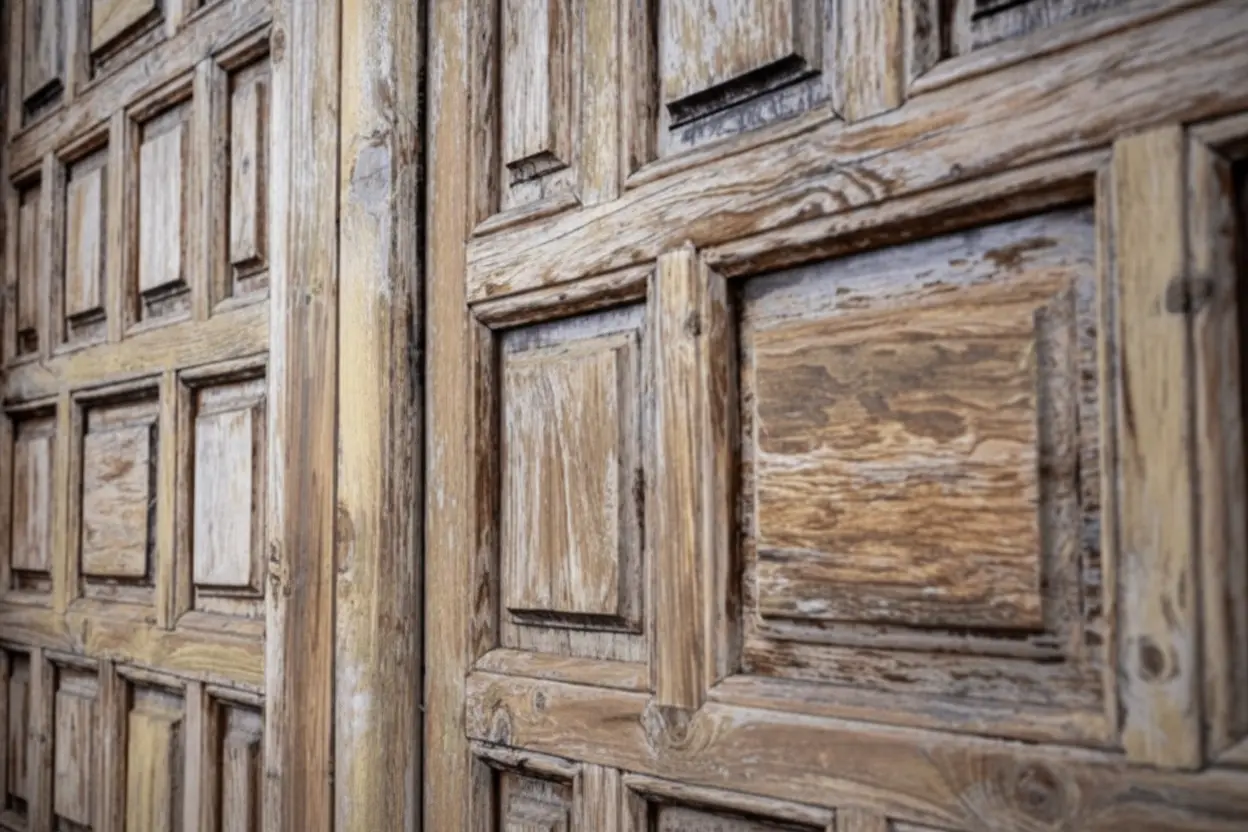
Solid timber usually shows grain that continues through the edge. Veneer often reveals a fine seam, edge banding, or a surface layer terminating over a different core. MDF edges tend to be flat, uniform, and grainless.
Manufacturers often reveal the truth on hidden surfaces. The underside of a table, the back of a cabinet, or the interior of a drawer usually tells you more than the front. In a well-made piece, hidden surfaces still make structural sense. In a deceptive one, that’s where the costume slips.
Perfect book-matching often indicates veneer. Natural board-to-board variation often suggests solid wood. Veneer can be beautiful. The point is not to demonize it. The point is to know when you are looking at surface image versus full material depth.
Weight can be a clue, but not a verdict. Some plywood pieces are substantial. Some solid timber pieces are smaller. Still, if something claims deep hardwood construction and feels suspiciously insubstantial, your skepticism is probably doing honest work.
“Solid timber throughout,” “veneered over plywood,” and “painted MDF” are honest answers. “Wood construction,” “real wood finish,” and “wood effect” are not really answers at all. They are smoke with a SKU attached.
Solid timber is not a single standard of excellence. Species matters. Density matters. stability matters. A softwood side table and a teak dining table are both technically wood. That does not make them equivalent.
Solid hardwood furniture usually costs more upfront. That part is obvious. What is less obvious is how often lower-cost pieces end up being more expensive over time because they cannot be repaired, refinished, or absorbed into the life of the home gracefully.
An MDF table or low-grade veneered table may look acceptable on day one. But once edges chip, moisture penetrates, or the surface begins to fail, the conversation shifts from care to replacement. A well-made solid hardwood table has a different life. It can be maintained. It can be refinished. It can acquire use without becoming disposable.
That does not mean every veneered piece is a bad purchase. It means you should know where you are buying beauty, where you are buying structure, and where you are buying something that will ask for replacement much sooner than the showroom suggested.
Not every furniture category carries equal consequence. A painted utility shelf is one thing. A dining table used twice a day for years is another. The right specification follows the use case.
Material honesty first. Marketing second.
Explore the full collection of furniture, handwoven rugs, table linens, blankets, and natural-material home goods selected for rooms meant to endure.
What is the difference between solid wood, veneer, and MDF furniture?
Solid wood means the relevant visible or structural part is real timber through its depth. Veneer means a layer of real wood has been applied over another core. MDF is a manufactured panel made from wood fibres and resin. These materials do not age the same way, cannot always be repaired the same way, and should not be marketed as though they were equivalent.
How can you tell if furniture is solid wood or veneer?
Check edges, hidden surfaces, and grain continuity. Veneer often reveals a surface layer over a different core, especially at edges or underneath. Solid wood usually shows more natural variation and consistent material depth. Start with the underside. It is less theatrical and therefore more honest.
Is MDF furniture bad? When is it appropriate?
MDF is appropriate in some painted cabinetry, built-ins, and controlled interior uses. It is much less compelling where edges take abuse, moisture is present, or repairability matters. The real problem is not MDF existing. The real problem is MDF pretending to be something nobler.
Can veneer furniture be refinished?
Sometimes, lightly, and only when the veneer thickness allows it. Veneer has much less sanding margin than solid timber. It can still be a legitimate construction method. It just should not be bought under the illusion that it behaves like a solid hardwood slab.
What materials does Reeva Sethi Home focus on?
Reeva Sethi Home focuses on material honesty, natural fibers, and furniture selected for long ownership. The collection includes solid hardwood where structural depth matters most, along with carefully executed veneer work over stable cores where that construction is the correct solution and openly described.
Which is better for a dining table, solid wood, veneer, or MDF?
For a dining table expected to handle years of family use, solid hardwood is usually the strongest long-term choice because it tolerates wear and can be restored. Veneer can be appropriate in some situations, but it offers less repair margin. MDF is generally not the material you want at the center of daily domestic life.
Where can I see furniture in person in the Bay Area?
Reeva Sethi Home is located at 20430 Saratoga–Los Gatos Road, Saratoga, CA 95070. Explore the furniture collection online or call 408-797-5283 to plan a showroom visit.