Furniture Guide What Is a Wingback Chair? Where the wings came from, the main types, the dimensions that matter, and how to choose one for a real room.
Three centuries ago it was built to keep the cold off a sitter's shoulders. It survives because most rooms still need one chair that stands up straight.
Listen to this guide 9 min
Narrated by AI voice
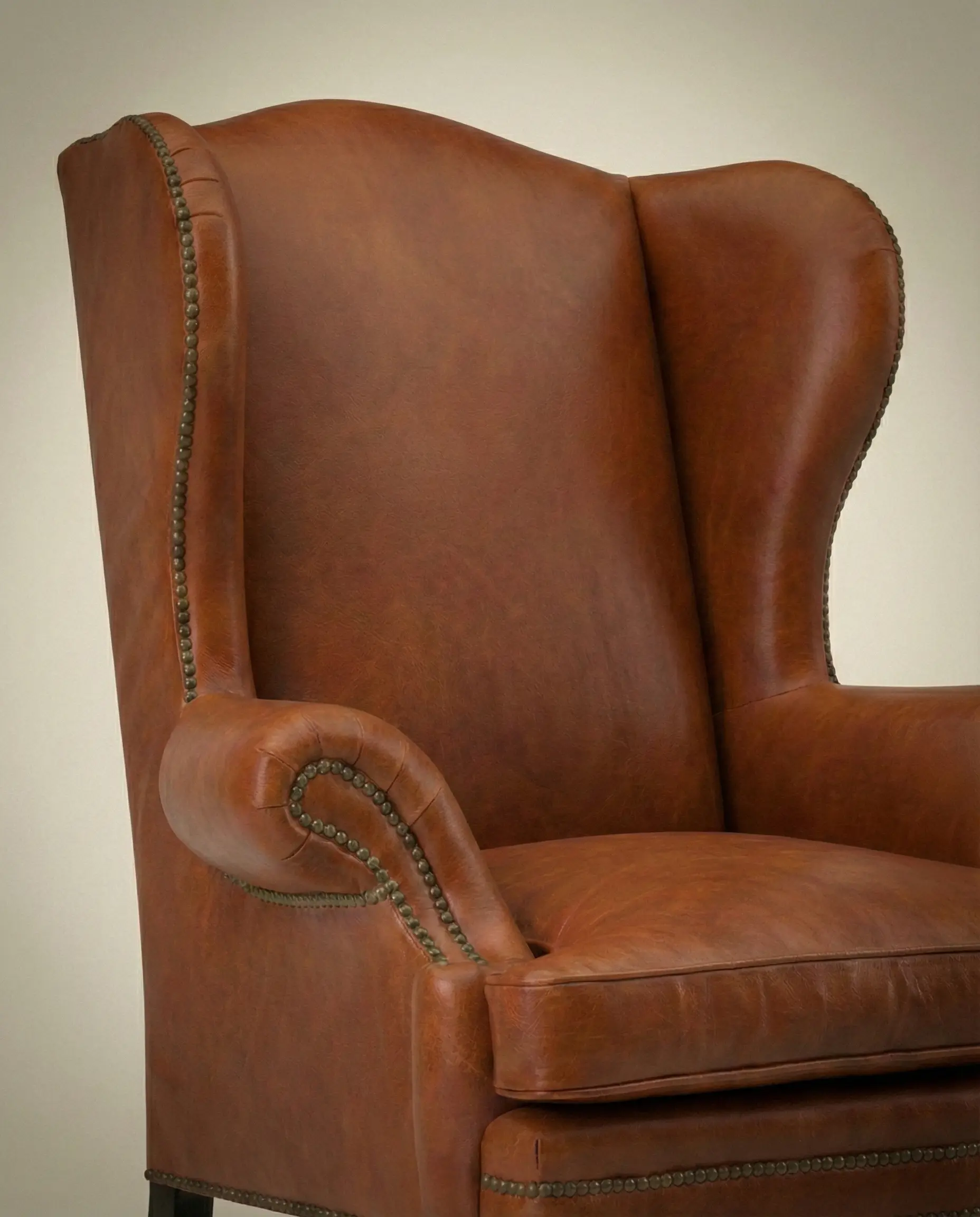
A wingback chair is a high-backed upholstered armchair with two projecting panels, or wings, at either side of the back. The form appeared in England in the late 17th century, when the wings shielded the sitter from drafts and held the fire's warmth; in its own time it was usually called an easy chair. A typical wingback stands 42 to 52 inches tall with a seat 17 to 19 inches from the floor. The main types are traditional, Queen Anne, Chippendale, barrel, modern heritage and cane.
- Also called
- Wing chair, fireside chair; in the 18th century, an easy chair
- Origin
- England, late 17th century; in America from the 1720s
- Original purpose
- Blocking drafts and holding warmth around the head and shoulders
- Defining feature
- Wings projecting forward from the upper back, usually flowing into the arms
- Typical size
- 42–52 in tall, 30–34 in wide, 30–36 in deep, seat 17–19 in high
- Best placed
- Reading corners, beside a fireplace, in studies, wherever a room needs height
- What to check
- A solid hardwood frame, a comfortable seat pitch, and wings that stay firm when you lean into them
A wingback chair is a high-backed upholstered armchair with projecting side wings near the head. It was developed in late 17th-century England to shield people from drafts and keep in the warmth of the fire, and it became one of the most recognizable seating forms in Western interiors.
That is why it still works. It is not decorative first. It gives a room height, enclosure and a fixed point, and its purpose is visible the moment you see it.
Why Is It Called a Wingback Chair?
The name comes from the two wings attached to the upper sides of the back. Before central heating, a fireplace warmed what stood directly in front of it and little else. The wings blocked side drafts and held warmth around the sitter's head and shoulders.
For most of its early life the chair went by another name. A Massachusetts easy chair of the 1750s at the Huntington Library carries a museum note explaining that 18th-century household inventories listed these pieces as easy chairs, the form we now call the wing chair. The name changed; the shape did not. Today "wingback" describes the silhouette rather than the function.
Are Wingback Chairs Still in Style?
Yes, and they never really left. Fabrics get lighter, legs get cleaner, profiles narrow, but the reason the form survives stays the same: it creates presence. A wingback anchors a corner, a reading area or a fireplace wall in a way low-profile seating cannot.
A room made only of low upholstery has nothing to stop the eye. One tall, well-proportioned chair is often the simplest fix, for the same reason a substantial chest steadies a bare wall (more on that in Settled, Not Furnished). Nor does it need to match the sofa beside it; see The Tyranny of the Matching Set. It suits traditional, collected and transitional rooms equally, and the clean-lined versions sit comfortably in warm minimalist rooms. Part of its pull is familiarity: period forms read as settled, a subject explored in The Architecture of Nostalgia.

What Is a Wingback Chair Used For?
Today a wingback works as a reading chair, fireside chair, accent chair or head-of-table chair. Its height gives it more authority than a standard armchair, which is why it is chosen when a room needs one piece with real vertical presence.
- Reading corners: the high back supports long sitting, and the wings give the seat a private, enclosed feel. It pairs naturally with a bookcase or library cabinet.
- Fireside seating: the original use, and still the most logical one.
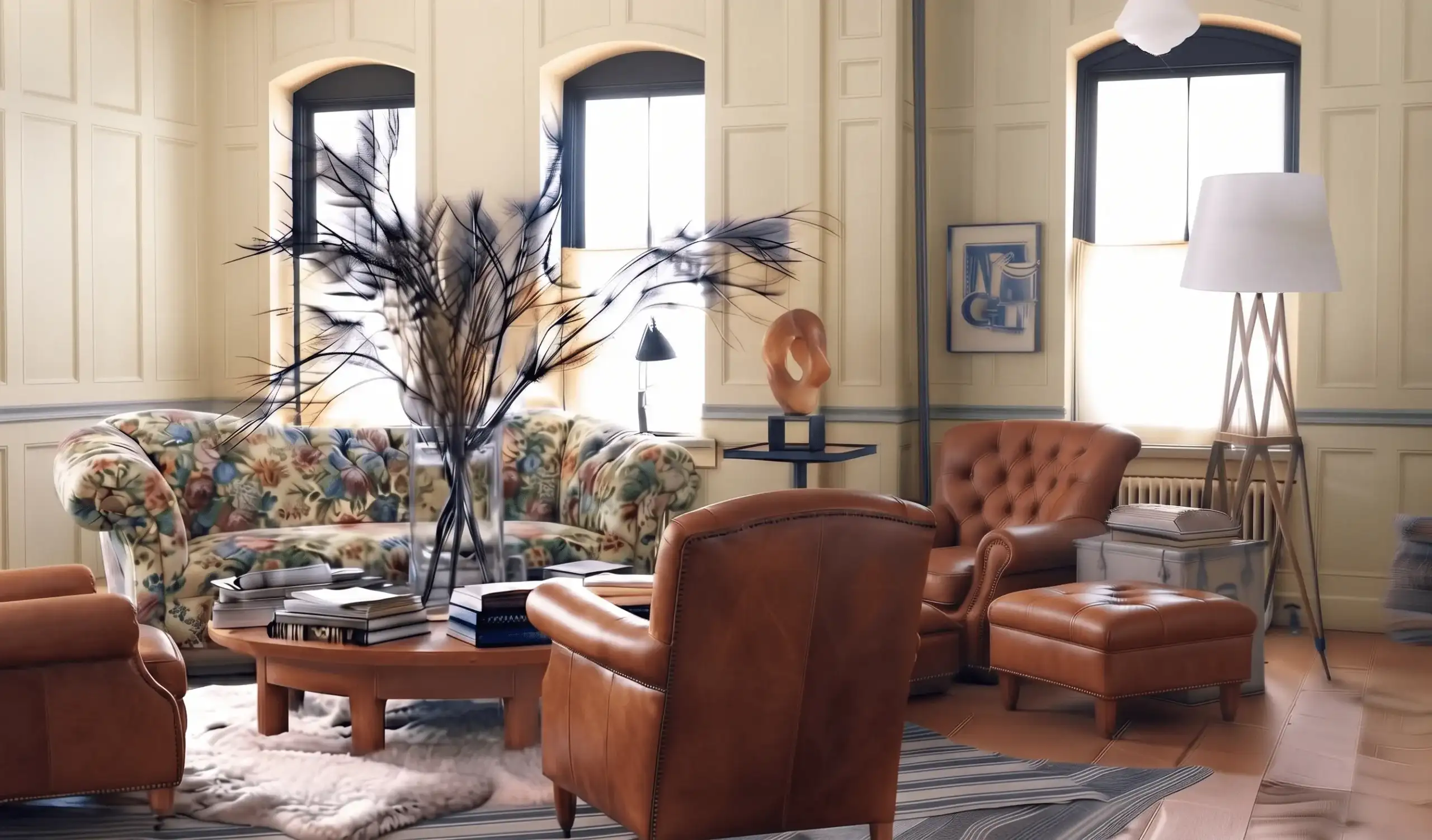
- Living rooms: a wingback adds height and balances a low sofa or ottoman. Across from a lower, open-armed bergère it makes a well-matched pair; our Bergère Chair Guide explains the difference.
- Studies and home offices: the form looks more deliberate than an open lounge chair.
- Bedrooms: where the 18th-century easy chair usually lived. A single wingback in a corner makes a reading seat without the informality of a bench.

Different Types of Wingback Chairs
The wings, the pitch of the back, the leg profile and the upholstery all change the character of the piece. These are the six you are most likely to meet.
Traditional Wingback
High back, defined wings, full upholstery and restrained legs. The reference point when most people picture a wingback, as in the Wentworth Wingback Chair.
Queen Anne Wingback
Early 18th century. Softer profile, cabriole legs, often ending in pad feet. Suits period rooms or rooms with other curved furniture.
Chippendale Wingback
Mid 18th century. Straight, square legs, often joined by stretchers, and a firmer outline. Reads more architectural than Queen Anne.
Modern Heritage Wingback
The traditional form with less ornament, tighter lines and a simpler base. For houses that want history without costume.
Barrel Wingback
The back curves continuously into the wings, making a more enveloping shape. Softer and less upright than a sharply profiled wing chair.
Cane or Wicker Wingback
Woven panels in place of upholstered wings: lighter, more open, at home on a porch or in a garden room. See the Hampshire Wicker Wingback Armchair.
Wingback Chair Dimensions
Scale matters more with a wingback than with most chairs, because it is meant to register as vertical architecture in the room. Too small and it looks decorative. Too large and it crowds everything around it.
| Dimension | Typical range |
|---|---|
| Overall height | 42 to 52 inches |
| Overall width | 30 to 34 inches |
| Overall depth | 30 to 36 inches |
| Seat height | 17 to 19 inches |
| Seat width | 20 to 24 inches |
| Wing projection | 8 to 12 inches |
| Arm height | 24 to 27 inches |
These numbers are older than they look. An English wing chair of 1725–1750 at the Philadelphia Museum of Art stands 44 inches tall with a 17-inch seat, and an English easy chair of 1710–1730 at Colonial Williamsburg stands 49 inches with a 19-inch seat. Three hundred years on, the proportions have barely moved.
In a room with an eight-foot ceiling, the lower half of the range usually reads best; tall windows and a substantial fireplace can carry 48 inches or more. A chair too small for its room is one of the quieter reasons a room feels wrong, which is why space planning belongs before shopping; our guide to planning a room before you buy furniture shows how. For exact specifications on a specific piece, call 408-797-5283.
The History of the Wingback Chair
The wingback emerged in late 17th-century England, in houses heated by open fires and still full of drafts. The Museum of Fine Arts, Boston describes the easy chair as a new form of the Baroque period that grew out of invalids' chairs and reclining chairs, and notes that it usually stood in the bedchamber rather than the parlor.
It was expensive to make, because it used so much imported fabric. In America, where it arrived in the 1720s, it was often kept for the head of the household, the elderly or the infirm, and upholstered to match the bed hangings and curtains of the room.
In the Queen Anne period the chair took on softer lines and cabriole legs. By the Chippendale years it had grown more formal, with straight legs and firmer profiles that suited libraries and drawing rooms. As houses warmed, the chair moved downstairs and stayed, because it solved a problem that never went away: how to place one chair in a room and make it look intended. (The full story is in The History of the Wingback.)
How to Choose a Wingback Chair
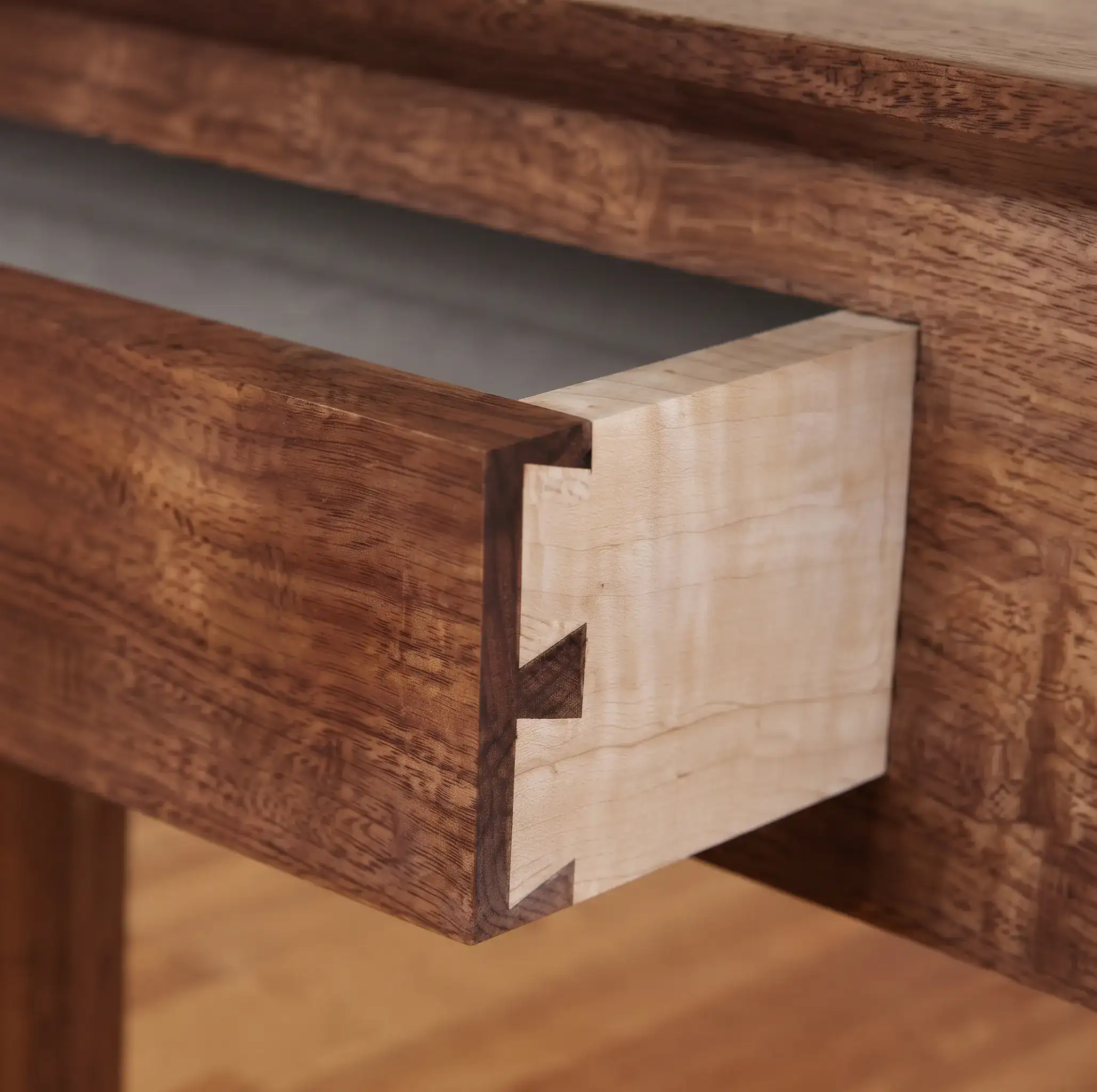
A good wingback is defined by proportion, frame and restraint. The form already carries enough authority; it needs the right height, a sound hardwood frame, a comfortable seat pitch, and upholstery that settles rather than collapses. To judge construction, see How to Tell If Furniture Is Well Made and our comparison of solid wood and veneer.
Five decisions that decide whether a wingback works in your room
For a closer comparison, read How to Choose a Wingback Chair and Wingback or Accent Chair?
A Chair Worth Reupholstering
A well-made wingback is reupholstered, not replaced. The frame outlives several covers, and the chair grows more particular to its house with each one. That is the test worth applying in the showroom: will this frame still be sound when the second cover goes on? Our furniture care guide covers the years in between, and What Is Heirloom Furniture? explains what makes a piece last long enough to pass on. The same thinking runs through our heritage furniture and the RS Studio essay Permanence.
To see how a wingback sits beside your own furniture, bring a photograph and the room's measurements to our Saratoga showroom, or arrange a home consultation. For whole rooms, our interior design services work across Saratoga, Los Gatos and Palo Alto; The Saratoga House shows how we approach homes here.
See the Wentworth Wingback in person.
Built on a kiln-dried solid mahogany frame, with brass nailhead trim. On view in our Saratoga showroom, with white-glove delivery across the US.
Reeva Sethi Home is a heritage furniture showroom at 20430 Saratoga–Los Gatos Road, Saratoga, California, serving Saratoga, Los Gatos, Los Altos, Monte Sereno, Palo Alto, San Jose and the greater Bay Area, with white-glove delivery across the US and international delivery on request.
Saratoga, CA 95070
11am – 4pm · call ahead
Bespoke sourcing
What is a wingback chair?
A wingback chair is a high-backed upholstered armchair with projecting side panels, or wings, on either side of the back. It developed in late 17th-century England to shield the sitter from drafts and hold warmth near the fireplace.
Why is it called a wingback chair?
Because of the two wings projecting from the upper sides of the back. In the 18th century the same chair was usually called an easy chair; "wing chair" and "wingback" describe its shape.
Are wingback chairs still in style?
Yes. Fabrics and proportions change, but the form has never gone away. A wingback gives a room height and a fixed point that low seating cannot, which is why it suits traditional, transitional and modern rooms alike.
What are the standard dimensions of a wingback chair?
A standard wingback chair is usually 42 to 52 inches tall, 30 to 34 inches wide and 30 to 36 inches deep, with a seat 17 to 19 inches from the floor.
What are the different types of wingback chairs?
The main types are traditional, Queen Anne (cabriole legs, softer lines), Chippendale (straight legs, firmer outline), barrel (the back curves continuously into the wings), modern heritage (pared-back detail) and cane or wicker.
What is the difference between a wingback chair and an accent chair?
A wingback chair is defined by its high back and projecting side wings, while an accent chair is a broader category chosen mainly to add visual interest. A wingback gives more enclosure and a stronger presence in a room.
Is a wingback chair comfortable for reading?
A well-built one is. The high back supports the head and the wings enclose the shoulders, which suits long sitting. Test the seat depth and pitch in person, because a seat that is too deep or too upright undoes the shape.
Where should a wingback chair go in a room?
Beside a fireplace, in a reading corner or with its back to a wall. Because a wingback blocks sightlines more than a low chair, it rarely works floating in the middle of a room.
Where can I buy a traditional wingback chair in the Bay Area?
Reeva Sethi Home in Saratoga, California carries heritage-inspired seating, including the Wentworth Wingback Chair, built on a kiln-dried solid mahogany frame. The showroom at 20430 Saratoga–Los Gatos Road is open Monday to Saturday, 11am to 4pm; call ahead on 408-797-5283.
RUCHI SETHI writes RS Studio as a journal of proportion, material truth, and interior permanence — essays for those who want to understand not just what a room looks like, but why certain pieces endure. Read the full RS Studio archive →