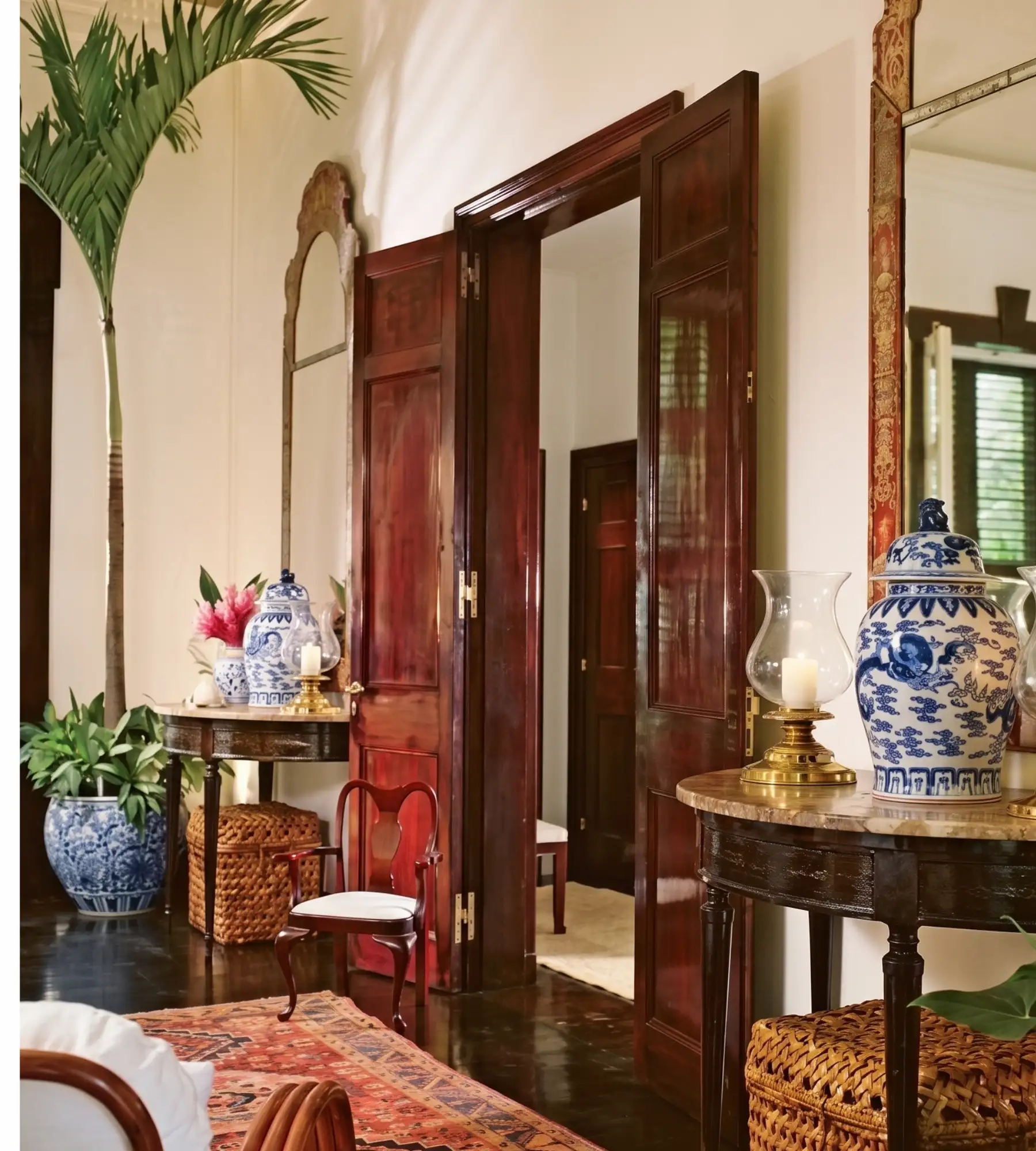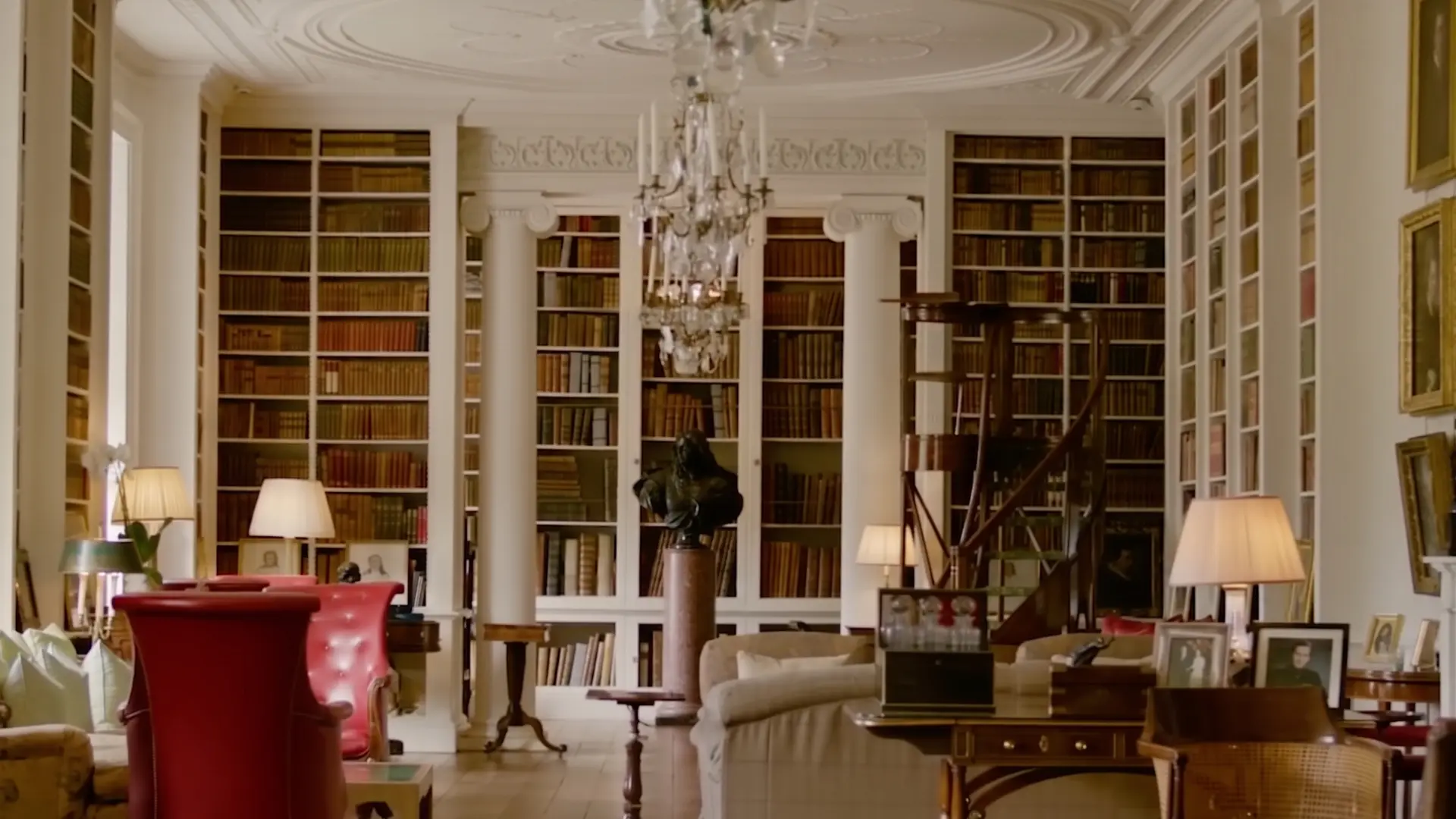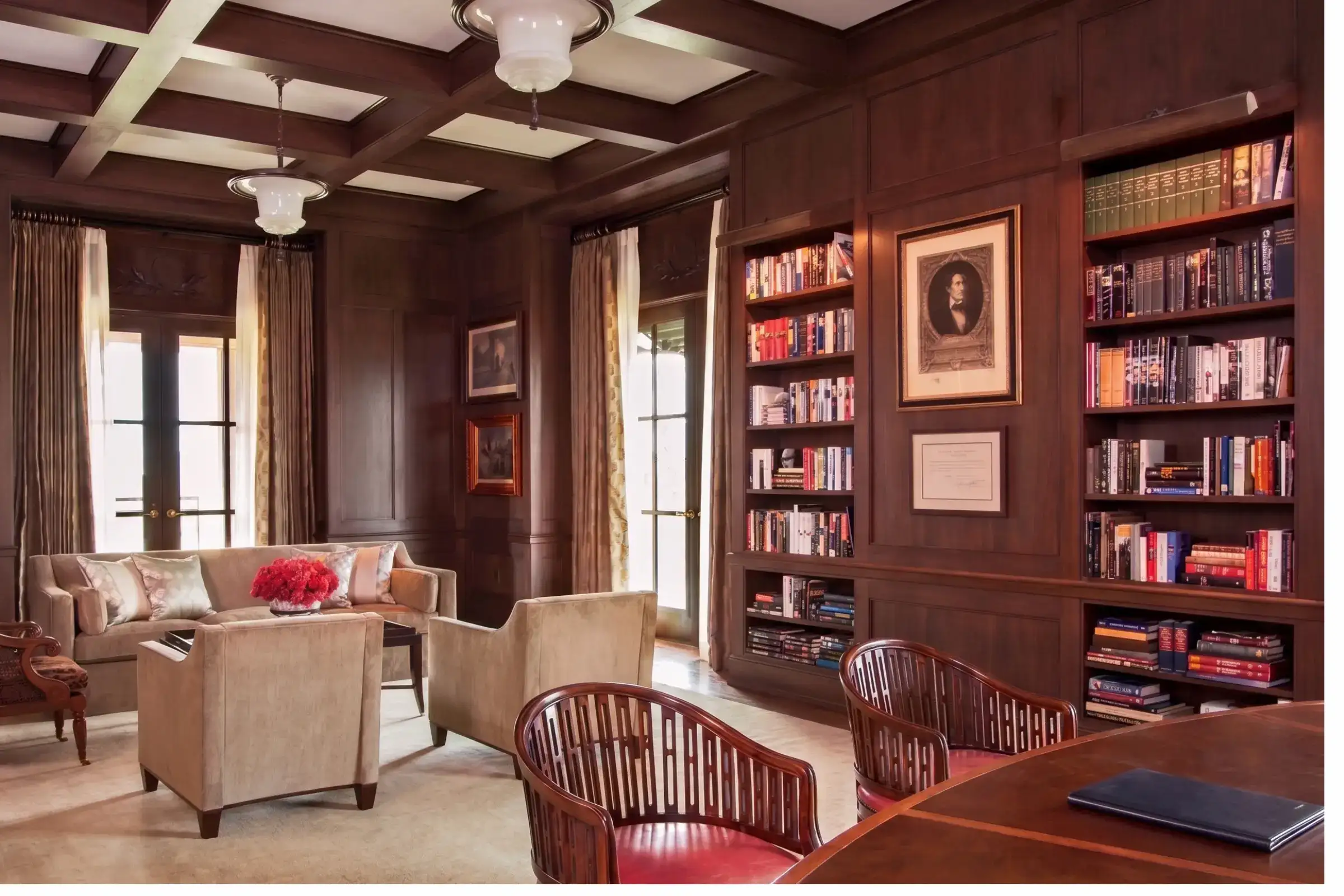
There was a period when the grand homes of America almost all had the same language.
You walked into a dining room and found walnut beneath your hand. Mahogany along the walls. Libraries lined with darker woods that grew richer with time rather than lighter with age.
The rooms were not trying to feel dramatic. They reflected what people believed a home should become: something that gained character as it lived with you.
Then something shifted.
England, 1720 The Walnut Shortage
For most of the seventeenth and eighteenth centuries, English country houses were furnished in oak and walnut. Oak carried the structure of the house itself: beams, floors, and panelling. Walnut belonged to the cabinetmaker. It carved cleanly, took a deep polish, and darkened with age into a colour somewhere between honey and bronze. The great Queen Anne and early Georgian furniture that filled the long galleries of the period was almost entirely walnut.
Then, around 1720, European walnut supplies began to decline, partly due to severe winters that damaged large walnut populations across parts of France and the Rhineland. Cabinetmakers in London turned to a wood that had been arriving in small quantities from the Caribbean and Central America for decades: mahogany.
Mahogany altered the language of furniture itself.
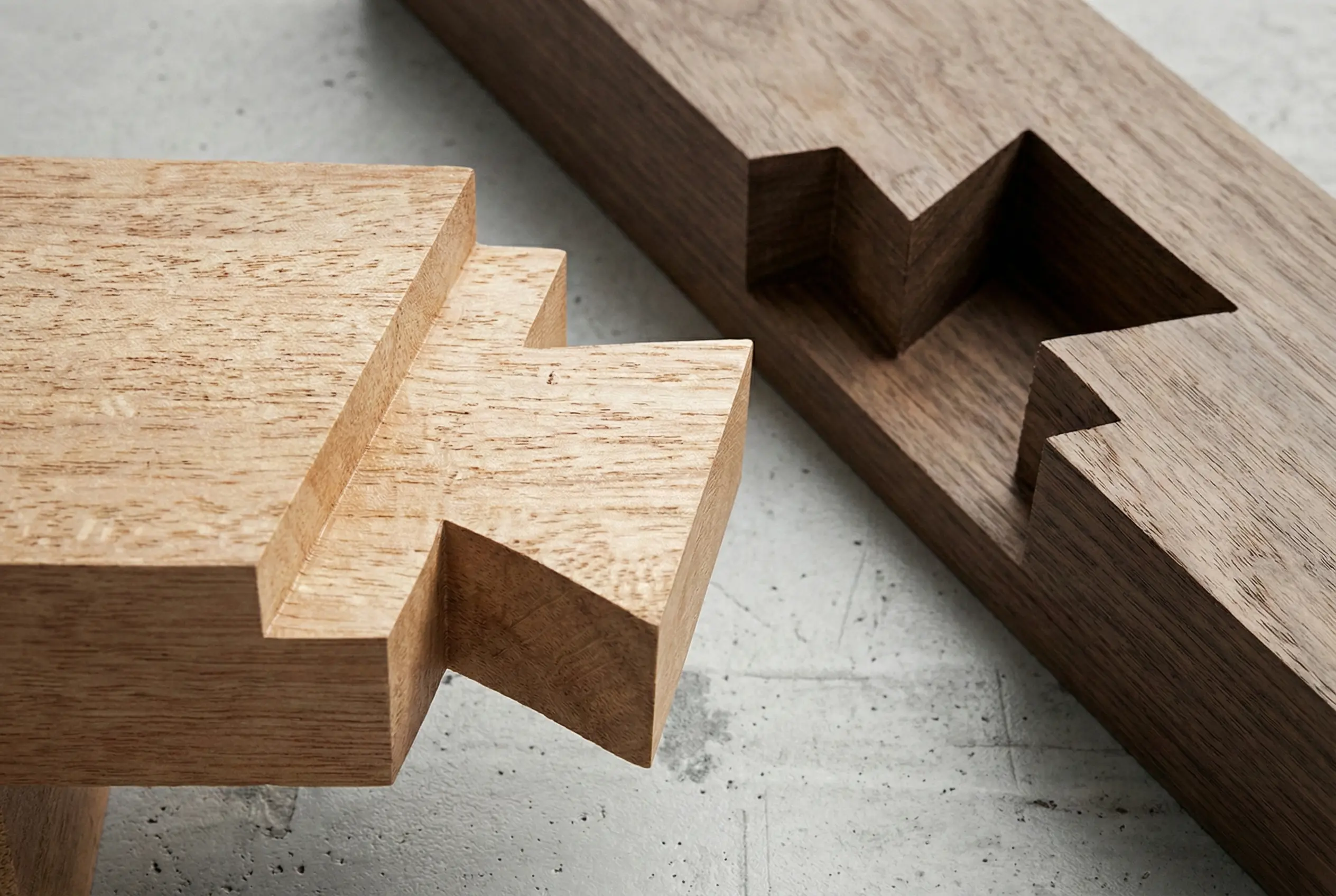
It was denser than walnut, more stable in changing humidity, and almost immune to woodworm. It could be cut into wider boards than any European hardwood. It carved with a precision walnut could not match. Above all, it took a polish so deep that the great cabinetmakers of the period, Chippendale, Hepplewhite, Sheraton, built their reputations on it.
You can read more about how materials of this kind age over time in Materials That Endure, and about the structural and visual differences between specific woods in our piece on mahogany furniture and the woods beneath the surface.
America, 1850 The Gilded Age in Dark Wood
By the middle of the eighteenth century, mahogany was the wood of the English ruling class. Dining tables, library shelves, writing desks, long conference tables. Mahogany appeared almost everywhere authority gathered. When the British built homes in the American colonies, they brought the wood with them.
In the new American republic, the same hierarchy held. The early Federal-period houses of Boston, Philadelphia, Charleston, and New York were furnished in mahogany imported from the West Indies. Walnut, now sourced from American forests, returned as the secondary cabinet wood. Cherry came into use for slightly more modest houses. Rosewood, darker and denser still, appeared in the most expensive parlours of the nineteenth century.
These were not stylistic choices. They were assumptions. A house of permanence was furnished in dark wood the way a serious meal was eaten on porcelain. The question of whether a dining table should be mahogany was no more debated than the question of whether it should have four legs.
This continued, with only minor variation, for nearly two hundred years.

The Victorian and Edwardian periods deepened the tradition rather than altering it. American Gilded Age houses, the Vanderbilt mansions, the Newport cottages, the great Chicago and Philadelphia townhouses, were finished in mahogany, walnut, oak, and rosewood. Library panelling darkened with age and fire smoke. Floors were laid in dense, close-grained hardwoods and oiled rather than stained.
Furniture from this period was built to be inherited rather than replaced. We've written more about what separates that kind of construction from contemporary furniture in what makes furniture heirloom quality.
Denmark, 1954 Scandinavia Arrives
The shift came slowly, and it came from a small generation of designers.
Beginning in the 1930s, Alvar Aalto in Finland, Kaare Klint and Hans Wegner in Denmark, and Bruno Mathsson in Sweden began designing furniture in pale local woods: birch, beech, and especially light Nordic oak and ash. The aesthetic was deliberate. After the heavy carved furniture of the Victorian period, the Scandinavians wanted air. They wanted rooms washed in northern light, even in the long winters when there was little.
For two decades this work circulated mostly in design journals. The Second World War ended, and it crossed the Atlantic.
The exhibition that changed everything was Design in Scandinavia, which toured twenty-four American and Canadian cities between 1954 and 1957. American consumers, exhausted by the carved heaviness of Edwardian furniture, saw light wood for the first time and wanted it. By the end of the 1950s, teak, imported from Burma and Thailand into Denmark and then reshipped to American showrooms, had become the wood of the modern home.
Teak was the bridge. It was still warm and still recognisably a wood with character, but it was paler than mahogany and read as new rather than inherited. The Eames chairs and Saarinen tables that defined American midcentury interiors were largely teak, walnut, or rosewood, with the rosewood not yet endangered and the walnut now sliced into thin veneers over plywood frames.
That move from solid wood to veneer over engineered cores was one of the quietest and most consequential shifts in furniture history. We've written about it in solid wood furniture vs veneer.
By the 1970s the darker Victorian house had begun to feel inherited rather than aspirational. Lighter rooms became the new default.
Everywhere, 2010 The Pale Decade
Through the 1980s, the dominant wood lightened further. Whitewashed oak appeared. Pickled pine became the default for cottage and country interiors. By the 1990s, maple and birch were the cabinet woods of choice in American kitchens.
Then, around 2010, a single specific aesthetic began to take over: very pale, almost white oak, with a matte finish, set against white walls and white kitchens. It was first championed by a small number of Belgian and Scandinavian designers, then picked up by American shelter magazines, then mass-marketed by furniture retailers, then licensed onto every flooring catalogue in North America.
From roughly 2010 through the mid-2020s, this became the default. White oak floors, white oak cabinets, white marble counters above them. The walls and the upholstery and the linen drapes all kept the same pale register. It was the colour palette of a Mediterranean villa applied to homes in climates that did not have Mediterranean light.
It produced rooms that were photographable. It also produced rooms that felt slightly weightless. Houses began to look more like one another than they had at any point in the previous two hundred years.
Something specific goes wrong in rooms that have lost their depth, and we've written about the architectural and material reasons for it in why some rooms feel calm.
Now The Return
Something is happening now.
Walnut has begun returning to American kitchens. Mahogany furniture, dismissed for decades as Victorian, is being bought by people in their thirties and forties for prices that would have astonished their parents. Houzz, which tracks the searches of seventy million American homeowners, reported that searches for "dark wood" rose 187 percent in the first three quarters of 2025 compared with the same period the year before. Searches for "wooden ceilings" rose 275 percent. Searches for "chocolate brown" rose 153 percent.
The shift is beginning to appear outside trend reports as well. Showrooms, designers, and newer homes have started bringing darker woods back into rooms after years of pale interiors.

Not because people suddenly decided walnut was fashionable again. Perhaps because rooms had begun to feel weightless. A generation that grew up in pale kitchens may now associate paleness less with calm and more with sameness. The houses that were photographed most often during the white-oak decade now look most clearly like the period that produced them, the way harvest gold appliances now date a kitchen to 1974.
The dark wood returning is not the dark wood of the nineteenth century. It is not heavy carved mahogany or claw-footed walnut. It is lighter in shape than its ancestors, with leaner profiles, less ornament, simpler lines. But the colour is back. The sense of permanence is back. Rooms are beginning to hold light rather than simply reflect it.
How to Buy Into the Return
The considered approach to acquiring dark wood now is the same one that produced the long-lasting interiors of the nineteenth century: slowly, deliberately, with attention to where each piece will sit and how it will age. The mistake most people make is treating it as a trend they need to adopt all at once.
If you are building a room around darker woods, we've written about the slow-acquisition approach in how to decorate like a collector, not a consumer, and about the broader question of which materials reward attention over time in materials that endure.
Five decisions that determine whether dark wood works in your room
See the walnut and mahogany pieces in person
The walnut, the mahogany, and the rich-grained woods we work with at the studio are selected for the way they deepen rather than date. Visit the Saratoga showroom to compare grain, weight, and finish in person.
Reeva Sethi Home is located at 20430 Saratoga–Los Gatos Road, Saratoga, California. The showroom is based in Saratoga and works with homeowners and designers throughout the Bay Area.
Saratoga, CA 95070
11am – 4pm
Bespoke sourcing
People often think they are choosing a colour when they choose wood.
I think they are usually choosing a feeling.
Some woods make a room feel lighter.
Some make a room feel rooted.
Perhaps that is what has been returning all along.
Why is dark wood coming back?
Dark wood is returning because rooms had begun to feel weightless. After roughly fifteen years of pale oak and white interiors, homeowners are choosing walnut, mahogany, and chocolate-toned woods for depth and warmth. Houzz reported searches for "dark wood" rose 187% in the first three quarters of 2025.
What was the original wood used in English country houses?
English country houses were furnished primarily in oak and walnut from the 17th and early 18th centuries. Oak carried the structure of the house. Walnut belonged to the cabinetmaker, used for chests, bureaus, and chairs with cabriole legs.
Why did mahogany replace walnut?
Around 1720, European walnut supplies declined sharply after severe winters damaged walnut populations in France and the Rhineland. English cabinetmakers turned to mahogany, which had been arriving in small quantities from the Caribbean. Mahogany was denser, more stable, less prone to splitting, and took a deeper polish than any European hardwood.
When did pale wood become popular?
Pale wood gained popularity in America after the Design in Scandinavia exhibition toured twenty-four American and Canadian cities between 1954 and 1957. By the late 1950s, teak had become the wood of the modern home. The trend toward pale woods deepened through the 1980s and 1990s and culminated in the white-oak-and-white-walls aesthetic that dominated from roughly 2010 to the mid-2020s.
What dark wood furniture is most popular in 2026?
Walnut and mahogany are the dominant dark woods returning to American homes. Houzz reports searches for "dark wood" rose 187%, "wooden ceilings" rose 275%, and "chocolate brown" rose 153% in the most recent reporting period. The dark wood returning today is generally lighter in shape than its Victorian ancestors, with leaner profiles, less ornament, and simpler lines.
Is dark wood furniture outdated?
Dark wood furniture is not outdated. It was the dominant wood in homes built for permanence for nearly three hundred years before the pale-wood era of 1954 to 2025. Search and design trends suggest it is returning to American homes after a fifteen-year absence.
Where can I buy dark wood furniture in the Bay Area?
You can view solid hardwood furniture in walnut, mahogany, and other heritage woods at Reeva Sethi Home in Saratoga. Call 408-797-5283 or book a showroom visit.
Houzz U.S. Emerging Trends Report (2025)
Design in Scandinavia exhibition archives (1954–1957)
Metropolitan Museum of Art furniture collections
Victoria & Albert Museum furniture history archives
REEVA SETHI writes RS Studio as a journal about materials, proportion, and the things that make rooms endure. These essays are for homeowners and designers who want to understand not just what a room looks like, but why certain pieces last. Read the full RS Studio archive →