The first time I understood what a rug actually does, I was standing in a room that had everything right except the floor. Beautiful furniture, correct proportions, good light. And yet something was wrong. It took me longer than I'd like to admit to see it — the rug was too small, too pale, and bought last. Everything above it was floating. The room looked assembled. Not composed.
I've seen this same mistake in almost every home I've walked into since. And I've made a version of it myself. People choose furniture first — a sofa they love, a dining table that feels right — and then somewhere near the end, they think about the rug. They treat it as a finishing layer. Something to soften the floor, add warmth, tie things together.
That is the wrong sequence. And it explains why so many well-furnished rooms still feel slightly off.
What a Rug Actually Does
Before any furniture arrives, the rug sets the proportion of a room. It defines the functional area — where the conversation happens, where the dining takes place, where the room begins and ends. Furniture then finds its position in relation to that boundary. Without it, pieces float. They have no shared logic. The room looks assembled rather than composed.
The rug also controls scale. A rug that is too small makes every piece of furniture around it look larger and more disconnected than it is. A rug that is correctly sized — generous enough to sit under at least the front legs of the sofa, large enough to anchor the dining table with room on all sides — pulls a room into proportion almost automatically.
And then there is the palette. The colors and materials in a rug become the reference point for everything above it. Get the rug first, and you have a guide. Every subsequent decision — upholstery, timber finish, cushion color, curtain weight — can be tested against it. Get the rug last, and you are trying to find something that works with choices already made. That is a much harder problem.
- The proportion and functional boundary of the room
- The scale relationship between all pieces of furniture
- The color palette and material references for everything above it
- The underfoot texture — how the room feels to live in
- The visual weight of the floor — how grounded the space reads
Material Intelligence
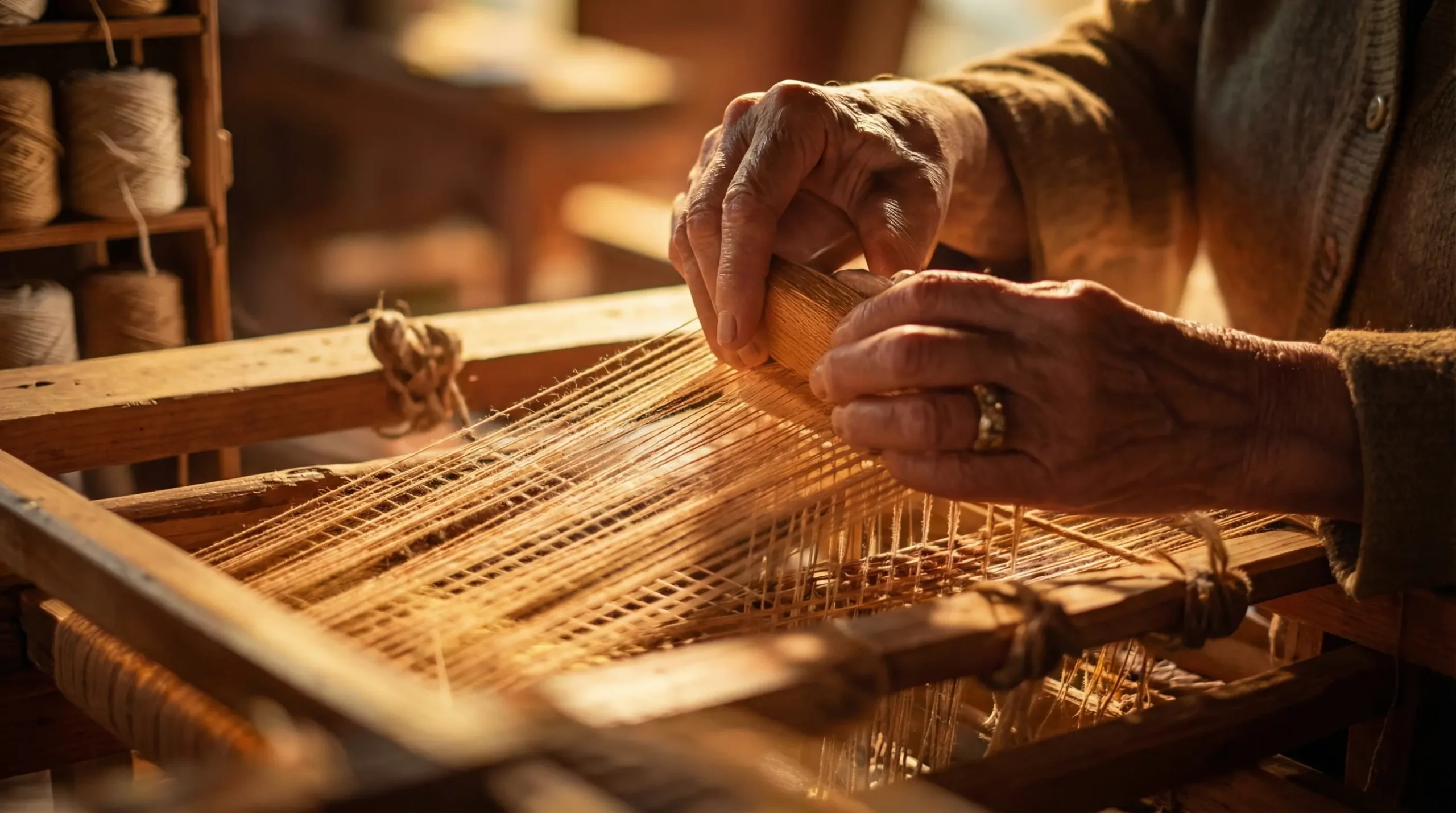
Not all rugs do the same work. The construction, fibre, and pile height of a rug determine how it sits, how it ages, and what kind of room it suits. This is where most buying decisions go wrong — people choose by color or pattern alone, and discover later that the rug does not behave as expected.
| Construction | Character | Best suited to |
|---|---|---|
| Soumak flatweave | Low profile, sits flat, tight weave, ages well underfoot | Living rooms, studies, high-traffic rooms — anywhere furniture needs to sit cleanly on top |
| Kilim | Very flat, reversible, geometric, nomadic in origin | Layering over jute, corridors, rooms that already have visual weight |
| Hand-knotted wool | Depth of pile, warmth, long lifespan, improves with age | Bedrooms, formal living rooms, anywhere permanence matters more than practicality |
| Jute / sisal | Natural texture, neutral tone, sits quiet | A foundation layer — use alone in relaxed spaces or under flatweaves for depth |
| Machine-made tufted | Soft underfoot, consistent pattern, shorter lifespan | Budget-conscious spaces — understand it will need replacing |
Texture matters more than pattern alone. A rug with a flat, tight weave and a strong geometric design reads very differently from a high-pile shag with the same colors. The flatweave sits back and lets the room lead. The high pile demands attention. Neither is wrong, but each requires a different room around it.
"Soft" is also not always the goal. Softness underfoot is comfortable, but softness as a visual property — pale, low-contrast, low-texture — can make a room feel unresolved. Rooms that feel wrong often have a rug that lacks enough visual weight to hold the floor. The rug disappears, and with it, the room's foundation.
The Consequence of Getting It Wrong
Most furnishing mistakes are not about individual pieces — they are about the relationship between pieces. The rug is at the center of those relationships. When it is wrong, every other decision is harder to correct.
The rug sits under the coffee table and nothing else. Furniture floats around it like islands with no shared logic. The room looks disconnected no matter how good the individual pieces are.
A pale rug on a pale floor with pale furniture creates a room with no contrast, no weight, no place for the eye to rest. California light is generous. Without something to push against, the room dissolves.
A highly patterned rug in a room with patterned upholstery and strong wall color creates competition rather than composition. The rug should anchor the room — not argue with it.
A machine-made rug chosen for convenience rather than character gives a room its ceiling. Everything above it can only rise as high as the foundation allows. The room feels staged rather than lived-in.
How to Choose
Start with size. In a living room, the rug should be large enough to sit under the front legs of all seating — or large enough to anchor the entire arrangement. When in doubt, go larger. A rug that is too large is almost always right. A rug that is too small never is.
I tell every client this. Most of them still go smaller than they should the first time. Then they come back.
Then consider the floor underneath. A dark wood floor reads differently from pale stone or bleached timber. The rug needs enough contrast with the floor to be read as a distinct layer. A pale rug on a pale floor is not a foundation — it is a continuation.
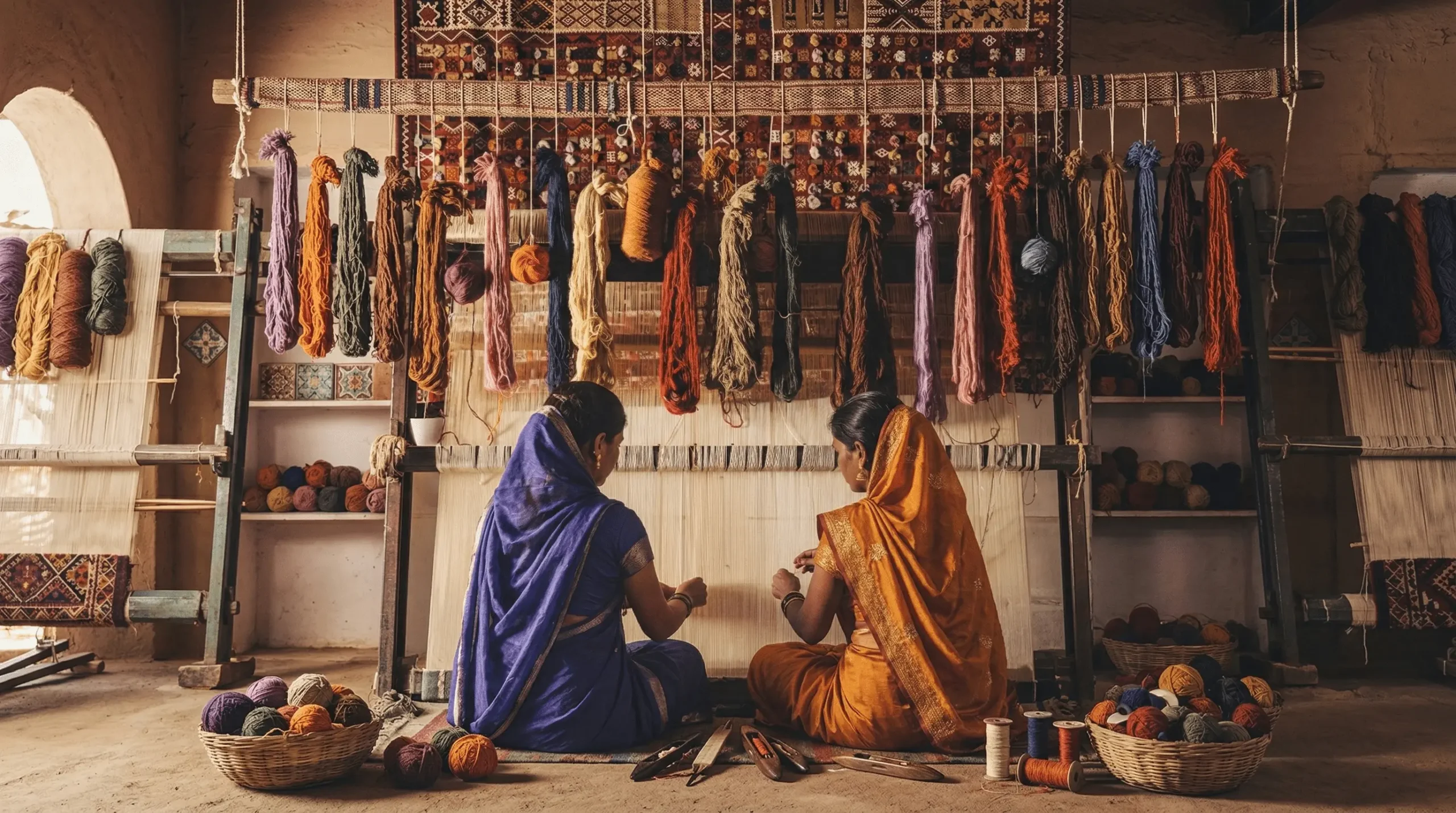
Then material. Natural fibres — wool, jute, sisal, cotton — age differently from synthetic ones. They develop character. They acquire the subtle irregularity of use. A hand-woven or hand-knotted rug made from natural fibre is not just a better product — it is a different category of object. One that can outlast the furniture placed on top of it.
Pattern last. Once size, floor relationship, and material are resolved, pattern becomes a question of what the room needs. A room with strong, dark furniture often wants a quieter rug — something geometric but restrained. A room with lighter pieces can carry more pattern. The rug does not need to be the most interesting thing in the room. It needs to be the one everything else can rely on.

If you are furnishing a new home and not sure where to begin, the rug is always the right answer. Come and see the collection in Saratoga — we'll guide you to the right foundation before anything else arrives.
Book a VisitWhere the Room Begins
At Reeva Sethi Home, we do not treat rugs as finishing pieces. They are where the room begins. Every conversation about a new home or a room that isn't working starts with the floor — what is on it, how large it is, what it is made from, and whether it has enough presence to hold everything that follows.
The furniture, the upholstery, the objects, the light — all of it is layered on top of that decision. Get the foundation right, and the rest of the room becomes significantly easier. Get it wrong, and no amount of beautiful furniture will fully correct it.
Buy the rug first. Let everything follow.
RUCHI SETHI is the founder of Reeva Sethi Home in Saratoga, California. She has spent two decades learning the principles of classical design — what makes a room endure, what makes it fail, and why the sequence of decisions matters more than any single piece. She opened the showroom because she couldn't find what she was looking for anywhere else. Read more.