Furniture descriptions often blur the distinction between solid timber, veneer, plywood, MDF, and other engineered materials. Sometimes that is laziness. Sometimes it is marketing. Either way, buyers are left with language that sounds reassuring but says less than it should.
This guide is meant to fix that. It is not a theatrical rant about retailers conspiring in dimly lit showrooms, much as some of them do deserve it. It is a practical checklist for looking at a piece closely, asking the right questions, and understanding what the answers actually mean.
At Reeva Sethi Home, the material standard is rooted in integrity: kiln-dried solid hardwoods where structure and longevity matter most, traditional joinery, natural fibers, and a preference for materials that age with dignity. The current furniture collection also acknowledges that carefully executed veneer over stable cores has a legitimate place when it is honestly described and properly used. That is the adult answer, irritatingly enough. Browse the furniture collection.
The goal is not to declare that every non-solid piece is worthless. The goal is to know what you are buying, where that construction makes sense, and where it absolutely does not.
These checks are ordered by usefulness, not drama. None of them alone is perfect. Together they form a reliable way to distinguish solid timber from veneer, MDF, and other engineered materials.
Use these in any showroom, on any piece, in a few minutes
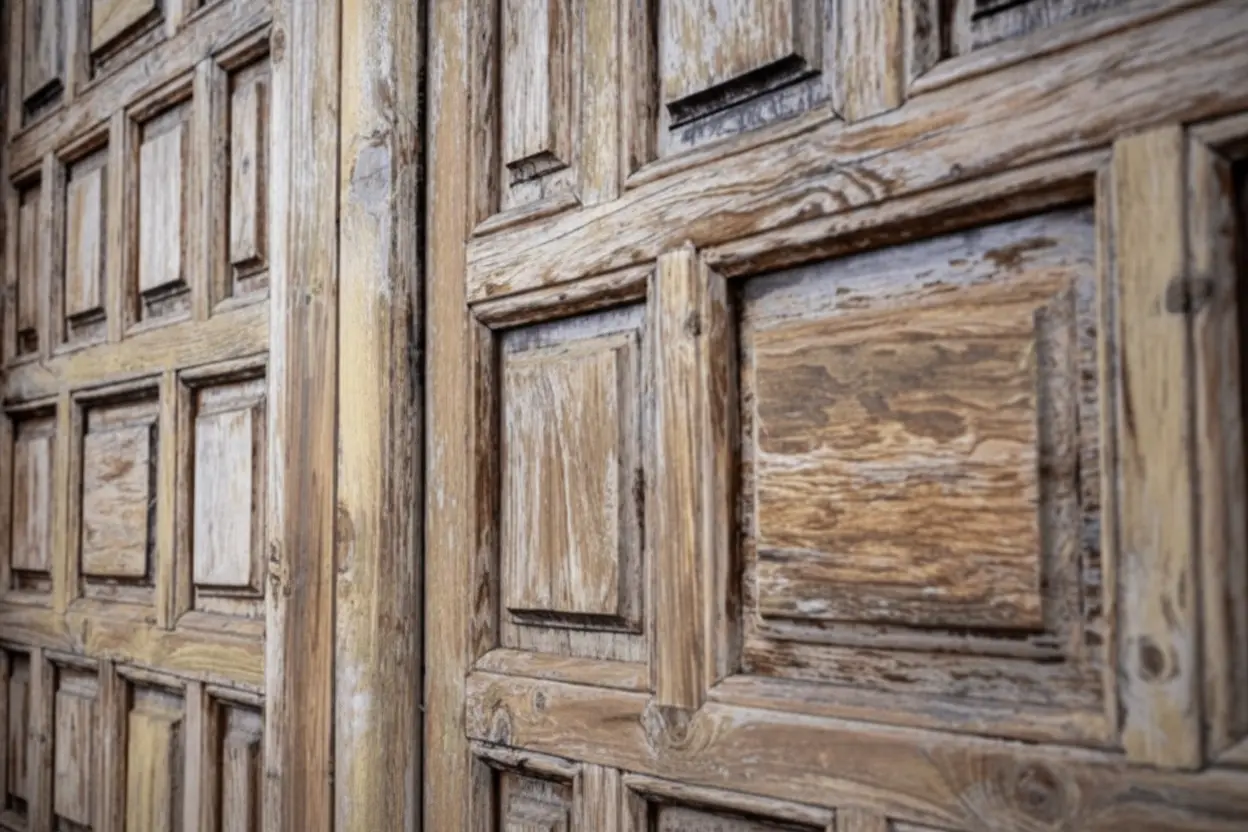
Look closely at edges and corners. Solid timber usually shows grain continuing through the edge. Veneered pieces often reveal a thin face layer over a different substrate or edge banding. This is one of the fastest and most useful first checks.
Often a good sign: grain continues naturally through the edge.Possible warning: visible surface layer, edge banding, or abrupt grain stop.The underside of a table, the back of a cabinet, or the interior face of a drawer front often reveals the real construction faster than the front does. MDF, plywood, particleboard, and solid timber usually look different once the decorative surface steps out of the way.
Often a good sign: hidden surfaces still show real timber grain and believable construction.Possible warning: exposed MDF, particleboard, or a visibly different core.Perfect book-matched symmetry often indicates veneer. Natural board-to-board variation more often suggests solid timber. Veneer can be beautiful. That is not the point. The point is to know whether you are looking at material depth or a carefully arranged surface effect.
Often a good sign: natural variation that feels board-based rather than mirrored.Possible warning: perfectly mirrored grain across adjacent surfaces.Mortise-and-tenon joints, dovetails, box joints, and well-made drawer boxes are strong signs of better construction. They do not automatically prove every visible surface is solid timber, but they often indicate a higher level of material seriousness than cam-lock fittings and stapled butt joints.
Often a good sign: dovetails, mortise-and-tenon, tight joinery, well-made drawer boxes.Possible warning: cam locks, flimsy interiors, stapled corners, visibly cheap hardware logic.People love pretending they can identify construction from heft alone. They cannot. Weight can help, especially on smaller movable pieces, but plywood can be substantial and some solid pieces can be relatively light depending on scale and species. Use this as a supporting clue only.
Helpful clue: the weight feels appropriate to species, thickness, and scale.Warning against nonsense: lightness alone does not prove anything, and heaviness alone does not save a bad piece.Ask directly which parts are solid timber, which are veneered, and whether any MDF or plywood is used in the construction. “Solid wood frame” is not the same thing as “solid timber throughout.” Clear answers are a good sign. Evasive answers are not.
Best answer: a precise breakdown of which elements are solid, veneered, plywood, or MDF.Warning sign: vague phrases like “wood construction” or “real wood finish” with no specifics.Some furniture language is precise. Much of it is not. Here is the short decoder.
What they say. What you should hear.
Not every phrase is dishonest. Many are simply incomplete, which is almost as useful.
“Solid wood frame”
The structural frame may be solid timber, but panels, tops, sides, or large visible surfaces may still be veneer, plywood, MDF, or particleboard. It is not the same as solid timber throughout.
“Real wood veneer”
The visible surface is real wood, but the piece is not solid timber through its depth. Veneer is legitimate when well used and honestly described. It is still not the same material experience as solid wood.
“Engineered wood”
This can refer to plywood, MDF, particleboard, and other manufactured wood-based products. It is a category term, not a guarantee of quality and certainly not a synonym for solid timber.
“Wood construction”
Almost nothing on its own. It may include timber, veneer, plywood, MDF, particleboard, or several at once. Ask for specifics.
“Kiln-dried solid hardwoods”
This is materially meaningful language when it is actually true. The RS Studio philosophy uses this kind of specificity because it tells you something real about performance, movement, and longevity.
Not every furniture category deserves the same level of insistence. The closer a piece is to moisture, repeated handling, impact, or daily wear, the more material depth and repairability matter.

Dining Room
Highest stakesDining tables take daily wiping, impact, heat, movement, and moisture. This is where solid hardwood usually makes the strongest long-term case. It is also where vague marketing language does the most damage because the consequences show up slowly and then all at once.
Strongest long-term specification: solid hardwood table surfaces with honest construction.Living Room
High stakesCoffee tables and side tables are touched constantly and seen from close range. Even when structural loads are lower than a dining table, material honesty matters because edge wear, surface damage, and visual fatigue become obvious quickly.
Look closely at edges, tops, and joinery.Kitchen-Adjacent Pieces
Moisture criticalAnything near moisture asks harder questions of materials. Trays, surfaces, small tables, and adjacent storage pieces need realistic specification. This is where the romance around bad material choices usually ends.
Pay close attention to moisture tolerance and edge integrity.Storage
ModerateBookcases, wardrobes, and case pieces can legitimately use a wider range of materials depending on visibility, load, and purpose. Good plywood is not a moral failure. Cheaply disguised composite pretending to be heirloom furniture is.
Drawer boxes, backs, and interiors tell the truth here.What to trust. What to question.
Start with material honesty, then make aesthetic decisions.
Explore furniture, materials guidance, the studio philosophy, blankets, and tapestries at Reeva Sethi Home.
How can you tell if furniture is solid wood or MDF?
Look at the edge, the underside, and any hidden surfaces. Solid timber usually shows natural grain and believable material depth. MDF is smoother, more uniform, and does not present as natural wood through its thickness.
What does “solid wood frame” mean?
Usually that only the frame members are solid timber. Large visible surfaces may still be veneer, plywood, MDF, or particleboard. It is not the same thing as solid timber throughout.
Is veneer automatically bad?
No. Veneer can be excellent when honestly described and properly used. It simply should not be mistaken for solid timber, because it does not behave the same way over time.
What should I ask a retailer?
Ask which parts are solid timber, which are veneered, and whether any MDF or plywood is used. Clear answers are a strong sign. Vague answers are not.
Where is Reeva Sethi Home located?
20430 Saratoga–Los Gatos Road, Saratoga, CA 95070. Phone: 408-797-5283.