Essay Settled, Not Furnished What makes a room feel personal, proportioned and made to stay.
Why some homes feel temporary however well they are furnished, and the quiet decisions that make a house feel as though it intends to stay.
Listen to this essay 12 min
Narrated by AI voice
To make a home feel established, start by answering its basic questions: where people eat, work, read and keep what they collect. In practice that means replacing the pieces still described as "for now", choosing furniture with enough scale for the room, adding case goods where a wall feels bare, letting pieces belong rather than match, leaving some space empty, and keeping things made from materials that improve with use.
Most of us can choose the furniture for a room in a weekend now. We find a picture we like, track down the pieces, and within a month a reasonable version of it is standing in our own house. The room is attractive. It is also, very often, a room anyone could own.
Try a simple test. If someone knew where you bought your sofa, your table, your rug and your art, how much of the room could they reproduce by next Saturday? If the answer is most of it, that may explain why a room full of good things can still feel generic.
Cost has little to do with it. A house of expensive, well-known pieces can feel unsettled, and a house of modest furniture can feel entirely at ease: the table fits the room, the desk is where real work happens, the books have a proper home, and some of it has plainly been there for years. Settled is not a style. It is what happens when a house stops being a set of purchases and becomes the surroundings of a particular life.
The Furniture We Call "For Now"
The first sign of an unsettled home is rarely cheap furniture. It is provisional furniture. The small table beside the bed because something had to go there. The console from the last apartment. The desk that holds a laptop and not much else. The dining table that is also the office, the chair that holds folded laundry.
Life happens in stages, and in a small apartment one table doing every job is simply how things work. But temporary choices rarely announce when they have become permanent. It works for now. When we move. I haven't figured out that wall yet. Enough of those, and the whole house begins to feel like a place someone is passing through.
A settled home has answered the basic questions slowly, one at a time. Where do we eat together? Where does work happen? Where do the things we keep actually live? Is there somewhere to read, somewhere for a guest? A list of everything you still describe as for now is a better guide to what the house needs than anything seen online this month. The aim is not more furniture. It is fewer unresolved decisions.
Proportion Before Product
One of the most common reasons a well-furnished room feels unfinished is that the furniture is slightly too small for it. Not dramatically. Just enough that something seems off, one of the quieter reasons a room feels wrong.
- A small coffee table marooned in a large seating group.
- A narrow console along a long wall, with a small painting floating above it.
- Little nightstands beside a king bed.
- A rug that sits under the coffee table rather than under the furniture.
- Curtains with too little fabric to frame the window.
Most of us shop one object at a time. We see a table and like the table. The more useful question is whether it has enough presence for this room. That is a question about relationships, and it is why space planning belongs before shopping.
Five places proportion is usually lost
Presence does not mean heavy. A low, well-proportioned sideboard can hold a room. So can a plain solid oak table, a restrained platform bed or a long, low sofa. The right size depends on the room, not on a rule. And it is worth knowing that a lamp or painting is often replaced with a more expensive one when quality was never the issue. Size was.
The Piece That Holds a Wall
Many rooms today lean almost entirely toward upholstery: a sofa, two chairs, an ottoman, a bench. Plenty of places to sit and nowhere good to put anything.
For most of history it was the other way around. Britannica describes the chest as the most important piece of furniture in the home until the eighteenth century, and in the early Middle Ages some were little more than hollowed logs strengthened with iron bands. The Muiderslot castle museum notes that this method of making a chest survives in the English word trunk.
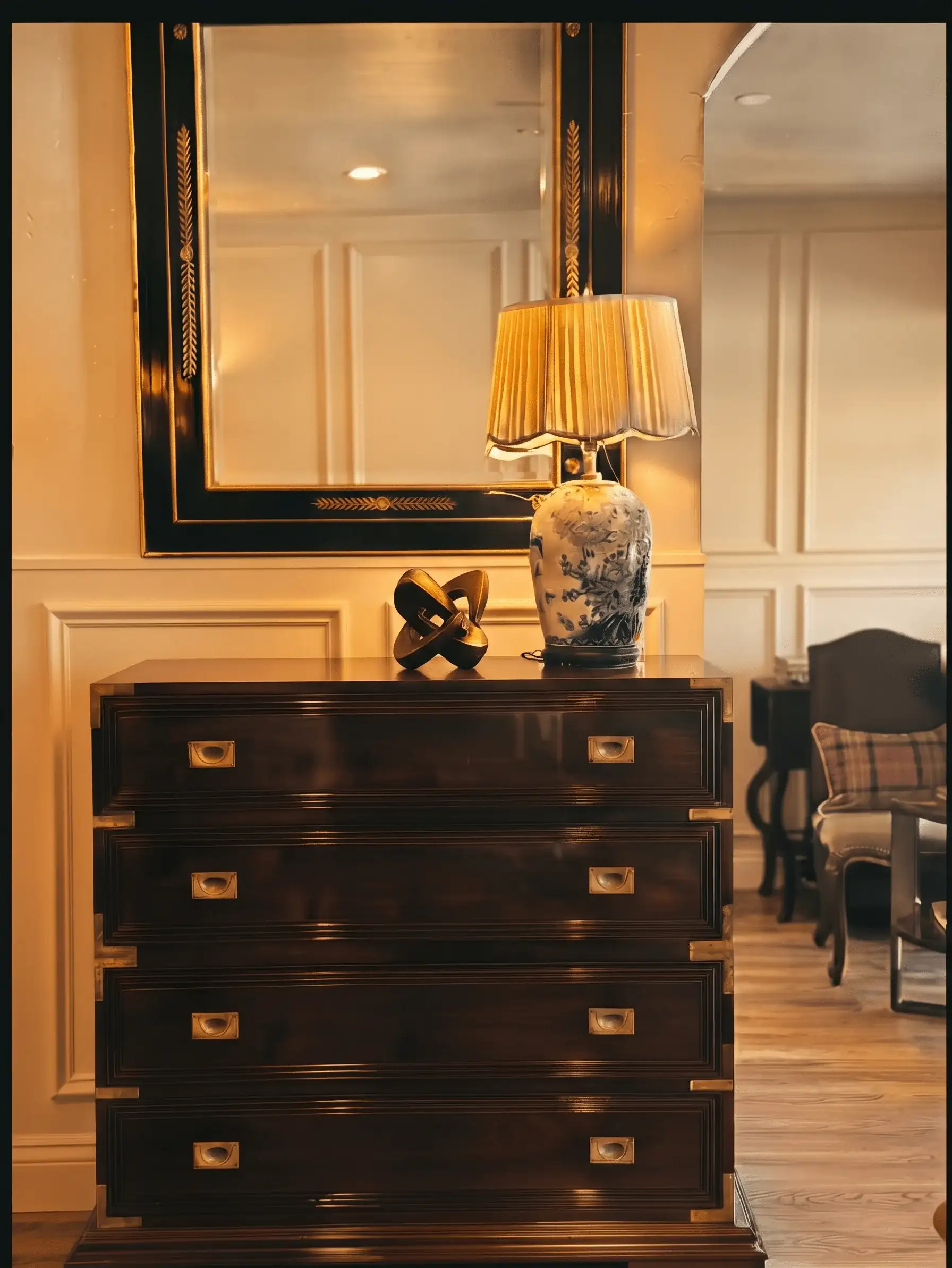
Case goods (chests, cabinets, sideboards, bookcases, dressers) do something seating cannot. They store, they display, and they give a room weight. When a long wall looks bare, the instinct is to add art or another chair. Often what it needs is a substantial chest, such as the solid mahogany Alden Campaign Chest, to anchor that side of the room and give whatever hangs above it, a painting or a mirror, something to answer to.
The same holds for anything we collect. Bottles on a kitchen counter look like clutter waiting to be dealt with; the same bottles in a cabinet chosen for them look intended. Books need shelves planned around them, which is what a piece like the Sovereign Carved Library Cabinet is for.
Why It Is There
When we want a more sophisticated house, it is easy to reach for the recognizable signs of one: the famous lounge chair, the travertine table, the large monochrome canvas, or the leather club chair and the dark wood desk. Each can be a fine choice. The difficulty comes when a room is assembled entirely from such signs, chosen because rooms of that kind usually have them. It ends up telling us very little.
Rooms become personal through what happens in them. Books gather near the chair where someone reads. A room for someone who hosts is arranged around conversation. A desk suits the work done at it; a dining table, like the six-legged Regent Refectory Table, suits the way a household actually gathers. Records, maps, cameras, things brought back from travel find their way in when they belong to a real interest.
It also helps when things arrive by different roads. Something made by a craftsman whose work you admire. Something inherited, or found while traveling. A hand-knotted rug, a handwoven tapestry, an original painting, a piece that wasn't what you were looking for but was interesting enough to make room for. None of it needs to be valuable or carry a grand story. When buying something significant, it is enough to know why it should be there: you admire how it is made, it solves a problem well, it has some history, or you simply love it. But if nearly everything could be swapped for something similar without changing the room, the house starts to feel interchangeable.
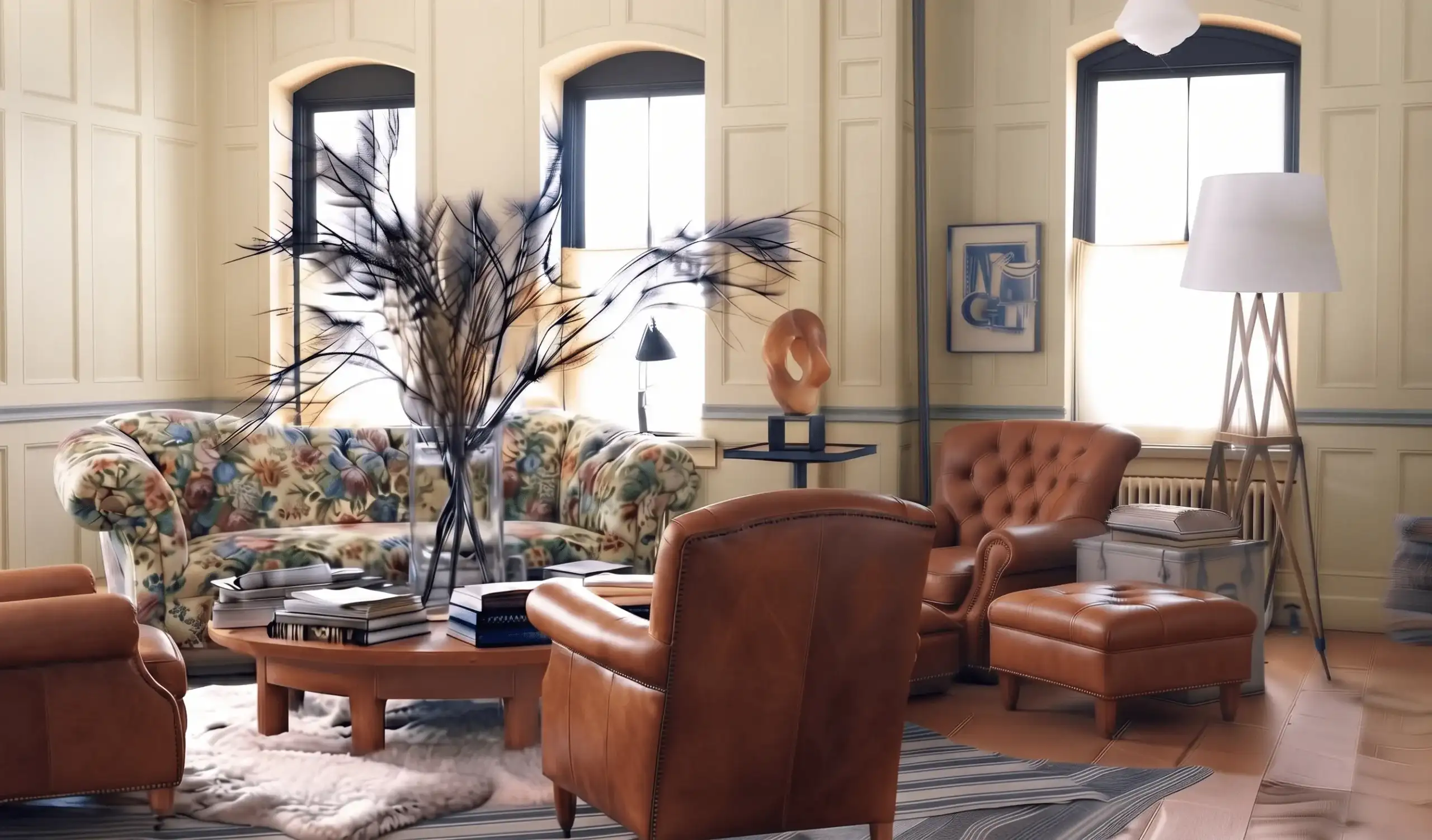
The same applies to matching. A walnut coffee table leads to a walnut console, and soon walnut is a rule. Black hardware becomes black lamps, then black curtain rods. The more convincing rooms hold things that don't match but belong: an old trunk beside a clean-lined sofa, a steel lamp on an old writing desk, a worn leather chair against new millwork. They share visual weight, agreeable proportion and enough substance that neither makes the other look thin. (More on this in The Tyranny of the Matching Set.)
So before letting go of something you love because it no longer fits the direction of the house, look at the object rather than the label. Is the scale right, the material good, the character hard to replace? It may be exactly what the room needs.
Beauty Is a Legitimate Function of a Room
It would be easy to read all of this as an argument that every piece must prove its usefulness. It isn't. Beauty is a legitimate function of a room.
Think of a dining room used a handful of times a year. The table is polished, the chairs are pushed in, the light falls across it in the afternoon and nobody sits there. By a strict measure of use, it is wasted space. But a room can earn its place by being looked after and looked at. Passing it every day, and knowing it is ready, is part of what it gives.
Leaving Room
A room can also try too hard. The coffee table is styled, then the console, then the mantel. Art appears on nearly every wall, and the corner that was content to be empty now has a chair in it. When everything asks for attention, nothing receives it.
A fine chest may want only a lamp. A dining table can be enough on its own. Where a homeowner sees an empty wall and feels something is missing, a designer often sees the breathing room that lets everything else work (a subject of The Room That Waits). Decide first what deserves attention: the fireplace, a painting you have owned for years, the view. Then ask what could leave, and resist replacing it.
Light works the same way. Rows of recessed fixtures make everything equally visible and the room flat. Turn them off one evening and leave only the lamps: a pool of light by the reading chair, a lamp on the chest, light over a painting or the dining table. Lighting doesn't only reveal what matters in a room. It decides it.
When There Is Less in the Room
None of this belongs to one style. A modern room in pale oak and stone, with almost nothing in it, can feel as settled as a traditional study. It is simply less forgiving.
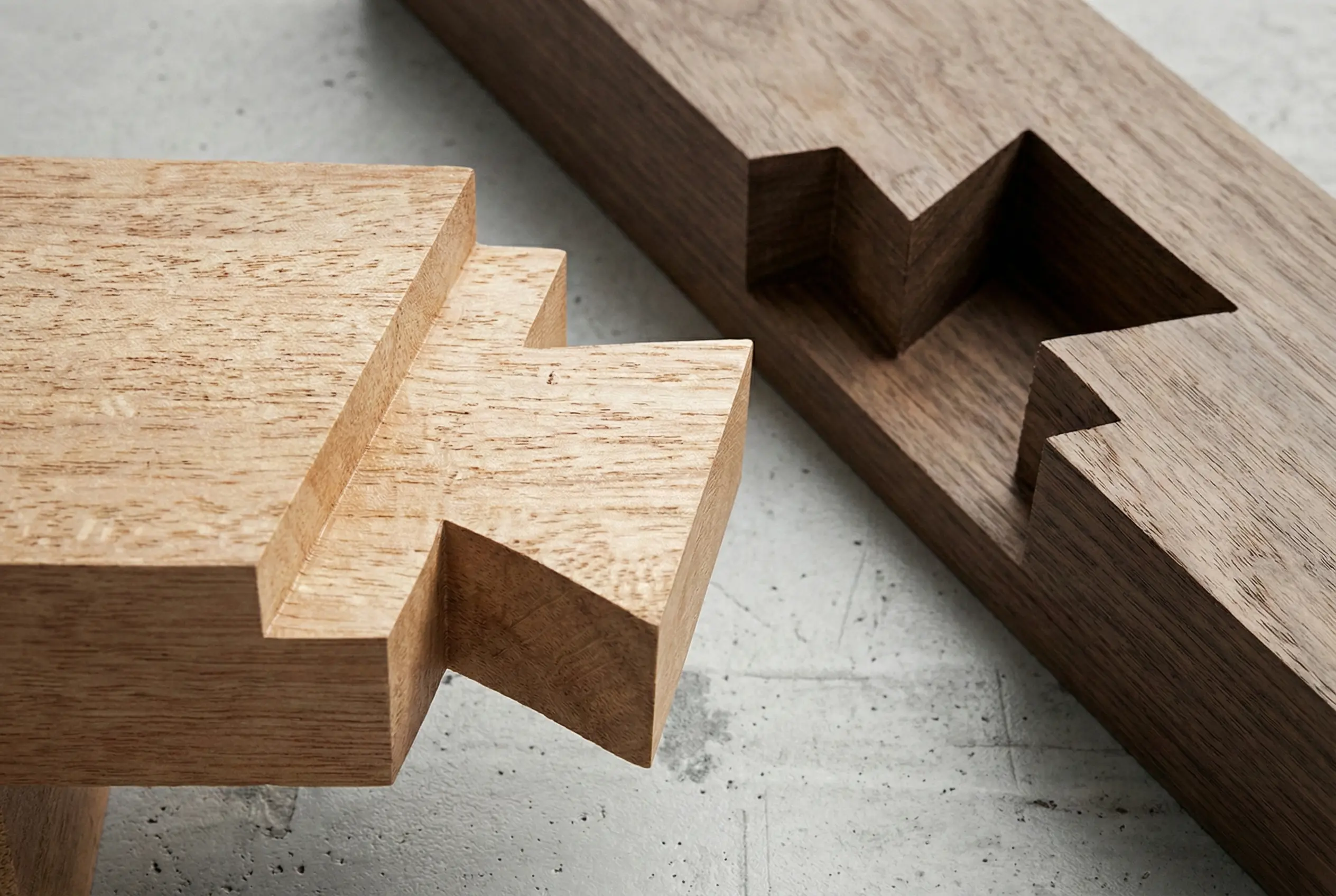
A traditional room has layers to absorb its mistakes. Pattern, books, molding, textiles: a table slightly too small or a chair of indifferent quality disappears among them. A spare room has nowhere to hide anything. If a living room holds only a sofa, a low table, two chairs and a sideboard, each piece carries a large share of the room alone. Proportion, joinery, grain and the finish of an edge stop being details. They are the room. (See Warm Minimalism.)
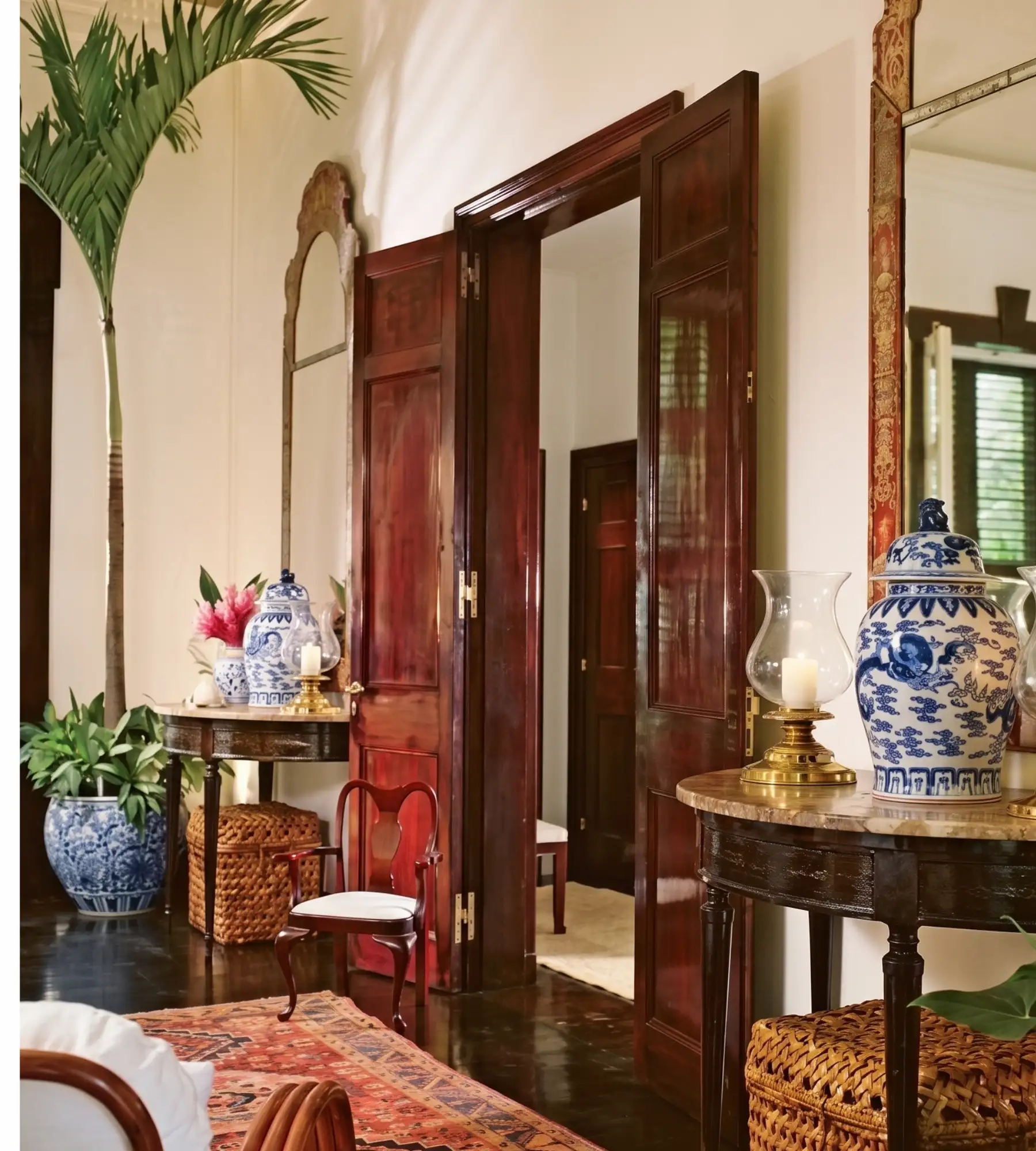
The vocabulary changes from a farmhouse table with Windsor chairs, to a loft's long low credenza and steel shelving, to a Nordic room with one solid oak table. The judgment behind each is the same.
The House Before the Furniture
Endless inspiration encourages us to impose a style on whatever house we live in. An English library planned for a high-rise. A traditional house stripped bare in pursuit of minimalism. Furniture scaled for a showroom pressed into a room with an eight-foot ceiling. Contrast between house and furniture can be wonderful, but you shouldn't have to ignore the house to make a style work.
Imagine the room emptied. The ceiling height remains, the windows, the light in the late afternoon, the trim, the fireplace, the view. All of it was there before anything was bought. Where does the room need weight? What do you see first when you walk in? What should recede? Only then do the objects enter the conversation. Buying better things rarely fixes a room whose problem is the space itself. (For houses here, see The Saratoga House.)
Kept Long Enough
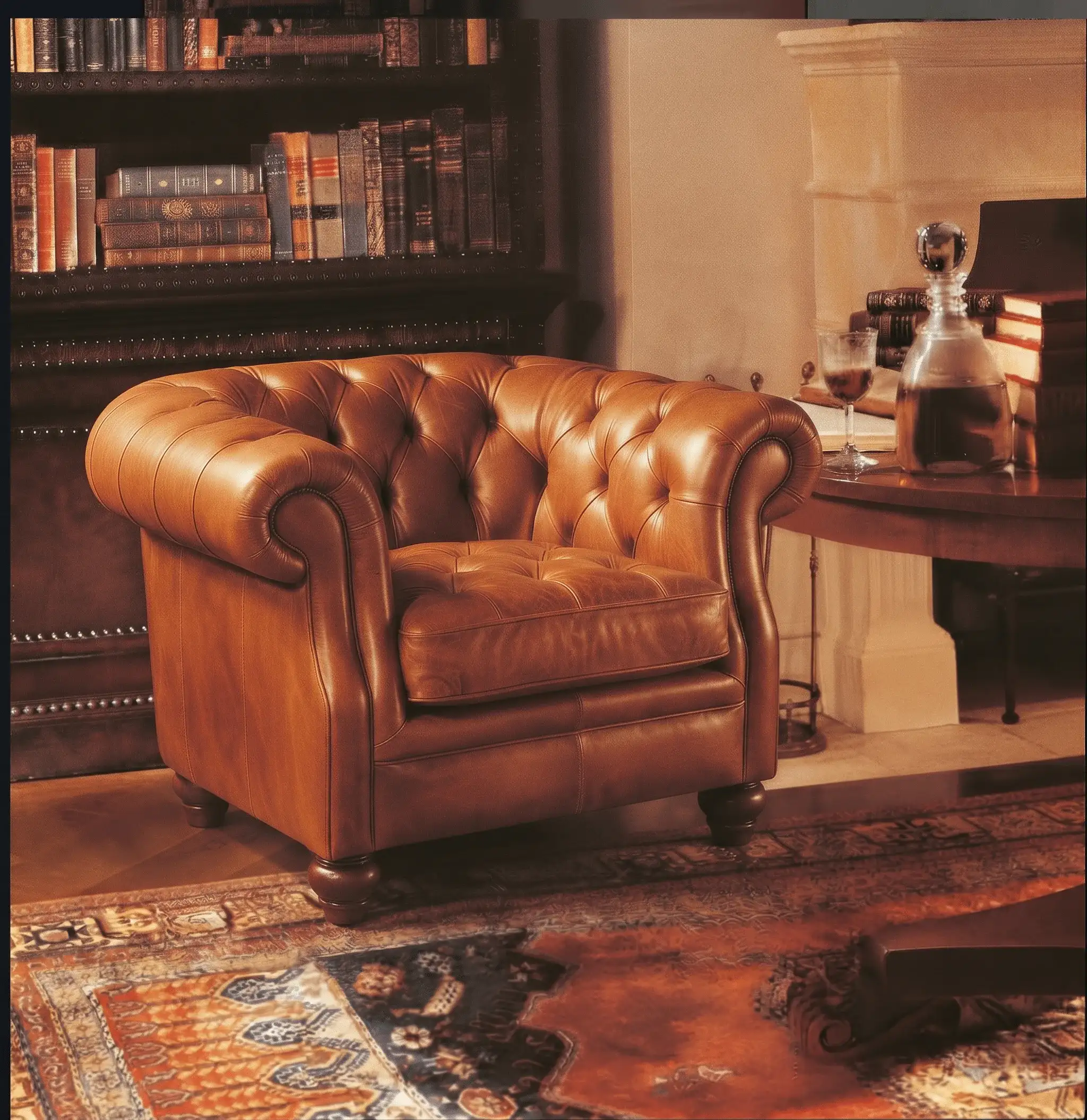
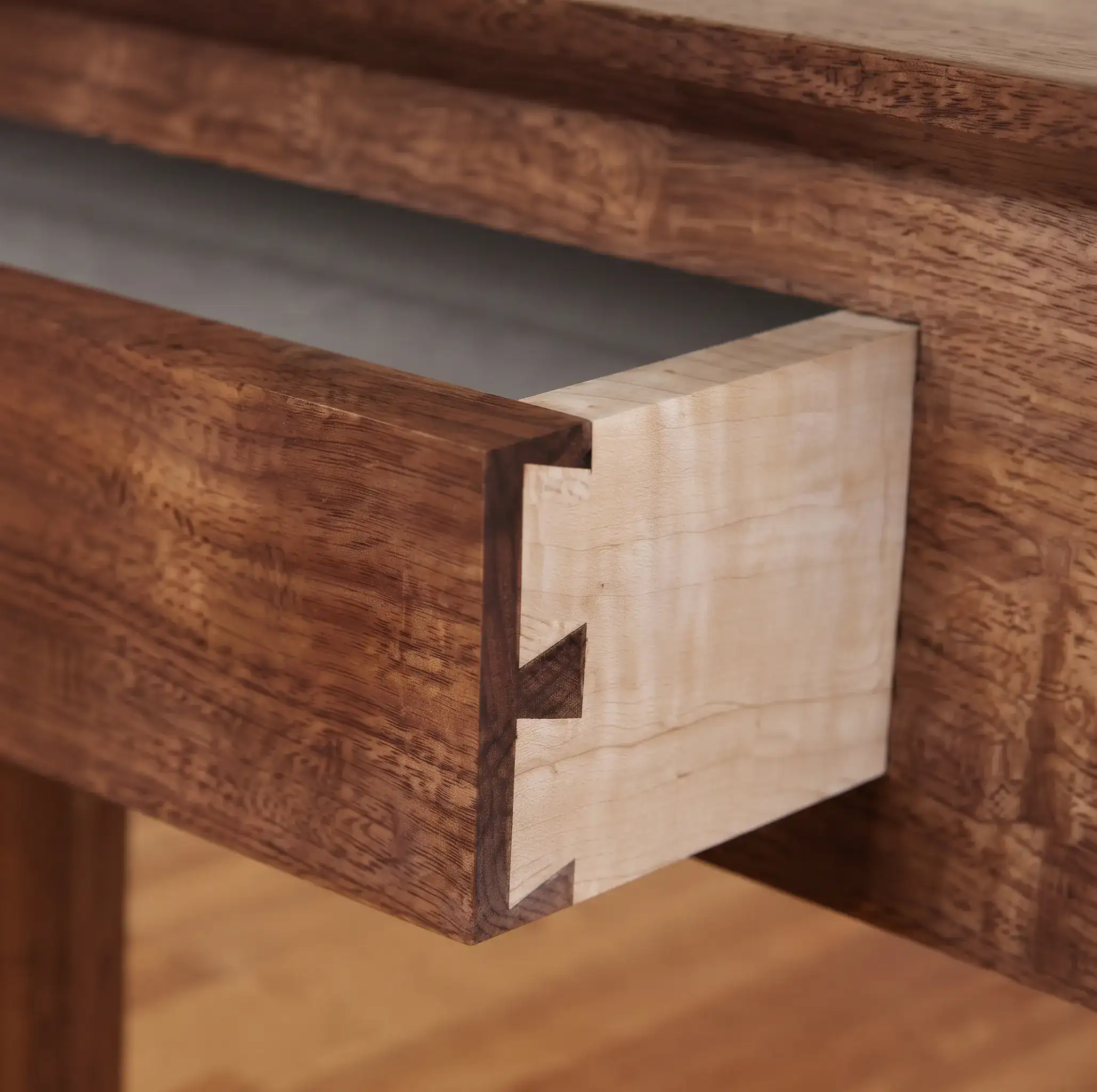
Some materials record a life gracefully. Wood takes marks, leather softens where hands rest, unlacquered brass darkens, wool rugs change as they are walked on. Others simply wear out: bonded leather peels, plating rubs through, thin veneers over low-quality particleboard can chip. We tend to judge furniture at the least revealing moment, when it is new and perfectly lit. The better question is how it will look in ten years. Quality matters most where life is physical: the chair used every evening, the hardware handled daily, the lamp within reach. For what to look for, read How to Tell If Furniture Is Well Made.
A settled home does not require antiques. History comes mostly from ownership: a chair that has moved through three houses, the first painting bought because it was loved rather than affordable, a table already decided on for the long term. The point is not to own things that look old. It is to keep things long enough that the house holds your history, and to look after them along the way. Our furniture care guide covers how.
One way to judge a piece: if you moved across the country tomorrow and paid for every hour on the truck, would you bring it? Some furniture belongs to an apartment. Some belongs to a person.
Not Everyone Has to Like It
A house designed for everyone's approval tends toward the sofa nobody dislikes and the art unlikely to start a conversation. Specific taste excludes. Deep green walls that one person finds restful, another finds gloomy. An old writing desk is worth its floor space to one owner and baffling to the next. An odd painting stays on the wall for twenty years because someone is attached to it. This isn't a case for strangeness as a performance. It is a case for making a considered choice, knowing it won't appeal to everyone, and keeping it anyway.
Where to Begin: How to Make a Home Feel Established
Not by making the house look richer. Walk through the rooms you have and notice what you have never quite been satisfied with:
- Anything you still call temporary.
- The piece that has always looked too small for its place.
- The bare wall that may want furniture rather than more art.
- One thing you could remove, and leave unreplaced.
A settled home doesn't arrive with age or income, and it isn't reserved for traditional rooms. It develops piece by piece, as what you own begins to fit the architecture, fit the life lived in it, and earn its place. If "does my home look established?" is hard to answer, ask instead whether it feels like somewhere you'll leave in six months, or somewhere you mean to stay.
Every piece in our heritage furniture and casegoods collections is chosen with scale and permanence in mind. Bring a photograph and the measurements of the room that still feels provisional to our Saratoga showroom, or arrange a home consultation. Book a visit.
Furniture with enough presence to stay.
Solid wood case goods, hand-knotted rugs and pieces scaled for real rooms, chosen for the next fifty years, not the next season.
Reeva Sethi Home is located at 20430 Saratoga–Los Gatos Road, Saratoga, California, serving Saratoga, Los Gatos, Los Altos, Monte Sereno, Palo Alto, San Jose and the greater Bay Area, and shipping worldwide.
Saratoga, CA 95070
11am – 4pm · call ahead
Bespoke sourcing
How do you make a home feel established?
Resolve the pieces you still think of as temporary, scale furniture to the room, add case goods where a wall feels bare, and keep things whose materials improve with use. Established is less a style than an absence of unresolved decisions.
Why does a room look unfinished even with good furniture?
Often, the issue is scale or arrangement: tables too small for the seating, a rug that doesn't reach the furniture, art too small for its wall, or a room made almost entirely of upholstery with nothing to anchor it.
What are case goods?
Non-upholstered storage furniture: chests, cabinets, sideboards, credenzas, bookcases, dressers and armoires. They give a room structure, storage and visual weight that seating cannot.
How wide should nightstands be for a king bed?
It depends on the room, but where space allows, nightstands closer to 28 or 30 inches wide usually look more resolved beside a king bed than the common 18-inch size.
Should all the wood in a room match?
No. Pieces from different woods and periods sit well together when they share visual weight, proportion and sound construction. Matching every finish tends to make a room look bought in one trip.
Does every room need to be used every day?
No. Beauty is a legitimate function of a room. A dining room used a few times a year can earn its place simply by being looked after and looked at.
Can a minimalist home feel established?
Yes, but it asks more of each piece. With fewer things in the room, proportion, material and construction carry everything.
RUCHI SETHI writes RS Studio as a journal of proportion, material truth, and interior permanence — essays for those who want to understand not just what a room looks like, but why certain spaces read as right. Read the full RS Studio archive →