
Something is off. You know it. You've rearranged it twice, repainted it once, added the rug everyone recommended — and still the room sits there, slightly resistant, refusing to become what you intended. The problem is almost never your taste. The problem is that no one told you about five specific, measurable conditions that determine whether a room works or doesn't. They are not aesthetic. They are physical. And once you know them, you cannot look at a room the same way again.
What follows is not a style guide. It is closer to a diagnostic — the kind of information that separates an interior designer who understands space from one who merely has opinions about it. Each of the five conditions has a number. The number is what matters. When you are ready to act on what you find, our Saratoga showroom carries the materials — hand-knotted wool rugs, natural fiber textiles, and solid wood furniture — that correct these conditions permanently.
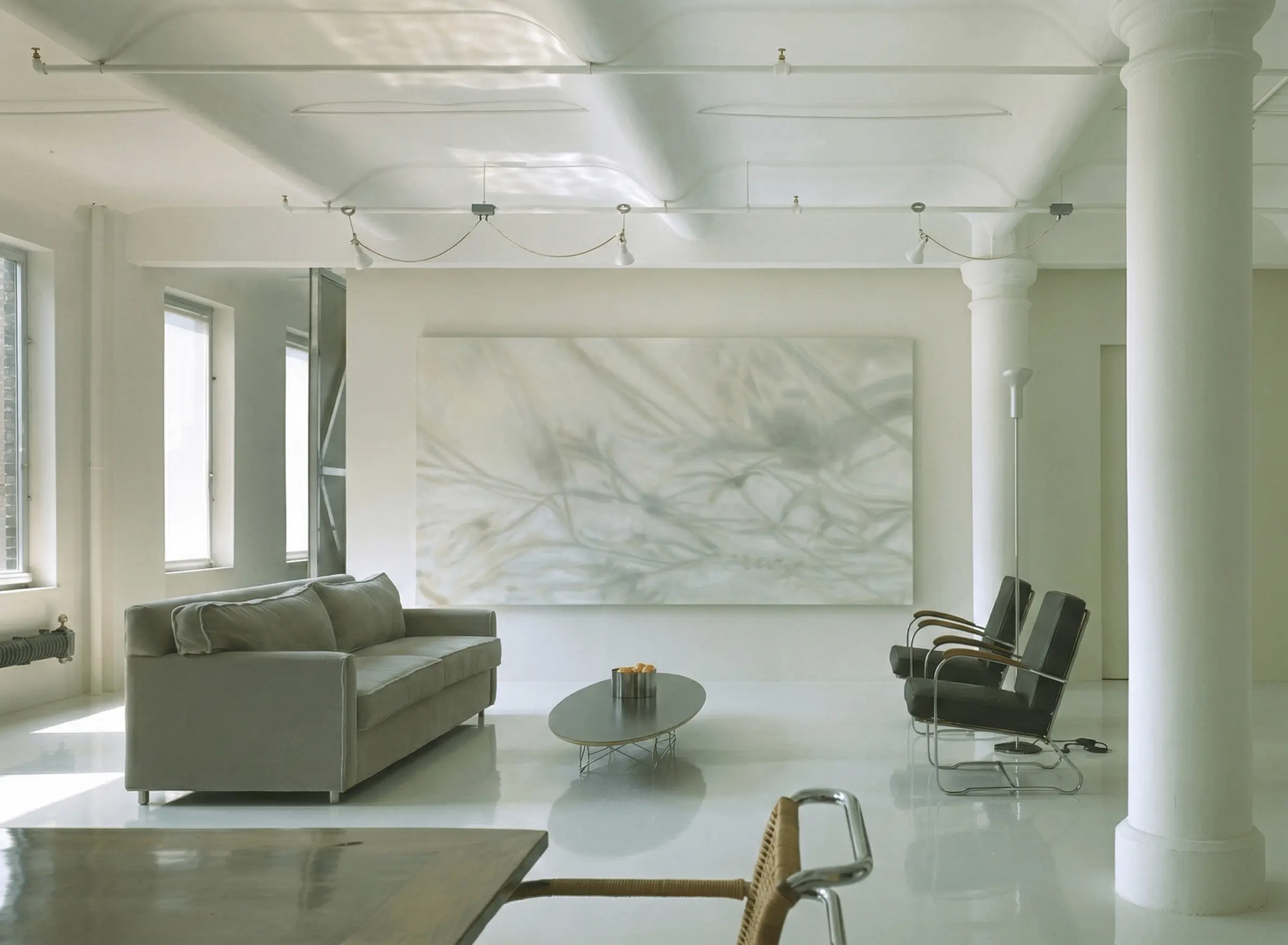
Every paint colour has an LRV — a Light Reflectance Value between 0 (pure black, absorbs everything) and 100 (theoretical pure white, reflects everything). Most people have never looked at it. It is, however, the single most consequential number in the room.
Above LRV 85, the wall reflects so much light that it eliminates shadow. And shadow is not an inconvenience to be designed out — shadow is how the eye reads three-dimensional space. Without it, walls lose their edge, corners dissolve, and the room becomes a glowing box with no depth. This is why rooms painted in "Architectural White," "Chantilly Lace," or "Super White" — all sitting at LRV 89–93 — look beautiful in a paint swatch and flat in a room.
Drop to LRV 55–72. This restores shadow without darkening the room. In a north-facing Bay Area room with cool grey light, LRV 60 will feel brighter than LRV 92 — because the eye can now read depth. Check the LRV on the back of any paint sample card. It is always there.

Environmental psychology has documented, across cultures and centuries of domestic architecture, a consistent proportion that produces comfort: approximately one foot of ceiling height for every three feet of room width. A room 18 feet wide with a 6-foot ceiling feels compressed. The same room with a 20-foot ceiling feels exposed. Neither is comfortable.
Bay Area open-plan architecture routinely violates this ratio — in both directions. Rooms are made wider by removing walls, then given soaring ceilings to compensate, producing spaces that feel enormous and unapproachable. Expansiveness without enclosure is exposure, not freedom. The primitive brain — the part that processes spatial threat before conscious thought arrives — reads the 1:3 ratio as safe.
You cannot lower a ceiling without renovation. But a horizontal picture rail, a deep cornice, or wallcovering that stops at two-thirds height all return the eye's sense of where the room ends. A large-format hand-knotted rug establishes the floor plane and immediately makes the ceiling feel proportionate to it.

Light is measured in Kelvin. 1800K is candlelight — amber, directional, warm. 6500K is an overcast sky — blue-white, flat, clinical. Every light bulb sits somewhere on this spectrum, and that number determines not just how the light feels but how every surface in the room renders under it.
At 2700K, the same room transforms. The timber deepens. The textile shows its weave. The white wall acquires the slight warmth that makes it read as cream rather than hospital. The room has not changed. Only the Kelvin value has — and it has changed everything.
Replace every bulb in the room with 2700K equivalents. This is a twenty-minute intervention that costs under $40 and is, per dollar, the highest-impact change available to a cold room. Avoid anything labelled "cool white" or "daylight." Look for "warm white" or the specific number 2700K on the packaging.
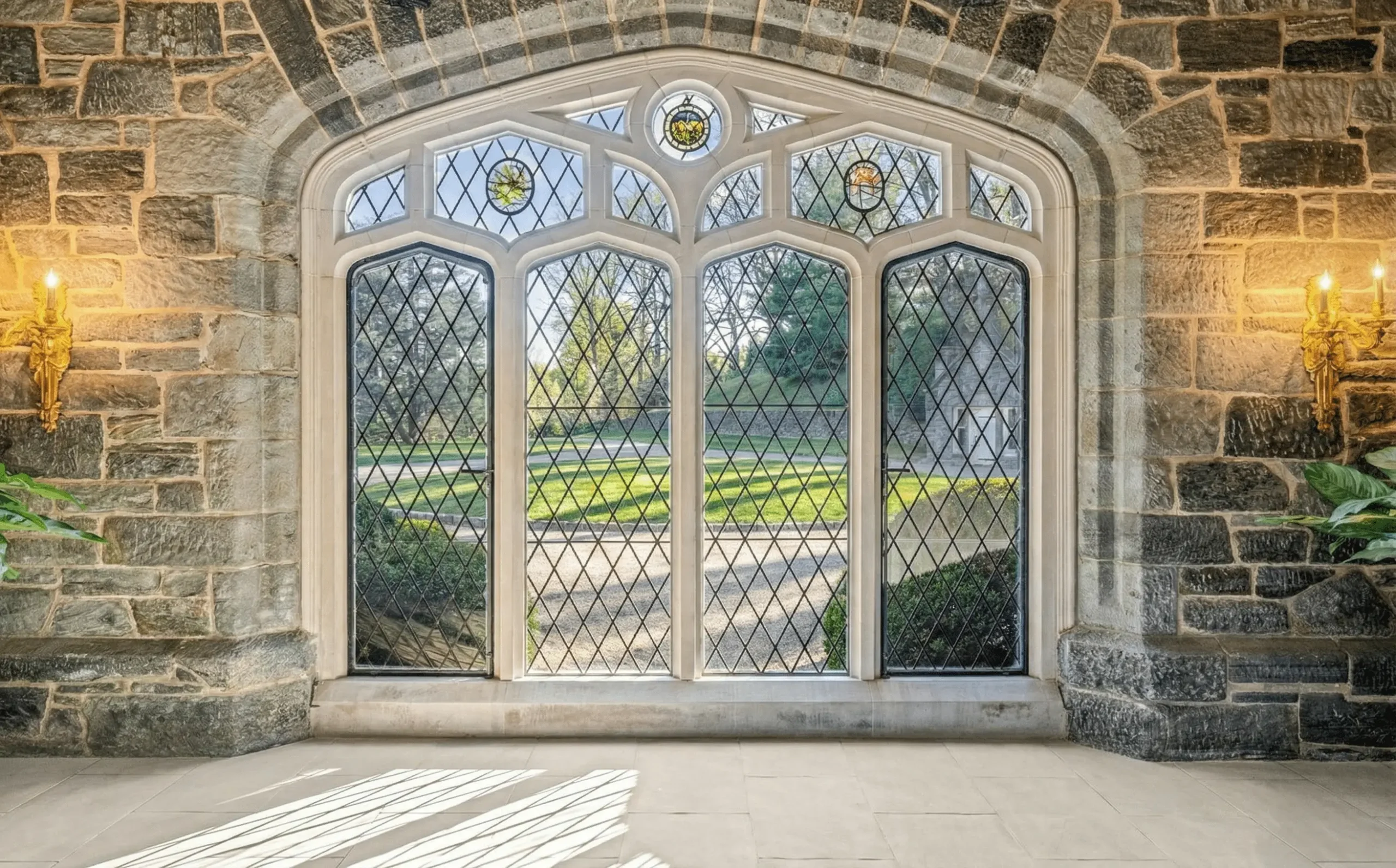
Hard, parallel surfaces create flutter echo — a rapid repetition of sound reflections that the conscious mind does not register as echo but the nervous system processes as low-level stress. Concrete floors, plaster walls, glass windows, polished stone: in combination, these surfaces produce a room with a reverberation time of 0.8–1.2 seconds. The ideal for a comfortable living space is 0.3–0.4 seconds.
You are not hearing the difference. You are feeling it. Research in environmental psychology has found that occupants of high-reverberation spaces report higher levels of fatigue, lower concentration, and a persistent sense of discomfort — even in the absence of any identifiable noise source. The room is loud in a frequency below attention. That is why you feel tired in it without knowing why.
This is also why introducing a single large-format wool rug changes a room so immediately. It is not visual alone — it is acoustic. The rug, the curtain, the upholstered chair: each absorbs the mid-frequency reflections that hard surfaces amplify.
Introduce absorption on non-parallel surfaces. A rug on a hard floor is the single highest-impact intervention — particularly a pure wool rug of genuine weight, whose dense natural pile absorbs mid frequencies more effectively than synthetic or tufted alternatives. Curtains that reach floor-to-ceiling on glass walls are the second. Together, they can halve reverberation time without any structural change.
Thermal conductivity is measured in W/mK — watts per metre per Kelvin. It describes how quickly a material conducts heat away from a surface in contact with it. Polished concrete: 1.7 W/mK. Ceramic tile: 1.0–1.3 W/mK. Solid oak: 0.17 W/mK. Wool: 0.04 W/mK.
This is why polished concrete floors — a dominant material choice in Bay Area residential architecture for two decades — produce a persistent physical discomfort that no amount of styling resolves. The problem is not aesthetic. It is the measured thermal behaviour of the material at the point of contact.
It is also why a wool rug placed over a hard floor changes the felt temperature of a room instantly — not because it adds visual warmth, but because wool at 0.04 W/mK conducts heat from your foot forty-two times more slowly than concrete.
You cannot change the thermal conductivity of an existing floor without replacing it. But covering it with a material of dramatically lower conductivity changes the thermal experience at every point of foot contact. A wool rug of sufficient weight — at least 1.5kg per square metre — is a measurable physical improvement, not a decorating choice. Browse our hand-knotted wool rugs or visit us in Saratoga to feel the difference in person.
- LRV of your paintFind it on the back of the sample card. If it reads above 82, your walls are almost certainly eliminating shadow and flattening the room. Drop to 55–72 before changing anything else.
- Ceiling-to-width ratioMeasure your room. If the ceiling height is less than a third of the room's narrowest width, the space is compressed. If it is more than half, the room is exposed. Both feel wrong in different ways.
- Kelvin temperature of your bulbsCheck the packaging of every bulb currently in the room. Anything above 3000K is rendering your materials clinically. Replace with 2700K before making any further decisions about colour or furniture.
- Hard surface ratioCount the parallel hard surfaces: floor, ceiling, opposing walls, glass. If every surface is hard, the room is reverberant and your nervous system is registering low-level stress without knowing why. Introduce absorption on at least two non-parallel surfaces.
- Floor material at contactIf your floor is concrete, tile, or stone and no textile covers it, the room is physically cold regardless of the thermostat reading. Thermal conductivity, not air temperature, is what the body experiences.
A room that feels wrong is not a failed room. It is a room that has not been diagnosed. Most of the discomfort described above can be addressed without renovation, without a designer, and without spending more than the cost of a good light bulb and a measured look at a paint tin. What it requires is understanding the conditions before addressing the symptoms.
What is LRV and why does it matter?
LRV stands for Light Reflectance Value — a number from 0 to 100 on every paint colour. Above LRV 85, walls eliminate shadow and destroy spatial depth. Dropping to LRV 55–72 restores three-dimensionality without darkening the room. It is printed on the back of every paint sample card.
What Kelvin temperature should home lighting be?
2700K for all residential living spaces. Above 3500K, light renders surfaces clinically — flattening timber, draining colour from textiles, and making white walls appear cold. Most builder-grade Bay Area homes default to 4000–5000K. Replacing bulbs with 2700K equivalents is the highest-impact, lowest-cost intervention available to a cold room.
Why does a wool rug make a room feel warmer?
Two reasons, both measurable. Wool has a thermal conductivity of 0.04 W/mK versus concrete at 1.7 W/mK — it conducts heat from your foot forty-two times more slowly, which the body reads as warmth. It also absorbs mid-frequency sound, reducing reverberation time toward the residential comfort range of 0.3–0.4 seconds. The room becomes physically warmer and acoustically quieter simultaneously.
Where can I find wool rugs and solid wood furniture in Saratoga or Los Gatos?
Reeva Sethi Home is the furniture showroom and design studio on Saratoga–Los Gatos Road, serving homeowners in Saratoga, Los Gatos, Los Altos Hills, Atherton, Woodside, and Menlo Park. When you are ready, book a design consultation.