Field Guide How to Tell If Furniture Is Well Made | A Field Guide to Craftsmanship
Seven things a restorer checks first. Each takes less than a minute, and none requires knowing anything about wood — only where to look.
To tell if furniture is well made, check seven things: whether it is solid wood or particle board under veneer; whether its joints lock wood into wood or rely on screws and staples; how its drawers are joined and how they run; whether the finish protects the wood or merely colors it; how much it weighs; whether it could be taken apart and repaired in fifty years; and whether its brass and carving are what they claim to be.
A well-made piece and a poorly made one can look identical on a showroom floor. The difference appears years later, when a drawer sticks, a leg loosens, or a finish clouds under a glass of water. By then the decision has long been made.
Restorers see both kinds every week: antiques two hundred years old that need only a joint reglued, and furniture not yet ten years old that is already beyond saving. What separates them is rarely the style or the price. It is how the piece was built, and almost all of it can be read in a minute, if you know where to look.
OneSolid Wood, or Something Pretending to Be
Look at an edge, the back panel, the underside of a drawer. In solid wood, the grain carries around the corner; the end of a board looks like the end of a tree. Particle board under a thin veneer shows a flat edge band, or a granular core wherever it has chipped.
A restorer begins every assessment here, because there is only so much anyone can do when the core is essentially sawdust held together with glue. Veneer itself is not the problem. Fine antique furniture is often veneered over solid wood. What matters is what lies beneath it. The Alden Campaign Chest, for instance, is crafted in solid mahogany; there is nothing under the surface pretending to be something else.
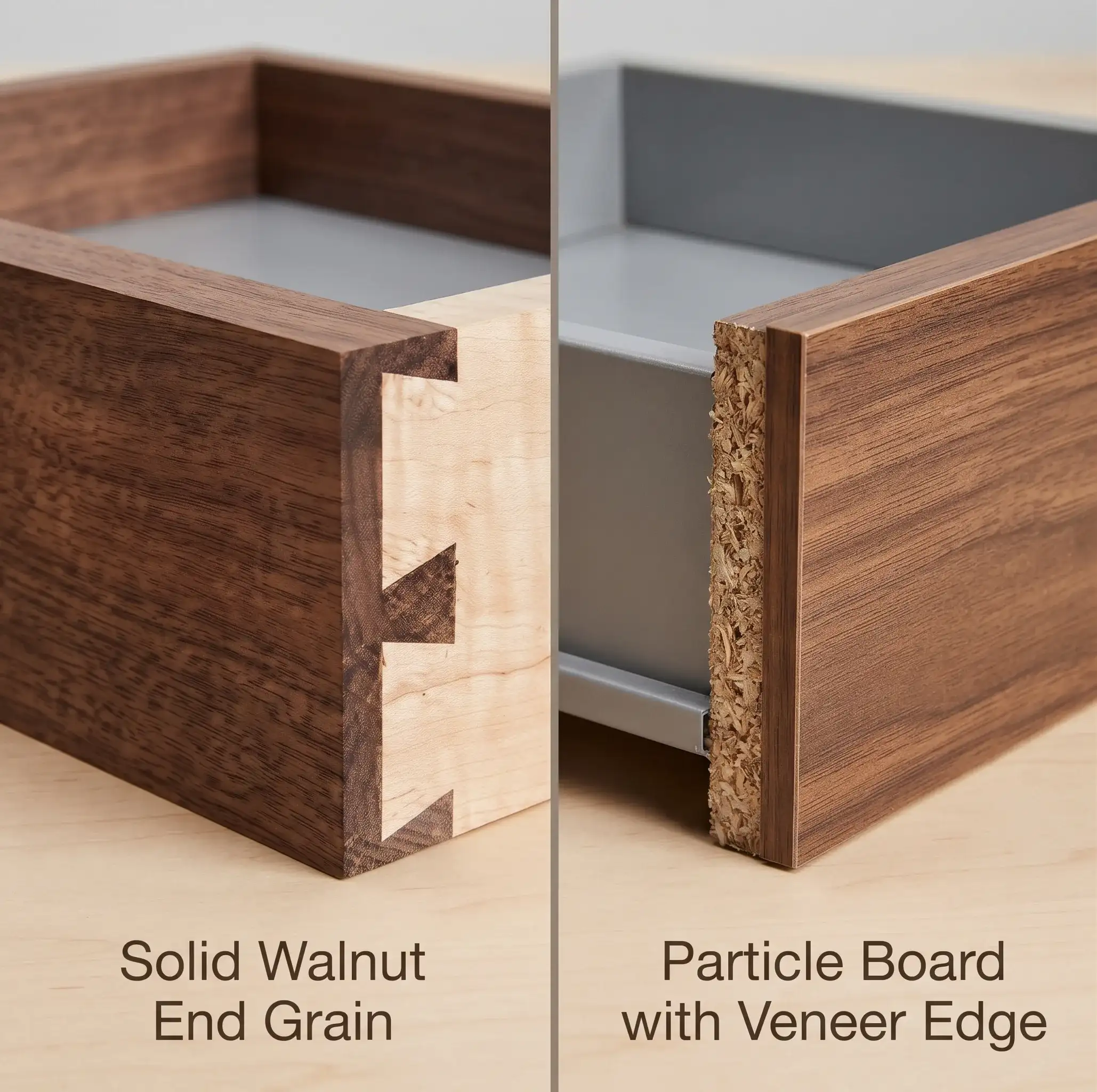
Then turn the piece around and press the back panel. On well-made casework it is solid wood or thick plywood, fitted into the frame. On cheaper pieces it is thin hardboard stapled into a groove, and it gives under a fingertip.
TwoThe Joints
Turn a chair over. Look where the legs meet the frame.
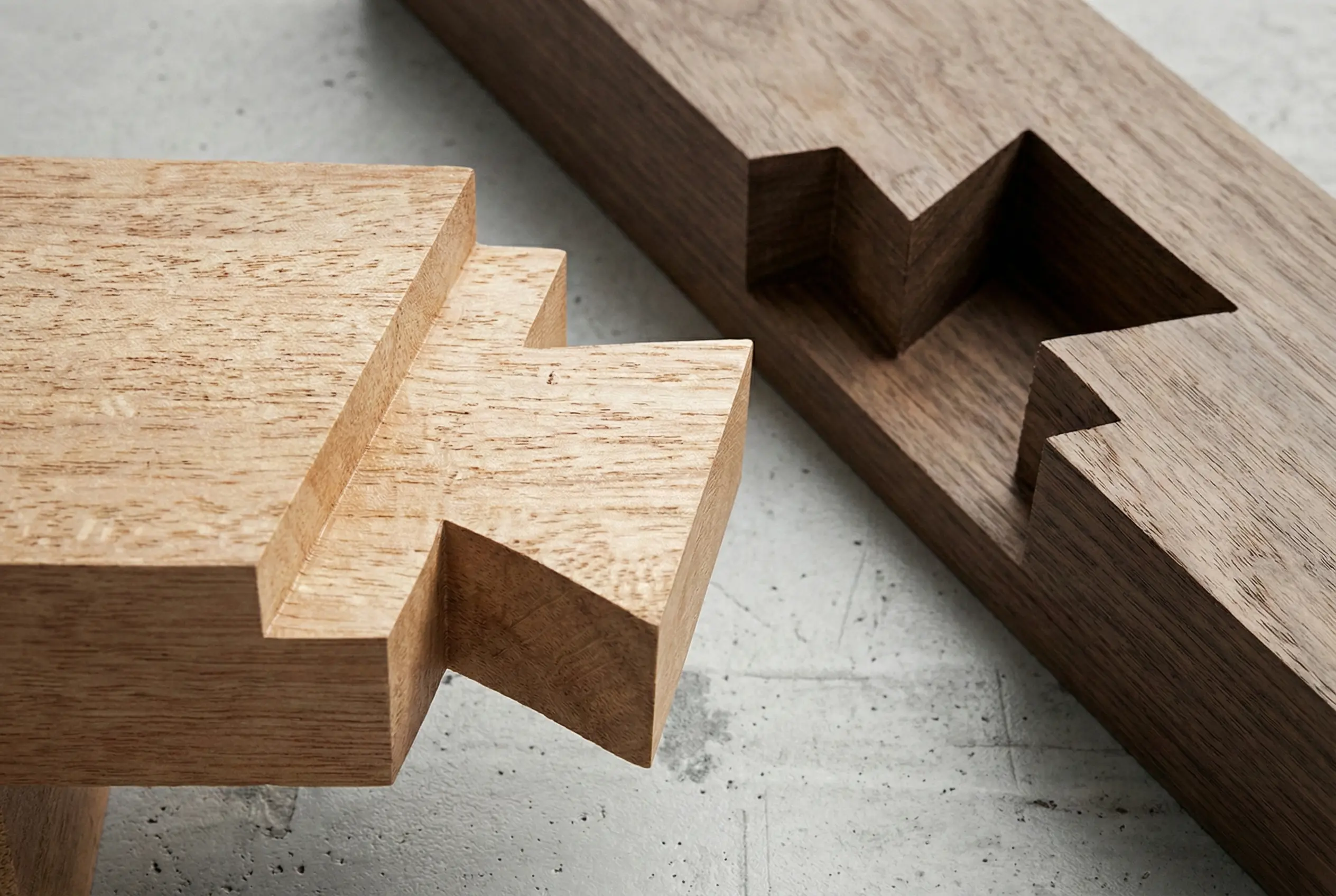
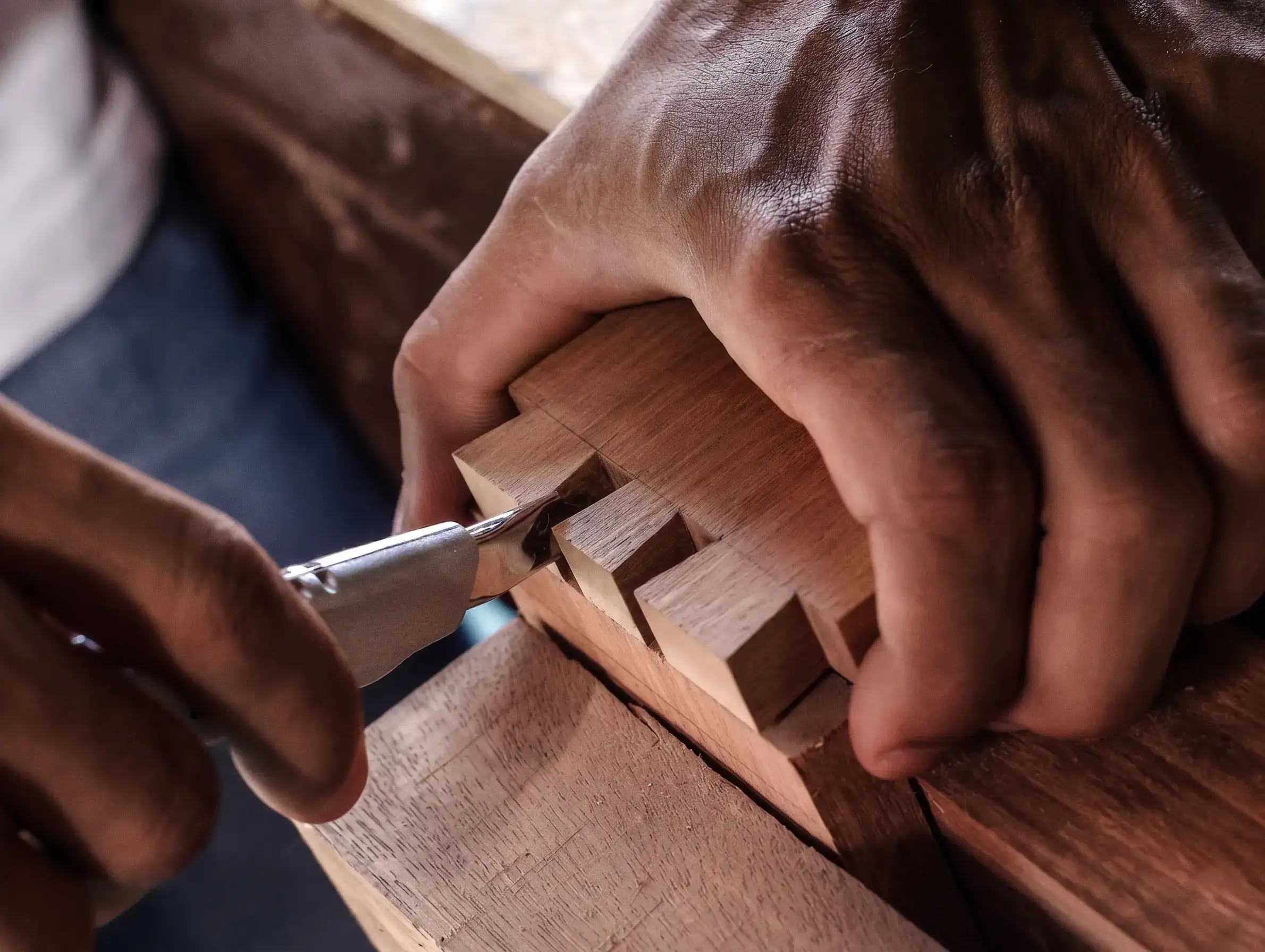
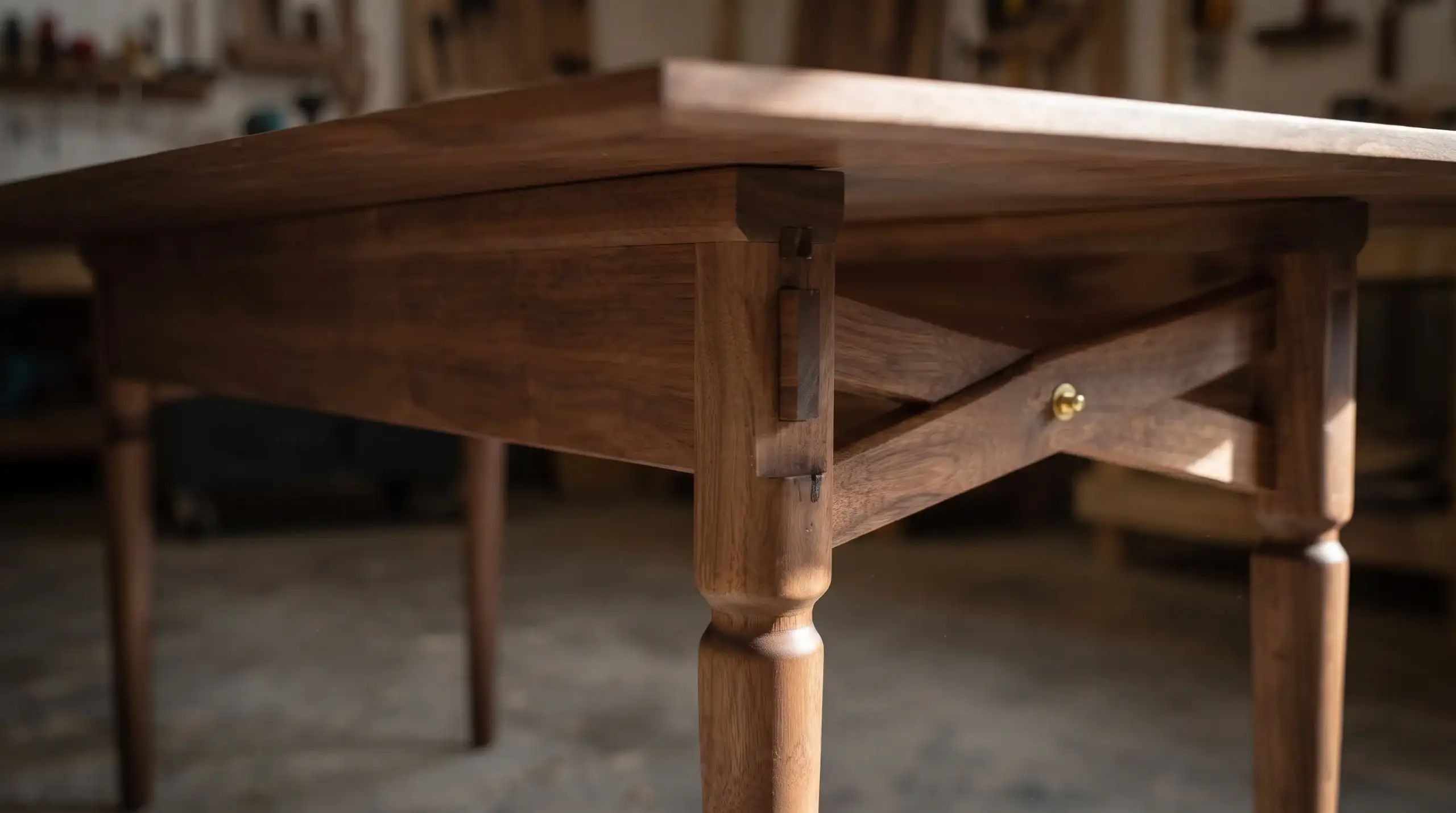
Traditional furniture relies on joints chosen for the work they must do: mortise and tenon for chairs and tables, dovetails for drawers, and dados for casework. These interlock wood across broad glued surfaces. Lower-cost furniture often depends heavily on cam locks, staples, thin dowels and brackets. Screws are not automatically a fault, but they should not be doing the work that sound joinery ought to do.
Five ways to hold wood together
You can test the most important joint with one hand. Hold a table leg and push the rail beside it sideways. A good mortise-and-tenon joint will not move or show a gap. On some pieces you can even see a small square peg on the face of the leg, where the tenon was pinned.
Older furniture tells the same story, though no period can be reduced to one construction method. Hand-cut dovetails, sliding dovetails and mortise-and-tenon joints were common in much fine eighteenth- and nineteenth-century work. Their survival is evidence of the value of joints that can be serviced rather than discarded.
Look, too, at what holds the legs apart. A full stretcher frame, like the one tying together the six baluster legs of the Regent Refectory Table, keeps a long table from racking for generations.
ThreeThe Drawers
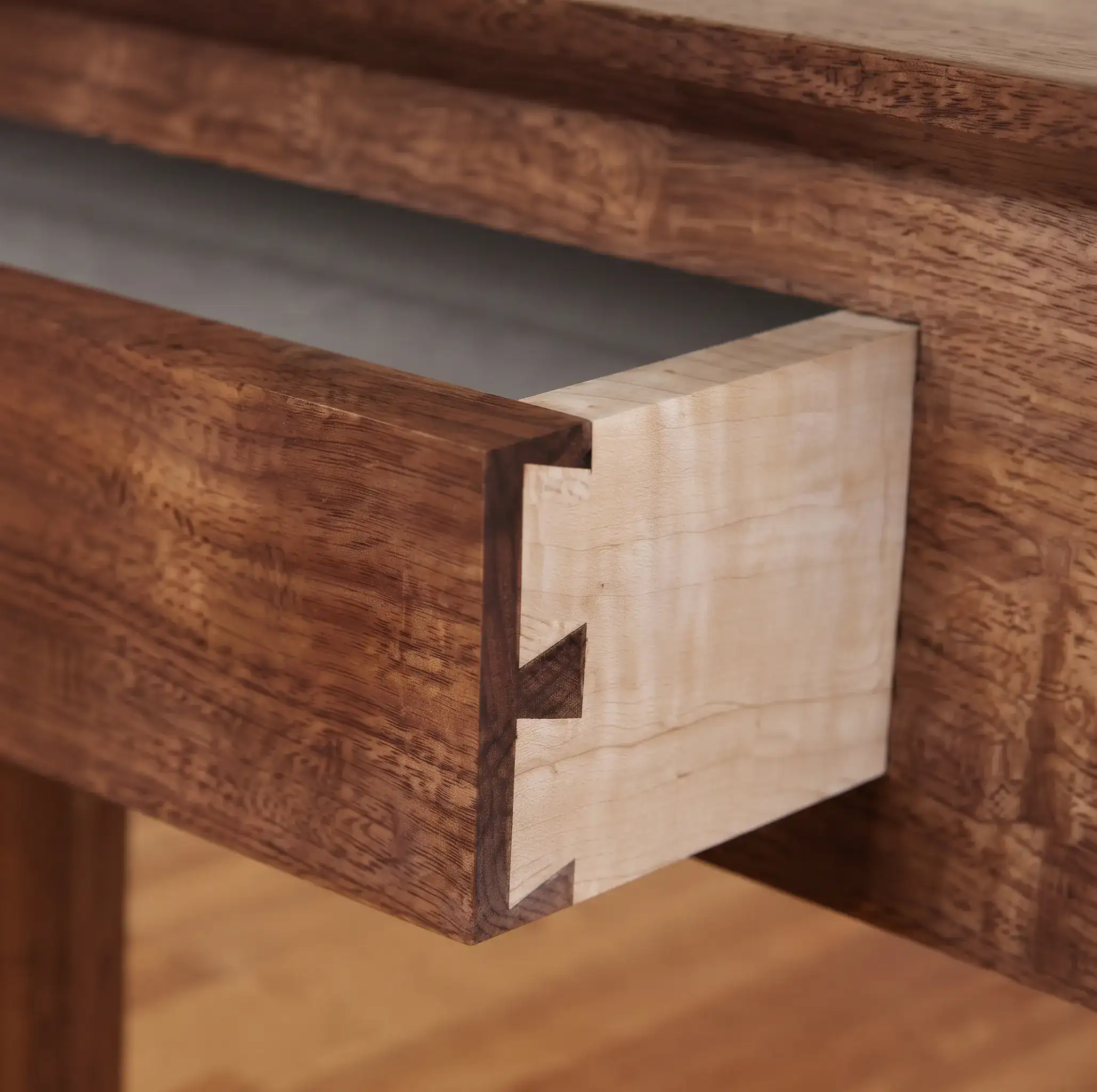
A drawer is a small piece of furniture used every day, and it tells you a great deal. Pull one all the way out. At the front corners, look for dovetails: interlocking fingers of wood. Stapled or simply glued corners will not survive decades of pulling. Then push the drawer back in from one side. A well-built drawer runs straight; a loose one racks and catches.
Wood-on-wood runners do wear. On antique pieces they can be worn half an inch deep. But a worn runner can be cut away and replaced with new wood, and the drawer goes back into service.
FourThe Finish
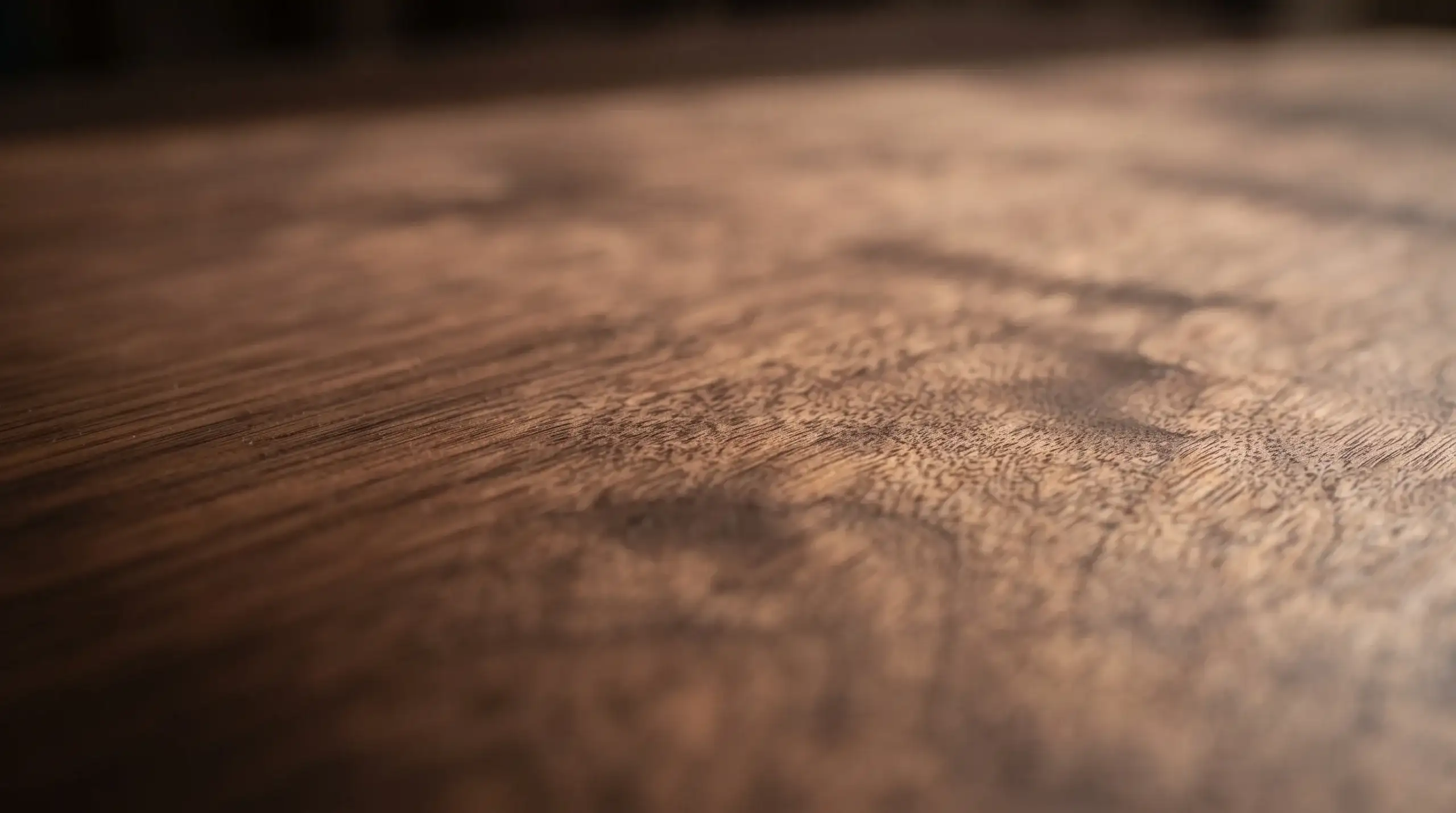
The finish is the first thing your hand touches, and the first thing to give a cheap piece away. A finish that does not protect will ring the first time a glass of water is set down on it.
Look at the color as well. Lower-cost furniture is often coated in a tinted finish, with the color in the topcoat rather than in the wood. It can sit on the surface and read flat. Fine furniture has also been stained, ebonized and coloured throughout history, so stain alone proves nothing. What matters is whether the finish respects the grain, protects the surface and can be cared for or renewed. A hand-applied finish, like the one on the Alden chest, works with the grain rather than hiding it. Our furniture care guide covers how.
FiveThe Weight
Lift a corner. When the edge of a dining table resists with real, dense weight, that is usually a sign of quality. Try it on a solid mahogany table and you will feel the difference at once.
Weight is a clue, not a rule. Mahogany is relatively light and entirely appropriate for a dresser. For a dining table, a denser wood is wiser; drop the corner of a plate on soft mahogany and it will dent.
SixWhether It Can Be Repaired
The question almost no one asks in a store. Traditional furniture was built to be taken apart. Joints set in hide glue release with steam or hot water, so a restorer can separate them, clean them and glue them again. A shellac finish lifts with alcohol, and a single damaged patch can be repaired and blended into the rest.
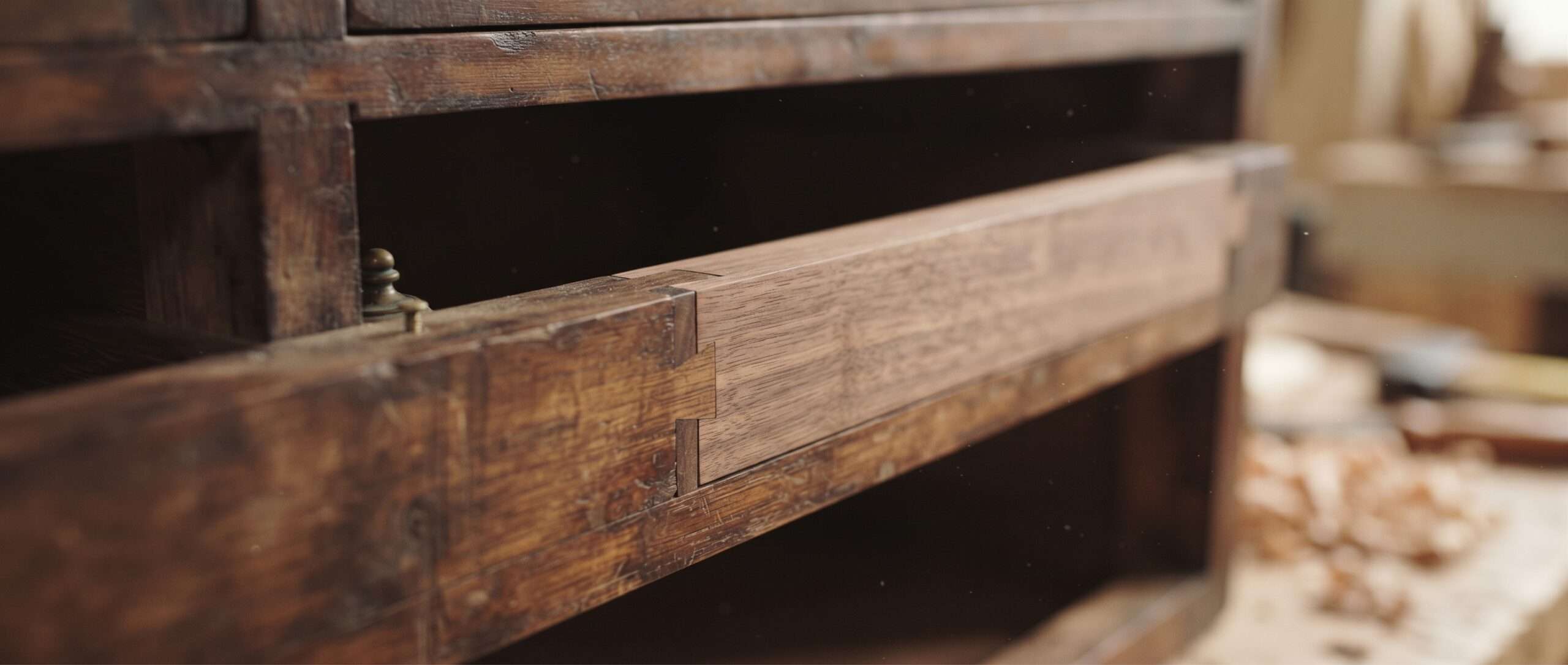
Modern wood glue is sold as stronger than wood. That sounds like an advantage until a joint comes under stress. When the glue is stronger than the wood, it is the wood that breaks, and a simple repair becomes a new part.
Not every maker agrees. Some who build new furniture use modern glue and design the joint itself to last the life of the piece, planning for repair in the finish instead. Professional restorers, such as members of the British Antique Furniture Restorers' Association, work to a stricter rule: replace only what is necessary, and make every repair reversible. Both are answering the same question: what happens to this piece in fifty years?
SevenWhether the Brass and the Carving Are True
Ornament is where cheap furniture hides best. Two quick tests settle most of it.
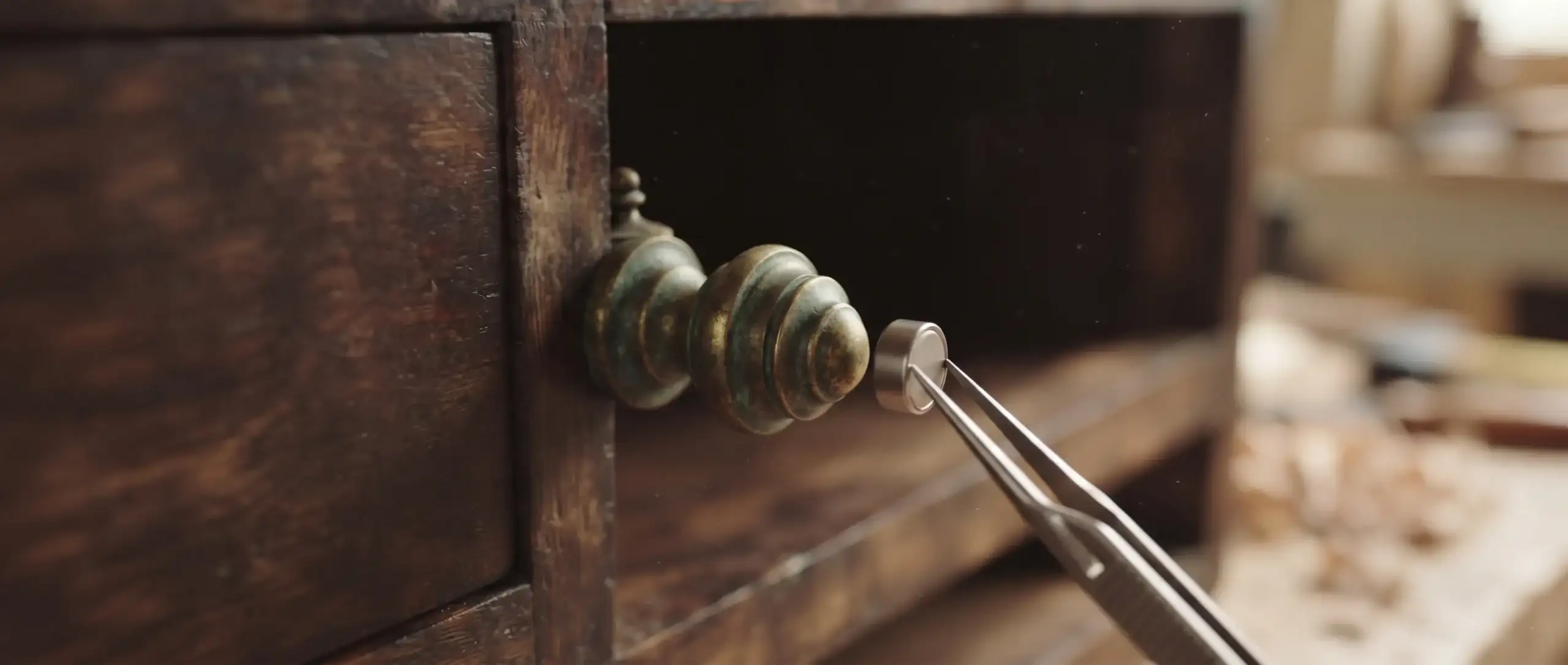
Brass first. Solid brass is heavy for its size, cool to the touch and not magnetic; a small magnet will slide straight off it, and cling to brass-plated steel. Plating wears through at the edges within a few years. Solid brass simply darkens, and can be polished back. The finials on our tapestry hanging rods are hand-cast in solid brass and then antiqued: made to age, not to peel.
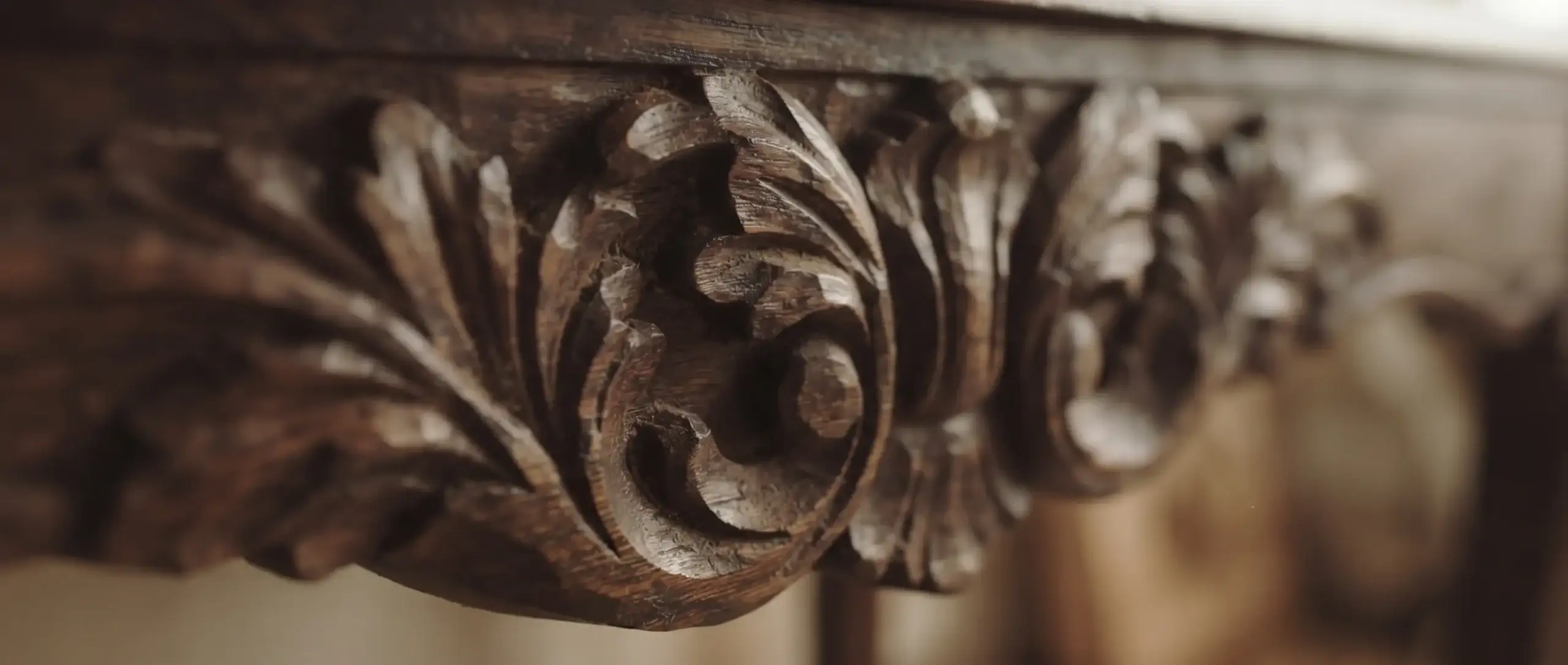
Then carving. Run a finger along it. Hand carving is crisp, slightly uneven and cut into the wood itself; no two leaves are quite the same. Applied ornament, moulded in resin or composite and glued on, repeats identically and often sounds hollow when tapped. The scalloped apron of the Harrington Console Table and the architectural detailing on the Sovereign Carved Library Cabinet are carved by hand.
The Return of the Hand
For two decades, furniture was asked to be flat, plain and quiet. Some of the makers who spent those years building it now say they miss the carving most of all. Their character had to come from grain and material alone, and the hand had little left to do.
Homes are changing with them. A clean, modern room now often holds one traditional piece: a carved console, a campaign chest, a library cabinet with real mouldings. It is not nostalgia. It is a broader palette, and the one piece with a maker's hand in it is usually the one the eye returns to.
The Question to Ask Out Loud
The last check needs no hands at all. Ask the person selling the piece: what joints hold the legs to the frame, and how are the drawers joined? A maker who builds properly will answer at once, in specifics: mortise and tenon, dovetail, pegged or not. An answer like "very sturdy construction" is also an answer.
The same applies online. A product page that names its wood, its joinery and its finish has nothing to hide. One that speaks only of style usually does. When in doubt, ask for a photograph of a drawer corner.
A Minute, and Then a Century
None of this requires a trained eye. A drawer pulled out, a chair turned over, a corner lifted. The pieces that pass are the ones that come back to a restorer's bench a century from now, still worth the work. They are also the most responsible furniture there is. The greenest table is the one that never has to be replaced.
Every piece in our heritage furniture and casegoods collections can be opened, turned over and lifted. At our Saratoga showroom, clients can examine the undersides, drawers and joinery before they buy. Book a visit and come and look underneath. For why this kind of making is becoming rare, read Who Pays for Craftsmanship to Survive.
Furniture worth turning over.
Solid wood, real joinery and finishes that can be repaired — pieces chosen for the next fifty years, not the next season.
Reeva Sethi Home is located at 20430 Saratoga–Los Gatos Road, Saratoga, California, serving Saratoga, Los Gatos, Los Altos, Monte Sereno, and the greater Bay Area.
Saratoga, CA 95070
11am – 4pm
Bespoke sourcing
Is veneered furniture always poor quality?
No. Veneer over solid wood has been used on fine furniture for centuries. The concern is veneer over particle board, which cannot hold traditional joinery or be repaired well.
What are the best joints in furniture?
For legs and frames, mortise-and-tenon joinery is one of the most durable and proven choices; for drawers, the dovetail is a proven choice. Both lock wood into wood across a large glued surface. Restorers regularly see mortise-and-tenon joints two hundred years old that are still sound.
Is heavier furniture better quality?
Often, because lower-cost furniture tends to use lighter, less dense material. But weight depends on the wood. A lighter wood such as mahogany suits a dresser, while a dining table benefits from something harder.
Is machine-cut joinery worse than hand-cut?
Not necessarily. A precisely machined mortise and tenon or dovetail is sound joinery. What matters is the kind of joint and how tightly it fits. Hand-cut dovetails show slight irregularities; that variation is a mark of the maker, not a flaw.
How can you check furniture quality when shopping online?
Read the product description for the wood species, the joinery and the finish; good makers name all three. If they are missing, ask the seller directly which joints hold the legs and drawers, and request a photo of a drawer corner and the underside.
How can you tell if brass is solid or plated?
Hold a small magnet to it. Solid brass is not magnetic, so the magnet will not stick; brass-plated steel will hold it. Solid brass also feels heavy for its size, and where it wears it darkens rather than flaking.
How long should well-made furniture last?
Generations. Restorers regularly see pieces two hundred years old whose mortise-and-tenon joints are still in working order, and that can be taken apart and reglued when they need it.
RUCHI SETHI writes RS Studio as a journal of proportion, material truth, and interior permanence — essays for those who want to understand not just what a room looks like, but why certain spaces read as right. Read the full RS Studio archive →