Some houses are technically perfect and yet strangely uncomfortable to occupy. The lines are clean. The finishes are expensive. The architecture is impressive in photographs. And still, no one fully relaxes in the room. The problem is rarely one dramatic mistake. It is usually a stack of smaller decisions that, taken together, create a space that feels visually harsh, acoustically exposed, and emotionally thin.
This is why so many contemporary homes read as cold even when they are luxurious. Not because modern design is inherently inhuman, and not because every open room or white wall is a failure, but because several common choices tend to reinforce one another in the wrong direction. Rooms lose threshold. Light loses softness. Surfaces reflect too much sound. Glass removes enclosure. The result is not simplicity. It is low-grade discomfort.
The useful part is that coldness can be diagnosed. It is not mysterious. Once you understand which conditions are creating the problem, you can begin correcting them with surprising clarity. Some fixes are architectural. Some are material. Some are as simple as changing the light.
Most cold interiors contain some combination of five recurring conditions: over-bright wall colour, lighting that is too cool, open layouts without enough threshold, hard flooring without acoustic softness, and extensive glazing without adequate enclosure. None of these is always wrong on its own. The problem is cumulative. Two may be manageable. Four at once is usually enough to make a house feel remote from the people living inside it.
-
Over-bright walls Extremely high-reflectance wall colours can flatten shadow and make the room read as glare rather than light. The eye has nowhere to rest. Photographically this can look clean. Spatially it often feels overexposed.
-
Cool lighting Lighting in the 4000K to 5000K range is common because it is bright and efficient, but in domestic interiors it often pushes the room toward a clinical register. Wood looks grayer. Skin looks flatter. The room stops feeling residential.
-
Too little threshold Open-plan living can work beautifully, but rooms still need sequence, arrival, and distinction. Without enough transition between zones, everything becomes one undifferentiated field, and the house loses intimacy.
-
Hard surfaces without softness Stone, concrete, tile, and slick finishes all reflect sound and light. Without rugs, curtains, upholstery, or woven material, the room often sounds harder and feels more exposed than the eye first notices.
-
Glass without enough enclosure Large expanses of glazing can be beautiful, but they also reduce the sense of shelter if not balanced by curtains, heavier materials, layered furnishings, or architectural framing. A room needs edge to feel inhabitable.
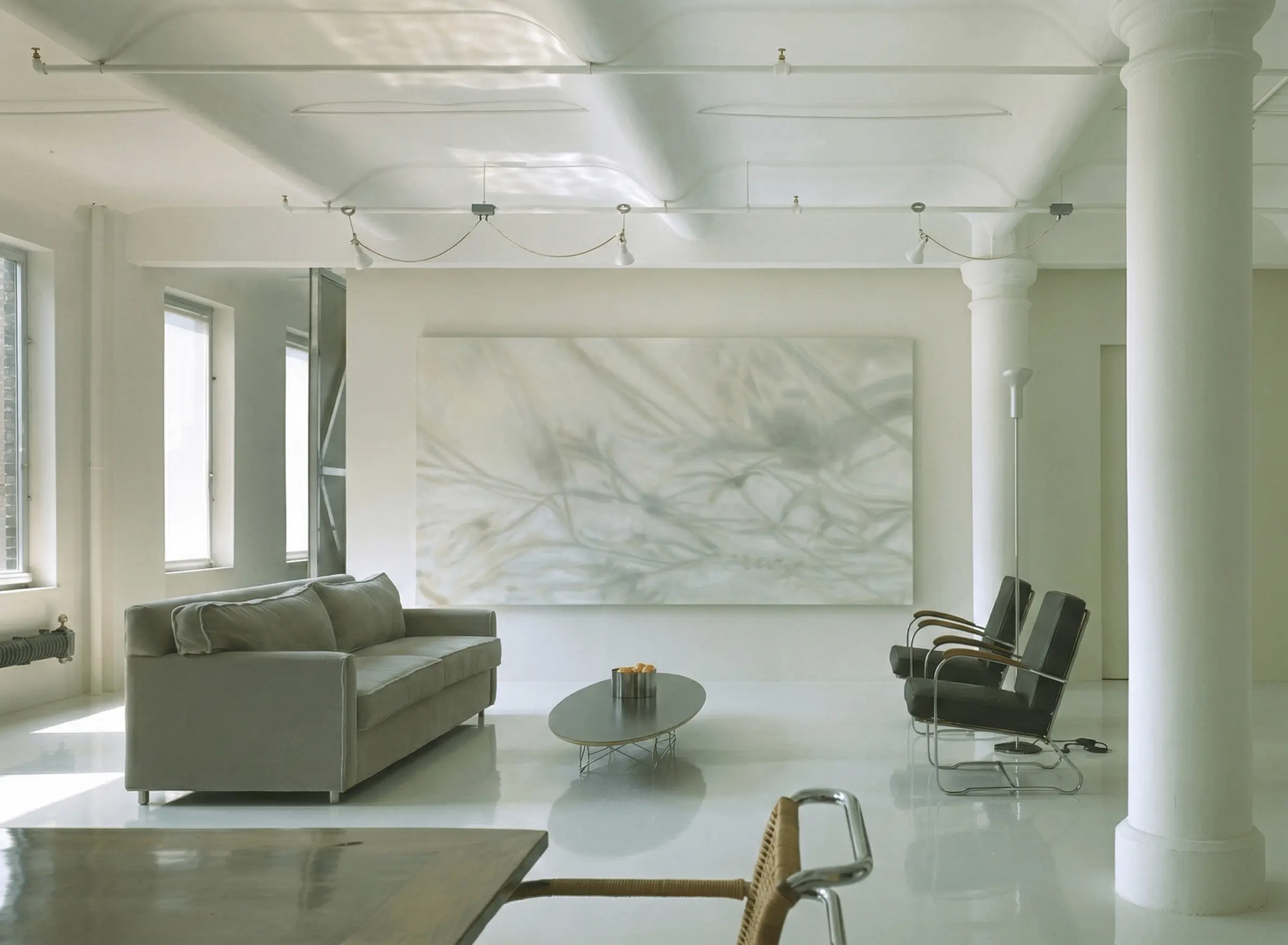
Most of these decisions make sense from another point of view. Bright walls photograph beautifully. Cool lighting looks clean and efficient. Open layouts promise flexibility. Large-format flooring is practical. Glass expands the apparent size of the room and captures the view. None of this is irrational. It is simply not the same thing as designing for deep comfort.
This is the central misalignment behind many cold interiors: the room is optimised for visual clarity and market legibility, not for the slower human experience of inhabitation. People do not merely look at a room. They sit in it at night. They listen to it. They move through it half-awake in the morning. They need warmth, edge, softness, and rhythm. Without those, design becomes image management.
What Usually Goes Wrong, and What It Affects
Rooms lose visual depth and begin to feel exposed rather than bright. Warmth depends on contrast as much as illumination.
Domestic rooms begin to feel more like offices, galleries, or transit spaces than places intended for family life.
The room loses arrival, hierarchy, and psychological distinction. Everything is visible, but very little feels anchored.
Sound travels too easily. Conversation feels sharper. The room becomes less intimate than its square footage suggests.
Not every cold house needs construction. In many cases, the most powerful corrections are immediate: warmer lighting, one substantial rug, heavier curtains, furniture with more weight, and the removal of surfaces or objects that make the room feel thin. These changes do not hide the architecture. They rebalance it.
The first and easiest shift is lighting. Changing from cooler bulbs to a warmer 2700K or 3000K range can alter the emotional register of a room almost instantly. The second is acoustic softness. A large wool rug placed where people actually sit changes not only the floor but the entire sound of the space. Then comes material weight: wood, woven surfaces, linen, leather, and anything that absorbs rather than merely reflects.
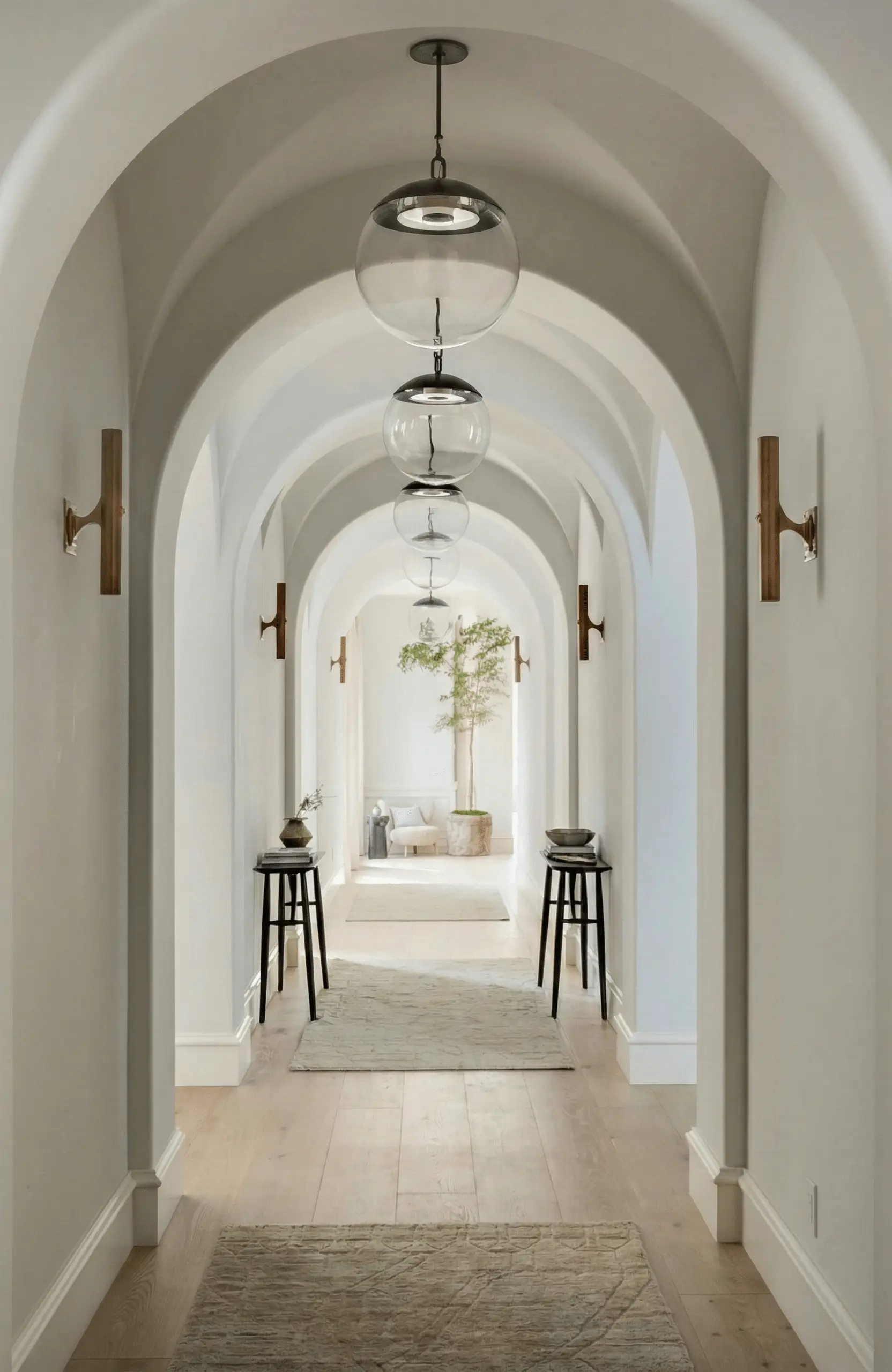
Warmth is not a decorative style. It is a material condition. Rooms feel warmer when they contain surfaces that hold light instead of throwing it back aggressively, fibres that absorb sound, and finishes that register age and use gracefully. This is why wool, linen, cotton, wood, leather, stone with softer finish, and aged metal all matter so much more than “colour palette” on its own.
The Elements That Bring a Room Back to Life
Wool brings both visual and acoustic depth. It is one of the fastest ways to reduce hardness in a room without changing the architecture.
Wood introduces density, grain, and a kind of quiet warmth that slick, synthetic, or overly polished materials usually lack.
These fibres soften edges and carry light gently. They help convert exposure into enclosure.
Smaller accents matter. The room is often held or broken by what repeats at the hand level every day.
This is also why one serious piece can shift an entire room. A strong rug, a substantial table, or a deeply textured textile establishes a new material standard. Once that happens, everything else is read against it. The room starts to organise itself around substance rather than image.
The deeper issue behind many cold rooms is not simply styling. It is architectural sequence. Human beings need rooms to tell them where they are. A home becomes livable not merely because it is open, but because it knows how to compress and release, how to create arrival, how to let one zone feel distinct from the next. Threshold is not decoration. It is orientation.
This is why a room with enough enclosure often feels more generous than one with endless exposure. Shelter enlarges experience. Edge creates calm. The room becomes more usable because it becomes more legible. This does not require turning the house into something old-fashioned. It requires giving modern space enough structure to feel inhabited.
The Warm Register
The larger point is simple. A home is not successful because it looks disciplined from the doorway. It is successful because it can hold a life. It should feel calm in the evening, readable in the morning, and generous under ordinary use. If the room is making people sit lightly, speak sharply, or leave quickly, something in the space is resisting habitation.
Coldness is not a mystery and it is not fate. It is usually the result of decisions that can be identified and corrected. The best rooms are not the most decorated ones. They are the ones where light, surface, sound, threshold, and material all quietly agree to support the people inside them.
Start with the pieces that change the room fastest
Why do modern homes feel cold even when they are expensive?
Usually because several conditions are working together: too much glare, cool lighting, not enough threshold, too many hard reflective surfaces, and too little enclosure. Expensive materials do not automatically create warmth if the room is still acoustically and visually harsh.
What is the fastest way to warm a cold room?
Start with warmer bulbs, a substantial wool rug, and real textile layering. Those three changes often shift the room immediately, even before any architectural work happens.
Can a cold house be fixed without renovating?
Often yes. Lighting, rugs, curtains, furniture scale, and material upgrades can significantly improve the room. More serious cases may still need threshold, zoning, or enclosure adjustments.
What lighting makes a house feel warmer?
In most homes, 2700K to 3000K lighting feels noticeably warmer and more residential than cooler bulbs. Layering the light matters too. Lamps and directional sources create depth that flat overhead lighting does not.
Where is Reeva Sethi Home located?
Reeva Sethi Home is located at 20430 Saratoga–Los Gatos Road, Saratoga, California. The showroom is open Monday through Saturday, 11 to 4, with appointments available within and outside those hours. Phone: 408-797-5283.