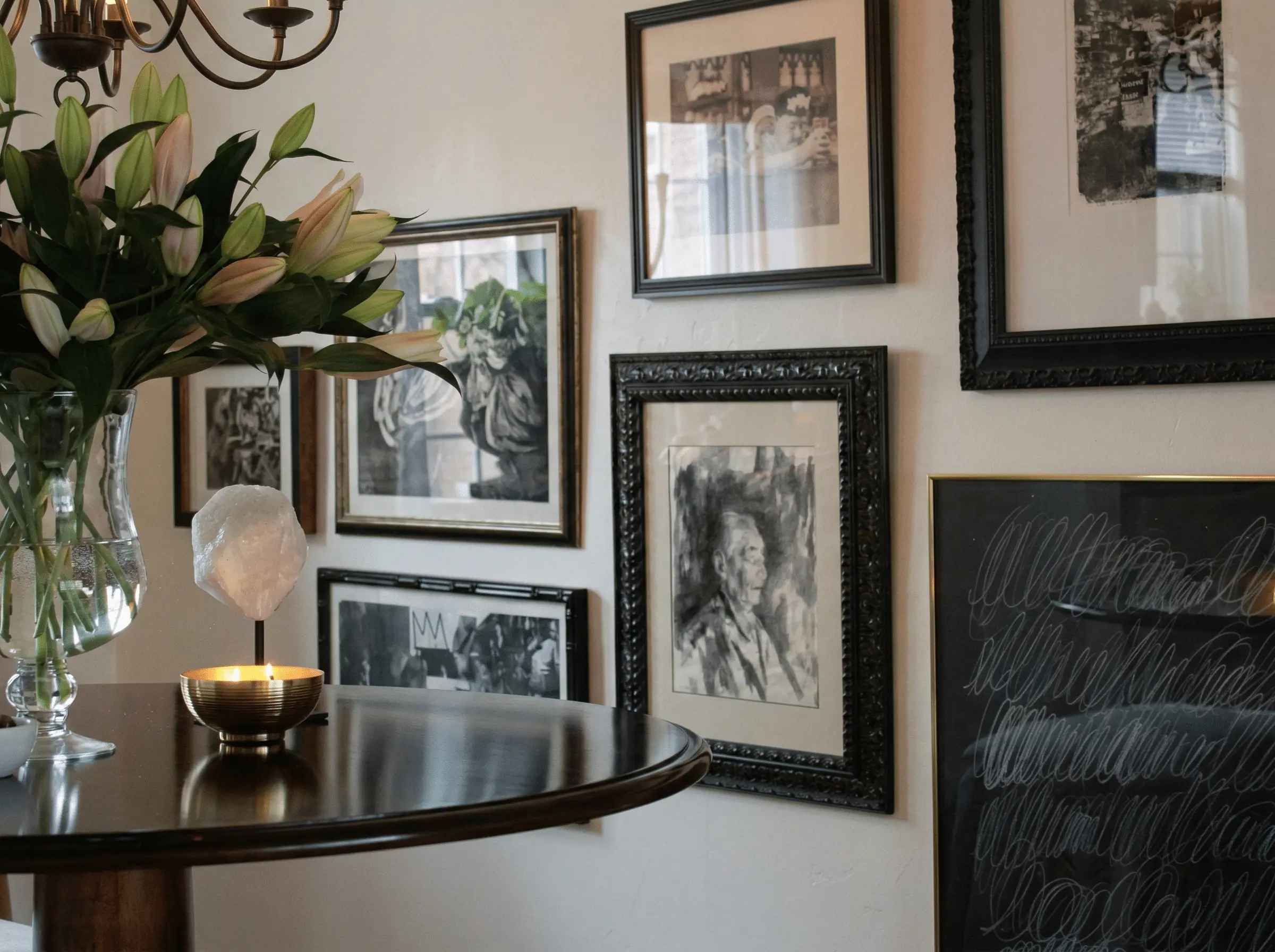
There is a particular kind of discomfort that comes from living inside a room that has been designed to impress rather than to hold. You notice it most at 9am on a Saturday morning — barefoot on a polished floor, waiting for the kettle, under lights that make everything look like an open-plan office. The room is technically beautiful. It appeared that way in the listing photographs. And yet something in it refuses to let you settle.
RS Studio was built to address this. Not through renovation, and not through the addition of another expensive object selected for its visual interest. Through a different premise entirely: that a home built from honest materials — hand-woven wool underfoot, teak and oak furniture, linen at the window — produces warmth structurally, not decoratively. The warmth is in the making. The room becomes livable because the materials are livable.
This is not a philosophy about restraint, or about the studied blankness that Bay Area interiors have mistaken for sophistication. It is a philosophy about substance. Natural fibre that softens with washing. Wood that acquires patina with use. Wool that insulates both thermally and acoustically. Objects that do not require careful handling — they require the opposite. They require living with, every day, without ceremony.
The RS Studio approach to home can be stated in a single sentence: timeless interiors that feel warm, calm, and livable, built from materials that age well and designed for families who actually use their homes.
This means something specific in practice. It means not trendy — because a room that chases the current moment will be wrong in three years, and there is nothing more expensive than a room that needs to be redone. It means not overly formal — because a dining table covered in a cloth you're afraid to stain is not furniture, it is theatre. And it means not minimalist in the Bay Area sense — which has come to mean stripped of every material with any density, warmth, or acoustic softness, leaving a room that is technically empty and experientially cold.
- Natural fabrics first Cotton, linen, wool, and cotton-linen blends form the foundation of the textile collection. Not because every other material is automatically wrong, but because natural fibres simply behave better over time. A pure linen tablecloth softens, gains texture, holds memory. A cotton-linen blend becomes easier to live with every time it is washed. The difference between these materials and cheaper substitutes is the difference between a room that feels inhabited and a room that does not.
- Comfortable seating as a non-negotiable A sofa you hesitate to sit on is not a sofa. It is a display item. RS Studio specifies and sources seating in natural materials — deep-cushioned, upholstered in cotton, linen, and richly textured weaves — that invites occupation. The standard is simple: if you would not spend a Sunday afternoon in it, it does not belong in a home.
- Durable materials that do not perform durability Teak resists moisture. White oak ages to a warm honey. Wool is naturally resilient underfoot. These properties are not incidental — they are why these materials have been used in homes for centuries. A hand-woven wool rug placed in a family home with children and dogs will usually look better in five years than it does today. That is not a coincidence. That is the material doing what it was made to do.
- Warm accents, not glamorous ones Aged brass instead of polished chrome. Warm-toned oak instead of cold-finished steel. Subtle natural stone instead of engineered flash. Textured, hand-woven textiles instead of smooth machine-finished cloth. None of these choices are flashy. All of them are correct — because they accumulate warmth rather than reflecting it back at you.
- Design for real life, not editorial photography As the Cold House diagnostic established: a room designed to be photographed is a room designed to be left. RS Studio reverses this. Every object in the collection — every tray, coaster, basket, and blotter — is selected on the basis of how it performs in daily use, not how it reads in a photograph. The photograph is a consequence of good design. It is never the goal.
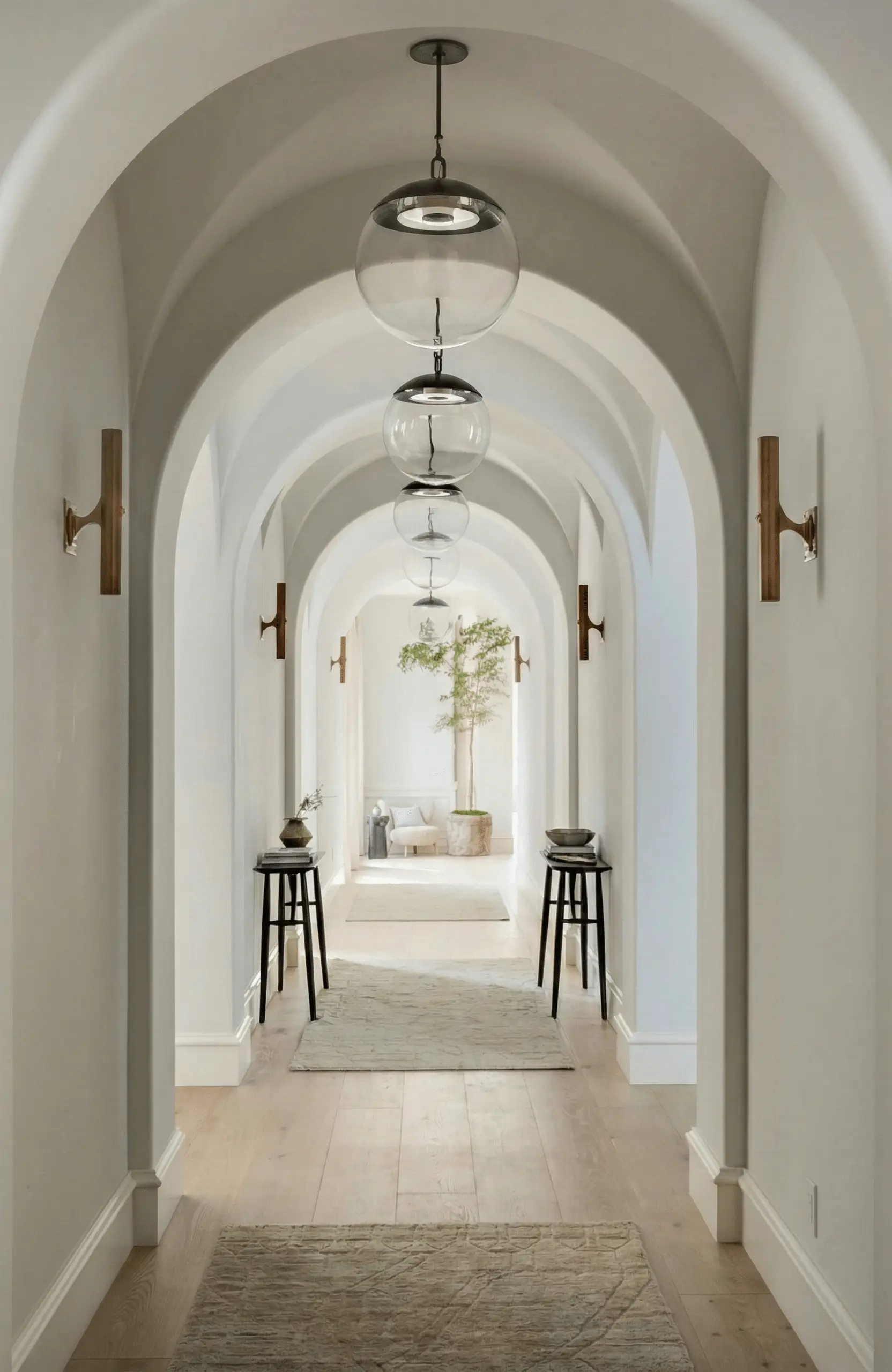
Textiles are where the physics of room comfort and the philosophy of real materials meet most directly. A pure wool rug on a hard floor reduces the room's reverberation time, raises the perceived floor temperature, and introduces the visual depth — the variation of a hand-woven surface under changing light — that machine-made material can rarely replicate. These are not decorative effects. They are physical ones.
What We Make, and What It's Made From
The foundation of any warm room. RS Studio's rug collection is woven in pure wool using traditional flat-weave and pile techniques. Natural dyes absorb and reflect light with a depth that synthetic colour cannot achieve. Available in sizes from entry runners to full room-scale carpets.
Jacquard-woven throws in cotton-wool blends, heavy enough to be useful and light enough to be draped. See the full blanket collection. These are not decorative objects placed on sofas for photography — they are for sleeping under, for reading wrapped in, for the kind of everyday use that softens them over time.
Hand-woven wall tapestries and richly textured woven cushions introduce mass, texture, and softness in ways flat decorative pieces cannot. Select tapestry cushions with velvet backing are included where the finish supports the room rather than cheapening it. A room with substantial textile presence is quieter, warmer, and more legible than the same room without it.
Tablecloths, napkins, and placemats in linen, cotton, and cotton-linen blends from the table linen collection. These are intended for use — they wash well, soften over time, and become more beautiful through repetition. A good table textile used three times a week for a decade will be better-looking than it was when it arrived.
The question RS Studio asks about every piece of furniture is not: does it look good in this room right now? The question is: will it still be right in this room in thirty years? This is a different standard, and it produces different choices.
Teak, white oak, and mahogany are the three hardwoods that meet this standard most reliably. Each has properties — density, grain structure, natural oil content, resistance to humidity — that make them exceptional for domestic furniture. In some pieces, supportive or secondary components may be used selectively where stability and long-term performance require it. That is not compromise. That is proper construction.
There is a category of domestic object that design culture has largely abandoned to the souvenir trade: the coaster, the tray, the desk blotter, the storage basket. These are everyday objects — handled multiple times a day, left out on tables and counters, visible in every corner of the home. They are also, in most homes, made cheaply and expected to be replaced without thought.
RS Studio treats these objects as seriously as furniture. A teak tray on a kitchen counter, a set of stone coasters on a side table, a leather-and-linen desk blotter in a home office, a hand-woven basket for storing blankets — these are not premium versions of disposable objects. They are objects made from materials that belong in the same room as a hand-woven wool rug and a well-made oak dining table. Cohesion at this level is not visible as individual choices. It is experienced as the quality of the room.
Everyday Objects, Real Materials
Serving, display, and organising trays in teak and oak from the home goods collection. Teak trays are suited to kitchen and bathroom use. Oak trays are for living and dining spaces. Both are finished to age well under daily use.
Coasters in natural stone — sandstone, travertine, slate — and teak. Available individually and in sets. Stone coasters acquire a slight patina with use that makes each one distinct. The point is not perfection. The point is graceful wear.
Full-grain leather and linen desk blotters for home offices and writing desks. A leather desk surface improves visibly with use — acquiring the patina of actual work — in a way that coated synthetic desk mats do not. This is a considered object for a considered workspace.
Hand-woven storage and display baskets in seagrass and rattan, naturally dyed. Used for blanket storage, log storage, magazine and book display, or as standalone objects. A hand-woven basket introduces the same acoustic softness and visual texture as a hand-woven rug — at floor level and in corners where rugs cannot go.
The materials RS Studio works with are their own colour palette. Teak is a warm amber-brown. White oak is a cool honey. Stonewashed linen is undyed ecru. Hand-woven wool holds natural dye — ochre, indigo, madder, walnut — in a way that reads as warm regardless of the specific colour. Natural stone is grey, buff, terracotta. This is not a curated palette. It is what happens when you build a room from honest materials.
The Five Accents That Work
Against these materials, no additional decorative accent is necessary. Aged brass hardware on an oak cabinet does not require a designer to select it — it is simply the correct finish for the material. Warm-toned oak beside stonewashed linen does not require a colour theory consultation. These combinations have been correct for centuries. RS Studio does not claim credit for them. It simply refuses to abandon them in favour of what is currently fashionable.
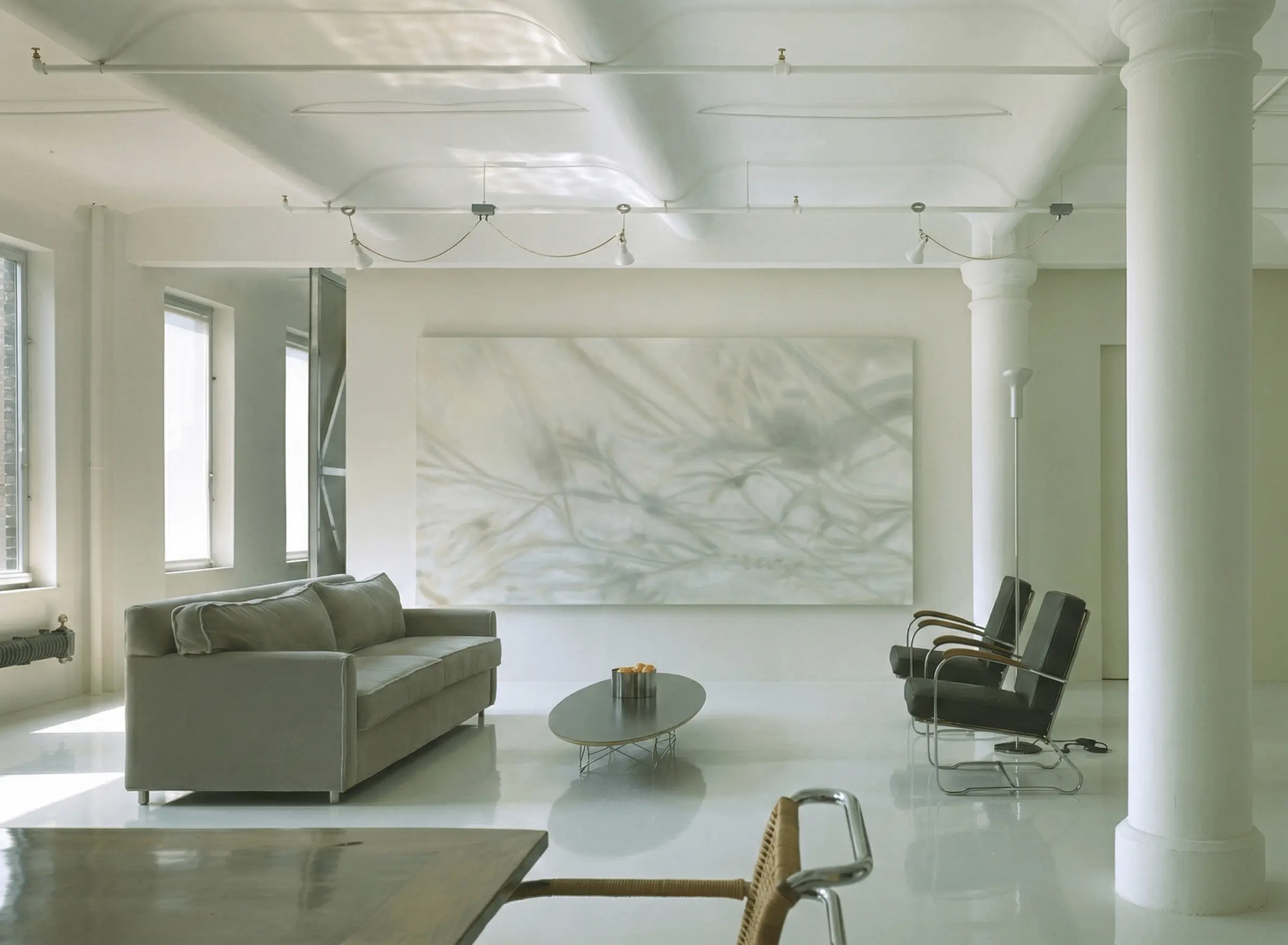
The diagnostic article in this series — The Cold House — describes the five physical conditions that make Bay Area rooms cold. The prescription for a room scoring 3 or 4 on that scale is, essentially, the RS Studio collection applied in sequence: a heavy wool rug first, then a change to 2700K bulbs, then the addition of one substantial wood furniture piece, then textiles at the window, then the accumulated smaller objects — baskets, trays, coasters — that signal to a room that it is inhabited.
Each of these additions changes not only the specific condition it addresses but the atmosphere in which all the other conditions operate. A wool rug changes the floor. But it also changes the ceiling — because the acoustic softening is experienced throughout the entire volume of the room. A well-made teak dining table introduces visual weight to a room that previously had none. But it also changes how every other surface in the room reads — because now there is a reference point of genuine density and honesty against which the white walls, the glass, and the polished concrete are measured and found, at last, to be background.
This is what RS Studio means by coherence. Not a matched set. Not a coordinated palette. A room in which every material is real, every object is honest, and the accumulated effect is a space that feels — as a family home should feel — warm, calm, and entirely livable.
Browse the collection by category
What materials does RS Studio use for rugs and textiles?
RS Studio sources hand-woven rugs in pure wool, jacquard-woven blankets in cotton-wool blends, linen and cotton table linens, and richly woven textile pieces including tapestry cushions. The collection centres on natural fibres and natural-feel materials chosen for softness, longevity, and daily use. The slight irregularity of a hand-woven surface is not a flaw. It is how the textile catches light differently at every point, and why it continues to look interesting twenty years from now.
What wood does RS Studio use for furniture?
RS Studio works primarily with teak, white oak, and mahogany — hardwoods chosen for density, grain character, and longevity. Many pieces in the furniture collection use substantial real wood construction, with certain supportive or secondary components used selectively where stability and reduced warping require it. Teak is exceptional for dining tables and surfaces in contact with moisture. White oak ages to a warm honey and is ideal for living room furniture and occasional pieces. Mahogany is used for larger case furniture where visual weight and stability are priorities.
What home goods does Reeva Sethi Home carry?
Reeva Sethi Home carries a considered range of everyday objects: teak and oak trays, hand-woven seagrass and rattan baskets, full-grain leather and linen desk blotters, natural stone and teak coasters, and jacquard-woven throws. Each piece in the home goods collection is chosen for material honesty and daily durability — real wood, woven fibres, stone, leather, and finishes that improve with use rather than degrade quickly.
Is RS Studio design family-friendly and suitable for homes with children?
Yes. The RS Studio philosophy is built entirely around real family life. Natural fabrics clean well and soften with washing. Wood surfaces acquire patina rather than feeling ruined by normal use. Hand-woven wool rugs are durable underfoot — wool is naturally resilient and long-wearing. This is design for homes that are actually lived in, not editorial showrooms.
Where is Reeva Sethi Home located and does it serve the Bay Area?
Reeva Sethi Home is located at 20430 Saratoga–Los Gatos Road, Saratoga, California. The showroom and bespoke services serve clients throughout the South Bay — Saratoga, Los Gatos, Los Altos, Palo Alto, Menlo Park, Atherton, Cupertino, and San Jose — as well as the broader Bay Area. Phone: 408-797-5283.