There are pieces of furniture that simply occupy a room. And there are pieces that alter its atmosphere. The wingback chair belongs firmly in the second category — and has done so for nearly four centuries, across every shift in taste, technology, and interior fashion.
Long before it became associated with libraries, studies, or old estates, the wingback chair served a practical purpose. Its high back and enclosing sides were designed to shield the body from drafts and retain warmth near the fireplace. It was not decorative in origin. It was protective. Architectural. Human.
That history still matters. Because even now, people respond to the chair emotionally before they understand why.
A Chair That Holds Space
A wingback chair creates a sense of enclosure in a room. It holds space differently from most contemporary seating. The tall silhouette introduces vertical weight. The wings soften exposure. The proportions encourage stillness rather than sprawl.
In many modern interiors, furniture is designed to disappear — thin frames, low profiles, pieces that visually retreat into the room. The wingback does the opposite. It establishes presence. Not loudly. Not aggressively. But with certainty.
A room with a wingback chair immediately feels more grounded. More intentional. It suggests reading instead of consuming. Conversation instead of distraction. Permanence instead of transience.
What Modern Rooms Have Lost
Good traditional furniture survives because it solves emotional problems as much as practical ones. And modern homes increasingly suffer from emotional weightlessness.
Open floor plans, hard surfaces, oversized sectionals, and fast furniture often create spaces that feel visually complete but psychologically thin. Everything is exposed. Nothing feels anchored. Rooms become arrangements instead of environments.
The wingback chair restores some of that lost gravity. Placed properly, it creates a point of refuge within the larger room — near a fireplace, beside a bookshelf, adjacent to a window with afternoon light. It introduces intimacy without requiring clutter.
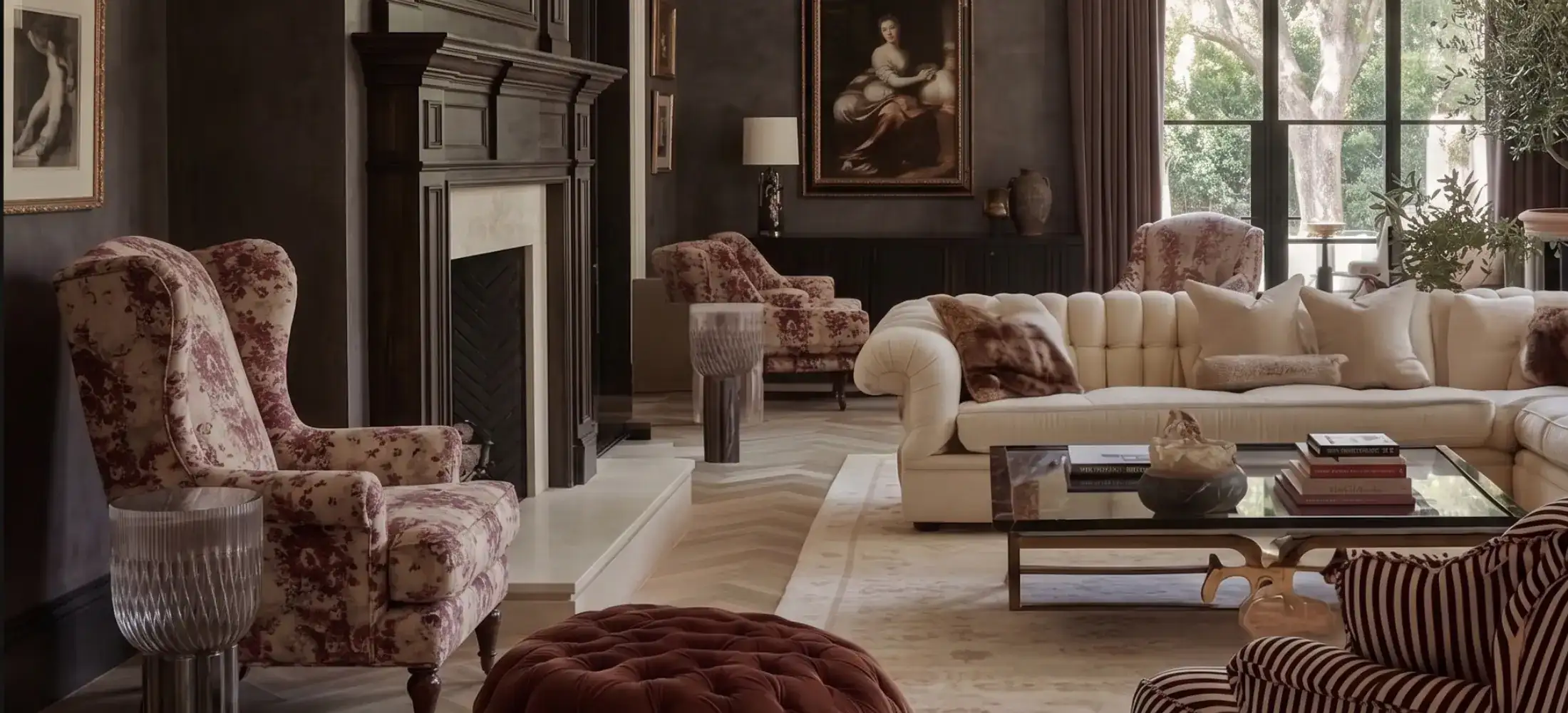
- Introduces vertical weight and visual authority to the room
- Creates a defined territory of enclosure within the larger space
- Signals a function — reading, conversation, stillness — rather than passive seating
- Provides contrast of silhouette against lower, horizontal furniture
- Anchors the room without requiring matching pieces around it
Why Traditional Forms Endure
The wingback evolved through many interpretations — English rolled arms, Queen Anne influences, Georgian profiles, tighter modern versions. Some became more decorative over time. Others retained a stricter architectural character. But the underlying idea remained remarkably consistent: enclosure, warmth, and authority.
That consistency is not coincidence. Most disposable furniture is designed around trend cycles. Traditional forms survive because they continue answering permanent human needs that do not change with fashion.
The high back and projecting wings shelter the sitter from the room, creating a sense of privacy within shared space. The body reads this as safety before the mind registers the chair at all.
The tall silhouette introduces vertical weight into rooms that tend toward the horizontal. It establishes a visual hierarchy. The room knows where to look.
A well-made wingback outlasts the furniture placed around it. It acquires the subtle gravity of age. It becomes the piece a room is organised around, not the piece that fills a gap.
People still want corners that feel protected. Rooms that calm them. Furniture that carries a sense of weight and intention. The wingback answers this not by trying to, but simply by being what it is.
How Proportion Changes the Room
The success of a wingback chair depends heavily on proportion — and proportion is where most buying decisions go wrong. High wings create enclosure and privacy. Lower wings feel lighter and more visually open. An upright back feels architectural and attentive. A reclined back shifts the chair toward lounge posture and loses authority. Shallow seats encourage conversation. Deep seats encourage sprawl.
These are not merely aesthetic distinctions. They determine how the room behaves and how the people in it feel. For a practical breakdown of each, read How to Choose a Wingback Chair That Holds a Room.
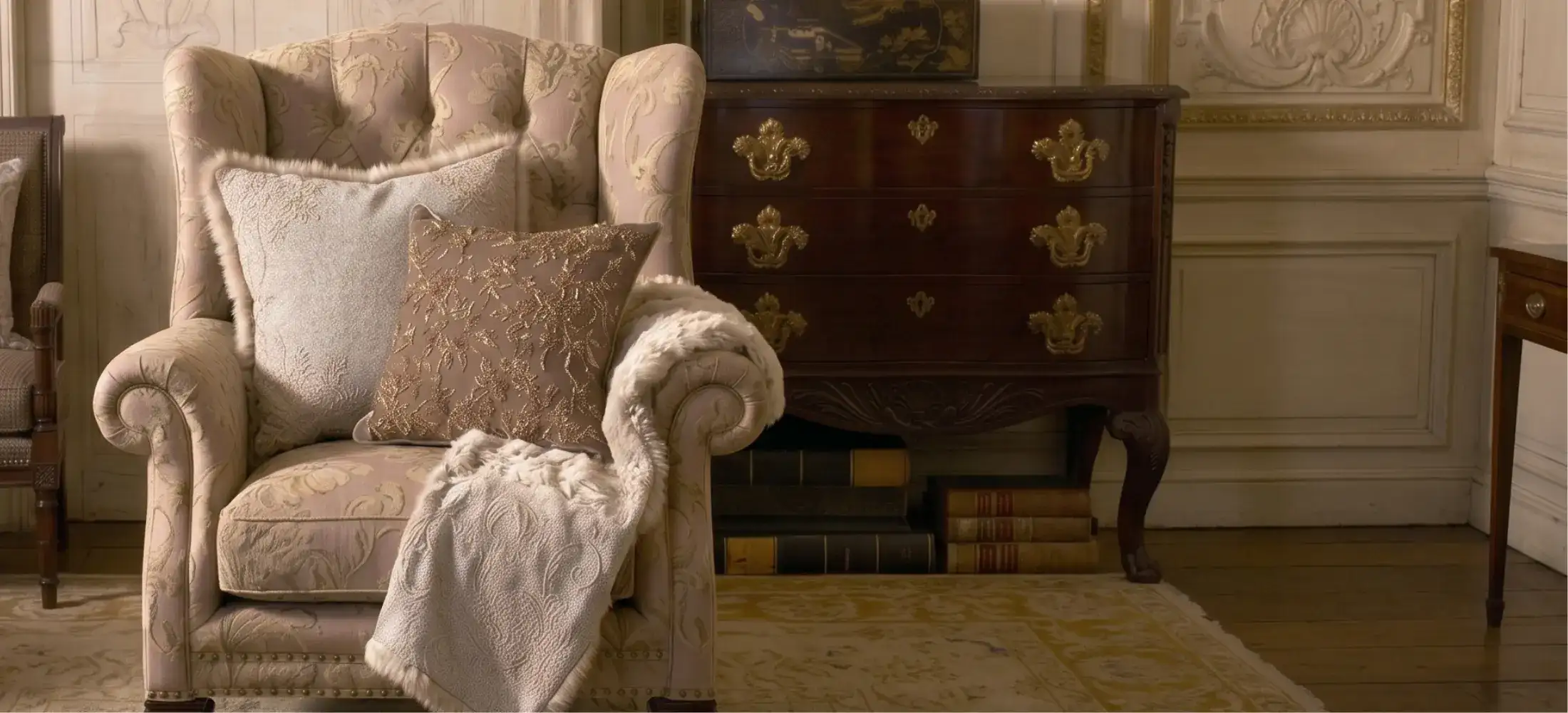
Proportion and frame quality are easier to assess in person than in photographs. See the Wentworth Wingback at the studio in Saratoga — compare seat geometry, wing height, and construction for your room.
View the Wentworth →More Than Seating
A wingback chair does not need to match everything else in the room. In fact, it is often more powerful when it does not. The best interiors rarely rely on matching furniture sets. They rely on contrast in silhouette, history, and emotional function.
The wingback's role is different from everything around it. It is not merely seating. It is a visual pause.
A home is not simply a collection of objects. It is a structure for emotional life. Some furniture fills space. A wingback chair changes the posture of the room.
→ Explore the chairs collection
REEVA SETHI is the founder of Reeva Sethi Home in Saratoga, California — a showroom built around the principle that rooms should last, not trend. She opened the studio because she couldn't find what she was looking for anywhere else. Read more.