Buying Guide How to Choose a Wingback Chair Seven things to check, with the measurements to look for, before a wingback earns its place in a room.
A wingback is bought for its silhouette and kept for its frame. The first is visible in a photograph. The second is not.
To choose a wingback chair, judge the structure before the fabric. Look for a kiln-dried hardwood frame, a seat 17 to 19 inches high and about 20 inches deep for upright sitting, a back close to upright, wings sized to the room, arms around 24 to 27 inches from the floor, and sprung suspension rather than foam alone. Then give the chair room to read clearly, ideally answering a fireplace, a window or a library wall.
| Check | Look for | Walk away if |
|---|---|---|
| Frame | Kiln-dried solid hardwood: mahogany, oak or beech | The chair feels light, or nobody can tell you what the frame is |
| Seat | 17–19 in high; about 20 in deep to sit upright, 24 in or more to lounge | You need a cushion behind you to reach the back |
| Back | Close to upright, with a slight rake | It reclines like a lounge chair |
| Wings | Taller by a fire or under high ceilings; lower in smaller rooms | The wings flex when you lean into them |
| Arms | About 24–27 in from the floor | Your shoulders lift when your forearms rest on them |
| Suspension | Eight-way hand-tied coils, or well-made sinuous springs | Foam over webbing and nothing else |
| Placement | Clear sightlines and something to answer | The only spot for it is floating mid-room |
A wingback chair is not a decorative accent. It is an anchor. The right one gives a room height, enclosure and a fixed point. The wrong one, however well it photographs, sags within a few years and reads as furniture rather than architecture.
The form began in late 17th-century England as an answer to drafty rooms: the high back and wings kept cold air off the sitter and held warmth near the fire. (The full story is in What Is a Wingback Chair? and The History of the Wingback.) That logic still explains the silhouette, and it tells you what to check. The shape is the point, so the chair has to hold it.
Why the Shape Works
The high back and wings enclose the shoulders and soften the edges of your vision. The geographer Jay Appleton called this preference prospect and refuge: we are drawn to places where we can see out while feeling sheltered. It is the same instinct that picks the corner table, the window seat and the chair that faces into the room.
A wingback placed well gives a room that refuge: a defined, human-scale spot inside a larger space, one that signals someone belongs there. It is also why a poorly built wingback fails so visibly. A chair that sags, leans back too far, or has wings too shallow to enclose anything makes the promise of the silhouette and then breaks it. Choose by structure; the feeling follows from the geometry.
Seven Things to Check Before You Buy
01Frame construction
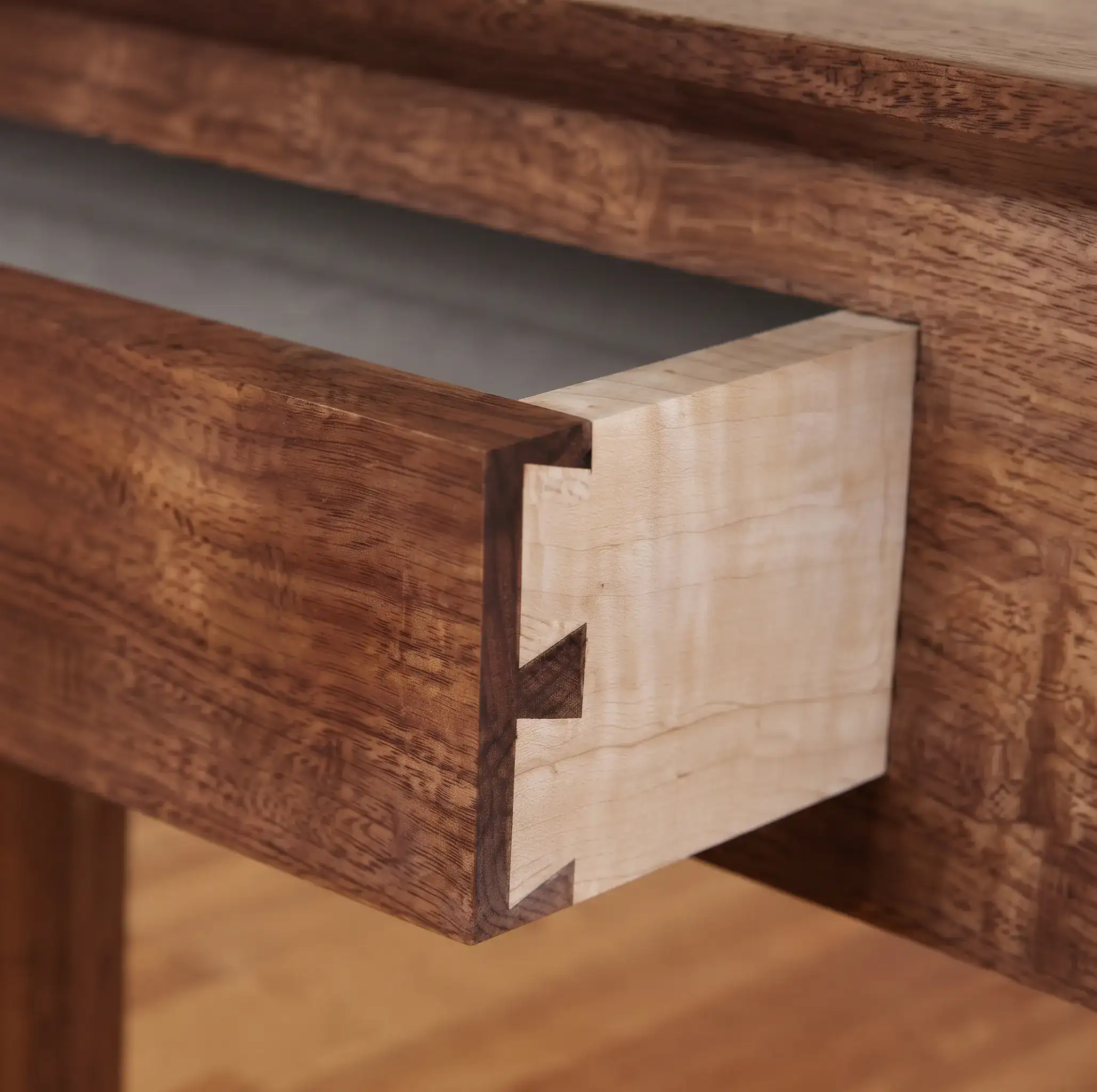
Start here. A proper wingback is built on kiln-dried solid hardwood, such as mahogany, oak or beech, with joints that are glued and reinforced rather than stapled. The structure should feel solid before any fabric goes on. Chairs that rely on padding to imitate solidity reveal themselves within a couple of years: the foam compresses, the seat shifts, and the silhouette loses its authority. Ask what the frame is and how it is joined; a good maker will know. Then lift one front corner. A hardwood frame is heavy. For more, read How to Tell If Furniture Is Well Made and Solid Wood vs Veneer.
02Seat height and depth
Seat height usually falls between 17 and 19 inches. Depth matters more. A seat around 20 inches deep keeps you upright, which is right for a reading chair or a room anchor. A seat of 24 inches or more invites a relaxed, lounging posture. Choose for how you actually sit, not for how the chair looks staged.
03Back angle
A wingback should support upright comfort. If the back reclines too far, the chair stops anchoring the room and starts reading as a lounge chair in disguise. Sit back and rest your head: the back should meet it without pushing you forward.
04Wing height and shape
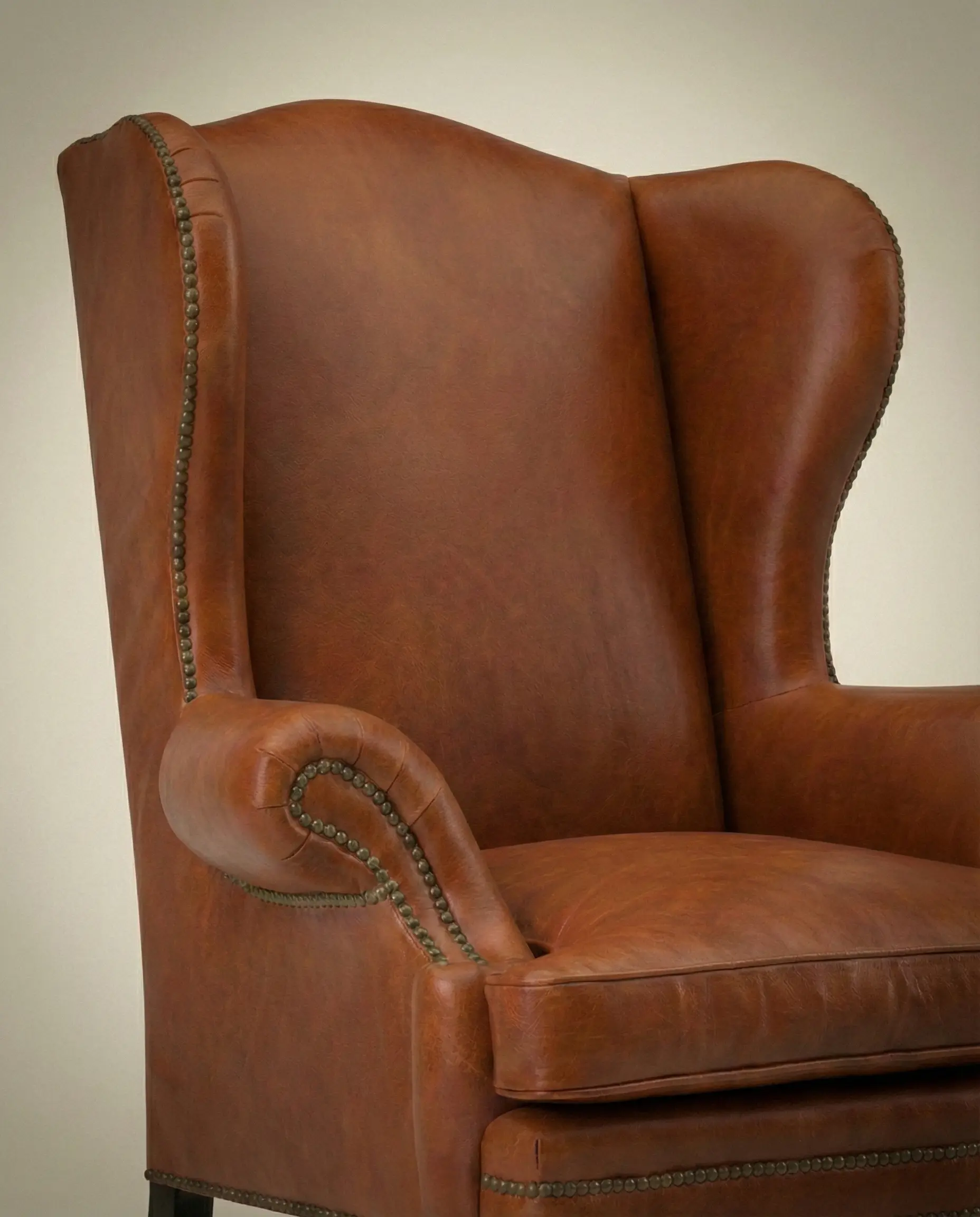
Higher wings give stronger enclosure and more presence; they suit fireplaces, reading corners and library walls. Lower wings feel lighter and work better under lower ceilings or among more contemporary furniture. Whatever the height, the wings should be firm. Press each one sideways; it should not give.
Arm height
Arms decide whether the chair is truly usable. Too low and they are decorative. Too high and they push the shoulders up, which makes long sitting uncomfortable. Around 24 to 27 inches from the floor usually supports reading and conversation without imposing on posture.
06Suspension and cushioning
Comfort should come from the suspension, not from foam so dense it collapses within eighteen months. Eight-way hand-tied coil springs are the traditional benchmark. Well-made sinuous springs are acceptable in good contemporary pieces. Foam alone is a compromise. Look for a seat that holds its shape and recovers cleanly after you stand up.
07Scale and placement
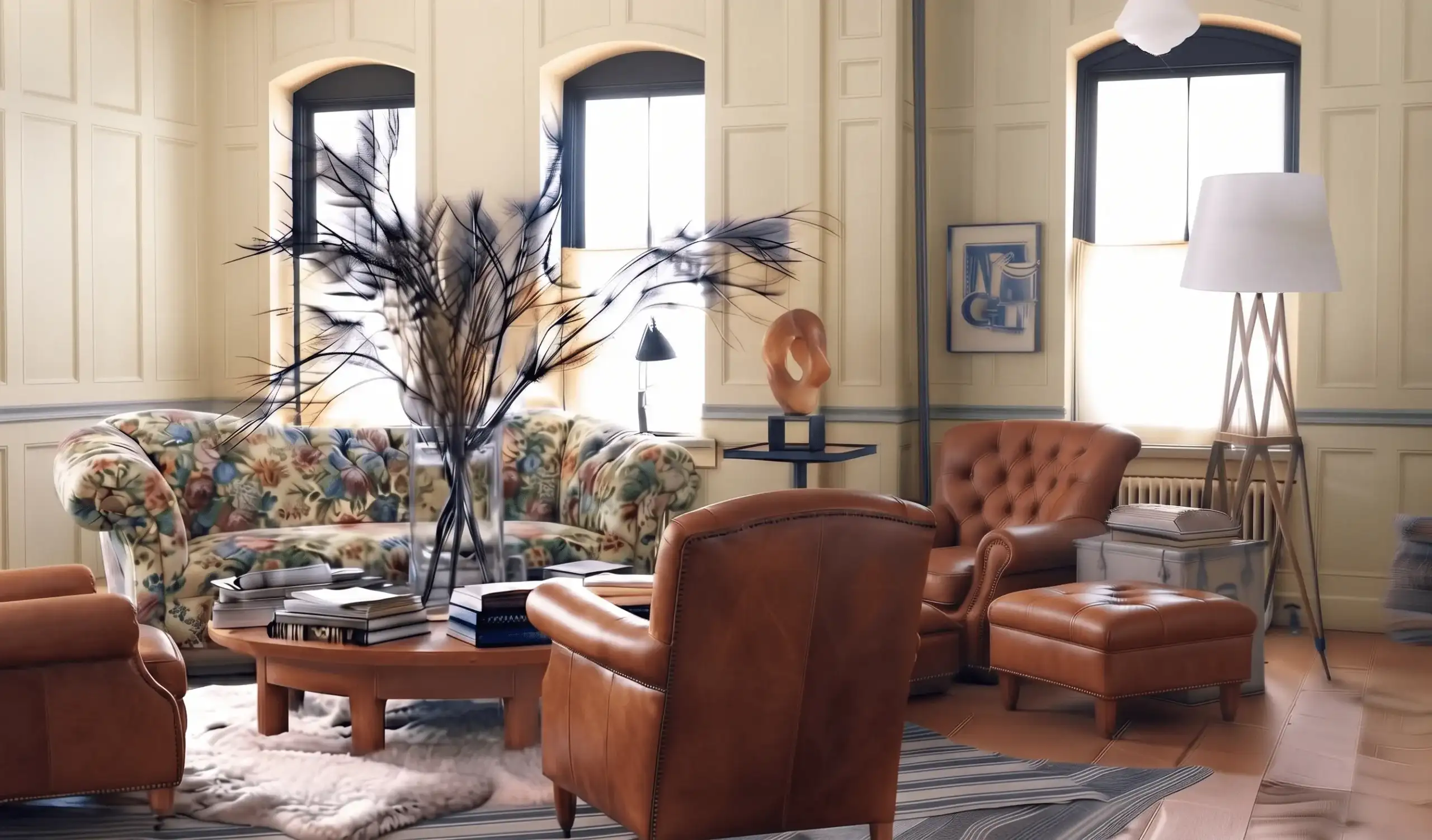
A wingback should look placed, not parked. Give it enough space that the whole silhouette reads from the room's main sightlines, and let it answer something: a fireplace, a window bay, a library wall, or a corner that would otherwise feel unresolved. A chair too small for its room is one of the quieter reasons a room feels wrong, which is why space planning belongs before shopping.

Testing a Wingback in Person
Proportion and seat geometry are hard to judge from a photograph. Ten minutes in the chair will tell you more than any listing.
- Sit with a book for ten minutes, not thirty seconds. Discomfort shows up late.
- Rest your head against the back. It should meet you without tipping you forward.
- Press each wing sideways. Firm is good; flex means a weak frame.
- Stand up using the arms. They should take your weight without movement or creaks.
- Ask what is under the cushion: coils, sinuous springs, or foam on webbing.
- Bring the room with you: a photograph and the measurements of the spot it will fill.
Upholstery: Choose It Last
Fabric is the easiest part to change and the last thing to decide. Linen and cotton are lighter and age well in everyday rooms; leather suits studies and darker rooms; velvet is richer but asks more of its surroundings. Our Fabric Register covers which cloths wear well. A sound frame will outlast several covers, which is what makes a wingback worth keeping: see What Is Heirloom Furniture? and our furniture care guide.
How to Buy a Wingback at Reeva Sethi Home
Furniture at Reeva Sethi Home is ordered through the Saratoga showroom or by phone, not through an online checkout. Because a wingback is the piece where proportion matters most, it is worth sitting in before you decide. Call 408-797-5283, book a showroom visit, or arrange a home consultation to see how a chair sits with your own furniture. You can browse all our wingback chairs and chairs online first.
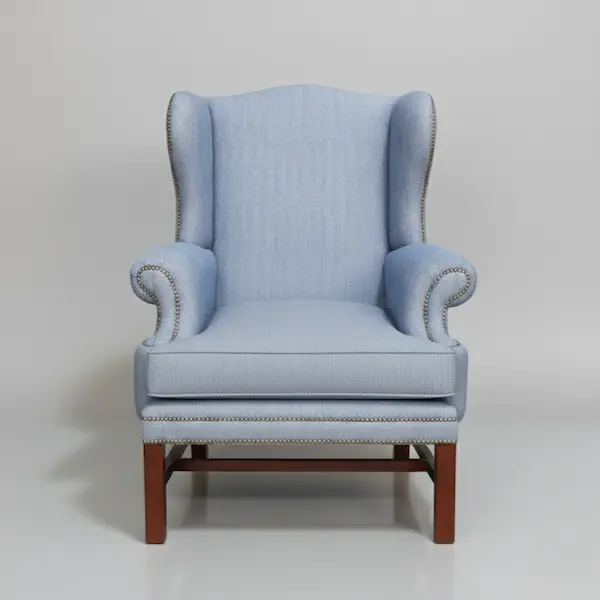
Sit in the Wentworth Wingback.
Built on a kiln-dried solid mahogany frame, with brass nailhead trim. Ordered by phone or in the showroom, with white-glove delivery across the US.
Reeva Sethi Home is located at 20430 Saratoga–Los Gatos Road, Saratoga, California, serving Saratoga, Los Gatos, Los Altos, Monte Sereno, Palo Alto, San Jose and the greater Bay Area, with white-glove delivery across the US and international delivery on request.
Saratoga, CA 95070
11am – 4pm · call ahead
Bespoke sourcing
How do I choose a wingback chair?
Judge the structure before the fabric: a kiln-dried hardwood frame, a seat 17 to 19 inches high, a back close to upright, wings sized to the room, arms around 24 to 27 inches high and sprung suspension. Then make sure the chair has space to read clearly in the room.
What should a wingback chair frame be made of?
Kiln-dried solid hardwood such as mahogany, oak or beech, with joints that are glued and reinforced rather than stapled. A hardwood frame is noticeably heavy when you lift one corner.
What seat depth is best for a wingback chair?
Around 20 inches keeps you upright, which suits reading and a more formal room. A seat of 24 inches or more gives a relaxed, lounging posture. Seat height is usually 17 to 19 inches.
What is the best suspension for a wingback chair?
Eight-way hand-tied coil springs are the traditional benchmark. Well-made sinuous springs are acceptable. Foam alone is a compromise that tends to compress within a few years.
Should a wingback chair have high or low wings?
High wings give more enclosure and presence, and suit fireplaces, reading corners and rooms with tall ceilings. Lower wings feel lighter and suit lower ceilings or more contemporary rooms.
Where should a wingback chair be placed?
Where it answers something: a fireplace, a window bay, a library wall or an otherwise unresolved corner. Give it enough space that the whole silhouette reads from the room's main sightlines.
Can I buy the Wentworth Wingback Chair online?
Furniture at Reeva Sethi Home, including the Wentworth Wingback Chair, is ordered through the Saratoga showroom or by phone on 408-797-5283. The showroom at 20430 Saratoga–Los Gatos Road is open Monday to Saturday, 11am to 4pm; call ahead.
RUCHI SETHI writes RS Studio as a journal of proportion, material truth, and interior permanence — essays for those who want to understand not just what a room looks like, but why certain pieces endure. Read the full RS Studio archive →