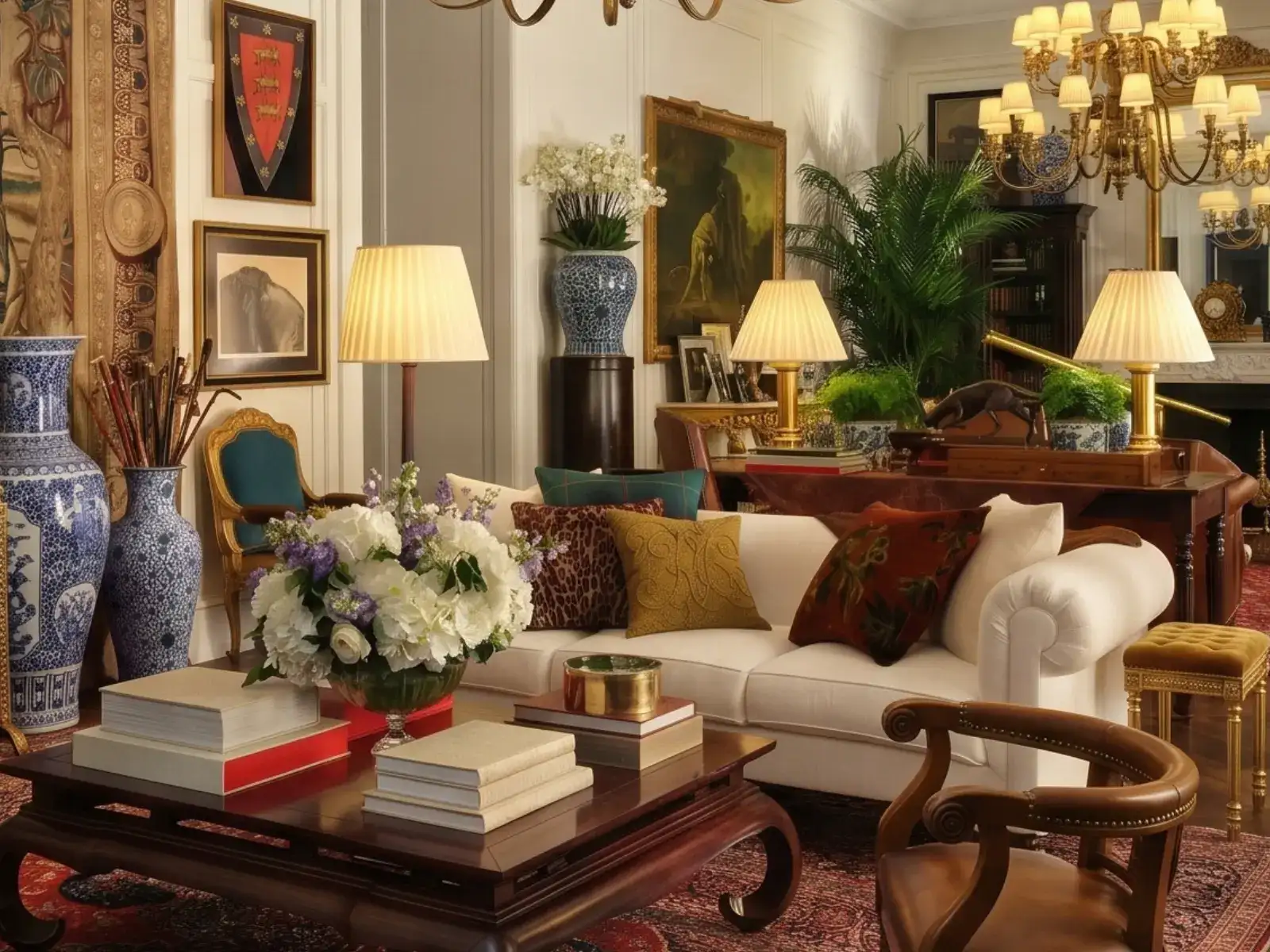
English Traditional Style is one of those phrases that gets misused so frequently it has almost lost meaning. People say it and picture chintz, clutter, hunting prints on every wall, a kind of museum-quality stiffness. What they are actually describing is a caricature — the surface details of what classic English style really is, without any understanding of the philosophy beneath them. The philosophy is something else entirely. It is about warmth, about layers that accumulate over time, about rooms that serve the people who live inside them rather than performing for visitors. It is one of the most liveable approaches to interiors ever developed, and it translates — completely and without compromise — to California.
What follows is not a checklist. It is a set of ten principles distilled from the tradition itself — each one explaining not just what to do, but why it works.
01 — Colour From the Ground Up
The English Traditional palette does not begin with a mood board or a trending colour. It begins with the landscape outside the window. Chalky off-whites, ochres, natural wood tones, and country greys form the foundation — colours that belong to stone, plaster, and aged timber. These are not beige by default. They are specific, considered, and warm.
Into this foundation come the accents: forest and khaki greens, muted yellows and oranges, soft blues, faded pinks, and warm reds. These appear in patterned upholstery, window treatments, and textiles — never as a single dominant colour but as a chorus of tones that have learned to coexist. For depth and contrast, deep mahogany, warm brass, bronze, and navy blue are woven throughout. The result is a room that feels rich without feeling heavy, layered without feeling confused.
The key distinction from most contemporary palettes is restraint applied to intensity, not to variety. English Traditional rooms are often full of colour — they are never loud.
02 — Let the Architecture Speak
One of the defining characteristics of English Traditional interiors is respect for the building itself. Exposed beams, stone walls, original timber floors, open fireplaces — these are not obstacles to decoration. They are the decoration. The furniture and textiles are chosen to work with the architecture, not to cover it.
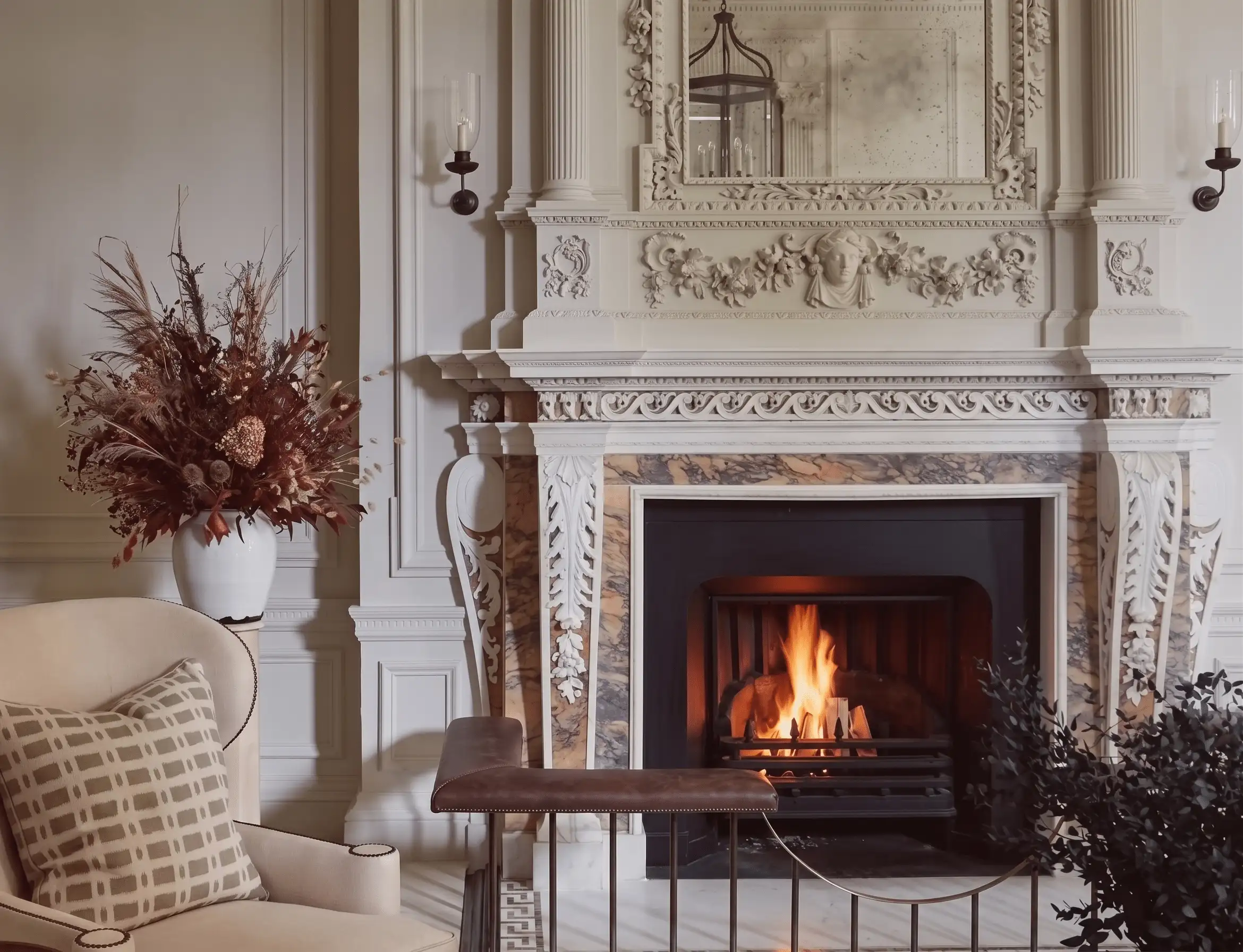
Fireplaces deserve particular attention. An open log fireplace with an ornate stone or marble hearth is not a decorative feature — it is the emotional centre of the room. Everything else orients toward it. The seating arrangement, the lighting, the rugs — all of it acknowledges the fireplace as the place where the room begins.
Other architectural elements that define the style include panelled walls and wainscoting, cornicing, dado and picture rails, wooden carvings, and large sash windows. Where these exist, they should be preserved and celebrated. Where they don't exist, they can be introduced — but always with conviction, never as a half-measure.
03 — The Foundation of the Floor
Flooring in English Traditional interiors is never an afterthought. It is the first decision, because every other decision rests on it — literally and visually.
In living and dining spaces, parquet or tongue-and-groove timber sets a warm, characterful base. In kitchens and hallways, irregular flagstone, limestone, or checkerboard marble in tumbled black and white brings a historic quality that no manufactured tile can replicate. These are surfaces with age and memory in them.
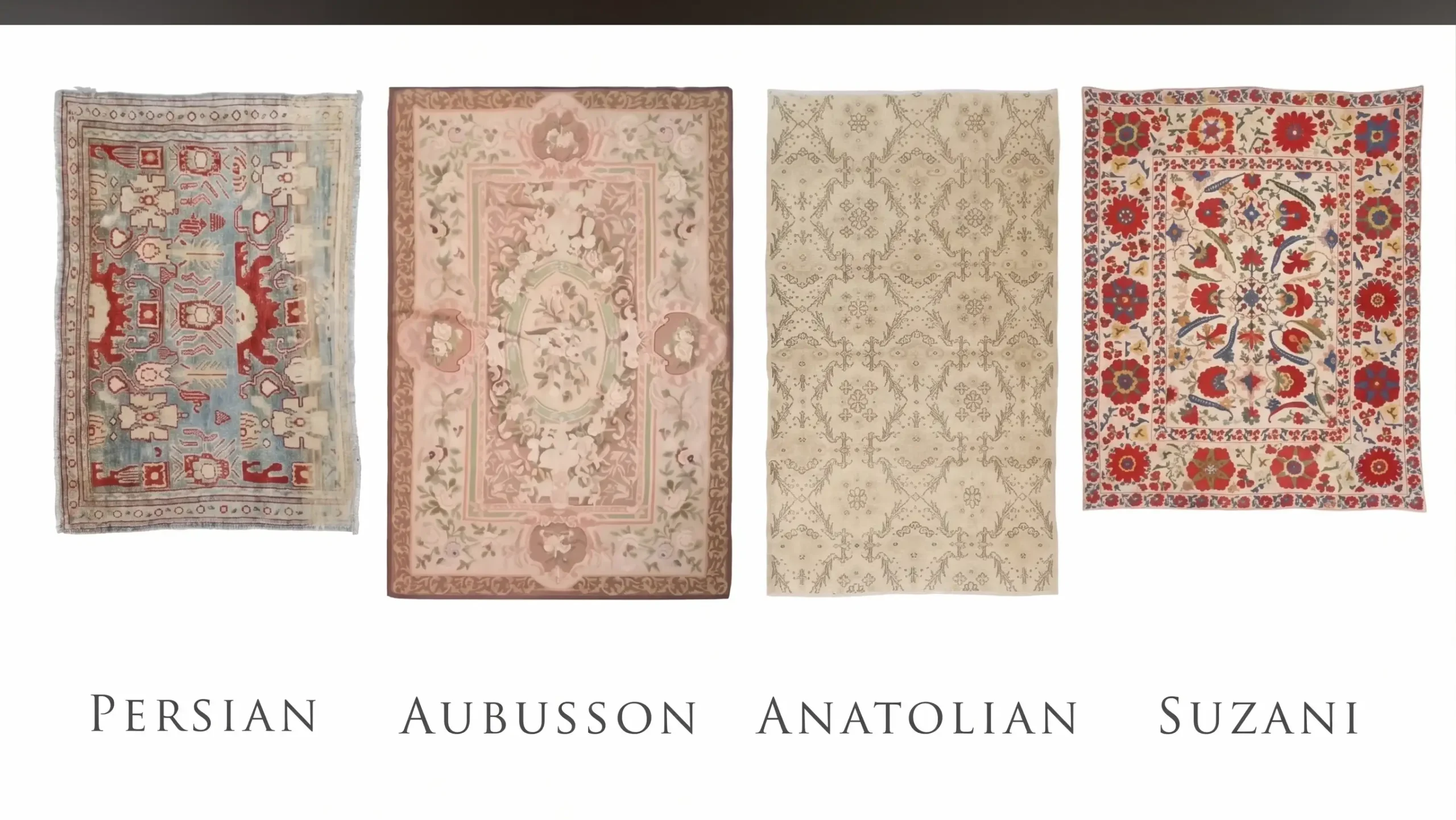
Over these floors come the rugs — and this is where the style truly begins to layer. Antique Persian, Oushak, Suzani, and Anatolian rugs bring pattern, warmth, and depth. Kilims add a flatter, more graphic note. Natural fibre weaves of jute and sisal sit beneath for added texture. The combination of a hard stone or timber floor with a layered arrangement of rugs is one of the most atmospheric effects in all of interior design. It is also one of the most practical — each layer adds acoustic warmth and physical comfort.
04 — Light That Serves the Room
English Traditional interiors are well lit, warm, and entirely devoid of harsh overhead lighting. This is not a stylistic preference — it is a structural principle. Rooms lit from above feel institutional. Rooms lit from multiple points at varying heights feel inhabited, intimate, and alive.
The approach uses several layers simultaneously. Ceiling pendants — bronze and glass, Regency lanterns, or vintage enamel factory lights — provide ambient illumination without dominating. Crystal or wrought iron chandeliers add grandeur in dining rooms and formal spaces. Wall lamps frame beds, mantels, hallways, and kitchen shelving, providing secondary illumination and a warm luster. Metallic picture lights bring artwork and architectural features to life. And throughout the house, table and floor lamps in reading nooks, on side tables, and beside beds provide the soft, glowing pools of light that make a room feel genuinely warm rather than simply bright.
Lampshades deserve specific attention. Pleated, gathered, or drum shades in natural linen, silk, or velvet — sometimes with antique trim or decorative motifs — diffuse light warmly and add their own textile softness to the room. The shade is not a functional afterthought. It is part of the atmosphere.
Layer the light
Never rely on a single source. Ceiling, wall, table, and floor lamps each serve a different purpose. The room should feel warm from every angle.
Eliminate overhead glare
Harsh downlights are antithetical to the tradition. A room lit from below eye level feels warmer, more intimate, and more human.
Use picture lights
A picture light does two things: it illuminates art and it casts a warm glow back into the room. It is one of the most underused lighting tools in contemporary interiors.
Choose warm lamp shades
Linen, silk, and velvet shades filter light warmly. A white or translucent shade produces a clinical quality that works against everything else in the room.
05 — Windows That Breathe and Insulate
In England, natural light is precious and curtains are necessary for insulation through long winters. This practical reality produced one of the most beautiful window treatment traditions in all of interior design. Heavy lined drapes hung high and wide — above and beyond the window frame — maximise available daylight while providing complete insulation when drawn. The effect of a generously proportioned curtain hung close to the ceiling is one of the simplest ways to make a room feel taller, warmer, and more considered.
Roman and festoon blinds offer an alternative and can be used in addition to drapes — providing privacy at mid-height while allowing light above. Fabric choices include traditional prints of gingham, ticking stripe, chintz, floral, damask, and plain linens. The window treatment is not decorative trim. It is an architectural element that defines the room.
06 — Furniture Built to Last
English Traditional furniture makes extensive use of mahogany, walnut, cherry, and rosewood — timbers chosen for their beauty, durability, and the way they age. Stripped, natural, or patinated timbers are used for everyday pieces: farmhouse dining tables, old English pedestals, kitchen islands. Polished rich mahogany appears in formal dining rooms, framed with Chippendale or high-back chairs with fabric seats.
In the living room, the seating arrangement is built around conversational groupings — tufted Chesterfield sofas, English rolled-arm sofas, slip-covered occasional chairs with exposed legs. Tufted ottomans double as coffee tables. Side tables and footstools are nestled into smaller reading nooks. The arrangement is not symmetrical by default — it is functional, oriented toward the fireplace, designed for conversation and long evenings.
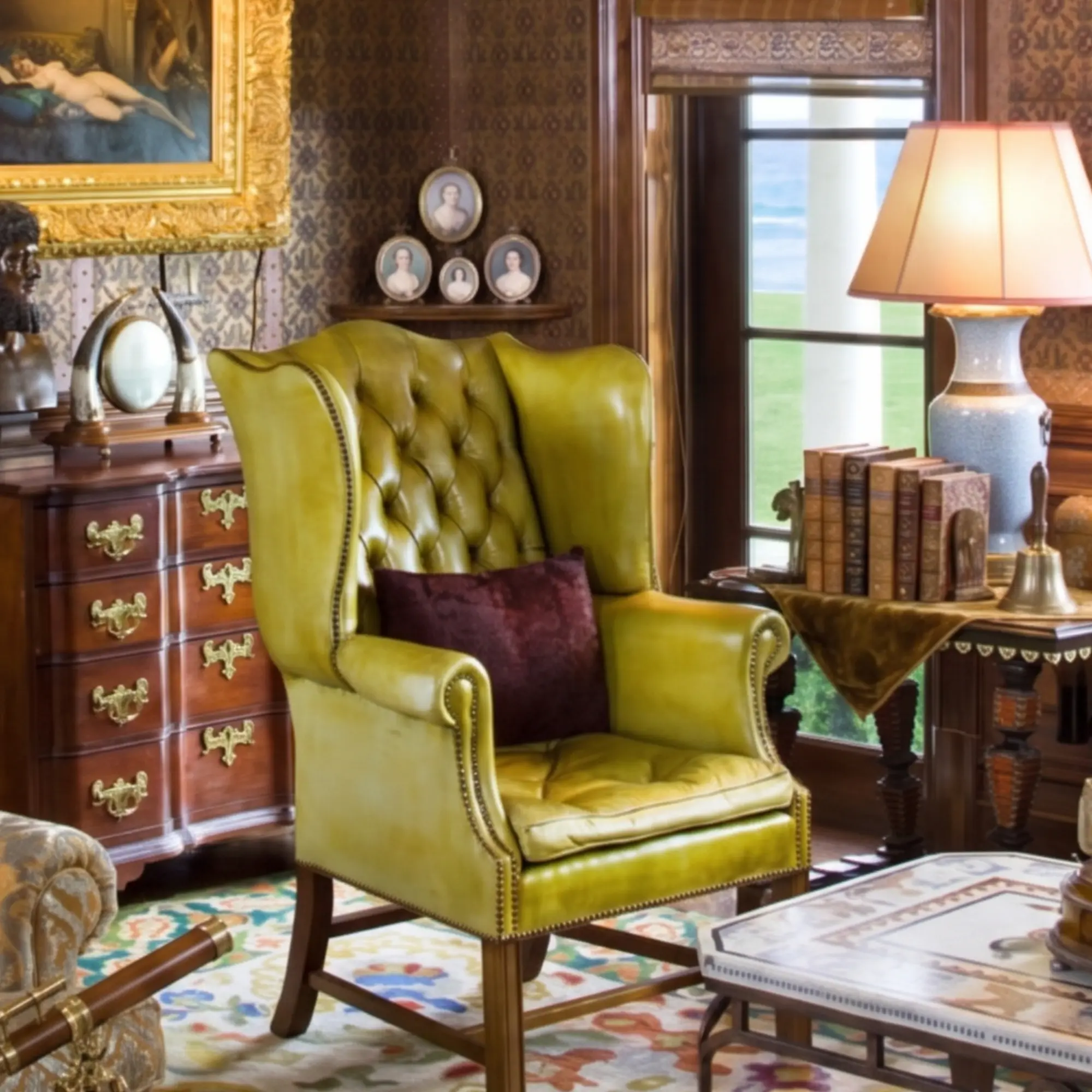
Wingback chairs deserve particular mention. The high back and enclosing wings were designed to shelter the sitter from draughts near the fire. The form followed a specific practical need, which is exactly why the silhouette has lasted four centuries. A wingback placed well creates enclosure and authority in a room. It signals that someone has thought about where to sit and what it should feel like to sit there.
07 — Soft Furnishings as the Final Layer
Sofas, armchairs, window seats, and beds are layered with a generous arrangement of cushions and throws — not for decoration, but for the physical experience of settling into a room. Needlework cushions, rich tapestries, detailed upholstery, and slip covers in traditional prints of gingham, plaid, ticking stripe, chintz, floral, damask, and twill all contribute texture and warmth.
This is where many contemporary interiors fall short of the tradition. They buy the right furniture and the right rugs, but they skim on the soft furnishings — one or two cushions where there should be six, a single throw where there should be layers. The softness of the English Traditional interior is not accidental. It is built deliberately, piece by piece, fabric by fabric, until the room feels like something you want to enter and not leave.
Decorative wallpapers add another dimension — not as a dominant feature but as a background layer that brings pattern and depth to walls that would otherwise simply recede. Vintage textiles, particularly those with age and history in them, are the most valuable additions of all.
08 — Art, Mirrors, and the Gallery Wall
Gallery walls in English Traditional interiors celebrate what the household actually cares about — family history, the surrounding landscape, equine and sporting subjects, botanical prints, portraits. The art is not chosen to match the sofa. It is chosen because it means something to the people who live there.
Larger statement pieces — old oil portraits, animal sketches, paintings of horses, dogs, and countryside — sit below picture lights and adorn hallways, entryways, and living spaces. They are placed where they will be seen every day, not stored in a corridor where nobody goes.
Ornate gilt or wooden mirrors above fire mantels serve a double function: they visually extend the space and maximise natural light. A well-placed mirror in a north-facing room can transform the quality of light entirely. This is not decoration — it is spatial intelligence.
09 — Books and the Collected Object
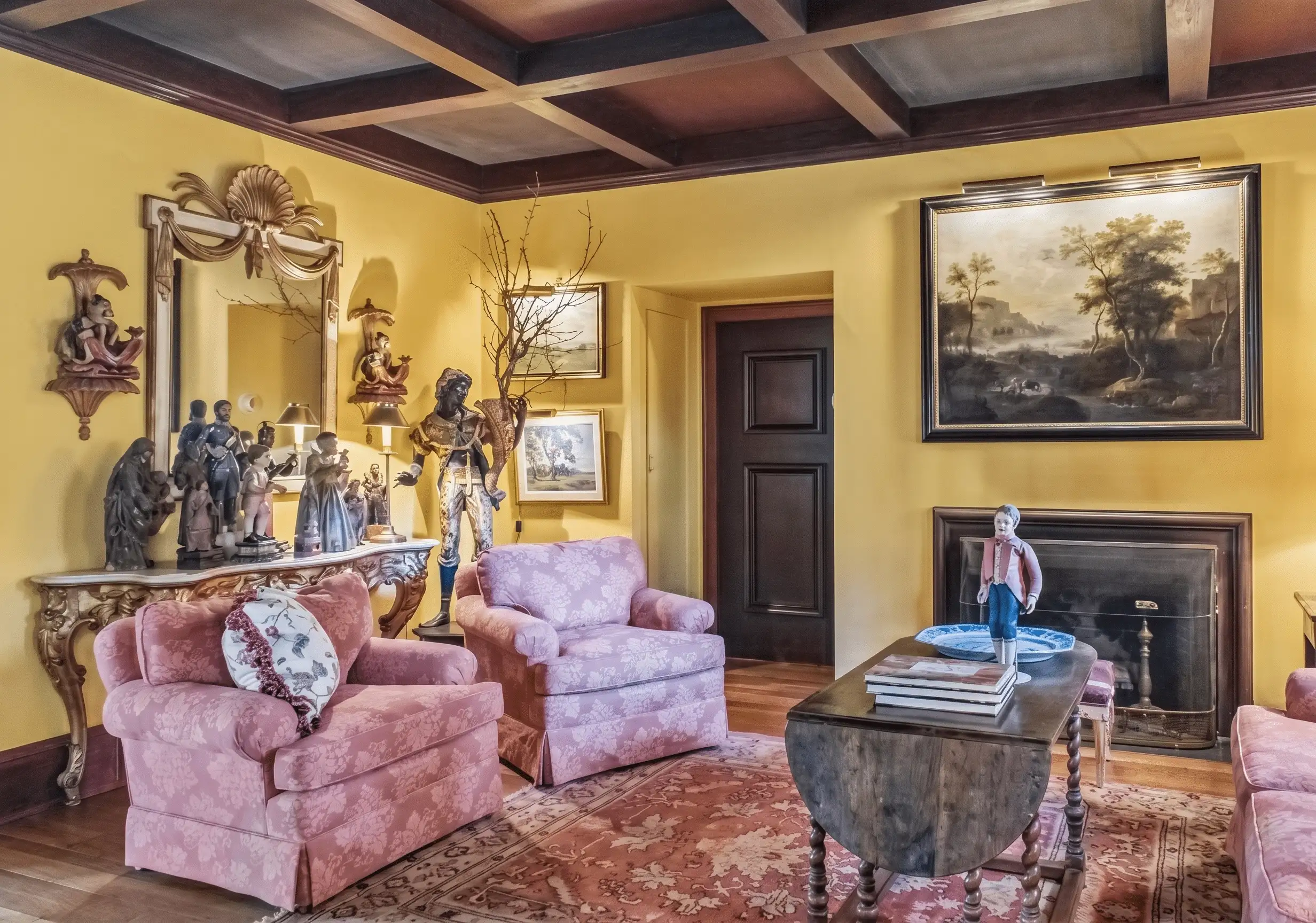
No English Traditional interior is complete without books — and not as decoration. Shelves filled with hardcover and leather-bound volumes, decorative bookends, and a scattering of family heirlooms and eclectic finds are the material evidence that someone actually lives here and has been living here for some time.
The other collected objects — small bric-a-brac gathered over years, hand-painted cups and saucers, painted pottery plates and vases, animal figurines, mantle clocks, one-off vintage finds — follow the same logic. Each item should bring joy, comfort, or meaning. Nothing is there because it fills a gap. Everything has a reason, even if that reason is simply that it was found somewhere and has been loved ever since.
This is the collected aesthetic at its most specific. The difference between a room that feels rich and a room that feels cluttered is not the quantity of objects. It is the quality of attention applied to each one.
10 — Flowers and the Living Element
English Traditional interiors are never without flowers — not arranged with florist precision, but gathered with a kind of effortless abundance. English roses, hydrangeas, peonies, lavender, daisies, and generous clippings of fresh green foliage in simple glass or ceramic vessels on fire mantles, dining tables, bedsides, and windowsills.
The flowers are not a finishing touch. They are evidence that the house is alive. They bring scent, colour, and the natural world indoors — a reminder that the interior is not sealed off from its surroundings but connected to them. Outside, ivy-covered facades, rose bushes, herb gardens, box hedging, and delphiniums in large planters and vintage vessels extend the same philosophy to the garden. The house and its landscape are one continuous environment.
If you are building an English Traditional interior and want to see the materials, scale, and quality in person — visit the studio in Saratoga.
Visit the Studio →Not in the Bay Area? Subscribe to RS Studio for monthly notes on heritage materials, layered rooms, and the philosophy behind them.
Subscribe →Where to Begin
The most common mistake when approaching English Traditional Style is trying to assemble it all at once. The rooms that exemplify this tradition most powerfully were not put together in a weekend. They accumulated — one considered piece at a time, one layer over another, over years. The patina, the sense of depth, the feeling that the room has a history — these cannot be purchased in a single visit to a furniture showroom.
Begin with the architecture. Then the floor. Then the furniture. Then the light. Then the textiles, the art, the books, the objects, the flowers. Each layer earns the next. The room builds itself, slowly, in the right order.
That is not a style. That is a practice.
The beauty is in the detail.
And in the patience to find it.
Frequently Asked
What is English Traditional Style in interior design?
English Traditional Style is a philosophy of decorating that prioritises warmth, practicality, and rooms that feel genuinely inhabited. It draws on heritage materials — mahogany, stone, natural fibre — and layers colour, pattern, and texture to create interiors that feel collected over time rather than assembled all at once.
What colours are used in English Traditional Style?
The English Traditional palette builds on chalky neutrals — off-white, ochre, country grey, natural wood tones — complemented by forest and khaki greens, muted yellows, soft blues, faded pinks, and warm reds. Deep mahogany, brass, and bronze provide contrast and depth throughout.
What furniture is used in English Traditional Style?
English Traditional furniture makes extensive use of mahogany, walnut, cherry, and rosewood. Key pieces include Chesterfield sofas, English rolled-arm sofas, occasional chairs with exposed legs, four-poster beds, and tufted ottomans. Furniture is chosen for durability and character, not trend.
How do you layer an English Traditional interior?
Layering in English Traditional Style begins with the architectural foundation — flooring, fireplaces, panelling — then builds through furniture, rugs, curtains, and finally soft furnishings, books, art, and objects. Each layer adds depth. Nothing is installed all at once.
Can English Traditional Style work in a modern home?
Yes. The principles of English Traditional Style — warmth, layering, practicality, heritage materials — translate to any architectural context. Bay Area and California homes in particular benefit from the enclosure and weight that traditional furniture and layered textiles provide.
REEVA SETHI is the founder of Reeva Sethi Home in Saratoga, California — a showroom built around the principle that rooms should last, not trend. She opened the studio because she couldn't find what she was looking for anywhere else. Read more.