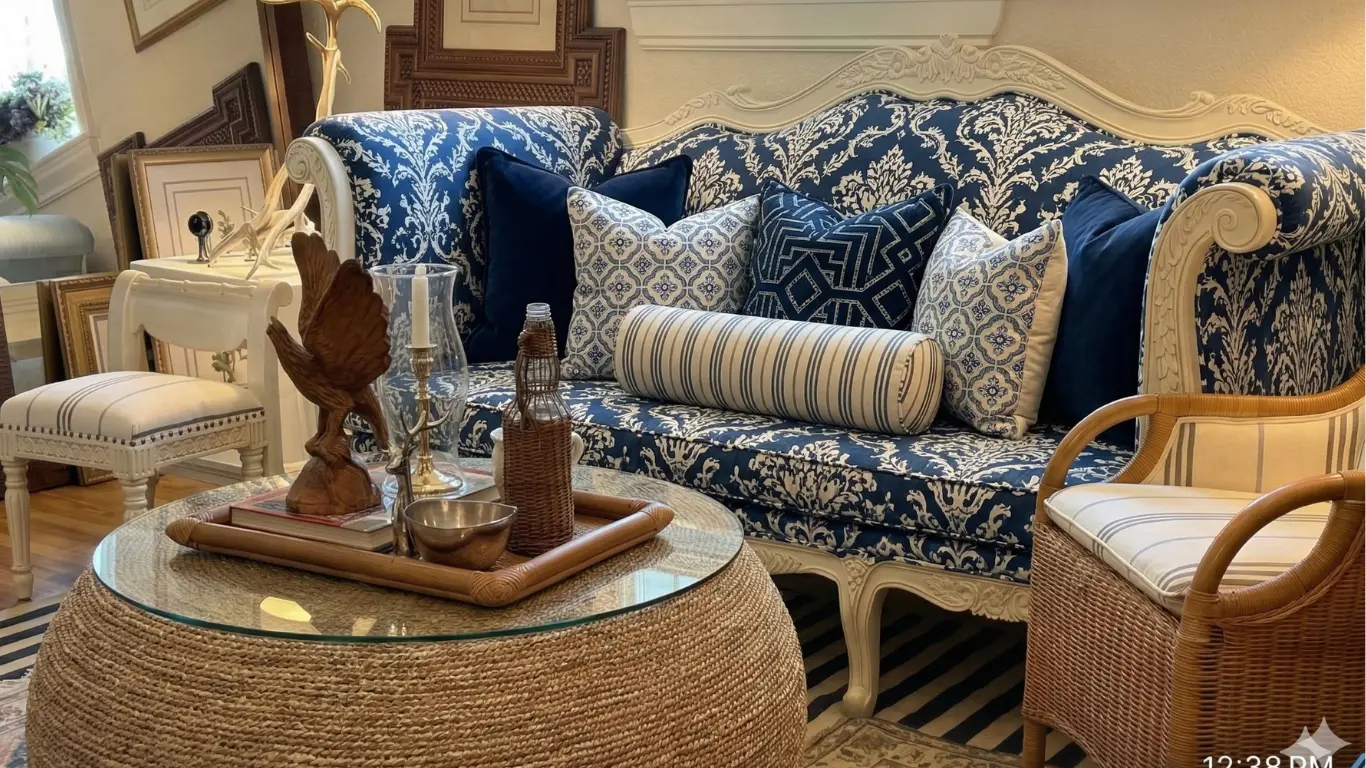
Most people misidentify Classic English Style. They picture chintz curtains, overcrowded mantelpieces, faded florals on every surface. They associate it with a particular era, a particular class, a particular country. They treat it as a look. That is the misunderstanding. Classic English Style is not a look. It is a set of priorities about how a room should be experienced — and those priorities are as relevant in a house in Saratoga, California as they are in a Georgian manor in Gloucestershire.
The confusion is understandable. English style has been so widely imitated, so freely borrowed and distorted, that the surface details — the toile, the mahogany, the wingback by the fire — have come to stand in for the philosophy beneath them. But the details are not the point. They are symptoms of a deeper intention: to make rooms that feel genuinely inhabited, warm, and purposeful. To make rooms that serve the life lived inside them, not the photograph taken of them.
Warmth First
The first and most important principle of Classic English Style is warmth. Not warmth as a color temperature — though that matters — but warmth as an atmospheric quality. The room should exude welcome. It should make you want to stay. It should feel, from the first moment you enter it, as though someone actually lives here and has thought carefully about your comfort.
This sounds obvious. It is not. A great deal of contemporary interior design produces rooms that are visually impressive and experientially cold. The proportions are correct, the materials are expensive, the palette is coherent — and the room feels like a hotel lobby in a city you are passing through. Nobody lives here. Nobody has left anything behind. There is nothing to sit near, nothing to reach for, no corner that claims you.
The English tradition understood, perhaps better than any other, that a room is a social environment before it is an aesthetic one. It exists to hold people. Its first obligation is hospitality. Everything else — the furniture, the fabrics, the arrangement, the objects — serves that obligation or it fails.
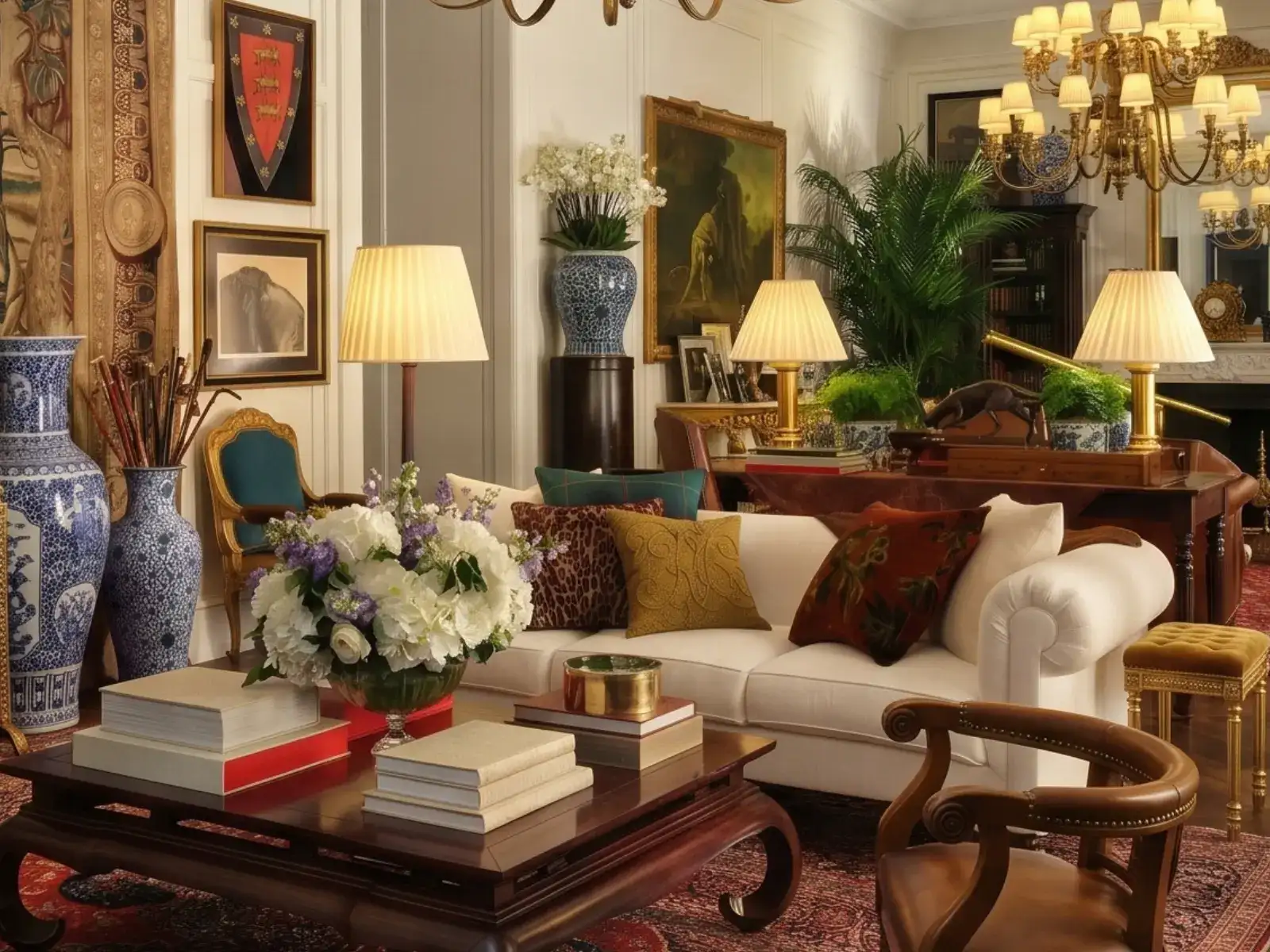
The lesson in rooms like this is not that every house needs chintz, coral walls, or English furniture. The lesson is that warmth has to be constructed deliberately. It comes from layered light, softened edges, comfortable seating, pattern used with conviction, and the sense that the room expects people to sit down and stay.
Practicality Alongside Elegance
The second principle is practicality — and this is where English style most sharply diverges from other traditions of formal decoration. The English approach has always insisted that a room must work. It must be comfortable to sit in for long periods. The sofa must be deep enough. The light must fall correctly for reading. The surfaces must have room for a glass, a book, a pair of spectacles. The arrangement must allow conversation to happen naturally, without effort.
This is not a lowering of standards. It is a different and more demanding standard. It requires the designer to think about the room in use, not the room at rest. To ask not "does this look right?" but "does this work?" A chair that is beautiful but uncomfortable is a failure. A room that photographs well but discourages sitting is a failure. Practicality is not the enemy of elegance — it is its proof.
A well-made wingback chair demonstrates this exactly. Its high back and enclosing wings were designed to shelter the sitter from drafts and retain warmth near the fire. The form followed the function. The elegance is inseparable from the practicality — and that is why the silhouette has lasted four centuries while purely decorative forms have vanished entirely.
The Layered Interior
Classic English Style does not arrive fully formed. It accumulates. The rooms that exemplify it best are rooms that have been lived in, adjusted, added to over time. A piece acquired on a trip. A fabric chosen because it worked with something already there. A handwoven rug that came from a grandparent's house and refused to be replaced because nothing else felt as right. A lamp that has stood in the same corner for twenty years because it casts the light correctly.
This layering is not accidental, but it does not follow a rigid plan either. It follows a sensibility — a consistent set of values about what matters — that guides each addition without dictating it. The result is a room that feels collected rather than decorated. Each piece has earned its place. Nothing is there merely to fill a gap or satisfy a trend.
Pattern in the English tradition is not applied for visual interest alone. It creates warmth, scale, and depth. It tells the room where it came from. A plain room is not more sophisticated — it is simply quieter.
The English interior prefers texture to polish. A worn leather arm. A faded kilim. Linen that has been washed many times. These surfaces carry time. They make the room feel inhabited rather than installed.
Pieces must earn their position through proportion — in relation to each other and to the room itself. A wingback that is too small loses authority. A rug that is too timid loses the floor. Scale is not optional.
From paint finish to fabric trim, detail in the English tradition is a matter of discipline rather than decoration. Each decision is made in relation to every other decision. Nothing is arbitrary.
The Intelligence of Restraint
There is a widely held belief that Classic English Style is maximalist. That it accumulates without editing, fills without restraint, adds and adds until the room can hold no more. This is a misreading — usually made by people who have seen bad examples of the style and mistaken excess for intent.
The best English interiors are deeply edited. Every piece has been considered. The difference between a room that feels richly layered and a room that feels cluttered is not the quantity of objects — it is the quality of attention applied to each one. A room with forty considered objects is not crowded. A room with ten unconsidered ones already feels full.
Restraint in this tradition does not mean emptiness. It means knowing what to keep and what to remove. It means understanding that a room has a visual weight capacity, and that exceeding it costs more than adding to it. The most disciplined English interiors are often the most abundant — because every abundance is deliberate.
- It is not a period style — it is a philosophy that works across periods
- It is not maximalism — it is edited abundance
- It is not formal — it is warm and practical above all else
- It is not about excess — it is about judgment
- It is not English — it is a set of principles that translate to any climate, any country, any life
Interpreting the Life, Not Imposing a Look
Perhaps the most sophisticated principle of Classic English Style — and the most frequently overlooked — is that it begins with the person, not the room. The designer's role is not to impose a vision but to interpret a life. To understand how the client actually lives, what they value, what they need, what they will use and what they will merely tolerate. And then to build a room around those realities.
This requires a different kind of conversation than most interior design encourages. Not "what do you like?" but "how do you live?" Not "what have you seen that you want?" but "what does this room need to do for you?" The answers to these questions are often hidden — beneath the aspirational images saved on phones and the furniture already owned and the habits so ingrained the client no longer notices them. The skill is in reading between the lines.
A room that serves its inhabitant perfectly will always look right, even if it breaks conventional rules. A room that follows the rules but ignores the inhabitant will always feel wrong, however correct it appears.
Why It Works in California
The question we are most often asked at Reeva Sethi Home is whether these principles — developed in the context of English weather, English architecture, English social life — translate to California. The answer is not only yes, but yes emphatically.
California homes, and Bay Area homes in particular, face a specific set of problems that Classic English principles solve directly. The scale is generous but the warmth is often absent. The light is beautiful but rooms can feel exposed and unanchored without the weight and enclosure that traditional furniture provides. The architecture is frequently open-plan, which creates visual flow but destroys the sense of distinct, purposeful rooms that make a house feel like a home.
A wingback chair placed correctly in a California living room creates the same enclosure and authority it creates in a Gloucestershire drawing room. A well-chosen rug anchors an open floor plan the same way it anchors a flagstone hall. Heritage furniture — solid wood, properly made — brings the same sense of permanence and weight to a Saratoga room that it brings to any room anywhere. These principles survive translation because they answer permanent human needs.
If you are furnishing a home in the Bay Area and want rooms that feel genuinely inhabited — warm, considered, and built to last — visit the Saratoga studio to experience the materials, scale, and atmosphere in person.
Visit the Studio →The Room That Endures
Classic English Style endures not because it is fashionable — it has never been fashionable in the trend-cycle sense — but because it continues to answer the same permanent needs. Comfort. Warmth. The sense that this room was made for the person who lives in it. The feeling, impossible to fabricate and immediately recognisable, that someone cared enough to get it right.
Most furniture trends answer the question: what does this room look like? Classic English Style answers a different question: what does this room feel like to live in? That is a harder question. It takes longer to answer. It requires more careful thought, more honest conversation, more willingness to set aside what looks impressive in favour of what actually works.
But the rooms that result from that effort are the rooms people keep. The rooms they continue returning to long after fashions around them have shifted. The rooms their children remember. The rooms that feel, years later, exactly as they should.
That is not a style.
That is a standard.
REEVA SETHI is the founder of Reeva Sethi Home in Saratoga, California — a showroom built around the principle that rooms should last, not trend. She opened the studio because she couldn't find what she was looking for anywhere else. Read more.