

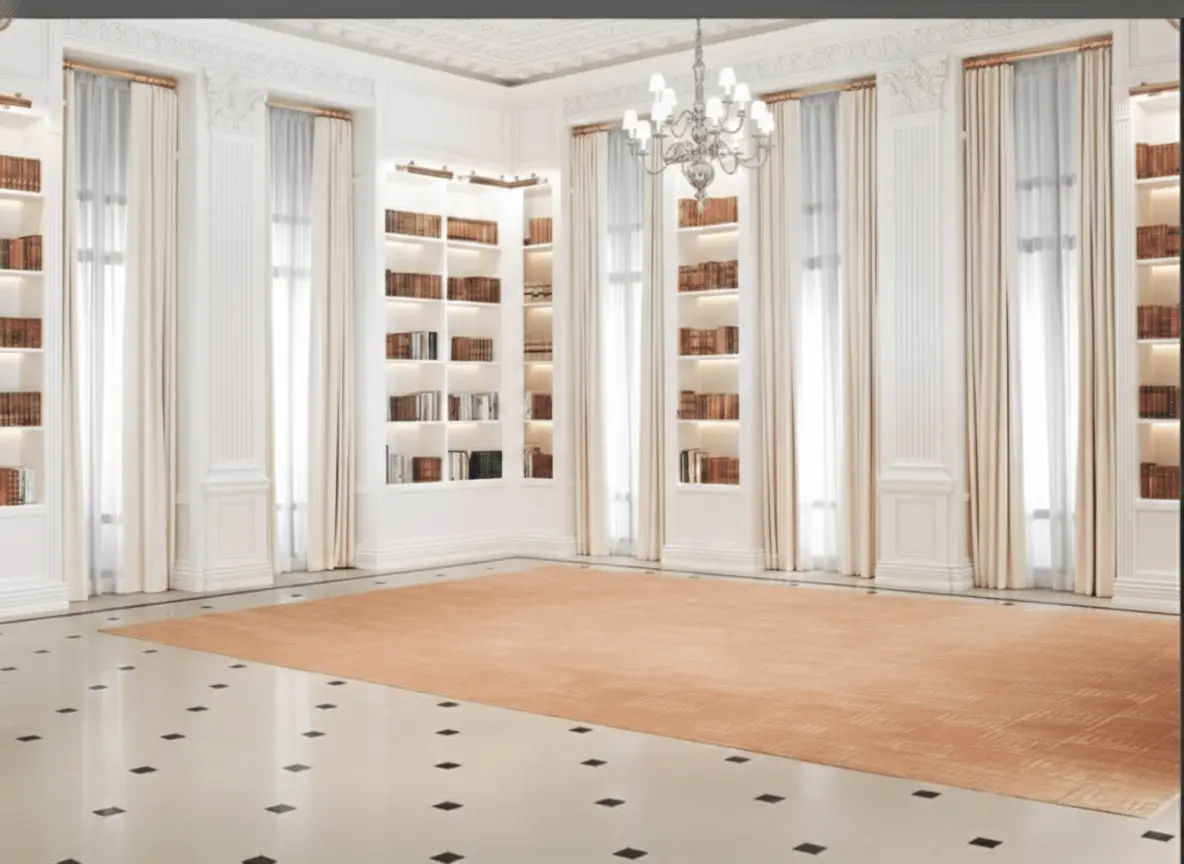
An open-plan living room usually feels cold for predictable reasons: the furniture is underscaled, the seating is scattered, the zone is undefined, and the materials have no visual weight. None of that is inevitable. Good interior design restores order through proportion, threshold, and sequence. With the right decisions, in the right order, an open-plan room stops feeling exposed and starts feeling inhabited.
Why Every RoomNeeds a Rug
The first intervention in a cold open-plan room is not a sofa. It is a rug. Specifically, a large rug with enough scale to define the living area properly. In most open-plan rooms, that means 9×12 feet at minimum, and often larger.
It Defines the Zone
The floor is the largest uninterrupted surface in the room. A rug placed correctly on that surface creates visual enclosure without building walls. The boundary of the rug becomes a threshold. It tells the eye where the seating area begins and where the surrounding space ends.
It Softens the Room
Hard flooring, exposed walls, and large uninterrupted volumes often make open-plan spaces feel acoustically harsh. A substantial rug helps soften that effect. It absorbs some sound, reduces visual starkness, and makes the room feel less hollow.
It Introduces Material Warmth
Wool rugs and other natural materials add immediate depth to an otherwise flat space. Texture matters. Variation matters. One serious material choice can reset the visual register of the whole room.
The rug is not decoration. It is the foundation. Every other design decision scales from this anchor.
— RS Studio · Foundation PrincipleWhy Furniture SizeMatters More Than Style
Open-plan rooms often fail because the furniture is too small for the volume of the space. A large room with a modest sofa, two light chairs, and a tiny coffee table will always feel unresolved. Proportion is not a decorative concern. It is a structural one. If the furniture does not visually hold the room, the room will feel empty no matter how expensive the pieces are.
The Scale Anchor Strategy
Start with the largest single piece you will place in the room. This is your scale anchor. In most living rooms, that is a substantial sofa, sectional, or a large seating composition. Once that anchor is right, everything else can be calibrated around it. Start small and the room stays small, no matter how much you add later.
| Room Size | Recommended Scale Anchor | Anchor Dimensions | Secondary Pieces Scale At |
|---|---|---|---|
| 16×18 ft | Large sofa or compact sectional | 8–9 ft × 5.5–6 ft | 60–75% of anchor |
| 18×24 ft | Large sectional or sofa plus chairs | 9–11 ft × 6–7 ft | 55–70% of anchor |
| 20×26 ft | Substantial sectional or dual seating group | 11–13 ft × 7 ft | 45–65% of anchor |
| 22×30 ft+ | Multiple anchors within defined zones | 13 ft+ plus secondary grouping | 40–60% of primary anchor |
This is about visual authority, not excess. In a large room, a substantial sofa is not overfurnishing. It is often the first correct move.
Seating Arrangement: Face-To-Face or Toward a Focal Point
Once the scale anchor is placed, arrange the supporting seating in one of two clear ways:
1. Face-to-face configuration: Opposing pieces across a central table create conversation and immediate intimacy.
2. Angled toward a focal point: Seating directed toward a fireplace, art wall, major window, or architectural feature gives the room a visual center.
What does not work is scattering furniture around the perimeter and leaving the middle empty. That is not openness. That is surrender.
The rug should be large enough that the main seating pieces sit on it at least partially. In most rooms, that means the front legs of every primary piece should rest on the rug. If the rug is too small, the whole room will feel fragmented no matter what else you buy.
Why Materials SignalPermanence
Cold open-plan rooms are often filled with glossy surfaces, thin finishes, and synthetic fabrics that reflect light but do not hold it. They read as temporary. Warm rooms, by contrast, are built from materials that have weight, texture, and the capacity to age well.
Rooms gain authority when their materials improve with use. Leather softens. wood deepens. wool settles. Materials that change well make a room feel established.
The Core Materials for Warm Open-Plan Rooms
Solid wood furniture: Oak, walnut, mahogany, and other hardwoods give a room visual weight and long-term credibility. They can be repaired, refinished, and kept.
Hand-knotted or high-quality wool rugs: Wool has softness, resilience, and depth. It is still the most convincing foundation for a room meant to feel grounded.
Leather upholstery: Good leather develops character over time. Cheap imitations do the opposite. One matures. The other peels and embarrasses everyone involved.
Natural textiles: Linen, cotton, and wool soften a room visually and physically. They also layer better than synthetic fabrics, which often look flat and age badly.
Matte and low-sheen finishes: Unpolished stone, timber, aged metal, and quieter finishes absorb light more gracefully than glossy surfaces. Warmth often comes from restraint, not shine.
Introduce one object of absolute material quality, and it changes how every other piece in the room is perceived.
— RS Studio · Material AuthorityCreating Thresholdin Open Plan
Open-plan architecture removes walls, but the room still needs boundaries. Without some kind of threshold, the space reads as one continuous field. That is why so many open-plan interiors feel exposed rather than generous.
Strategy 1: The Rug Boundary
A large rug under a complete seating arrangement is the easiest and most effective way to create a zone without construction. It tells the room where to begin.
Strategy 2: Shelving or Low Dividers
Open shelving, low case goods, or a console behind the sofa can divide space without closing it off. This is especially useful when the living area needs separation from dining or circulation paths.
Strategy 3: Ceiling or Architectural Variation
If the room has beams, a soffit, a lowered ceiling plane, or an alcove, use it. Locate the seating group where the architecture already suggests enclosure.
Strategy 4: Textiles and Layering
Curtains, tapestries, upholstered pieces, and layered fabric surfaces help soften edges and visually compress the room. They are not structural, but they contribute to enclosure in a powerful way.
Do not try to fill the entire floor area. Leave breathing room around the seating group. A defined composition surrounded by clear space feels deliberate. A room packed edge to edge feels anxious.
The Order ofDecisions
Step 1: Choose and place the rug first. This defines the zone before anything else.
Step 2: Choose the scale anchor. Start with a substantial sofa or sectional, or in larger combined rooms, a major seating and dining anchor.
Step 3: Place the anchor on the rug. Orient it toward a focal point or into a conversation grouping. Let the furniture define the room, not just occupy it.
Step 4: Add secondary seating. Use chairs or supporting upholstered pieces with enough scale to hold their own beside the anchor.
Step 5: Add tables and support pieces.Coffee tables, side tables, and consoles should complete the arrangement, not compete with it.
Step 6: Layer textiles.Pillows, curtains, and additional soft materials bring the room to life.
Step 7: Finish with warm lighting. Use warm residential light, not cold office light. Layer lamps and accent sources so the room has shadow, depth, and evening character.
The sequence matters. Define the zone. Establish the scale. Layer the materials. That is how an open room begins to feel complete.
— RS Studio · Sequence AuthorityWhat KillsOpen-Plan Warmth
Mistake 1: A Rug That's Too Small
A rug that sits like a postage stamp under the coffee table does not define a room. It just confirms that nobody measured.
Mistake 2: Furniture Too Small for the Space
Light, underscaled furniture disappears in a large room. The result is not elegance. It is visual drift.
Mistake 3: Furniture Against the Walls
Pushing everything outward makes the empty center look larger and colder. Pull furniture inward and let the room gather.
Mistake 4: Too Much Glass or Gloss
Reflective surfaces can work in moderation, but too many make the room feel hard and impersonal. Matte, tactile finishes usually read warmer.
Mistake 5: No Textile Layering
A room without rugs, curtains, pillows, or throws often feels unfinished. Soft materials are not optional in a room that is meant to feel inhabited.
Mistake 6: Flat, Cold Lighting
Cool, overly bright overhead lighting strips a room of atmosphere. Warm layered lighting restores dimension and calm far more effectively than another decorative object ever will.
RS Studio's furniture collection includes pieces with the scale and material presence open-plan rooms require. Pair them with architectural rugs, solid wood tables, and design guidance that restores proportion, warmth, and order. For a room-specific plan, book a consultation in Saratoga.