The Fabric Register
A controlled palette for rooms designed to age. On restraint, repetition, and textiles chosen for how they live—not how they perform.
A room does not need endless fabric options. It needs a register, a limited vocabulary that can be reused, layered, and trusted across time.
The mistake is assuming variety comes from color. In practice, it comes from weave, scale, hand, and age. When a fabric palette is controlled, rooms feel calmer. Decisions become easier. Objects relate to one another without explanation.
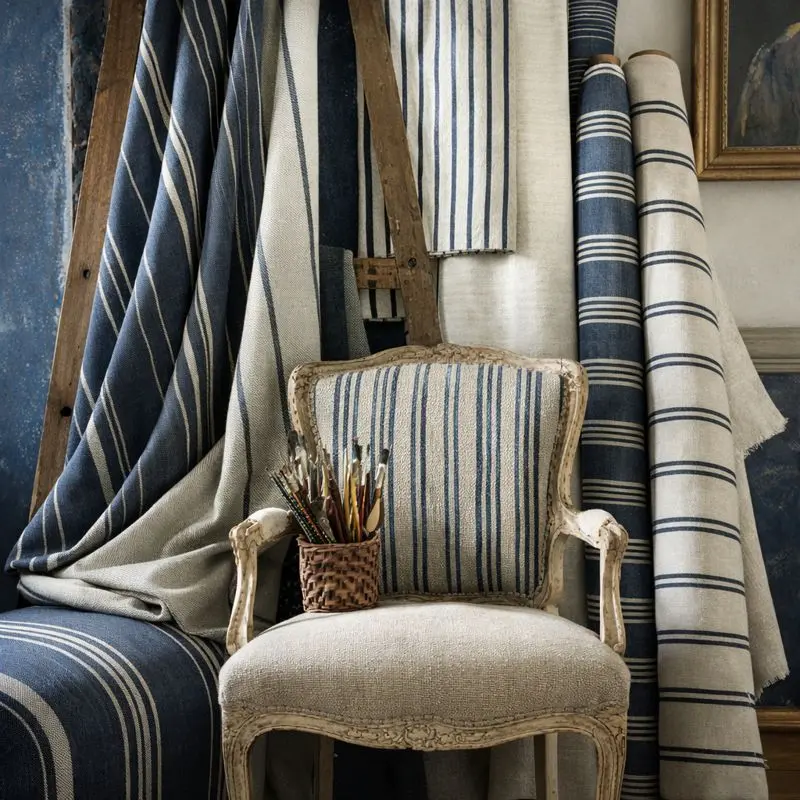
The most enduring interiors rely on fabrics that repeat. The same stripe appears on a chair, then later on a cushion. A neutral ground returns on drapery, then quietly again on a bench. Over time, this repetition creates cohesion without effort.
Texture Does the Work
When color is restrained, texture carries meaning. Linen softens. Wool holds its shape. Cotton wears in, not out. These materials do not announce themselves, but they register over time.
This is how rooms become comfortable without becoming casual. The palette stays steady. The surfaces evolve.
Designed to Age, Not Refresh
A fabric register is built with the expectation of wear. Fading is not failure. Patina is not damage. The goal is not preservation, but continuity.
When textiles are chosen this way, they stop dictating the room. They support it. They allow objects, light, and daily life to remain the focus.
REEVA SETHI, founder and principal designer of RS Studio, creates interiors rooted in classical proportion and material restraint. Her work reflects Northern California light, favoring permanence, craftsmanship, and composed spaces designed to endure beyond trend.