The Wood Beneath
the Surface
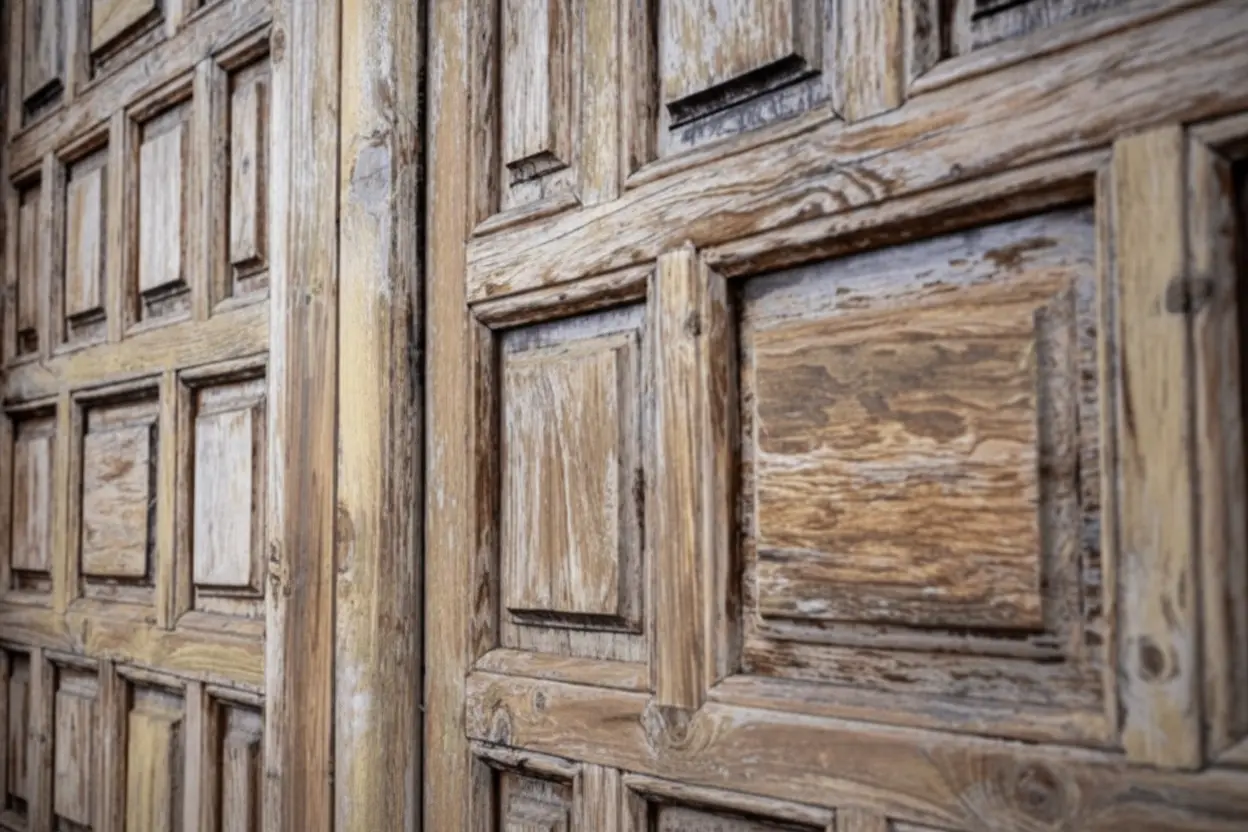
What gives mahogany furniture authority is not simply species, but figure, cut, finish, and the way light behaves once it reaches the surface.
There is a difference between wood that merely occupies a room and wood that defines it. Mahogany belongs firmly in the second category. It has been used for centuries not because of trend, but because it offers something rare in furniture making: stability, workability, richness of tone, and a surface that becomes more persuasive as it ages. You can see this in every piece in the Reeva Sethi Home furniture collection — the material carries its own authority.
That does not mean every dark wood deserves the same reverence. Buyers are too often sold the colour of mahogany without the substance of it. Stain mimics tone. Veneer is misunderstood. Figure is mislabeled. And too many rooms end up crowded with wood that looks expensive in photographs and flat in person. If you have ever wondered why a dining table that looked rich in the showroom feels ordinary at home, this is usually the reason.
This guide corrects that. We are not admiring wood from a distance. We are learning how to read it. For a broader view of how material decisions affect longevity, see our essay on materials that endure. For how those decisions sequence inside a room, start with the furniture you should buy last.
I · The Raw Material
Every finished piece begins with a more ordinary reality: a log, a mill, a decision about what the material will become. The grain pattern you admire later, the stability you assume, the symmetry you call beautiful — all of that begins in the way timber is chosen and processed. This is why heirloom-quality furniture cannot be faked at the finishing stage. The decisions are made long before the finish is applied.
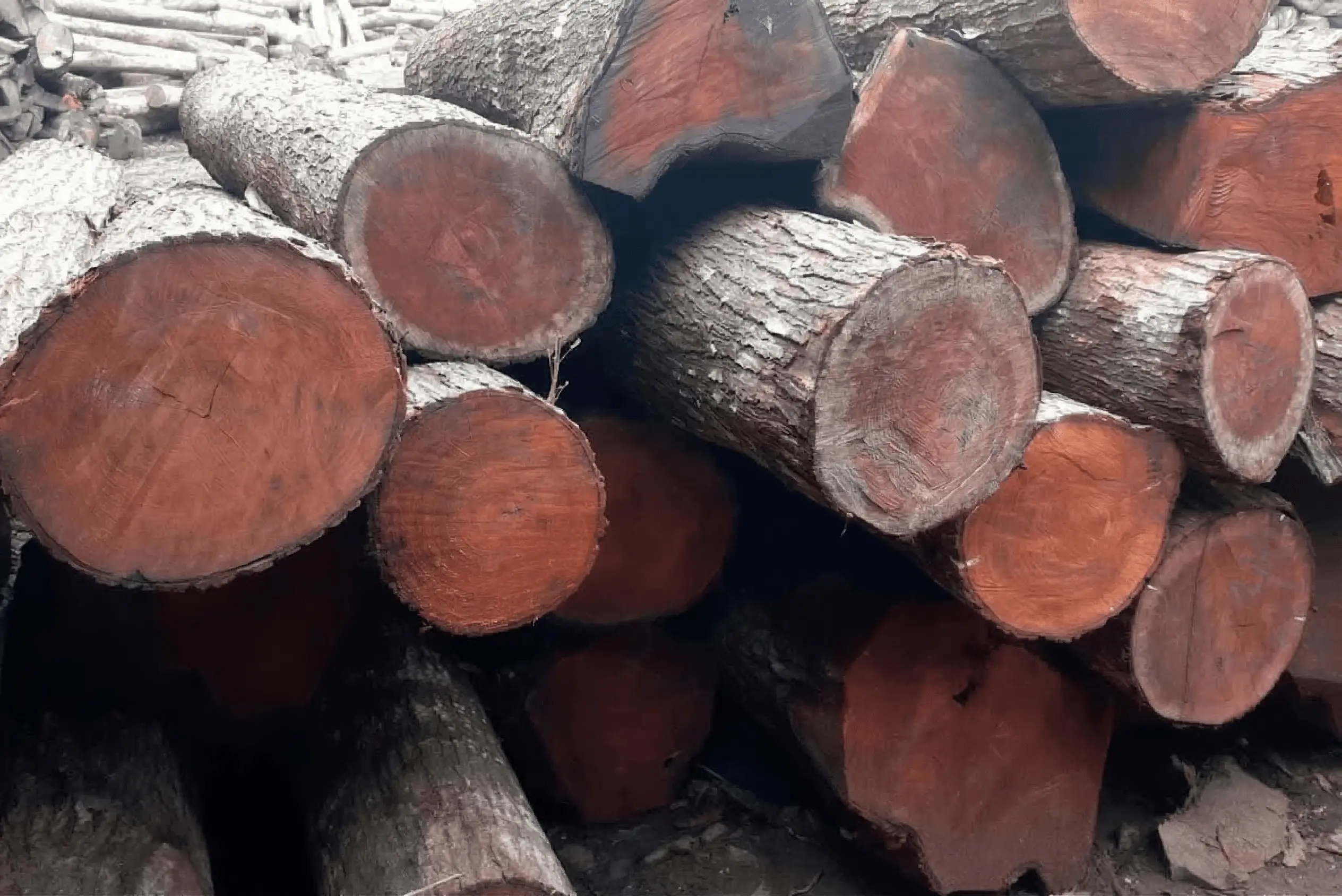
All fine furniture begins long before polish or joinery · RS Studio
Mahogany earns its place not by being the darkest or most dramatic, but by offering one of the most complete combinations of beauty and performance available to the cabinetmaker — which is why it anchors the furniture collection at Reeva Sethi Home in Saratoga.
Why mahogany keeps returningMahogany is stable. It carves cleanly. It can look restrained in paneling and casework, or richly expressive in figured veneer. This versatility is why it appears across the casegoods, dining tables, and chairs collection — performing equally well in a sideboard and a dining table without compromise.
Dark wood is not automatically mahogany, and expensive is not automatically better. What matters is whether species, cut, and finish suit the purpose of the piece. See our full guide to solid wood versus veneer for how this plays out at point of purchase.
II · Construction
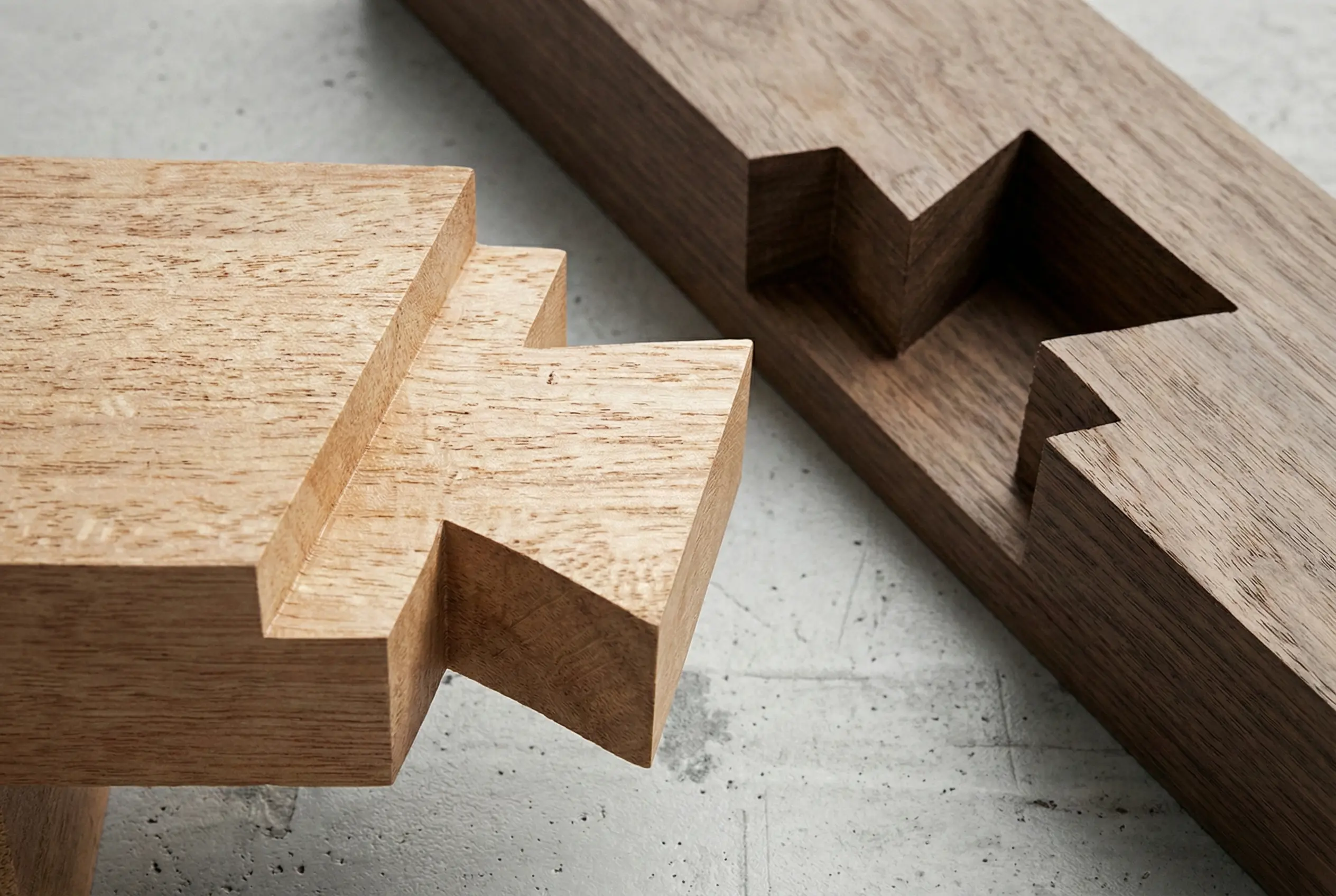
There is a lazy idea that veneer is a shortcut. In bad furniture, it can be. In fine furniture it is often the opposite — veneer allows a maker to control grain, mirror figure, and reduce seasonal movement in ways solid timber cannot. We cover this in full in the guide to solid wood versus veneer furniture.
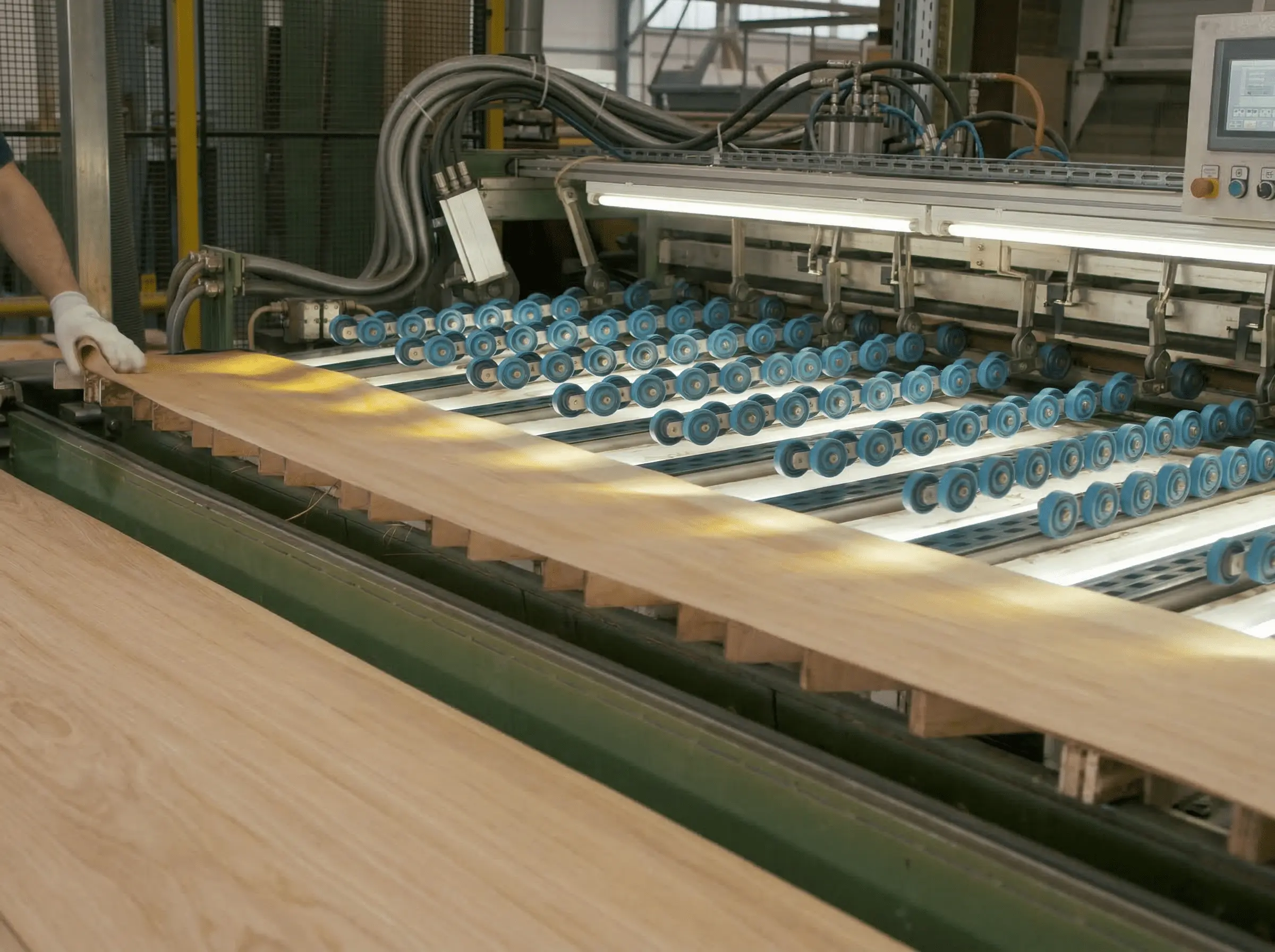
Veneer is not a compromise when handled correctly · RS Studio
Bookmatching, radial layouts, and balanced panels are not accidents. They are design decisions made early and carried through with discipline — the same discipline that governs joinery, examined in our essay on permanence in furniture construction.
III · Figure & Light
Most people begin with colour because it is the easiest thing to notice. Serious furniture begins with figure. Figure is the way grain behaves visually across the surface — whether the wood is quiet or dramatic, whether it pulls light inward or throws it back. This is what separates pieces that hold a room together from pieces that simply occupy it. A distinction explored further in why a room feels wrong and across the RS Studio journal.
Sunburst and radial layoutsThe shifting life you see in fine wood belongs to the material itself — to grain direction, figure, and the way light enters and leaves the surface. In radial layouts, each segment meets the light differently because grain direction shifts panel by panel. The same effect exists in solid wood arranged identically. You can evaluate it directly in the dining and occasional tables at the Saratoga showroom.
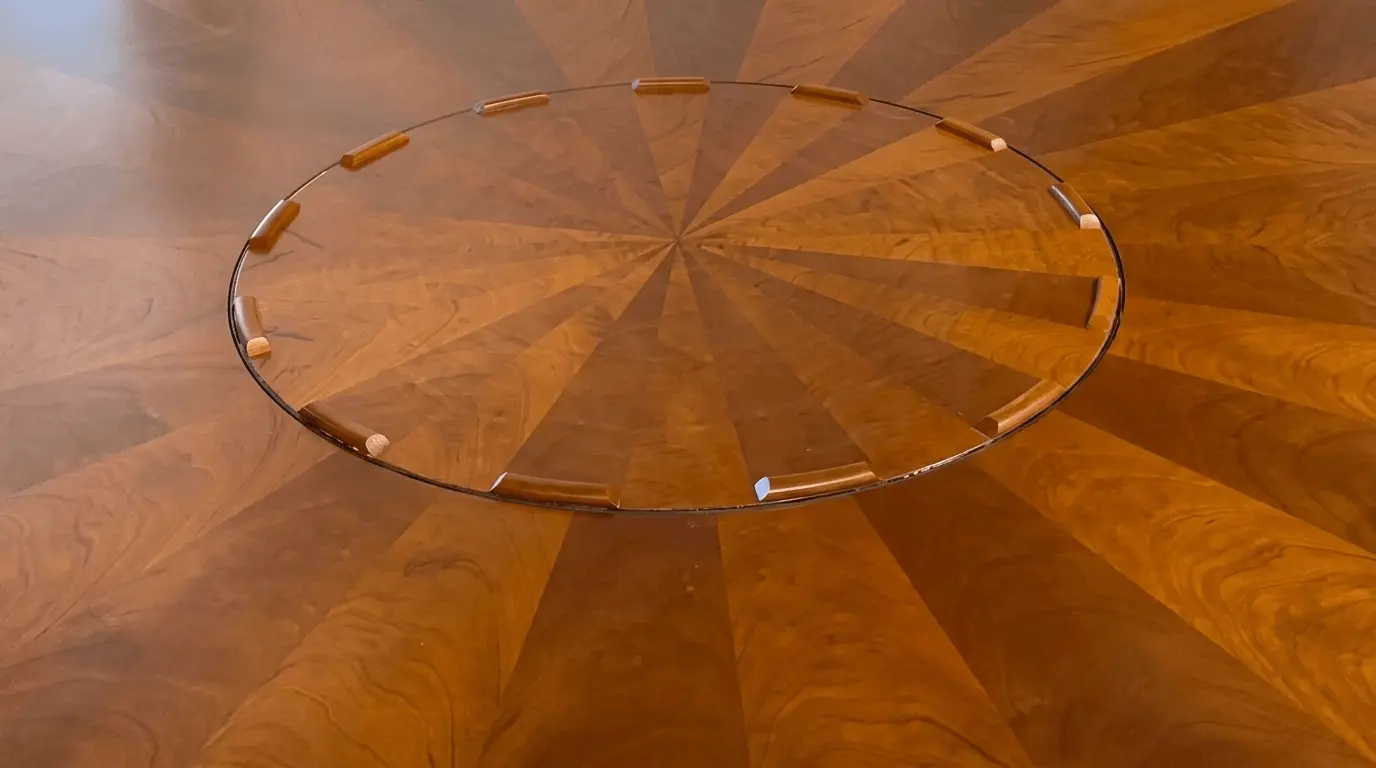
Radial grain turns direction into visual rhythm · RS Studio
The proper term is chatoyance. Wood reflects light unevenly because of the orientation of its fibres. In the right timber this creates a shifting lustre rather than a flat shine. Mahogany does this beautifully when cut and finish are sympathetic. Gloss is not the same thing. Finish can add polish — it cannot manufacture depth where the wood itself has none. This is one of the five measurable conditions that determine whether furniture actually works in a room — see why a room feels wrong for the full framework.
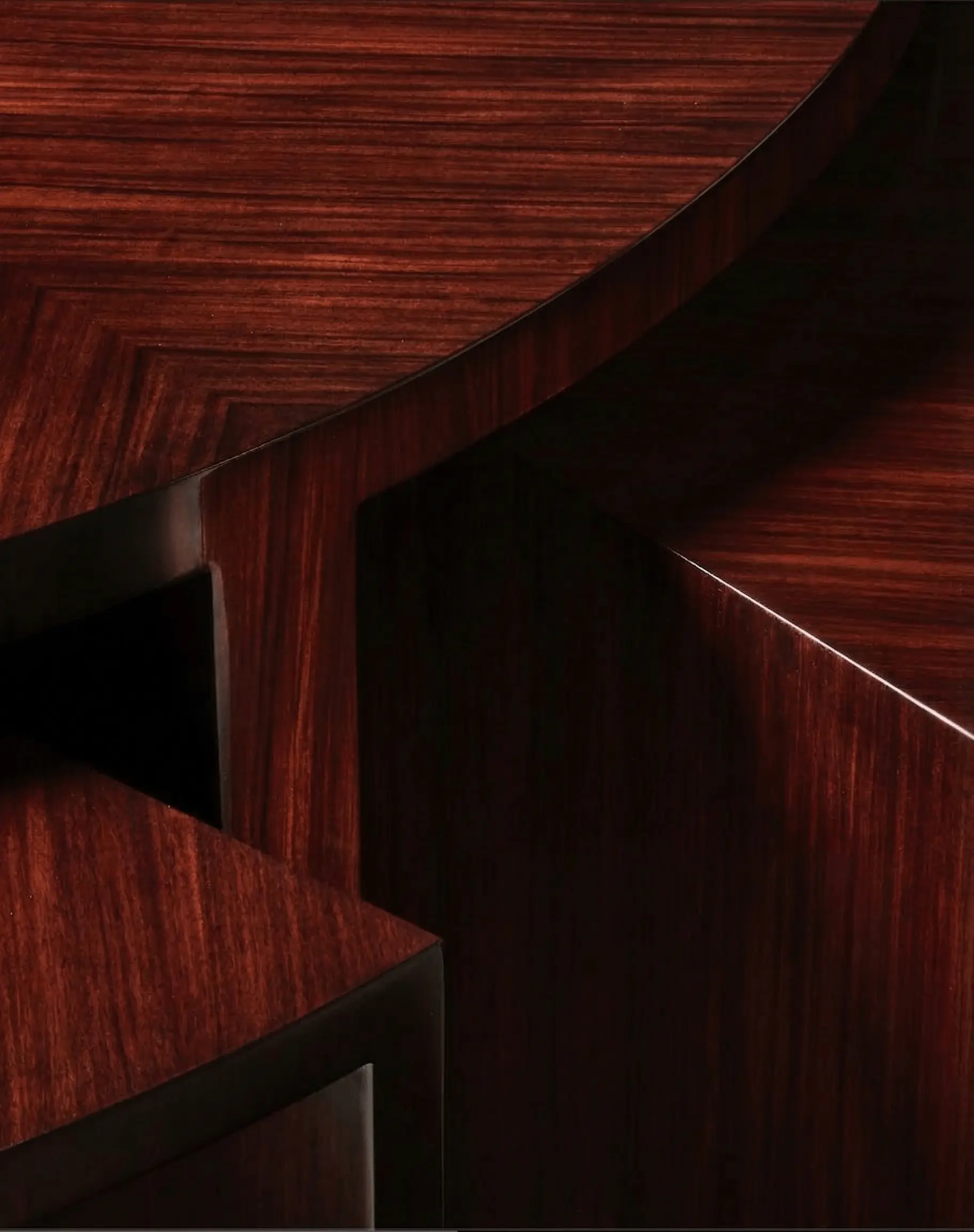
Direction matters. Figure can be dramatic without becoming loud · RS Studio
IV · Restraint
One of the mistakes people make when learning about wood is assuming quality must always announce itself loudly. It does not. Some of the most persuasive mahogany surfaces are not wildly figured at all. They are controlled, straight-grained, and quietly responsive to light. This restraint is what makes mahogany effective as an anchoring material in Bay Area estate interiors — it supports proportion rather than interrupting it.
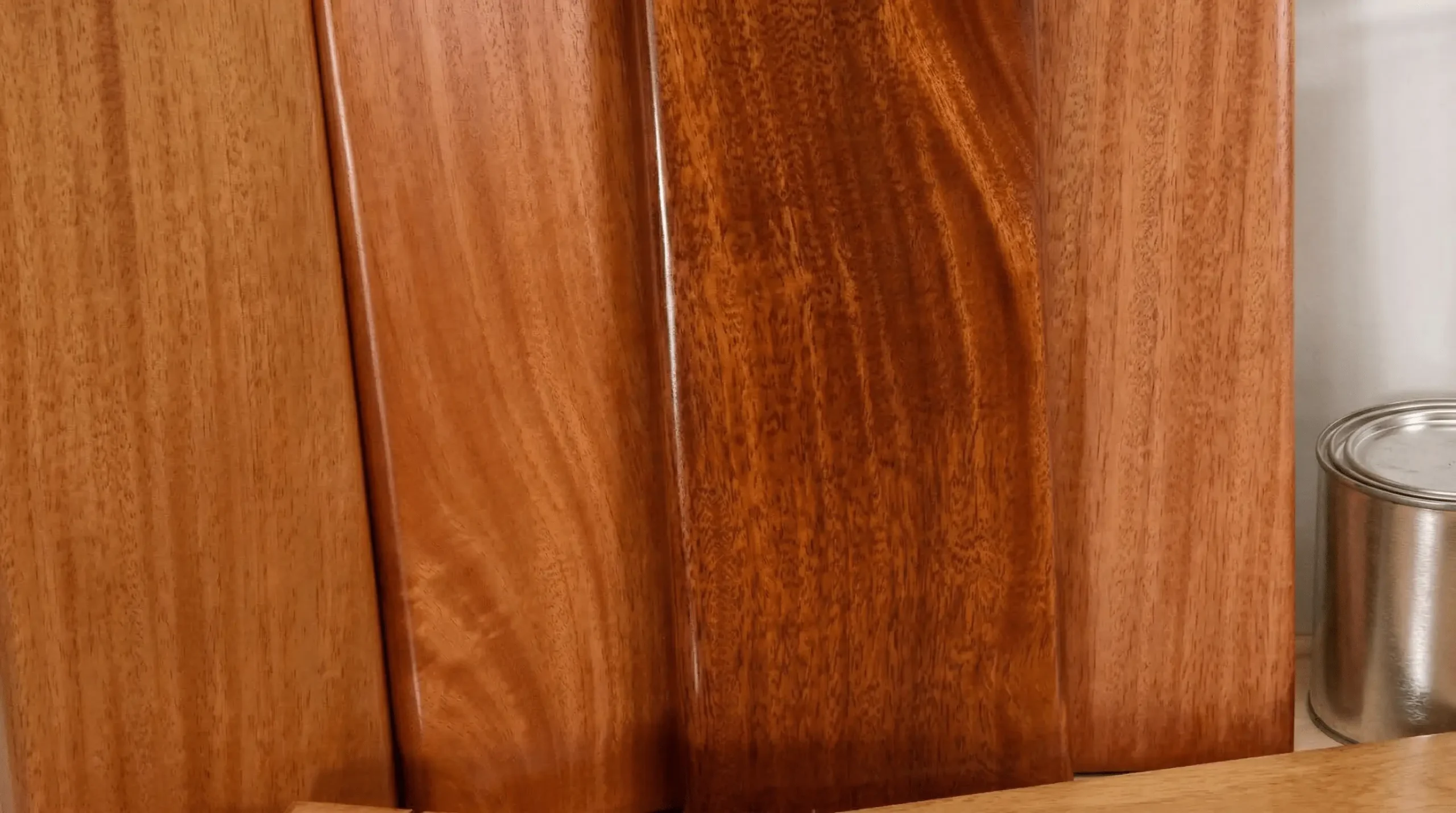
In restrained grain, depth becomes more important than drama · RS Studio
This is the version of mahogany designers trust. It is one of the reasons the classic aesthetic and the collected home continue to endure — the materials do not date because they were never performing.
V · Crotch Figure
There are moments when the surface is meant to be the event. Crotch figure — taken from the junction where trunk and branch diverge — creates the feathered, fan-like patterns long associated with high-style furniture. Used well on a statement dining table or cabinet door, it produces a focal surface that feels almost architectural in its symmetry.
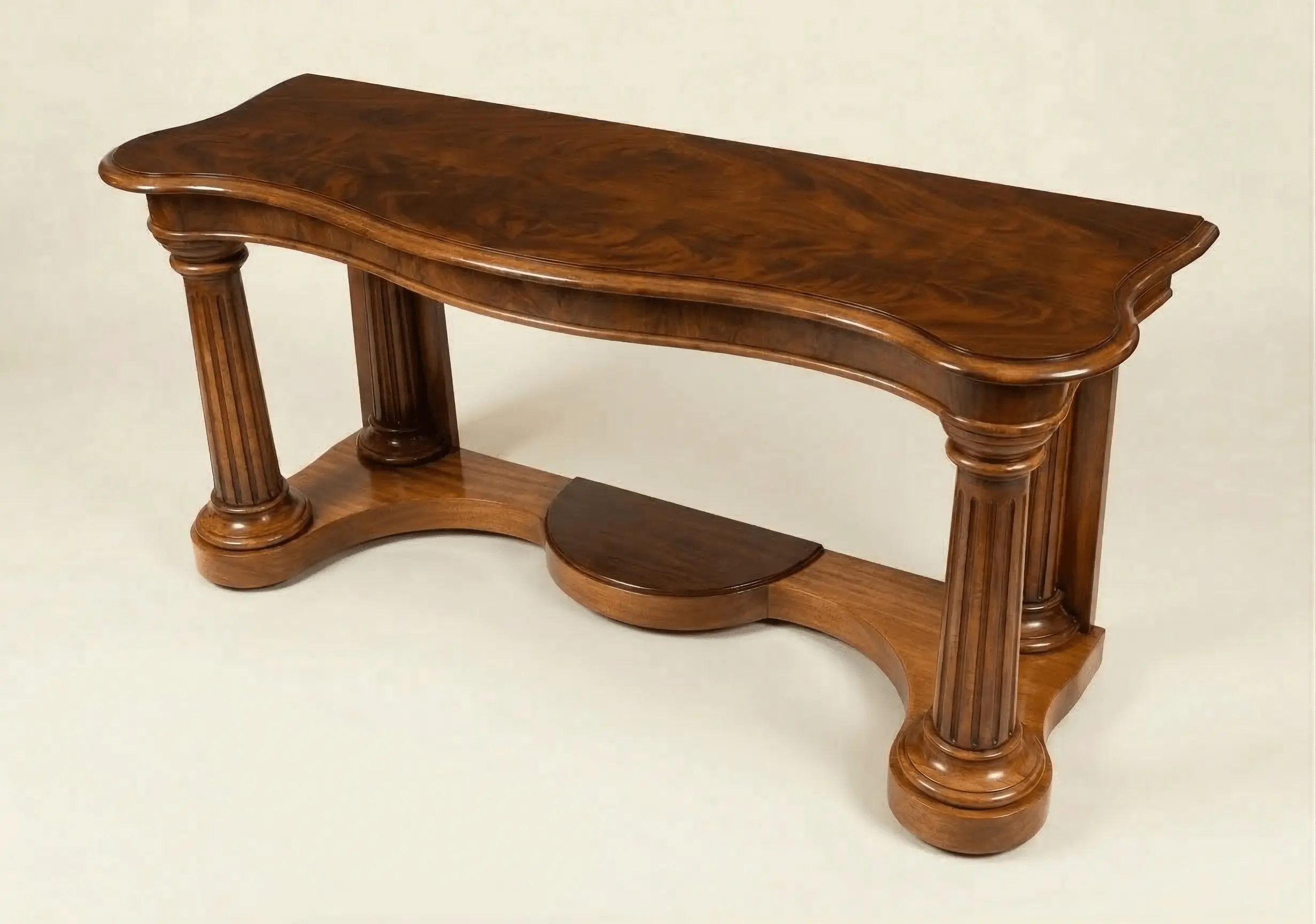
When figure opens outward, timber becomes composition · RS Studio
These pieces only work when the construction around them is disciplined. The art of the tapestry operates on the same principle — one strong focal surface supported by restraint everywhere else.
How to read a wood surface at a glance| What you see | What it often means | What to ask next |
|---|---|---|
| Flat, dead surface | Heavy finish, weak figure, or generic stained wood | Is the depth in the timber or only in the coating? |
| Shifting light across grain | Natural chatoyance — optical depth from grain orientation | Is the movement from the cut, the species, or the layout? |
| Perfect mirrored pattern | Bookmatched veneer — deliberate panel composition | Was the symmetry intentional and consistent across the piece? |
| Strong feathered burst | Crotch figure or expressive veneer selection | Does the form support the drama, or is the surface doing all the work? |
| Quiet straight grain | Architectural restraint and material discipline | Does the finish bring out warmth without artificial gloss? |
VI · Species
One reason buyers get confused is that “mahogany” is used loosely. Some timbers are true mahoganies. Some are close relatives. This is why any serious conversation about luxury furniture in Saratoga must start with species, not just finish.
Cuban Mahogany
Swietenia mahagoni
Historically significant, deeply prized, and now exceptionally rare. The original mahogany of eighteenth-century furniture.
True MahoganyHonduran Mahogany
Swietenia macrophylla
The benchmark for fine mahogany from the nineteenth century onward. Stable, carvable, warm, and deeply versatile.
True MahoganyAfrican Mahogany
Khaya species
A respected related genus — not true Swietenia, but can show excellent ribbon figure and broad utility in furniture making.
Related GenusSapele
Entandrophragma cylindricum
A favourite in contemporary cabinetmaking where strong ribbon figure and architectural veneer work are desired.
Mahogany Family RelativeRosewood
Dalbergia species
A different family entirely — often darker and more dramatic. Not interchangeable with mahogany in character or working properties.
Distinct Precious HardwoodWalnut
Juglans species
One of the great furniture woods. Particularly effective in home office furniture where figure and radial veneers are at their best.
Separate Fine Furniture TimberVII · Placement
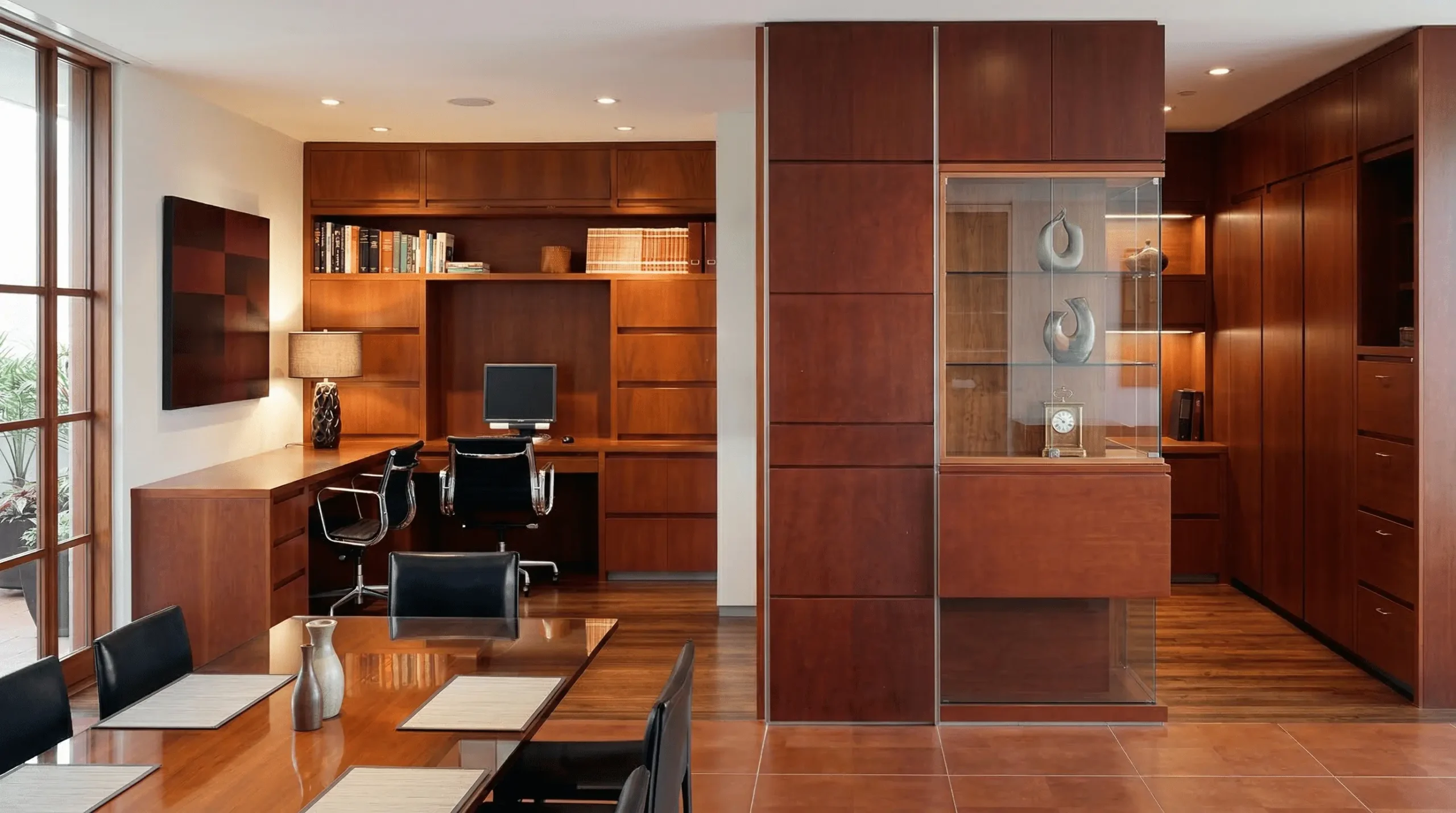
Mahogany carries authority, but authority is not the same as heaviness. Used well, it anchors a room rather than darkening it. It asks for surrounding materials with honesty: linen and wool upholstery fabrics, leather, stone, natural brass. The architectural rugs and heritage throw pillows in the collection are chosen with exactly this pairing in mind — flatweaves and hand-knotted pieces that sit beneath mahogany furniture without competing with it.
What mahogany does not want is panic styling — too much contrast, too many unrelated finishes. It needs to be placed with intelligence. This is the founding premise of the correct sequence for furnishing a room — the wood is not the first decision.
Tilt the surface toward the light. Read the edge. Check whether the grain has depth or only colour. Ask what species, how it was finished, and whether the veneer layout was deliberate. Most weak furniture fails those questions quickly. You can apply these tests at the Reeva Sethi Home showroom in Saratoga. For deeper project guidance, our bespoke design service covers material selection from the start.
You are buying judgment made visible. — RS Studio · Reeva Sethi Home, Saratoga, California
What is chatoyance in wood?
Chatoyance is the optical effect where wood appears to shift in luminosity as the viewing angle changes. It occurs because wood fibres are oriented in different directions, reflecting light unevenly. Mahogany, sapele, and figured walnut are particularly known for strong chatoyance.
What is the difference between true mahogany and African mahogany?
True mahogany refers to Swietenia species — primarily Cuban (Swietenia mahagoni) and Honduran (Swietenia macrophylla). African mahogany (Khaya species) is a related but distinct genus that shares similar working properties and can show excellent ribbon figure, but is not a true Swietenia mahogany.
Is veneer furniture inferior to solid wood?
Not necessarily. In fine furniture, quality veneer over a stable substrate allows the maker to control grain direction, create bookmatched and radial layouts, and produce surfaces impossible to achieve in solid wood. Read our guide to solid wood versus veneer for the full comparison.
What is crotch figure in wood?
Crotch figure is a dramatic grain pattern taken from the junction where a tree trunk diverges into a major branch. The converging growth rings create feathered, fan-like patterns highly prized in formal furniture — most commonly used in veneered tabletops, cabinet doors, and drawer fronts.
Where can I see mahogany furniture in person in the Bay Area?
Reeva Sethi Home at 20430 Saratoga–Los Gatos Road, Saratoga CA 95070 carries solid hardwood furniture including mahogany pieces. The showroom serves Saratoga, Los Gatos, Los Altos, Palo Alto, Menlo Park, and greater San Jose. Call +1 408-797-5283 or book an appointment online.
RS Studio is the editorial imprint of Reeva Sethi Home — a Saratoga-based showroom serving the Bay Area with heritage furniture, architectural rugs, luxury fabrics, bespoke interior services, and handwoven tapestries. RS Studio publishes on material culture, design philosophy, and the discipline of rooms built to last. Located at 20430 Saratoga–Los Gatos Road, Saratoga CA 95070 · +1 408-797-5283.