In a workshop outside the village of Pietrasanta, there is a chest of drawers that has been in the same family since the early part of the last century. It has been refinished once. One drawer was rebuilt after the house flooded in 1966. Nothing else has been done to it. The chest is not remarkable to look at. That is, in every sense, the point.
What keeps furniture alive across a century is not beauty — beauty is common enough, and it follows fashion down. It is the quality of decisions made before the piece ever left the workshop: at the joint, at the moment of species selection, at the finishing stage, when no one who will eventually own the piece is present to ask questions.
Those decisions are what this article is about.
There is a persistent idea in furniture retail that solid wood is simply better than engineered wood — that one is the premium choice and the other a concession. This is not quite right, and acting on it produces rooms full of solid wood furniture that fails in ways its owners did not anticipate.
Solid wood moves. It expands across its grain with humidity and contracts with dryness, across its entire life. This is not a defect — it is a property, and a maker who understands it designs around it. A maker who ignores it produces furniture that splits at wide panels, opens at glue joints, and rattles in its own mortises by the third winter.
Engineered materials — MDF, plywood, particleboard in their various grades — are dimensionally stable in ways solid wood is not. They hold paint evenly. They do not cup. A quality plywood substrate under a veneer can outlast a solid wood panel of equivalent dimension in the right conditions. The material is not inferior. Its application often is.
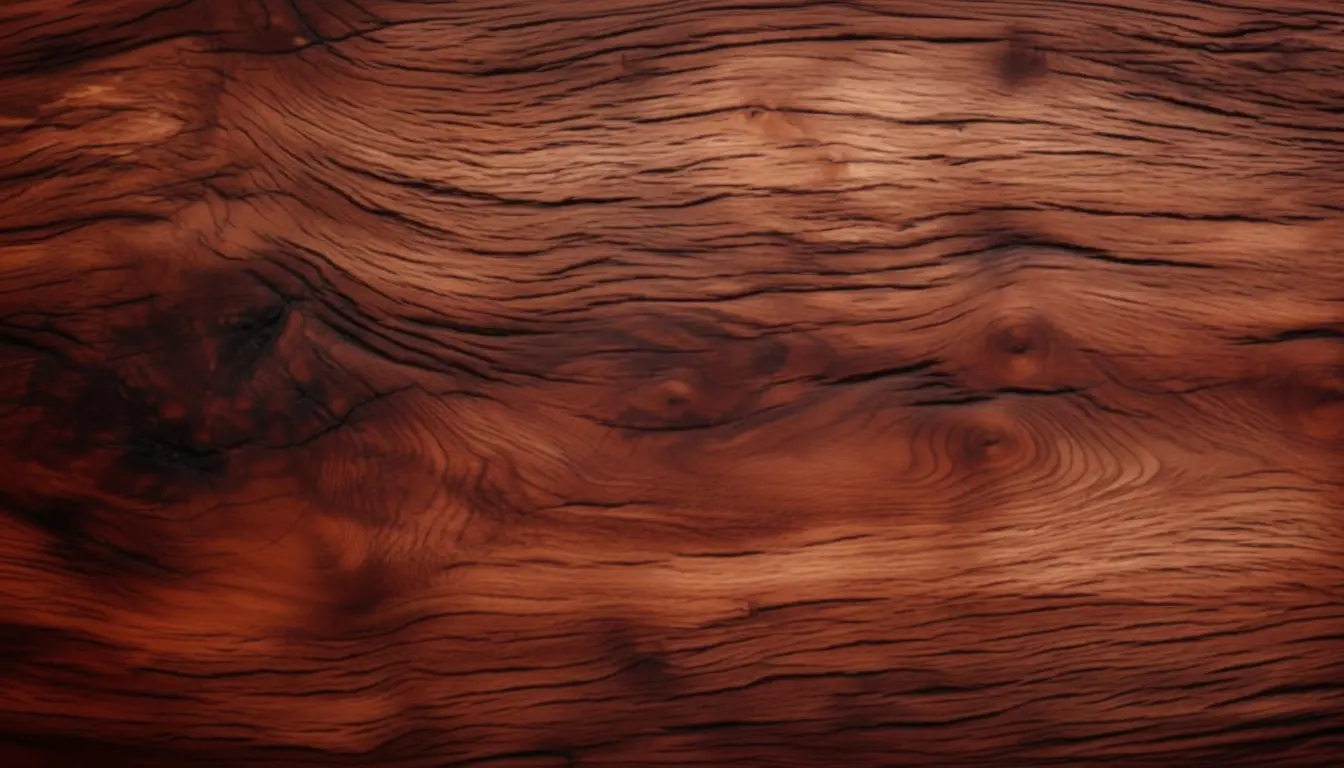
The chest in Pietrasanta was built in solid walnut throughout, including the drawer bottoms — which is how you know it was built without cost pressure, since drawer bottoms in solid wood are an extravagance that serves only longevity. It has not warped because the maker understood grain direction and left room for movement at every panel. That knowledge is the actual material. The wood is just what carries it.
Mahogany has been used in serious furniture for three centuries. Not because it is fashionable — it has gone in and out of fashion several times — but because it behaves well. It is stable for a hardwood, machines cleanly, holds detail in carving and joinery, and darkens into something genuinely beautiful over decades of use. These are not aesthetic properties. They are behavioral ones.
Teak is resistant to moisture and insects in ways that made it essential in maritime applications and that still make it sensible outdoors. Indoors, its natural oils complicate adhesion and can interfere with certain finishes. It is not a universal premium. It is a specific material for specific conditions, and treating it otherwise produces furniture that is expensive and difficult to maintain.
White oak has a tighter grain and better natural moisture resistance than red oak. It ages quietly — not dramatically — developing an evenness of tone over years that reads as settled rather than new. For residential furniture expected to last a generation, it is among the more reliable choices. It does not ask for attention. It simply performs.
Walnut is another matter. It is softer, more susceptible to denting, and shifts considerably in color as it ages — lightening with UV exposure before settling into warmth. It is also, at purchase, among the most beautiful woods available. This creates a particular temptation: to specify walnut everywhere because it photographs well, without accounting for how it will behave at a kitchen table, a desk, a surface used daily by people who put things down without thinking.
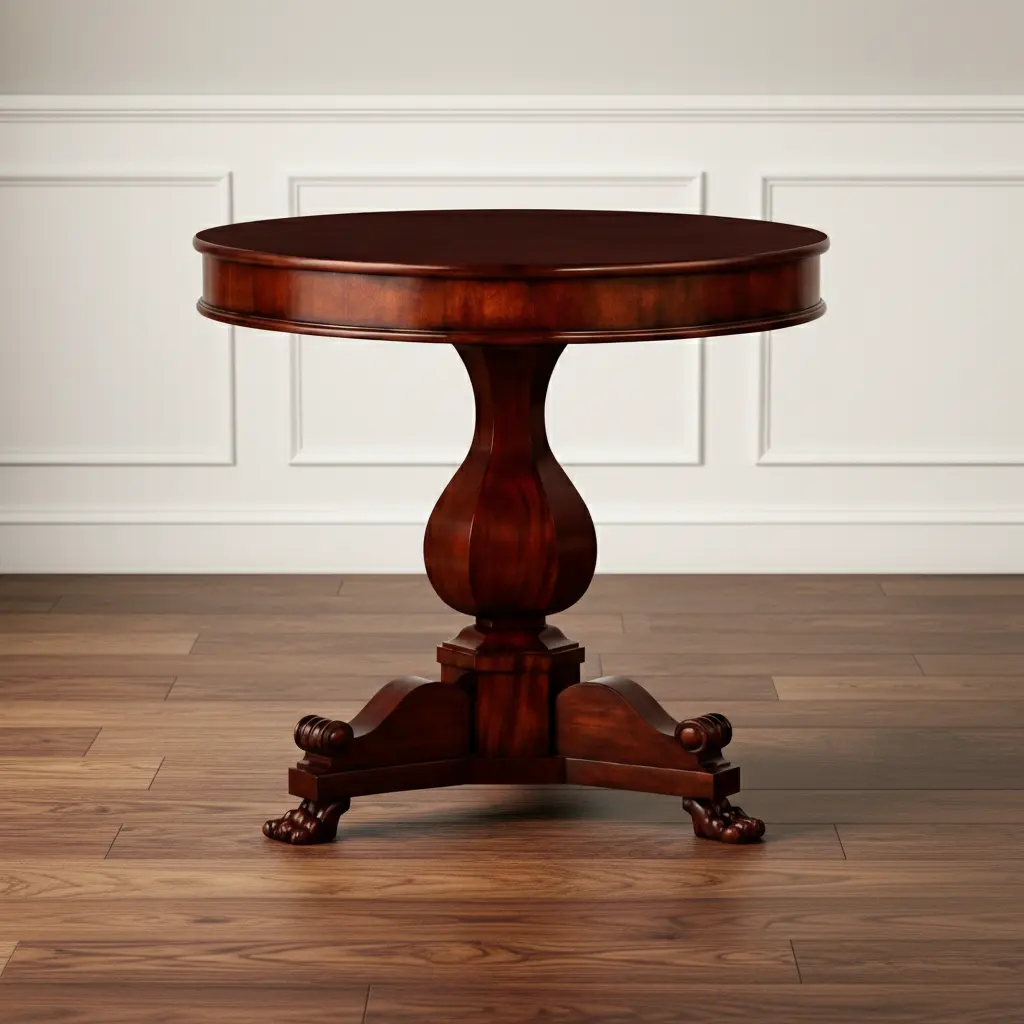
The question to ask of any species is not what it looks like in February. It is what it will look like — and how it will function — in ten Februaries.
Most furniture does not fail at the surface. It fails at the joint — quietly, over years, until one morning a chair rocks that did not rock before, or a drawer binds that once ran clean, or a table apron separates from its leg in a way that is obvious only in a certain light.
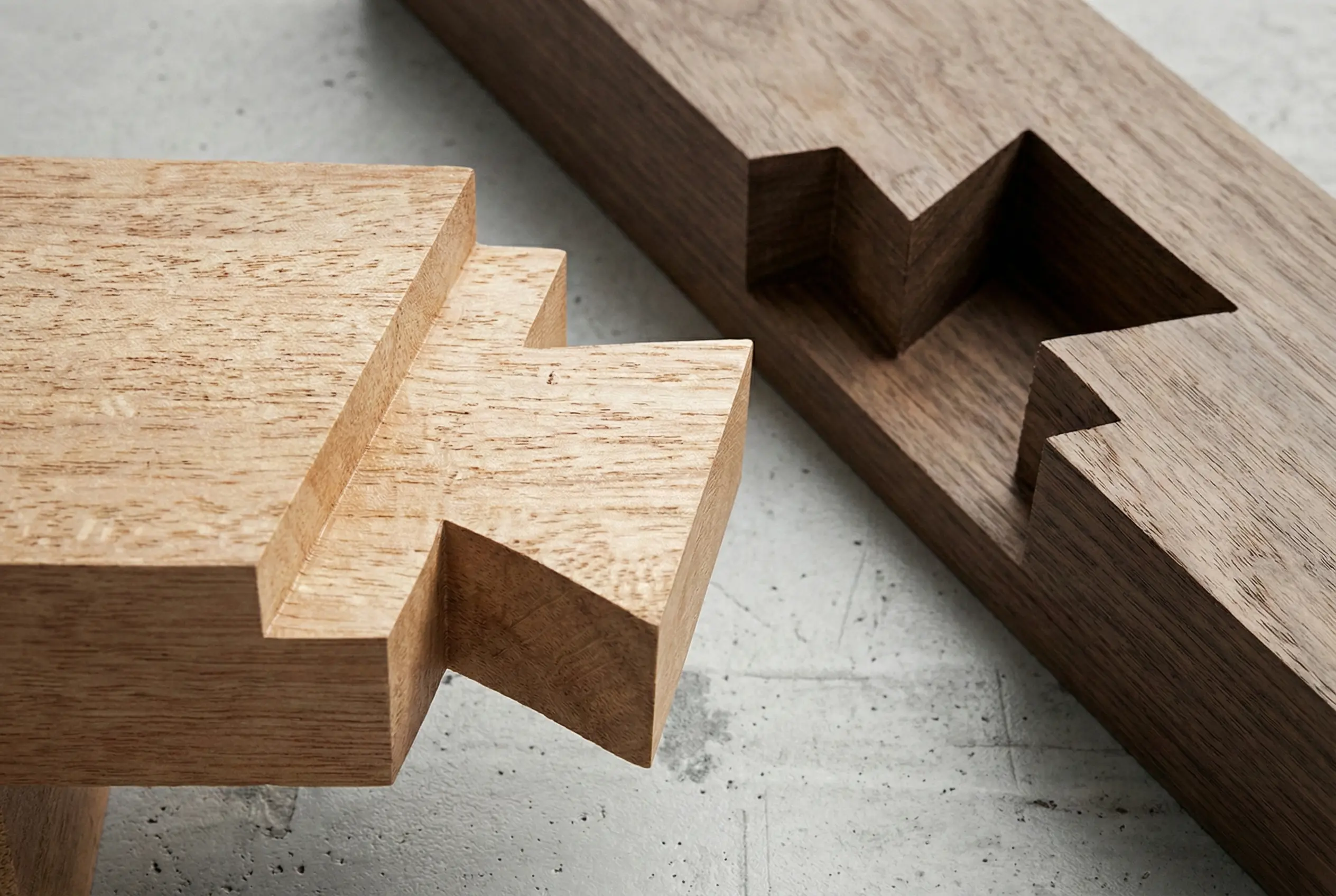
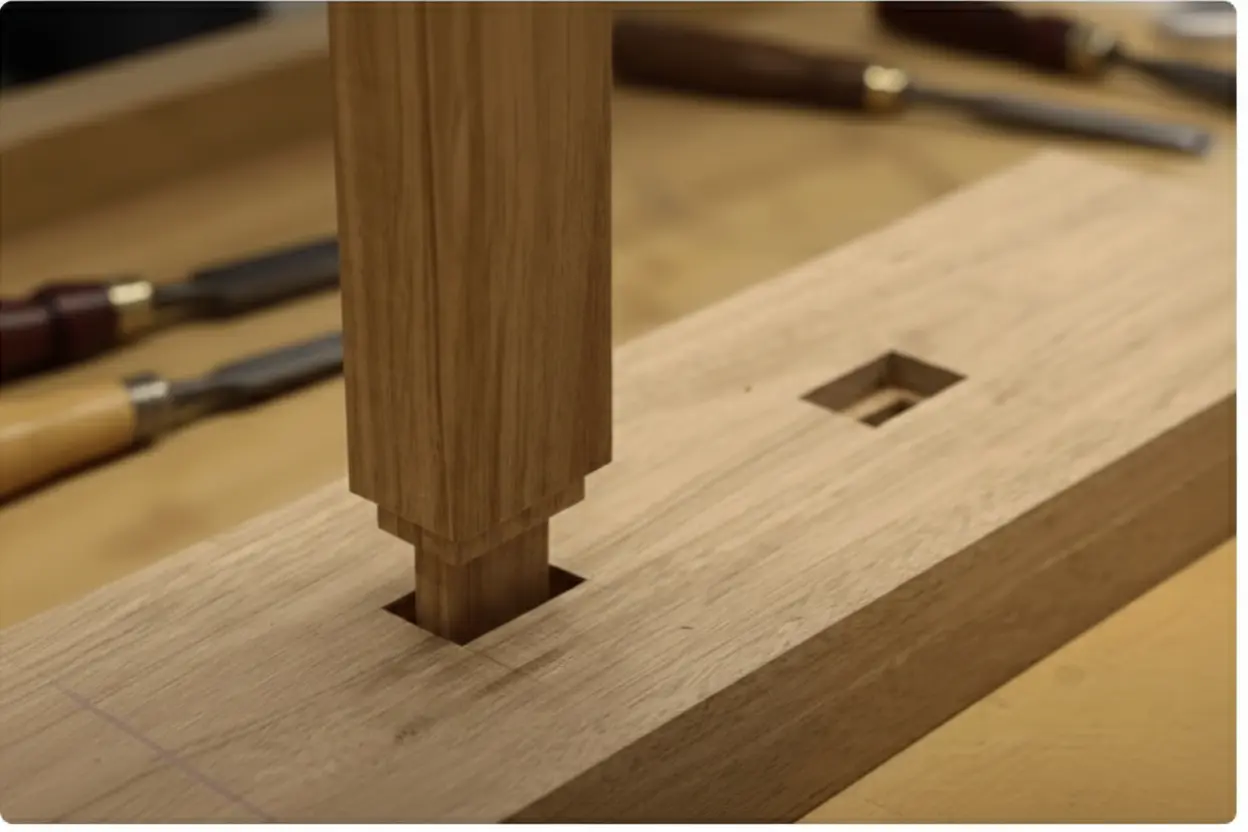
The mortise-and-tenon is the oldest furniture joint in continuous use because it works. A projecting tenon fits into a receiving mortise across a substantial glue surface, creating mechanical interlock that distributes stress rather than concentrating it. When the joint is well-cut and correctly glued, it is stronger than the wood on either side of it. When it loosens — which it eventually will — it can be disassembled, cleaned, reglued, and clamped in an afternoon. This repairability is not incidental. It is the point.
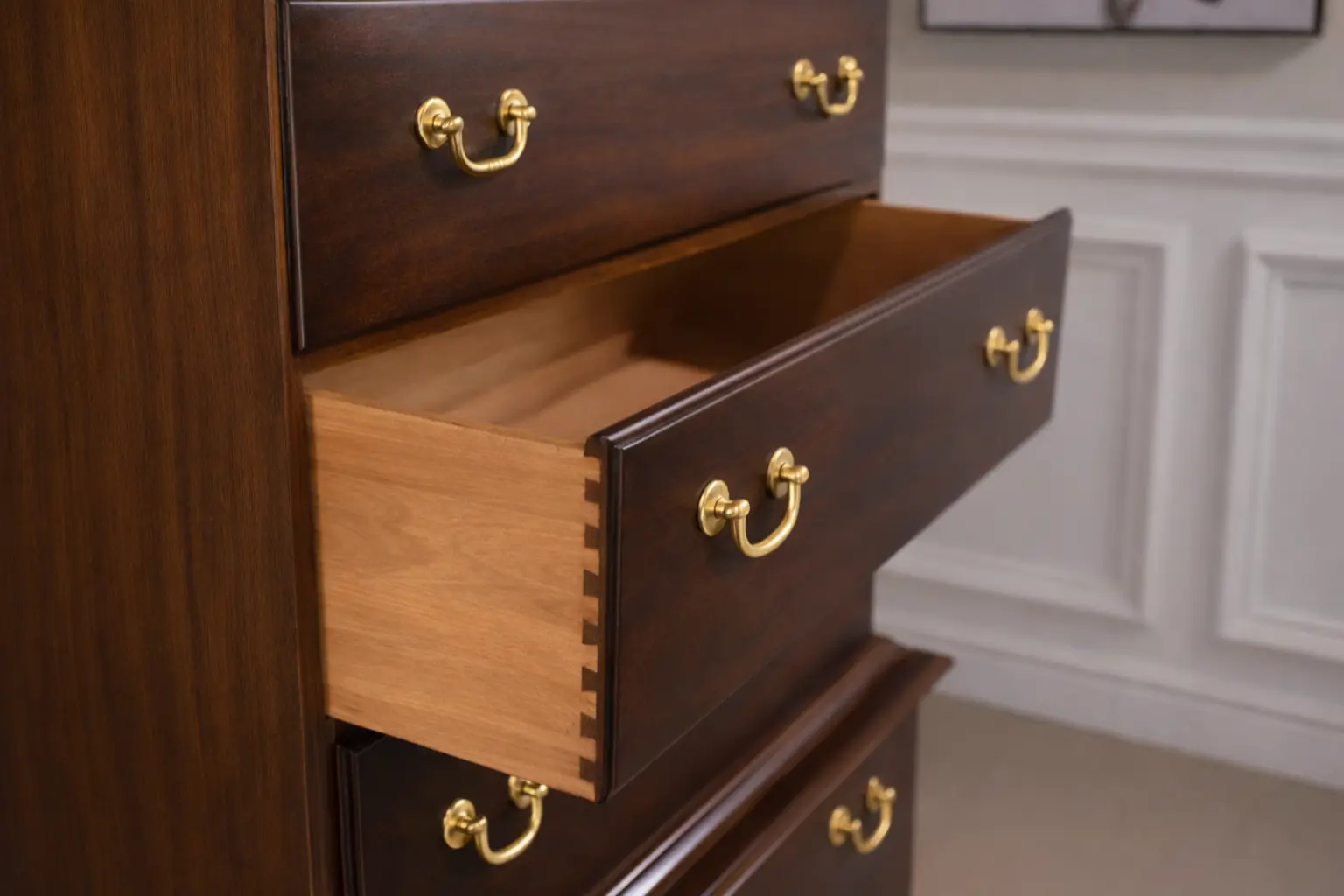
Dovetails resist being pulled apart, which is why they appear at drawer corners, where the stress is lateral and repetitive across a lifetime of use. The geometry does the work. Glue is secondary. A hand-cut dovetail is not an affectation — it is a joint that will outlast the furniture around it.
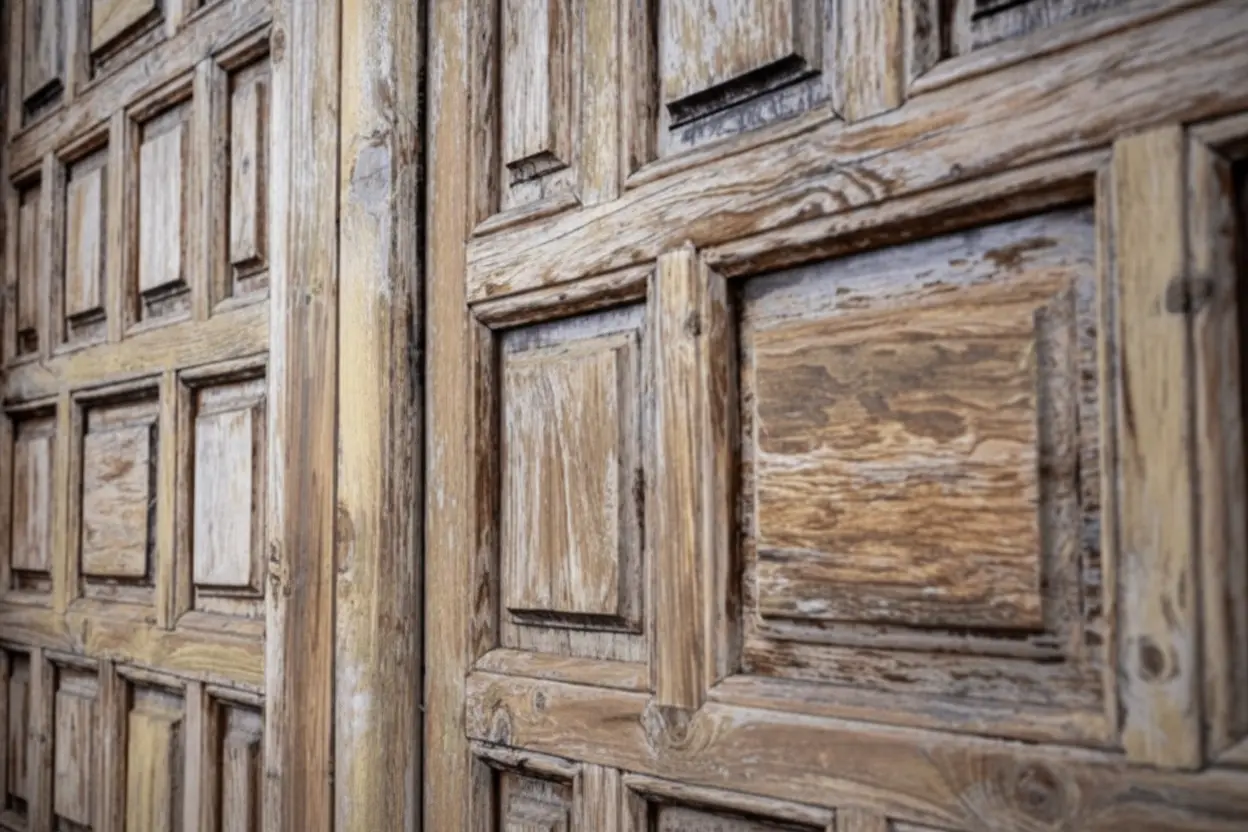
Frame-and-panel construction — a panel floating within a frame, free to move with seasonal humidity — is why old doors still open and close cleanly while solid-glued panels from the same period have long since split. The panel is not fixed. It breathes. The frame holds its shape because it has been designed to accommodate movement rather than resist it.
None of this requires visible joinery. Some of the most enduring furniture conceals its structure entirely behind clean, uninterrupted surfaces. What it requires is that the joinery exists — that the maker chose the joint for the load, not for the price point. The difference between those two choices is not visible at purchase. It becomes visible over time.
There is a surface on the chest in Pietrasanta that took on its character gradually over the first twenty years of use and has changed very little since. It is not pristine. It shows where hands have rested, where objects have been set down, where sunlight has fallen at the same angle every afternoon for decades. None of this reads as damage. It reads as life.
This is what a penetrating oil or wax finish does. It becomes part of the wood rather than sitting over it, wears with the surface rather than peeling from it, and can be refreshed — not restored, refreshed — with materials available at any hardware supplier. The wear is gradual and legible. You know what it is. You can address it when you choose to, and the result is maintenance, not restoration.
A thick lacquer or catalyzed coating behaves differently. It looks, at purchase, more perfect — sealed, even, without variation. It also fails differently. A chip is a chip. There is no invisible repair. The finish must be stripped and reapplied, which is a significant undertaking, and the piece in the interim simply looks damaged. The failure is abrupt rather than gradual, and it tends to arrive well within the ownership period of the person who bought the piece.
Shellac — made from lac resin, dissolved in alcohol — is repairable with fresh shellac. It has been used in fine furniture finishing for two centuries for precisely this reason. A shellac-finished surface can be touched up by the owner. The repair is invisible. This is a different kind of durability than hardness or resistance. It is the durability of something that can be cared for rather than simply endured.
A maker who has thought seriously about the lifecycle of what they build will answer these questions without hesitation. That ease of answer is itself information.
-
Is it repairable? Not just the surface — the joints, the mechanism, the hardware. Can a loosened joint be re-glued without dismantling the piece? Can replacement parts be sourced in fifteen years? If the answer is unclear, the piece was not designed to be owned that long.
-
How does the wood move? Wide solid panels, tabletops, drawer bottoms in solid wood — these expand and contract with seasonal humidity. Has the construction accounted for this? Fixed fasteners running across grain direction are a failure point. The maker should be able to show you where and how movement has been accommodated.
-
What fails first? Every piece has a point of greatest stress. Chair joints at the seat rail. Drawer corner joints. Extension table mechanisms. Ask specifically. The answer reveals whether the maker has thought about the piece in use or only in the showroom.
-
Can the finish be refreshed? Not restored — refreshed. Periodic maintenance with a compatible product is the difference between furniture that improves with age and furniture that deteriorates on a schedule. Know which one you are buying.
-
What does the structure look like? You do not need to see every joint. But if the maker cannot or will not describe how the piece is held together, that absence of transparency is the answer.
The chest in Pietrasanta will survive its current owners. It survived several sets of owners before them. No one who made it is alive to take credit for this. They left the credit in the wood, in the joints, in the finish that still responds to a cloth and a little oil the way it did in 1921.
That is the only kind of furniture worth buying. Not because it is virtuous to buy it, but because everything else will eventually ask to be replaced — and the replacement will ask the same thing, sooner than expected, and cost more than it should.
Buy the chest. Ask the questions. Give it time.
For furniture built to be owned for a long time, and guidance on what that actually means.
Begin a Bespoke Conversation20430 Saratoga–Los Gatos Road · Saratoga, CA · 408-797-5283
RS Studio is the editorial and design philosophy imprint of Reeva Sethi Home — a Saratoga-based showroom and studio serving the Bay Area with heritage furniture, architectural rugs, and considered interiors. RS Studio publishes on design philosophy, material culture, and the discipline of rooms built to last.