 Written by
 A mahogany bookcase represents more than storage—it’s a statement of permanence in an impermanent world. For centuries, mahogany has been the wood of choice for libraries that house treasured collections, studies where serious work happens, and living rooms where books are valued as companions rather than decoration. This guide examines what distinguishes exceptional mahogany bookcases from ordinary alternatives, helping you invest in furniture that will serve for generations.
Why Mahogany Remains the Gold Standard
When British cabinetmakers of the 18th century discovered mahogany, they recognized something extraordinary. This tropical hardwood offered qualities no European timber could match: exceptional strength, remarkable stability, and a deep, lustrous color that aged into ever-richer tones. Three centuries later, mahogany remains unrivaled for fine furniture, particularly bookcases where structural demands meet aesthetic expectations.
The Properties That Matter
Several characteristics make mahogany ideal for bookcases:
- Dimensional stability—mahogany resists warping and twisting even under the substantial weight of book collections
- Workability—the wood carves cleanly, allowing for detailed moldings and architectural elements
- Strength-to-weight ratio—strong enough for floor-to-ceiling spans without excessive bulk
- Finishing qualities—accepts stains and polishes beautifully, developing deeper character over time
- Resistance to decay—natural oils provide protection against deterioration
These properties explain why antique mahogany bookcases from the Georgian and Victorian eras remain functional and beautiful today. A well-made mahogany bookcase isn’t a purchase—it’s an inheritance you’re preparing for future generations.
How Mahogany Ages
Unlike woods that fade or deteriorate, mahogany grows more beautiful with time. Fresh-cut mahogany displays a pinkish-brown hue that deepens into rich reddish-brown tones over years of exposure to light and air. This natural darkening process, called oxidation, creates the coveted patina that antique collectors prize. The wood’s natural oils continue working beneath the surface, maintaining suppleness while the finish develops subtle crazing that speaks to decades of service. A fifty-year-old mahogany bookcase possesses a warmth and depth that cannot be artificially replicated—only time creates genuine patina.
Mahogany Varieties
Not all mahogany is created equal. Understanding the distinctions helps you evaluate quality:
Genuine Mahogany (Swietenia) includes Cuban, Honduran, and other Central American varieties. These represent the original mahogany that built the furniture industry’s reputation. Cuban mahogany, now extremely rare and protected, was the preferred choice of 18th-century English cabinetmakers. Honduran mahogany remains available and delivers comparable quality.
African Mahogany (Khaya) comes from various African species that share mahogany’s working properties and appearance. While technically different genera, quality African mahogany serves admirably in fine furniture. It’s often more readily available than Central American varieties.
“Philippine Mahogany” is actually Lauan or Meranti—not true mahogany at all. This misleading trade name describes woods that lack mahogany’s strength, stability, and aging characteristics. Avoid furniture using this substitute despite the mahogany label.
Bookcase Styles and Their Applications
Mahogany bookcases span multiple design traditions, each suited to different spaces and collections. Understanding these styles helps match furniture to your specific needs.
Library Bookcases
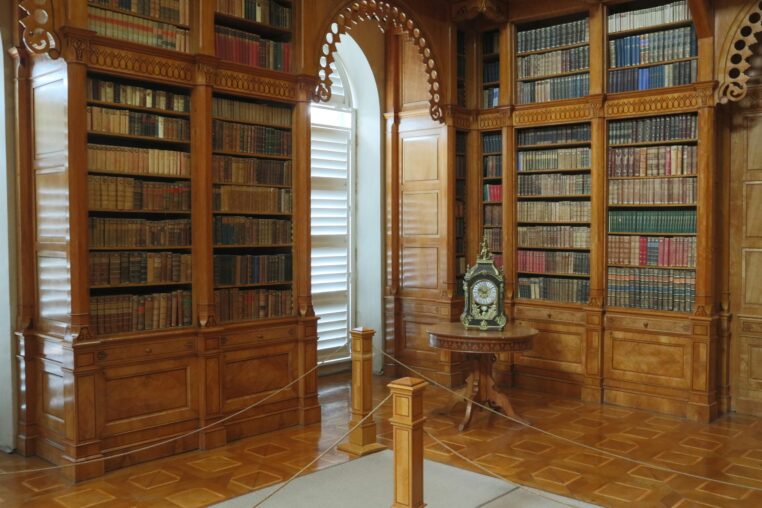
Full-scale library bookcases reach floor to ceiling, often featuring architectural elements like crown moldings, pilasters, and classical proportions. The Devonshire Grand Mahogany Library exemplifies this tradition with its English architectural silhouette and commanding presence.
These pieces suit:
- Dedicated home libraries with substantial collections
- Studies and home offices requiring professional gravitas
- Living rooms where books are central to the home’s identity
- High-ceilinged spaces that can accommodate their scale
Barrister Bookcases
Barrister bookcases feature glass-fronted sections that lift up and slide back, protecting books from dust while allowing easy access. Originally designed for law offices, these pieces suit anyone who values both protection and display. Their modular nature allows you to add sections as collections grow.
Secretary Bookcases
Secretary bookcases combine book storage with a fold-down writing surface, creating dual-purpose pieces ideal for smaller spaces. The bookcase portion typically sits atop a desk section with drawers and cubbies for papers and supplies. This traditional form serves beautifully in bedrooms, guest rooms, or studies where space is limited.
Open Bookcases
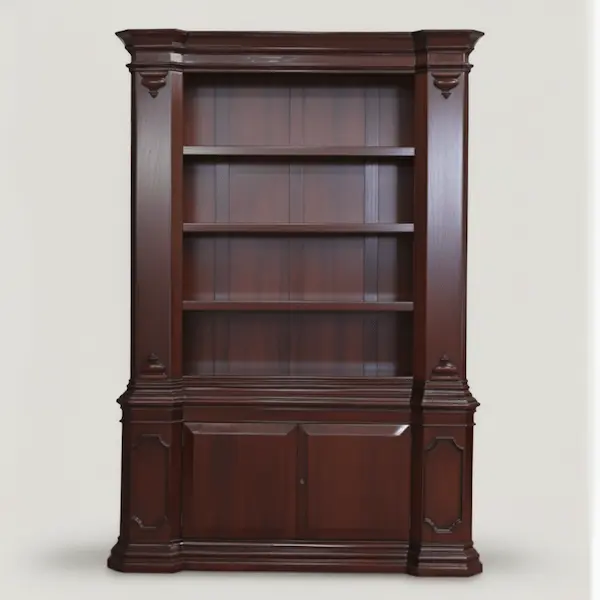
Simple open bookcases—shelves without doors—offer accessibility and display. They work well for frequently accessed collections or decorative arrangements mixing books with objects. The Canterbury Arch Library Bookcase combines open display with architectural detail through its arched crown and glazed mullion doors on select sections.
Construction Quality: What to Examine
The construction of a mahogany bookcase determines whether it will serve for decades or disappoint within years. Understanding quality markers helps you evaluate pieces regardless of price point.
Joinery
Traditional joinery methods create furniture that strengthens with age:
- Mortise and tenon joints—the gold standard for frame construction, where a projecting tenon fits into a corresponding mortise
- Dovetail joints—interlocking wedge-shaped cuts that resist pulling apart, essential for drawer construction
- Doweled joints—acceptable when combined with quality glue and proper fit
- Dado joints—grooves cut into sides to support fixed shelves
Avoid furniture relying solely on screws, nails, or staples. Metal fasteners through wood will eventually loosen as the wood moves seasonally. Traditional joinery accommodates wood movement while maintaining structural integrity.
Shelf Support
Bookshelves carry substantial weight—a full shelf of hardcover books can weigh 25 pounds per linear foot or more. Quality bookcases address this through:
- Appropriate shelf thickness—¾ inch minimum for spans up to 30 inches; thicker for longer spans
- Proper support systems—adjustable pins should be sturdy brass or steel, not plastic
- Back panel construction—solid backs provide crucial rack resistance
- Center supports—wide bookcases should have vertical dividers preventing sag
Solid Wood vs. Veneer
Both solid wood and quality veneer have legitimate applications in bookcase construction:
Solid mahogany excels for structural elements—frame pieces, moldings, carved details, and visible edges. It can be refinished indefinitely and repairs more easily than veneer.
Quality veneer over stable substrates makes sense for large flat panels like bookcase sides and backs. Veneer allows use of highly figured wood cuts that would warp if used as solid panels. The key is quality substrate (plywood, not particleboard) and proper veneer thickness.
Avoid paper-thin veneers over particleboard or MDF. These cannot be refinished, chip easily, and won’t survive the decades of service that justify investment in mahogany furniture.
Finish Quality
The finish protects wood while enhancing its beauty:
- Hand-rubbed finishes—traditional French polish and hand-rubbed oil finishes develop incomparable depth
- Lacquer finishes—quality lacquer provides durable protection when properly applied
- Even application—no drips, runs, or cloudy areas
- Proper preparation—the finish should enhance grain, not obscure it with buildup
Sizing Your Bookcase
Proper sizing ensures your mahogany bookcase serves both functional needs and aesthetic goals.
Measuring Your Collection
Before shopping, assess what you’re storing:
- Count your books—estimate linear feet needed (roughly 8-10 average books per foot)
- Note unusual sizes—art books, folios, and reference volumes need deeper, taller shelves
- Plan for growth—collections expand; allow 20-30% additional capacity
- Consider display items—objects, photos, and decorative pieces need space too
Room Proportions
The bookcase must relate properly to its space:
- Ceiling height—floor-to-ceiling pieces work best in rooms with 9+ foot ceilings
- Wall space—measure the exact wall and note any obstacles (outlets, vents, moldings)
- Visual weight—large bookcases dominate rooms; ensure the scale is appropriate
- Traffic flow—doors and passages need clearance; bookcases shouldn’t impede movement
Standard Dimensions
Typical bookcase measurements provide planning reference:
- Shelf depth—10-12 inches for most books; 14-16 inches for art books and oversized volumes
- Shelf height—10-12 inches for standard books; adjustable shelves accommodate variation
- Overall width—36-48 inches typical for single units; built-ins span entire walls
- Overall height—ranges from 36 inches (low) to 84+ inches (floor-to-ceiling)
Architectural Details That Matter
The details distinguish exceptional mahogany bookcases from ordinary alternatives.
Crown Moldings
Crown moldings cap bookcases with architectural authority. Classical profiles—ogee, dentil, egg-and-dart—connect furniture to centuries of design tradition. The molding should be proportionate to the piece’s overall scale and relate to the room’s existing architectural trim.
Base Treatments
The base anchors the bookcase visually and practically:
- Bracket feet—traditional choice providing elegant transition to floor
- Plinth bases—continuous platforms creating substantial visual foundation
- Ball-and-claw feet—Chippendale-style detail for formal traditional pieces
- Hidden bases—concealed supports creating floating appearance
Glass and Glazing
Glazed doors protect books from dust while allowing display:
- Mullion patterns—traditional divided-light configurations add visual interest
- Glass quality—seeded or wavy glass suits antique-style pieces; clear glass for contemporary
- Hardware—brass or bronze hardware should complement the overall design
Carved Elements
Hand-carved details elevate bookcases from furniture to art:
- Fluted pilasters—vertical grooves creating classical column references
- Rosettes and medallions—focal point carvings at corners or centers
- Acanthus leaves—traditional motif appearing in cornices and capitals
- Shell carvings—Georgian-era favorite for crown decorations

Caring for Mahogany Bookcases
Proper care ensures your mahogany bookcase develops beautiful patina while remaining structurally sound for generations.
Regular Maintenance
- Dust weekly—soft cloth or feather duster prevents buildup
- Polish periodically—quality furniture polish 2-4 times yearly maintains finish
- Avoid silicone—silicone-based polishes can interfere with future refinishing
- Check for pests—inspect occasionally for signs of wood-boring insects
Environmental Considerations
Wood responds to its environment. Protect your investment through:
- Humidity control—maintain 40-60% relative humidity; extremes cause cracking or warping
- Temperature stability—avoid placing near heating vents or air conditioning
- Light protection—direct sunlight fades finishes; use curtains or UV-filtering glass
- Level placement—ensure the floor is level to prevent structural stress
Addressing Issues
Minor problems often respond to home care:
- Water rings—mayonnaise or non-gel toothpaste can sometimes lift white rings
- Scratches—furniture markers or wax sticks disguise minor scratches
- Sticky drawers—rub candle wax on slides for smoother operation
- Loose joints—address promptly before damage spreads; consult professionals for valuable pieces
Integrating Bookcases Into Your Space
The Home Library
Dedicated libraries call for substantial bookcases that command attention. Built-in or floor-to-ceiling freestanding pieces create the immersive environment serious readers desire. Pair with comfortable reading chairs positioned near natural light.
The Study or Home Office
Studies benefit from bookcases that project professional competence while serving genuine function. Position reference materials within easy reach of the desk. The combination of mahogany bookcases with quality desks and tables creates spaces conducive to focused work.
The Living Room
Living room bookcases serve both storage and display. Mix books with collected objects, framed photographs, and decorative items. The guide to mixing antiques with modern furniture offers strategies for integrating traditional mahogany pieces into varied interiors.
Bay Area Considerations
Peninsula homes present specific opportunities for mahogany bookcases. The region’s appreciation for intellectual life—shaped by Stanford, venture capital culture, and the tech industry—creates natural demand for serious home libraries. Mahogany’s warmth provides welcome contrast to the clean-lined contemporary architecture common in the area.
For context on regional design approaches, see our guides to Atherton interior design, Menlo Park home design, and Palo Alto home design.
The Investment Perspective
Quality mahogany furniture represents genuine investment. The principles of quiet luxury and heirloom furniture apply directly to bookcase selection.
Consider these factors when evaluating price:
- Material quality—genuine mahogany costs more than substitutes but lasts longer
- Construction method—traditional joinery justifies premium pricing
- Detail work—hand-carved elements and architectural details add value
- Scale and complexity—larger, more elaborate pieces require more material and labor
- Finish quality—hand-rubbed finishes command higher prices than spray applications
A quality mahogany bookcase purchased today will likely still serve when your grandchildren inherit it. Calculate cost-per-year-of-service rather than just purchase price.
Making Your Selection
Armed with this knowledge, you can evaluate mahogany bookcases confidently. Remember:
- Genuine mahogany outperforms substitutes—verify the wood species
- Traditional joinery ensures longevity—examine construction methods
- Proportions must suit both collection and space—measure carefully
- Architectural details distinguish exceptional pieces—examine crown, base, and trim
- Quality represents investment—evaluate cost over expected lifetime
Browse the storage and bookcase collection to explore mahogany options crafted to the standards discussed throughout this guide. Each piece represents centuries of cabinetmaking tradition applied to serve contemporary needs.
Explore mahogany bookcases and library furniture at Reeva Sethi Home. Our collection features pieces built to house your treasured books and objects for generations—furniture that honors the reading life while serving as permanent fixtures in Bay Area homes.