 Written by
 A leather club chair represents the intersection of comfort, craftsmanship, and enduring style. Born in British gentlemen’s clubs of the late 19th century, these deep-seated, generously proportioned chairs were designed for extended sitting—reading, conversation, contemplation. Today’s quality leather club chairs honor that tradition while serving contemporary homes seeking comfortable seating that transcends trends.
The History and Appeal of Club Chairs
Understanding the club chair’s origins illuminates why certain design elements matter.
Origins in Gentlemen’s Clubs
The club chair emerged in Victorian-era British private clubs—establishments like White’s, Boodle’s, and the Reform Club. These weren’t spaces for quick meetings but environments where members spent hours reading newspapers, conducting quiet business, and socializing. Chairs needed to accommodate extended sitting in complete comfort.
Key design elements emerged from this context:
- Deep seats—allowing members to settle in for hours
- Low backs—comfortable support without restricting conversation
- Rounded arms—wide enough to rest a book or drink
- Substantial proportions—conveying stability and permanence
- Leather upholstery—durable enough for heavy commercial use
Why Club Chairs Endure
The leather club chair remains popular because its design fundamentally works:
- Ergonomic success—proportions developed through actual use, not aesthetic theory
- Visual warmth—leather and substantial forms create welcoming presence
- Design flexibility—works equally in traditional libraries and contemporary lofts
- Timelessness—neither trendy nor dated; simply classic
- Investment value—quality examples appreciate with age rather than declining
Understanding Leather Quality
Leather selection determines how your club chair ages, feels, and performs over decades.
Full-Grain Leather
Full-grain leather represents the highest quality option:
- What it is—the complete outer surface of the hide, including natural grain
- Why it matters—natural grain provides durability and develops beautiful patina
- How to identify—surface shows natural variations, pores, and character marks
- Aging characteristics—develops rich patina; becomes more beautiful over time
- Price point—commands premium pricing but justifies investment
Top-Grain Leather
Top-grain leather offers a middle ground:
- What it is—full-grain leather with surface sanded to remove imperfections
- Why chosen—more uniform appearance than full-grain
- Trade-offs—loses some natural character and doesn’t age as beautifully
- Performance—still durable and comfortable; respectable choice
- Price point—less expensive than full-grain; more than bonded or faux
Corrected-Grain Leather
Corrected-grain leather prioritizes uniformity:
- What it is—heavily processed leather with artificial grain stamped on
- Appearance—very uniform; lacks natural variation
- Durability concerns—coating can crack or peel over time
- Aging characteristics—doesn’t develop patina; tends to look worse with wear
- Value assessment—acceptable for lower-use pieces; not ideal for primary seating
Leather to Avoid
Certain materials fall short for quality club chairs:
- Bonded leather—leather scraps glued together; peels and flakes within years
- Bicast leather—split leather with polyurethane coating; cracks badly
- Faux leather/PU—synthetic; appropriate for some uses but not heirloom furniture
Leather Color Considerations
Color affects both aesthetics and practicality:
- Cognac and tan—classic club chair colors; shows patina beautifully; versatile
- Dark brown—sophisticated; hides wear; works in most settings
- Oxblood and burgundy—traditional English club aesthetic; rich and warm
- Black—contemporary; shows dust and scratches more readily
- Navy and green—unexpected choices that can work beautifully

Construction Quality Markers
Beyond leather, construction determines how a club chair performs and lasts.
Frame Construction
The frame provides structural foundation:
- Kiln-dried hardwood—essential for stability; prevents warping and cracking
- Corner blocks—reinforcing blocks at stress points indicate quality construction
- Doweled and glued joints—stronger than staples or screws alone
- Species matters—oak, maple, and beech offer superior strength
Avoid: Particle board, pine, or plywood frames. These materials cannot support the weight and stress of long-term seating.
Suspension Systems
How the seat supports you affects comfort and longevity:
- Eight-way hand-tied springs—the gold standard; springs tied in eight directions for even support
- Sinuous springs—S-shaped wire; acceptable but less comfortable and durable
- Webbing only—typically insufficient for club chair comfort
- Test method—sit deeply and shift weight; quality suspension responds evenly
Cushion Fill
Fill materials affect comfort and shape retention:
- High-density foam—provides firm support that maintains shape
- Down-wrapped foam—foam core with down feather layer; best of both worlds
- Down and feather—luxurious but requires regular fluffing; casual aesthetic
- Density matters—higher density (2.0+) resists compression longer
Quality Indicators to Examine
When evaluating a leather club chair, check:
- Seam quality—even, tight stitching with consistent spacing
- Leather matching—pieces should match in color, grain, and character
- Back panels—quality chairs finish backs properly, not just visible surfaces
- Underside inspection—reveals frame construction and spring system
- Arm construction—should feel solid, not hollow or lightweight
Club Chair Styles
Within the club chair category, several styles offer different aesthetics.
Classic English Club Chair
The traditional interpretation:
- Proportions—deep seat, low back, rolled arms
- Details—often features nailhead trim and turned wood legs
- Leather—typically cognac, brown, or oxblood
- Best for—libraries, studies, traditional living rooms
French Club Chair (Art Deco)
The continental variation:
- Proportions—slightly more compact than English versions
- Details—curved lines, often without nailhead trim
- Aesthetic—softer, more feminine interpretation
- Best for—living rooms, reading nooks, bedrooms
Cigar Chair
The oversized variation:
- Proportions—extra deep seat and generous width
- Details—often features tufted back and seat
- Comfort—extremely lounging-oriented
- Best for—media rooms, man caves, large living rooms
Contemporary Club Chair
Modern reinterpretations:
- Proportions—cleaner lines; may reduce arm width
- Details—minimal ornamentation; metal or simple wood legs
- Materials—may include unusual leather colors or mixed materials
- Best for—modern interiors seeking warmth; transitional spaces
Sizing and Fit
Proper fit ensures a club chair provides intended comfort.
Seat Dimensions
Critical measurements to evaluate:
- Seat depth—typically 21-24 inches; deeper suits taller sitters
- Seat width—typically 20-24 inches between arms
- Seat height—typically 17-19 inches; affects ease of sitting and rising
- Arm height—typically 24-27 inches from floor; affects reading comfort
Testing for Fit
When trying a club chair:
- Sit fully back—your back should contact the backrest comfortably
- Check thigh support—seat should support most of thigh without cutting behind knees
- Test arm resting—arms should fall naturally on armrests without shoulder strain
- Consider activities—can you read comfortably? Converse? Nap?
Room Scale
Club chairs are substantial pieces. Consider:
- Room size—club chairs need space; cramped placement diminishes appeal
- Clearance—allow 18+ inches around chairs for traffic flow
- Visual weight—dark leather in small rooms can feel heavy
- Pairs vs. singles—symmetrical pairs require larger spaces
Placement and Arrangement
Position your leather club chair for maximum function and visual impact.
Living Room Placement
Club chairs serve several living room roles:
- Flanking fireplace—classic arrangement creating conversation grouping
- Anchoring sofa grouping—placed perpendicular to sofa for balance
- Reading corner—positioned near lamp and side table for solo use
- Window position—near natural light for daytime reading
Library and Study Placement
In scholarly spaces:
- Near bookcases—convenient to reference materials
- Facing desk—creates consultation area for visitors
- Reading alcoves—dedicated spot with dedicated lighting
Bedroom Placement
Club chairs work in bedrooms for:
- Reading retreat—positioned near window with good light
- Dressing area—spot to sit while putting on shoes
- Visual anchor—adds substance to large master bedrooms
Pairing Considerations
Club chairs work alongside other pieces:
- Side tables—essential for drinks, books, reading glasses
- Floor lamps—proper reading light positioned over shoulder
- Ottomans—extend comfort for lounging; optional but beneficial
- Throws—add softness and pattern to leather seating
Club Chairs vs. Wingback Chairs
Both serve reading and conversation, but differ significantly.
Key Differences
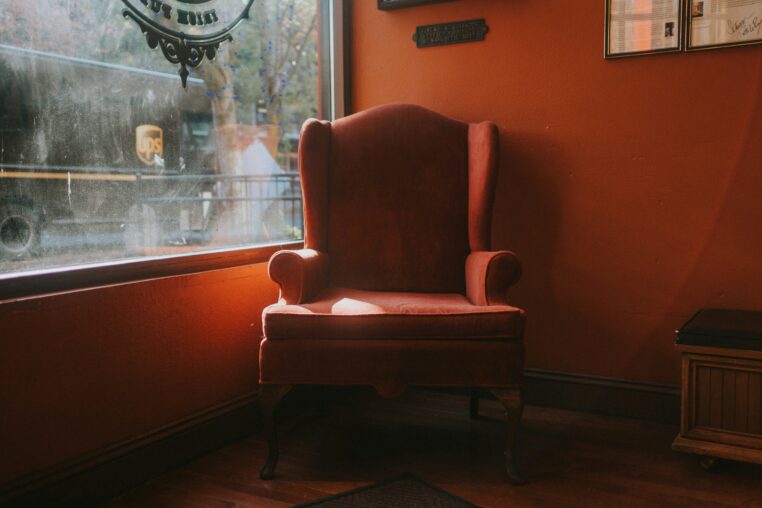
- Back height—wingbacks have tall backs; club chairs are lower
- Wings—wingbacks shield from drafts; club chairs are open
- Formality—wingbacks read more formal; club chairs more casual
- Comfort style—wingbacks support upright sitting; club chairs encourage lounging
The Wentworth Wingback Chair exemplifies the wingback tradition, while club chairs offer a different approach to comfortable seating.
When to Choose Each
Choose club chairs when:
- Lounging comfort is priority
- Casual aesthetic is desired
- Room allows substantial furniture
- Pairs are needed for conversation
Choose wingbacks when:
- Extended reading requires head support
- More formal aesthetic is desired
- Space is limited (wingbacks often have smaller footprints)
- Traditional look is paramount

Caring for Leather Club Chairs
Proper care ensures your leather club chair ages beautifully.
Regular Maintenance
- Dust weekly—soft cloth removes surface dust and prevents buildup
- Vacuum crevices—use soft brush attachment monthly
- Condition quarterly—quality leather conditioner maintains suppleness
- Rotate cushions—if removable, rotate for even wear
Spill Response
Handle spills promptly:
- Blot immediately—absorb liquid with clean cloth; never rub
- Water spills—wipe and allow to dry naturally
- Oil-based spills—more problematic; may require professional cleaning
- Food stains—clean gently with appropriate leather cleaner
Environmental Protection
Protect leather from damage:
- Avoid direct sunlight—UV causes fading and drying; position carefully
- Maintain humidity—very dry environments crack leather; consider humidifier
- Temperature extremes—keep away from heating vents and fireplaces
- Pet considerations—claws can scratch; weigh risks carefully
Professional Care
Some situations warrant professional attention:
- Deep stains—professionals have products and techniques unavailable to consumers
- Restoration—antique or damaged pieces benefit from expert care
- Reconditioning—periodic professional treatment extends leather life
Club Chairs in Bay Area Homes
The Peninsula’s design culture embraces leather club chairs for good reason.
Regional Style Compatibility
Club chairs suit Silicon Valley aesthetics:
- Intellectual culture—reading-oriented design resonates regionally
- Collected aesthetic—club chairs suggest curated taste and traveled experience
- Investment mindset—quality pieces appreciate; tech wealth understands value
- Indoor-outdoor living—leather’s durability suits active households
Design Integration
Club chairs work across Peninsula design approaches:
- Contemporary homes—leather warmth softens modern architecture
- Traditional estates—club chairs are at home in formal libraries
- Mid-century modern—complements Eames and period furnishings
- Mixed interiors—club chairs bridge traditional and contemporary elements
For regional design context, see our guides to Atherton interior design, Menlo Park home design, and Palo Alto home design.
Investment Perspective
A quality leather club chair represents genuine investment.
Cost Considerations
Understand what affects pricing:
- Leather grade—full-grain commands premium; lower grades cost less
- Construction quality—eight-way hand-tied springs cost more than sinuous
- Brand and source—established manufacturers charge for reputation and guarantee
- Scale and complexity—larger chairs require more material and labor
Value Over Time
Quality chairs prove their value:
- Longevity—quality club chairs serve 20-50+ years
- Cost per year—divide purchase price by years of service
- Appreciation—vintage club chairs often worth more than original purchase
- Satisfaction—daily use of quality furniture provides ongoing pleasure
The principles of quiet luxury and heirloom furniture apply directly to club chair selection.
Common Buying Mistakes to Avoid
Learn from others’ errors when shopping for your leather club chair:
- Buying without sitting—photographs cannot convey comfort; always test in person when possible
- Ignoring measurements—assume chairs are larger than they appear online; measure your space carefully
- Prioritizing price over quality—cheap club chairs fail within years; quality costs more initially but serves longer
- Overlooking leather grade—bonded leather looks acceptable initially but deteriorates rapidly
- Forgetting delivery logistics—club chairs are heavy and bulky; ensure doorways and staircases accommodate delivery
- Matching too precisely—club chairs needn’t match sofas exactly; complementary tones often work better than identical
Making Your Selection
When choosing your leather club chair, prioritize:
- Leather quality—full-grain or quality top-grain for pieces you’ll keep
- Frame construction—kiln-dried hardwood with reinforced joints
- Comfort testing—sit in the actual chair; don’t rely on photos
- Scale appropriateness—ensure the chair fits you and your space
- Style compatibility—choose details that complement your interior
Browse the seating collection to explore leather club chairs and other quality seating options. Each piece represents the comfort-first design philosophy that made club chairs legendary—furniture built for how we actually live, not just how rooms photograph.
Experience leather club chairs and fine seating at Reeva Sethi Home. Our collection features pieces built for genuine comfort and lasting beauty—furniture that serves your daily life while appreciating across generations. Visit the Saratoga showroom to discover how quality leather feels and see our full seating collection.