
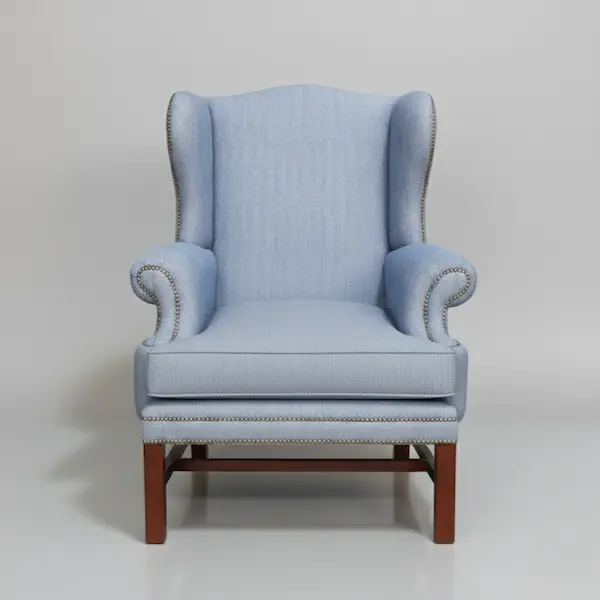
How to Choose a Wingback Chair
An architectural anchor, chosen by proportion, comfort geometry, and build quality.
A wingback chair is not a decorative accent. It is an architectural anchor. Choose it the same way you choose a door, a stair rail, or a fireplace surround: by proportion, comfort geometry, and build quality first.
The Legacy of Form
The wingback emerged in late 17th-century England as a practical response to drafty interiors. Before central heating, the high back and projecting wings helped shelter the sitter while holding warmth close to the hearth. The best examples still carry that original intent: enclosure without bulk, presence without noise.
If you want a quick public reference on the silhouette’s history, this is adequate: Wing chair (reference). What matters more is function. A wingback should support upright comfort, create privacy at the head and shoulders, and read as structurally correct from across the room.
For the product anchor, start here: Wentworth Wingback Chair. For comparison across silhouettes: Seating and Chairs.
The Seven Considerations
Frame Construction
Insist on kiln-dried hardwood (mahogany, oak, or beech) and a frame that feels anchored. The best chairs do not rely on padding to create structure. Structure is built in.
Seat Proportions
Seat height typically lands between 17–19 inches. Depth determines posture: deeper reads relaxed, shallower reads formal. Choose for how you actually sit, not how the chair photographs.
Back Angle
A wingback should support upright comfort. If the back angle is too laid back, you lose the “architectural anchor” effect and the chair becomes visually soft in a way that ages poorly.
Wing Height & Shape
Higher wings create enclosure and privacy. Lower wings feel lighter in mixed seating. The correct choice depends on placement: hearth and library corners usually benefit from height.
Arm Height
Arms determine whether the chair is genuinely usable. Too low feels decorative. Too high feels stiff. Correct arms support reading, conversation, and long sit times without forcing posture.
Suspension & Cushioning
Comfort should come from suspension and build quality, not overly soft foam that collapses. Look for structure that holds its shape and recovers without looking tired.
Scale & Placement
A wingback should feel placed, not parked. Give it breathing room so the silhouette reads composed. The chair works best when it “answers” something: a fireplace, a library wall, a window bay, or a quiet reading corner.
Next Step
If you want a wingback chosen correctly in the context of the room, start with the studio anchor page and then browse seating by silhouette.
Reeva Sethi Home is located at 20430 Saratoga Los Gatos Road, Saratoga.