 Written by
 Dark academia home decor has evolved from a social media aesthetic into a legitimate design philosophy that resonates with thoughtful homeowners. At its core, dark academia celebrates intellectual pursuit, classical education, and the romantic notion of scholarly life—expressed through interiors rich in wood tones, leather, books, and objects that suggest a life devoted to learning. This guide explores how to create authentic dark academia spaces that transcend trend and become genuinely meaningful environments.
Understanding Dark Academia as Design Philosophy
Before selecting furniture or accessories, understanding dark academia’s underlying principles ensures your space reflects genuine values rather than surface aesthetics.
The Intellectual Foundation
Dark academia draws inspiration from centuries-old academic institutions—Oxford and Cambridge colleges, European libraries, American Ivy League traditions. These spaces weren’t designed for photographs; they evolved to serve real purposes: housing books, facilitating study, inspiring contemplation. Authentic dark academia home decor honors this functionality rather than mimicking visual tropes.
The aesthetic values:
- Substance over style—genuine materials and quality construction
- History and permanence—furniture that improves with age
- Intellectual engagement—spaces designed for reading, writing, thinking
- Curated collections—meaningful objects rather than decorative props
- Warm atmosphere—environments conducive to long hours of focused work
What Dark Academia Is Not
Understanding the aesthetic’s boundaries prevents common missteps:
- Not a costume—avoid theatrical staging that feels like a movie set
- Not exclusively dark—the “dark” refers to mood and palette, not absence of light
- Not about age pretense—you needn’t pretend everything is antique
- Not maximalist clutter—edited collections beat overwhelming accumulation
- Not purely decorative—every element should serve a genuine purpose
The Color Palette: Beyond Simply Dark
The dark academia palette creates warmth and depth without heaviness when properly balanced.
Foundation Colors
Build your palette on these rich, grounding tones:
- Deep browns—walnut, mahogany, espresso, chocolate
- Warm neutrals—cream, ivory, parchment, ecru (not stark white)
- Forest tones—hunter green, olive, moss, bottle green
- Wine and burgundy—port, claret, oxblood, Bordeaux
- Navy and midnight—deep blues that read nearly black
Accent Colors
Use sparingly to add richness:
- Brass and gold—hardware, lamp bases, picture frames
- Cognac and caramel—leather tones that warm the palette
- Rust and terracotta—subtle warmth in textiles
- Plum and aubergine—dramatic but sophisticated
What to Avoid
Certain colors undermine the aesthetic:
- Bright white (too clinical; use cream or ivory instead)
- Gray (too contemporary; the palette is warm, not cool)
- Black (too harsh; use navy or very dark brown)
- Any neon or primary colors
Essential Furniture for Dark Academia Home Decor
Furniture forms the foundation of dark academia home decor. Select pieces that would serve scholars across generations.
The Library or Study
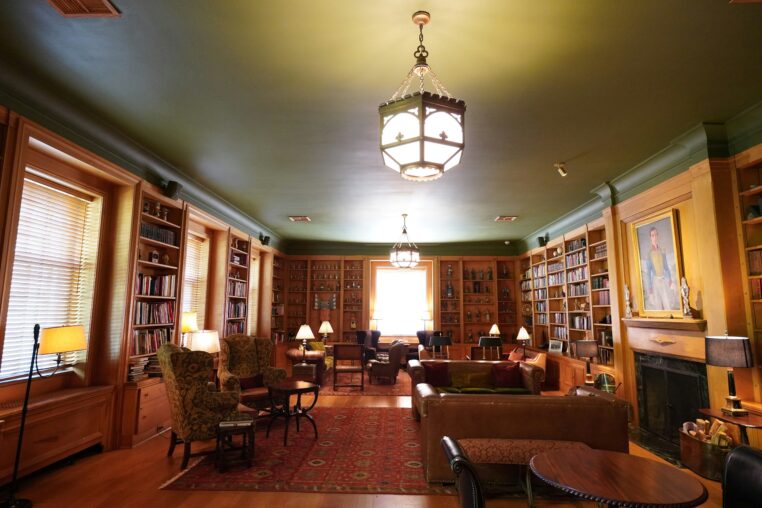
No dark academia space feels complete without substantial book storage. Floor-to-ceiling bookcases in mahogany or walnut establish immediate scholarly credibility. The Devonshire Grand Mahogany Library exemplifies the architectural presence such pieces should command.
Consider these bookcase characteristics:
- Scale—err toward larger; modest bookcases feel inadequate
- Material—solid wood or quality veneer over hardwood plywood
- Details—crown moldings, fluted pilasters, traditional proportions
- Finish—warm browns with visible wood grain, not painted
Reading Chairs
A serious reading chair anchors any dark academia sitting area. The Wentworth Wingback Chair represents the ideal: enveloping wings that shield from drafts and distractions, proper lumbar support for hours of reading, and a silhouette refined over centuries of use in libraries and studies.
Look for:
- Wingback designs—the quintessential scholarly seating
- Leather upholstery—ages beautifully and cleans easily
- Proper proportions—seat height and depth that support extended sitting
- Quality construction—eight-way hand-tied springs, solid wood frames
Writing Desks
A substantial writing desk serves as command center for intellectual work. Traditional partner desks, pedestal desks, or secretaries all suit the aesthetic. Position near natural light but not facing windows directly—the traditional arrangement places light over the shoulder.
Essential desk features:
- Solid wood construction—mahogany, walnut, or oak
- Leather writing surface—tooled leather tops with gilt borders
- Storage—drawers for papers, supplies, and the inevitable accumulation
- Scale—large enough to spread papers and books
Occasional Tables
Side tables and console pieces complete the room. Position end tables beside reading chairs for coffee cups and open books. Console tables along walls display decorative objects and additional books. Browse the tables collection for pieces with classical lines and quality wood construction.

The Role of Books in Dark Academia Spaces
Books are fundamental to dark academia home decor—not as decoration but as evidence of intellectual engagement.
Building an Authentic Library
The most convincing dark academia libraries contain books actually read, not purchased by the yard for visual effect. Focus your collection on:
- Classic literature—the Western canon provides natural visual harmony
- Philosophy and history—subjects central to traditional education
- Art and architecture—oversized volumes add visual interest
- Poetry—slim volumes mix well with larger tomes
- Reference works—dictionaries, encyclopedias, atlases
Vintage and Antique Books
Older books add authentic patina to shelves. Seek:
- Leather-bound volumes—even worn examples add richness
- Gilt-edged pages—the gold catches light beautifully
- Cloth bindings in muted colors—the neutral tones harmonize naturally
- Complete sets—matched volumes create visual rhythm
Estate sales, used bookstores, and online dealers offer affordable vintage books. Condition matters less than character—worn bindings suggest actual use.
Arranging Books
Avoid overly styled arrangements that scream decoration:
- Group by size—creates visual order without artificial precision
- Vertical and horizontal mixing—horizontal stacks break up visual monotony
- Leave some space—room for new acquisitions and decorative objects
- No backward books—the trend of turning spines inward undermines the point entirely
Lighting for Scholarly Spaces
Proper lighting in dark academia spaces balances function (you must actually see to read) with atmosphere (the warm, contemplative mood the aesthetic demands).
Layered Lighting
No single fixture can accomplish everything. Layer multiple sources:
- Ambient lighting—ceiling fixtures or concealed uplighting for general illumination
- Task lighting—desk lamps, floor lamps beside reading chairs
- Accent lighting—picture lights, cabinet illumination, candles
Fixture Styles
Traditional fixtures suit the aesthetic:
- Banker’s lamps—the green glass shade is iconic for a reason
- Library floor lamps—adjustable brass reading lamps
- Chandeliers—in libraries, tiered designs with candle-style bulbs
- Wall sconces—brass with fabric shades flank bookcases elegantly
Light Quality
Color temperature affects atmosphere dramatically:
- Use warm bulbs—2700K to 3000K creates the golden glow the aesthetic requires
- Avoid cool white—anything above 4000K feels clinical
- Consider dimmers—adjustable intensity lets you control mood
- Embrace candles—real candlelight adds incomparable warmth
Textiles: Warmth and Comfort
Textiles soften dark academia spaces while adding warmth, color, and tactile interest.
Rugs
Quality rugs anchor seating areas and add pattern to rooms dominated by wood:
- Oriental and Persian patterns—traditional designs in wine, navy, cream, and gold
- Natural fibers—wool rugs offer warmth underfoot
- Appropriate scale—rugs should extend under seating furniture
- Aged appearance—vintage or antique rugs suit the aesthetic perfectly
Throw Blankets and Pillows
Layered textiles make spaces inviting for long reading sessions:
- Cashmere or wool throws—draped over chair arms or ottoman corners
- Velvet pillows—in burgundy, forest green, or navy
- Tapestry pillows—classical patterns connect to academic traditions
- Leather accent pillows—complement leather seating
Window Treatments
Heavy draperies complete the scholarly atmosphere:
- Velvet or heavy cotton—substantial fabrics that puddle on floors
- Deep colors—burgundy, hunter green, navy, or rich brown
- Simple hardware—brass or iron rods with classical finials
- Full length—floor-to-ceiling treatments add drama
Tapestries and Wall Hangings
Tapestries add texture and historical reference to walls. Medieval and Renaissance revival designs suit dark academia particularly well. Hang on large walls that might otherwise feel bare, or use as alternative to traditional artwork.
Curated Objects for Dark Academia Home Decor
Beyond furniture and books, carefully selected objects complete dark academia home decor.
Academic and Scientific Objects
Items suggesting intellectual pursuit:
- Globes—antique or reproduction world globes on wooden stands
- Astronomical instruments—armillary spheres, telescopes, astrolabes
- Hourglasses—functional timepieces with philosophical overtones
- Magnifying glasses—brass-handled versions for desk display
- Specimen collections—butterflies, minerals, pressed botanicals under glass
Writing and Study Objects
Desk accessories that serve genuine purpose:
- Fountain pens—quality writing instruments displayed on stands
- Inkwells—antique glass or brass, functional or decorative
- Letter openers—brass or bone handles
- Blotters and desk sets—leather accessories organizing desktop items
- Bookends—substantial pairs in marble, bronze, or wood
Artwork
Art selections should feel considered rather than decorated:
- Portrait paintings—doesn’t matter who; the gravitas matters
- Classical prints—architectural drawings, botanical illustrations, maps
- Oil paintings—landscapes and still lifes in gilded frames
- Sculpture—classical busts, bronze figures on pedestals
What to Avoid
Certain objects undermine authenticity:
- Mass-produced “vintage-look” décor
- Fake antique books bought by the yard
- Plastic or resin reproductions of valuable objects
- Items with no genuine use or meaning
- Anything that feels like costuming rather than decorating

Room-by-Room Applications
The Home Library or Study
This is dark academia’s natural habitat. Prioritize:
- Floor-to-ceiling bookcases on at least one wall
- A substantial desk positioned for natural light
- One or two serious reading chairs
- Layered lighting—desk lamp, reading lamp, ambient fixture
- An oriental rug to define the space
The Living Room
Balance scholarly elements with livability:
- One bookcase or built-in shelving unit
- A wingback or leather club chair alongside contemporary seating
- Dark wood accent tables
- Heavy draperies on windows
- Collected objects on surfaces rather than bare minimalism
See our guide to mixing antiques with modern furniture for strategies on integration.
The Bedroom
Create a scholarly retreat:
- Dark wood bed frame—four-poster or sleigh designs
- Bedside stack of books rather than just nightstand lamps
- A small bookcase or secretary if space allows
- Velvet or damask bedding in deep colors
- Heavy drapes ensuring proper darkness for sleep
The Dining Room
Academic aesthetic extends to entertaining spaces:
- Dark wood dining table—mahogany or walnut
- Upholstered dining chairs in leather or velvet
- China cabinet or sideboard displaying collections
- Candlesticks for evening atmosphere
- Art on walls—portraits, still lifes, landscapes
Dark Academia Home Decor in Bay Area Homes
Dark academia home decor resonates particularly well in Silicon Valley, where intellectual achievement shapes regional identity.
Why It Works Here
The Peninsula’s culture values:
- Intellectual accomplishment—Stanford, Google, venture capital success stories
- Collected aesthetic—homes reflecting interesting lives and traveled experiences
- Quality over quantity—investment in fewer, better things
- Subtle distinction—quiet luxury that doesn’t shout
Regional Considerations
Adapt the aesthetic to California conditions:
- Balance dark with light—California’s sunshine allows darker interiors without gloom
- Indoor-outdoor connection—dark academia needn’t feel hermetically sealed
- Earthquake country—secure bookcases and heavy objects properly
- Climate control—quality wood furniture requires stable humidity
For regional design context, see our guides to Atherton interior design and Menlo Park home design.
Building Your Collection Over Time
The most authentic dark academia spaces develop gradually rather than arriving fully formed.
Start With Foundations
Invest first in major pieces:
- Quality bookcase that will serve for decades
- One excellent reading chair
- A proper desk if you work from home
- An oriental rug that anchors your primary room
Add Books Genuinely
Build your library through actual reading:
- Buy books you intend to read
- Supplement with estate sale finds in your interest areas
- Accept that a real library takes years to accumulate
- Quality editions of favorites justify the investment
Collect Objects Meaningfully
Curate rather than accumulate:
- Each object should have a story or genuine use
- Travel souvenirs beat catalog purchases
- Family pieces connect to personal history
- Patience beats impulse—wait for the right piece
Embrace the Process
The philosophy of heirloom furniture applies perfectly here. Spaces that develop over time acquire authenticity that cannot be purchased. Each addition should feel like discovery rather than decoration.
Living the Aesthetic
Ultimately, dark academia home decor succeeds when spaces actually support intellectual life rather than merely depicting it.
Ask yourself:
- Do you actually read in your reading chair?
- Are your books genuinely interesting to you?
- Does your desk support real work?
- Do the objects on display mean something?
If your dark academia space serves genuine purposes—reading, writing, thinking, conversation—it will always feel authentic. If it exists primarily for photographs, even expensive furnishings will ring hollow.
The goal isn’t recreating a museum or movie set. It’s creating spaces where intellectual life flourishes naturally, surrounded by quality objects that age gracefully and serve faithfully across decades.
Create your own dark academia sanctuary with pieces from Reeva Sethi Home. From library bookcases to leather seating to collected accessories, our collection provides the foundation for spaces that celebrate the intellectual life. Visit the showroom in Saratoga to experience pieces that will serve your scholarly pursuits for generations.