 Written by
 Atherton interior design operates under a singular imperative: absolute discretion. In America’s wealthiest zip code, where hedge-fund principals neighbor tech billionaires behind walls of mature oaks and towering hedges, interiors must convey authority without announcement. The furniture here does not shout. It commands.
Understanding Atherton Interior Design
Atherton interior design is defined by what it refuses to do. It refuses trend. It refuses ostentation. It refuses anything that might date or diminish. In a town where the average home sells for over $7 million and many estates trade privately for multiples of that figure, interiors must meet expectations shaped by a lifetime of exposure to the world’s finest things.
The town’s character—established in 1923 and fiercely protected since—directly shapes its interiors. No sidewalks. No commercial zones. No streetlights in most areas. Properties measured in acres, not square feet. For historical context on how Atherton became the Peninsula’s most exclusive address, see the Atherton overview.
This privacy-first philosophy extends into every room. Atherton homes do not perform for guests—they shelter families across generations. The furniture must do the same.
The Atherton Difference
Other Peninsula towns have wealth. Atherton has legacy. Families here have built companies, endowed universities, and shaped industries. Their homes reflect not just current success but multigenerational stewardship.
This distinction matters for interior design. A tech executive’s first major home might showcase achievement. An Atherton estate communicates something different: permanence, continuity, the quiet confidence of those who no longer need to prove anything.
Interiors here reference tradition without replicating it. Georgian proportions might inform a library’s millwork. A dining room might seat twenty with ease. But nothing feels like a museum. These are homes that host grandchildren’s birthday parties and intimate dinners with Nobel laureates—often in the same week.
The demographic reality shapes expectations. Atherton residents have traveled extensively. They have stayed in the world’s finest hotels, dined in Michelin-starred restaurants, and collected art across continents. Their eye is trained. They recognize quality instantly—and its absence even faster.
Designing for Dynasty
Where other markets might ask “What’s trending?”, Atherton asks “What will my grandchildren inherit?” This multigenerational thinking fundamentally shapes furniture selection. It transforms every purchase decision from a transaction into an investment in family legacy.
The Heirloom Imperative
Every significant piece in an Atherton home should be capable of serving the next generation. This eliminates entire categories of furniture—anything with particleboard cores, trend-driven silhouettes, or construction that cannot be refinished.
What remains is furniture built the way it was built a century ago:
- Solid hardwood construction with mortise-and-tenon joinery
- Hand-finished surfaces that develop patina over decades
- Eight-way hand-tied springs in upholstered pieces
- Kiln-dried lumber that remains stable across generations
For guidance on identifying furniture that qualifies as true heirloom quality, see our guide to heirloom furniture versus trend furniture. For understanding seating construction in depth, see our comprehensive leather club chairs guide.
Scale Without Spectacle
Atherton estates demand furniture with presence. Entry halls span forty feet. Living rooms accommodate multiple seating groups. Dining rooms seat extended families with ease.
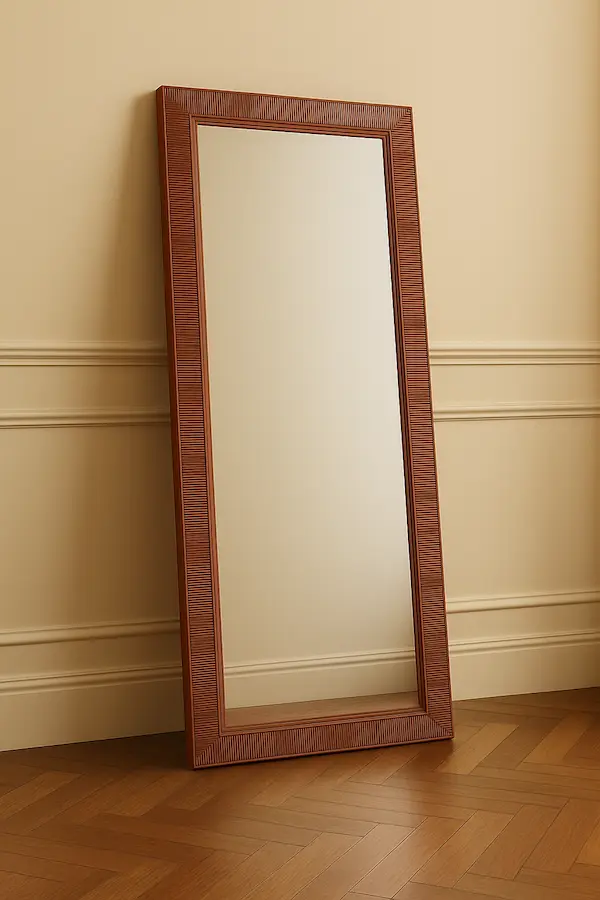
Yet scale in Atherton never tips into spectacle. The goal is comfort at grand proportions, not intimidation. A seven-foot floor mirror anchors an entry without overwhelming it. A substantial coffee table serves as the centerpiece of a conversation group scaled to the room.
Room by Room: Atherton Interiors
The Entry Hall
In Atherton, the entry hall is not a pass-through but a destination. These spaces often feature double-height ceilings, curved staircases, and enough square footage to host a reception. For comprehensive guidance on furnishing these important spaces, see our guide to console tables for grand entries.
Furniture must command this volume:
- Console tables of substantial depth and presence
- Floor mirrors that ground the vertical space
- Benches or settees for practical elegance
- Decorative objects with museum-quality presence
The Library
No Atherton estate is complete without a dedicated library. These rooms serve as private retreats, home offices, and spaces for confidential conversations. In an era of digital distraction, the library offers something increasingly rare: a room designed for deep thought.
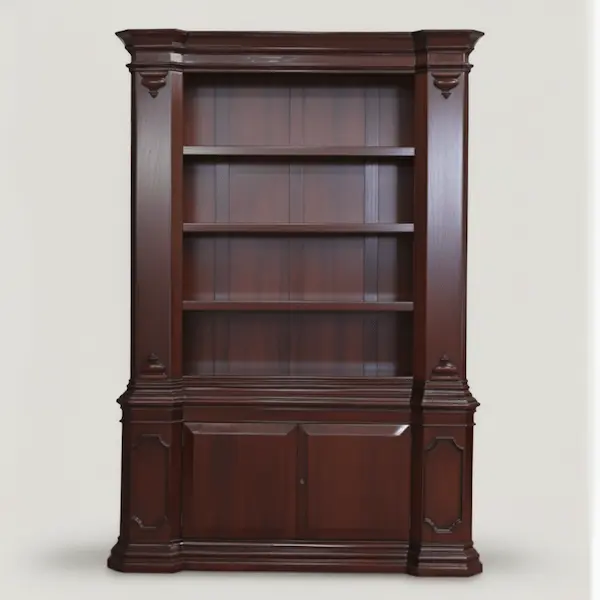
The Devonshire Grand Mahogany Library represents the standard for such spaces—architectural in scale, fitted with a rolling ladder, and crafted to store generations of accumulated knowledge.
Supporting pieces include:
- Wingback chairs for focused reading
- Partners desks for substantial workspace
- Leather desk accessories and scholarly objects
For deeper guidance on creating these spaces, see our article on designing a private study in Silicon Valley homes.
The Living Room
Atherton living rooms typically accommodate multiple furniture groupings. A primary seating area near the fireplace might be complemented by a secondary conversation group, a game table arrangement, and reading chairs positioned near windows.
The key is cohesion without matching. Pieces should feel collected over time, as if three generations contributed to the room’s current state. This approach is detailed in our guide to mixing antiques with modern furniture.
Successful Atherton living rooms balance formality with approachability. The furniture should welcome a casual Sunday afternoon with family as comfortably as it hosts a formal evening reception.
The Dining Room
Formal dining in Atherton requires furniture that rises to the occasion—quite literally. Tables must seat twelve to sixteen comfortably, with leaves available for larger gatherings. Sideboards must store extensive china services and serving pieces accumulated across generations.
- Extension dining tables in mahogany or walnut
- Sideboards and buffets with ample storage
- Upholstered dining chairs for extended dinners
The dining room often serves as the heart of Atherton entertaining. Thanksgiving dinners, holiday celebrations, and milestone birthdays all center on this table. The furniture must be equal to these moments—substantial enough to anchor the occasion, refined enough to honor it.
The Primary Suite
Atherton primary suites rival the square footage of entire Bay Area condominiums. These spaces require furniture that creates intimacy within grand proportions.
Essential pieces include:
- Substantial bed frames with headboards scaled to high ceilings
- Armoires and dressers that complement built-in closet systems
- Seating areas with comfortable reading chairs
- Writing desks for morning correspondence
The primary suite should feel like a private retreat within the larger home—a place where the demands of the outside world cannot intrude.
Guest Accommodations
Atherton hospitality extends to guest quarters that rival boutique hotels. Visitors—whether extended family, business associates, or dignitaries—expect accommodations that honor their presence.
Guest rooms require thoughtful furnishing: quality bedding, adequate storage, and the small touches that communicate care. A writing desk allows guests to work. A comfortable chair offers a place to read. Fresh flowers and quality linens complete the welcome.
Materials for Atherton Estates
Atherton interior design favors materials that age gracefully and require minimal replacement. The goal is furniture that looks better in twenty years than it does today.
Woods
Mahogany remains the standard for formal Atherton interiors. Its density, stability, and ability to take a deep polish make it ideal for heirloom furniture. Walnut offers a slightly warmer alternative for less formal spaces. Oak appears in libraries and studies where a more robust character suits the room’s purpose.
The choice of wood communicates values. Mahogany speaks to tradition and permanence. Walnut suggests warmth and approachability. Oak conveys strength and scholarly purpose. Each serves its role in the overall composition.
Upholstery
Performance fabrics have no place in Atherton’s finest rooms. Instead, natural fibers predominate:
- Wool: Durable, naturally stain-resistant, ages beautifully
- Linen: Develops character over time, ideal for slipcovers
- Leather: Full-grain only, develops rich patina
- Silk: For accent pieces and formal seating
- Mohair: Luxurious texture with exceptional durability
- Cotton velvet: Depth and warmth for traditional pieces
Accents
Hardware, trim, and decorative elements should match the furniture’s quality:
- Solid brass hardware, not plated
- Hand-forged iron for appropriate pieces
- Beveled glass in cabinet doors
- Hand-applied finishes rather than sprayed

Art and Collections
Atherton homes often house significant art collections. Furniture must complement rather than compete with these works. Neutral upholstery, restrained silhouettes, and quality materials create the backdrop that serious art requires.
The relationship between furniture and art requires careful consideration. A bold contemporary painting might require subdued seating beneath it. A delicate watercolor needs furniture that doesn’t overwhelm. The goal is dialogue between elements, not competition.
For collections of decorative objects, display cabinets and bookcases provide both protection and presentation. The furniture becomes the frame that honors the collection.
Lighting and Atmosphere
Proper lighting transforms furniture from functional objects into elements of atmosphere. In Atherton estates, lighting must serve multiple purposes: task illumination for reading and work, ambient lighting for entertaining, and accent lighting to highlight architectural details and art.
Furniture placement must account for natural light patterns. A reading chair positioned near north-facing windows receives consistent, gentle light throughout the day. South-facing rooms require careful consideration of how sunlight affects upholstery over time.
Evening lighting creates entirely different moods. The same library that serves as a bright workspace by day becomes an intimate retreat when lit by table lamps and sconces. Furniture selections should anticipate these transformations.
The Atherton Approach to Acquisition
Furnishing an Atherton estate is not a weekend project. The most successful interiors develop over years, with pieces acquired thoughtfully rather than purchased in haste. This patient approach yields rooms with depth and character that cannot be achieved through rapid acquisition.
Start With Anchors
Begin with architectural pieces that establish scale and character: the library bookcase, the entry console, the dining table. These anchors inform everything that follows. They set the tone and quality standard for the entire home.
Layer Gradually
Secondary pieces—side tables, accent chairs, decorative objects—can be added over time. This gradual approach creates the collected feeling that defines Atherton’s best interiors.
Edit Ruthlessly
In Atherton, less is always more. A single exceptional piece outperforms three mediocre ones. Empty space is not a problem to solve but a luxury to preserve.
Privacy and Service
Atherton residents value discretion in all things, including how their homes are furnished. White-glove delivery, private consultations, and the ability to view pieces without visiting public showrooms are not luxuries but expectations.
Estate-scale furniture also requires specialized handling. Pieces must be delivered by experienced crews who understand how to navigate circular drives, protect established landscapes, and work within the schedules of busy households.
The service relationship often extends across generations. Families return for additions and updates as needs evolve. Children furnishing their first homes seek guidance informed by their parents’ collections. This continuity mirrors the multigenerational thinking that defines Atherton itself.
Connecting Indoor and Outdoor
Atherton’s Mediterranean climate and generous lot sizes make outdoor living essential. With over 260 sunny days per year, terraces and gardens serve as true extensions of interior living spaces. Interiors should flow naturally to these outdoor rooms, pool houses, and garden pavilions. The transition between inside and out should feel effortless, with sightlines and furniture placement that acknowledge the landscape beyond.
For guidance on selecting furniture that transitions between inside and out, see our article on luxury indoor-outdoor furniture for Bay Area homes.
Working With Atherton’s Character
Every Atherton estate has its own personality, shaped by its era, its architecture, and the families who have called it home. Atherton interior design succeeds when it respects this character rather than imposing a new one.
A 1920s estate demands different furniture than a contemporary build, even if both occupy the same street. Period-appropriate pieces should inform the selection, even when the goal is a collected rather than historically accurate interior.
Understanding local design heritage helps inform these decisions. For context on how Peninsula towns developed their distinct characters, see our guides to Woodside estate furnishing, Menlo Park home design, Mountain View modern living, Palo Alto home design, and Los Altos Hills interior design.
The principles of quiet luxury find their fullest expression in Atherton. Here, restraint is not limitation but sophistication. Quality needs no announcement. The furniture speaks for itself—quietly, confidently, permanently.
Explore heritage furniture and artisan pieces for Atherton estates at Reeva Sethi Home. Specializing in Atherton interior design, we serve the Peninsula’s most distinguished residences with the discretion and quality they require. Based in Saratoga, serving Atherton and surrounding communities.