 Written by
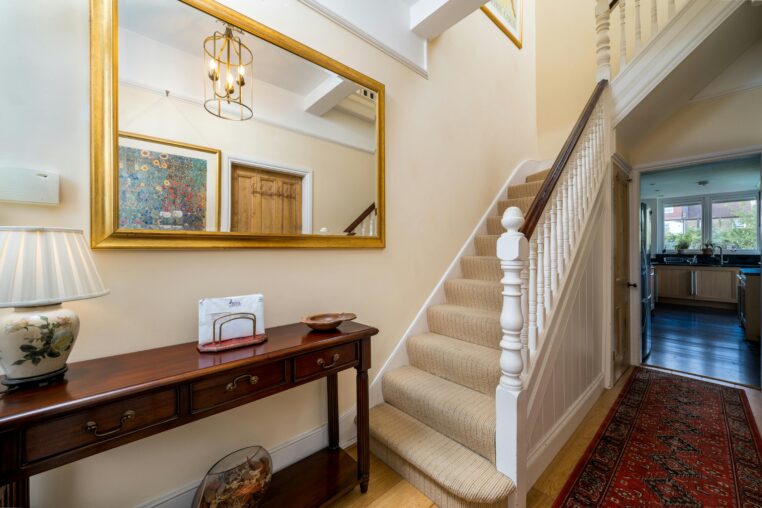
 Console tables for grand entries serve a function beyond mere furniture—they establish the tone for everything that follows. In the substantial homes of Silicon Valley, where foyers often rival the square footage of urban apartments, these slender tables must accomplish multiple goals simultaneously: creating visual anchor points, providing functional surface area, and communicating something essential about the home and its inhabitants before a single word is exchanged.
The Role of Entry Console Tables
The entry console table occupies unique psychological territory. It is the first piece of furniture guests encounter, the surface where keys and mail accumulate daily, the backdrop for flowers that welcome visitors. This dual nature—decorative and functional, public and private—makes selection particularly consequential.
In grand entries, the console table must hold its own against architectural drama. High ceilings, sweeping staircases, and formal proportions demand furniture with presence. A table that would anchor a modest foyer disappears in spaces scaled for impact. Understanding this relationship between furniture and architecture is essential for successful selection.
The principles of quiet luxury apply particularly well to entry furniture. Quality should be evident without announcement. The table should demonstrate care and consideration without demanding attention that properly belongs to guests and conversation.
Proportions for Grand Spaces
Console tables for grand entries require proportions that match their architectural context. Standard dimensions that work in typical homes feel inadequate in spaces designed for impact.
Height Considerations
Standard console table height ranges from 28 to 32 inches. In grand entries with high ceilings, tables at the upper end of this range—or even slightly taller—often work better. The vertical proportion should relate to ceiling height; what seems imposing in an eight-foot room appears grounded under twelve-foot ceilings.
Length and Depth
Entry console tables typically range from 36 to 72 inches in length. Grand entries often benefit from longer tables—60 inches and above—that provide adequate visual weight. Depth usually falls between 12 and 18 inches; deeper consoles offer more surface area but require more floor space.
Consider the wall space available and the traffic patterns around the table. In entries that serve as thoroughfares, shallower consoles maintain circulation flow. In entries designed for gathering, deeper tables can accommodate larger arrangements and more substantial displays.
Visual Weight
Beyond physical dimensions, visual weight matters. Tables with substantial legs, decorative aprons, or detailed carving project more presence than minimalist designs. In grand entries, some visual complexity often serves better than stark simplicity—though the specific choice depends on the home’s overall aesthetic.
Materials and Construction
The entry console table sees daily use and deserves construction that will maintain its appearance under real-world conditions.
Wood Selection
Solid hardwoods remain the gold standard for console tables. Mahogany offers traditional elegance with exceptional durability. Walnut provides warmth suitable for both traditional and contemporary contexts. Oak delivers robust character that improves with age. Cherry develops deeper color over years of exposure to light, becoming richer with time.
Avoid veneered particleboard or MDF in entry furniture. These materials cannot withstand the inevitable bumps, moisture exposure, and daily wear that entry furniture endures. Solid wood can be refinished when necessary; damaged composite materials must be replaced entirely.
Joinery
Quality console tables use traditional joinery—mortise and tenon, dovetails, or similar methods that create structural bonds stronger than the wood itself. These joints resist the racking forces that can loosen lesser construction over years of use. Metal fasteners alone, without proper wood-to-wood joints, suggest cost-cutting that will eventually manifest as wobbling or loosening.
Finishes
Entry furniture requires durable finishes that resist water rings, scratches, and the general wear of daily use. Lacquered finishes provide excellent protection when properly applied. Oil finishes offer beautiful depth but require more maintenance. Whatever the choice, the finish should enhance rather than obscure the wood’s natural beauty.
Styles of Entry Console Tables
Console tables for grand entries span multiple design traditions, each suited to different architectural contexts and personal preferences.
Traditional Console Tables
Traditional designs feature carved details, cabriole legs, and ornate aprons. These tables suit formal entries in Georgian, Colonial, or European-inspired homes. The traditional table collection demonstrates how period-appropriate details create cohesive interiors.
Transitional Designs
Transitional console tables blend traditional proportions with simplified details. They work well in homes that mix periods and styles, providing classic elegance without period-specific commitment. These versatile pieces adapt to evolving décor preferences.
Contemporary Console Tables
Contemporary designs favor clean lines, minimal ornamentation, and honest material expression. They suit modern architecture and homes with edited, curated aesthetics. In grand entries, contemporary consoles often benefit from substantial scale to maintain presence despite simpler detailing.
Demilune and Specialty Shapes
Demilune (half-moon) consoles offer elegant curves that soften angular entries. Serpentine fronts add movement and visual interest. These specialty shapes can solve design challenges while creating distinctive focal points.
Functional Considerations
Entry console tables serve practical functions that influence ideal selection.
Storage Options
Some console tables include drawers for keys, mail, and small items. Others feature lower shelves for baskets or decorative storage. In grand entries where function should remain discreet, hidden storage often serves better than open shelving. Consider how often you need access to stored items and whether drawer pulls complement the table’s design.
Surface Durability
Entry surfaces receive items dropped hastily—keys, phones, bags, umbrellas. The finish must tolerate this treatment without showing immediate damage. Consider how the surface will look after five years of daily use, not just in showroom lighting.
Coordination with Mirrors and Art
Entry consoles frequently sit beneath mirrors or artwork. The table should complement these elements without competing. Consider the vertical composition when selecting—how the table’s proportions and style interact with whatever hangs above.
Lighting Considerations
The relationship between console tables and lighting deserves careful attention in grand entries.
Table Lamps
Matching lamps on a console table create classic symmetry while providing welcoming illumination. Lamp scale should relate to table proportions—substantial lamps on substantial tables, more delicate fixtures on lighter pieces. The combined height of table plus lamp should not overwhelm the space or compete with chandeliers above.
Overhead Lighting
Consider how ceiling fixtures interact with the console table arrangement. A chandelier centered over the entry creates one relationship; recessed lighting creates another. The console’s finish should look beautiful under the specific lighting conditions of your entry, not just under showroom lights.
Natural Light
Entries with windows or sidelights expose furniture to sunlight that can fade finishes over time. Position console tables to minimize direct sun exposure, or select finishes that will age gracefully with light exposure.
Styling Entry Console Tables
The way a console table is styled affects its impact as much as the piece itself.
Symmetrical Arrangements
Symmetrical styling—matching lamps flanking a central object—creates formal elegance appropriate for traditional entries. This approach works well beneath mirrors where the reflection doubles the effect. The center object often defines the arrangement’s personality, whether a significant sculpture, a tall vase, or a collected treasure.
Asymmetrical Compositions
Asymmetrical arrangements feel more casual and contemporary. Balance visual weight rather than matching objects exactly. A tall lamp on one side might balance a stack of books and a small sculpture on the other.
The Power of Restraint
Grand entries benefit from restraint in styling. A single exceptional arrangement often outperforms cluttered collections. Leave breathing room around objects. Let quality pieces make their statement without competition.
Seasonal Updates
Entry tables provide opportunities for seasonal styling—fresh flowers, holiday arrangements, collected objects that rotate through the year. Design the permanent installation to accommodate these changes gracefully. Keep the base arrangement simple enough that seasonal additions enhance rather than overwhelm.

Console Tables in Silicon Valley Homes
The grand entries of Peninsula homes present particular opportunities for console table selection. Understanding local architectural traditions helps inform appropriate choices.
Spanish Colonial Entries
Many Peninsula homes feature Spanish Colonial architecture with arched doorways, tile floors, and wrought iron details. Console tables in these entries should acknowledge this heritage—substantial wood, warm tones, perhaps carved details that complement architectural ornamentation.
Mediterranean Estates
Mediterranean entries often feature stone floors, high ceilings, and dramatic lighting. Console tables here need presence to hold their own against architectural drama. Deeper colors and substantial proportions serve better than delicate pieces.
Contemporary Architecture
Modern Peninsula homes often feature open floor plans where entries flow into living spaces. Console tables in these contexts must work with the broader room while still defining entry territory. Clean lines and quality materials typically serve best.
Traditional Colonials and Georgians
Classic American architecture calls for console tables with appropriate period references. Traditional proportions, refined details, and warm wood tones complement these homes’ formal character.
For context on Peninsula design traditions, see our guides to Atherton interior design, Woodside estate furnishing, Menlo Park home design, and Los Altos Hills interior design.
Pairing Console Tables with Other Furniture
Entry console tables relate to furniture throughout the home. Consider these relationships when selecting.
Entry Seating
Grand entries often include benches or chairs for putting on shoes or waiting for others. The console table and seating should share design vocabulary without matching exactly. Materials, finish tones, and proportional weight should feel cohesive.
Visual Connection to Living Areas
If the entry opens to living or dining rooms, the console table becomes part of that visual conversation. Materials and styles should complement what’s visible from the entry. Consider sightlines when furniture is purchased—what guests see when they first enter affects how welcome they feel.
Coordination with Rugs
Entry rugs anchor furniture groupings and define space. The console table should work with rather than against rug colors and patterns.
Caring for Entry Furniture
Entry console tables require regular maintenance to preserve their appearance in high-traffic locations.
- Dust regularly with a soft, dry cloth to prevent buildup
- Clean spills immediately to prevent water damage to finishes
- Use coasters or trays for items that might scratch or leave marks
- Polish periodically with appropriate products for the specific finish
- Address scratches promptly before they accumulate and require refinishing
- Protect from direct sunlight which can fade finishes over time
Investing in Quality
Console tables for grand entries represent the first statement a home makes. Quality investment here pays dividends in daily satisfaction and lasting impression.
When evaluating options, consider:
- Construction quality that ensures decades of service
- Materials that will improve rather than deteriorate with age
- Proportions appropriate to the specific entry’s scale
- Style that will remain relevant as tastes evolve
- Practical features that serve real daily needs
For guidance on distinguishing quality, see our article on heirloom furniture versus trend furniture. For mixing pieces thoughtfully, consult our guide to mixing antiques with modern furniture.
Making the Selection
Selecting an entry console table requires balancing aesthetics, function, and context. Measure the entry carefully—both floor space and wall dimensions. Consider ceiling height and the proportions it suggests. Think about daily use patterns and the practical demands the table will face.
Visit the space at different times of day to understand how light affects the entry. Consider what guests see when they first enter and how the console table will contribute to that impression. Take photographs from the doorway to evaluate scale and placement options before making final decisions.
Don’t rush the decision—the right console table will serve for decades and contribute daily to the experience of coming home. Quality entry furniture becomes part of the rhythm of daily life, greeting you each time you return and welcoming guests with understated elegance.
Browse the table collection to explore options across styles and sizes. Each piece demonstrates the quality standards appropriate for grand entries—furniture designed to make first impressions count while serving for generations.
Explore console tables for grand entries and other heritage furniture at Reeva Sethi Home. Our collection features pieces built to anchor the substantial entries of Peninsula homes—furniture that establishes tone and serves with distinction for generations to come.