 Written by
 Menlo Park home design occupies a unique position in Silicon Valley’s residential landscape. As the epicenter of venture capital and home to Facebook’s headquarters, the town attracts a particular kind of resident—one who values intellectual sophistication over conspicuous display. The furniture and design choices here reflect that sensibility: understated quality, functional elegance, spaces designed for both deep work and meaningful conversation.
Understanding Menlo Park Home Design
Menlo Park’s character derives from its position between worlds. Stanford University sits just across the border, lending academic gravitas. Sand Hill Road’s venture capital firms define the town’s economic identity. Facebook’s sprawling campus has transformed entire neighborhoods. Yet beneath this tech overlay lies older Menlo Park—the Allied Arts district, the Sharon Heights estates, the tree-lined streets that have welcomed families for generations.
This layered identity shapes Menlo Park home design in distinctive ways. Interiors must serve residents who might breakfast with a Nobel laureate and dine with a unicorn founder. They must accommodate both solitary intellectual work and the networking that defines Peninsula life. The furniture cannot be merely beautiful—it must be smart, considered, purposeful.
For context on Menlo Park’s history and development, see the Menlo Park overview.
The Menlo Park Aesthetic
Where Atherton announces generational wealth and Woodside celebrates ranch heritage, Menlo Park projects intellectual confidence. The aesthetic here is neither ostentatious nor artificially rustic. Instead, it suggests a resident who has considered their choices carefully, who values quality over trend, who understands that true sophistication requires no explanation.
This manifests in interiors that feel curated rather than decorated. Every piece serves a purpose. Scale is considered—rooms feel neither empty nor crowded. Materials are exceptional but not flashy. The overall impression is of thoughtful abundance, where quality is assumed rather than displayed.
The Influence of Stanford
Stanford University’s proximity shapes Menlo Park more than most residents consciously acknowledge. The academic tradition of rigorous thought, evidence-based decisions, and intellectual discourse permeates the town’s culture. Homes often include serious libraries, dedicated study spaces, and rooms designed for small gatherings where ideas matter more than appearances.
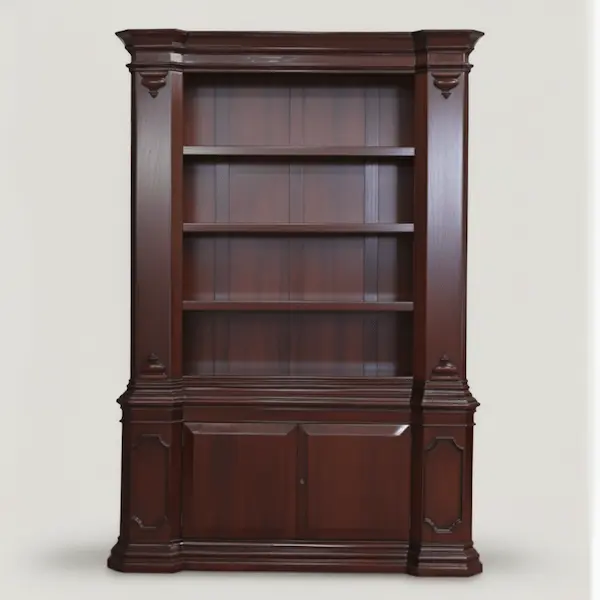
The Devonshire Grand Mahogany Library exemplifies the furniture such spaces require. Its traditional craftsmanship honors academic heritage while its scale accommodates the serious collections many Menlo Park residents accumulate over careers spent at the forefront of their fields.
Venture Capital Sensibility
Sand Hill Road’s influence extends beyond economics. The venture capital mindset—evaluating potential, managing risk, thinking in long time horizons—affects how Menlo Park residents approach design decisions. They view furniture as investment rather than expense. They consider resale value, longevity, and quality-to-price ratio with the same analytical rigor they apply to term sheets.
This sensibility favors pieces that appreciate over time. Heirloom-quality furniture that will outlast fashion cycles. Timeless designs that won’t date when trends shift. For guidance on this approach, see our article on heirloom furniture versus trend furniture.
Room by Room: Menlo Park Interiors
The Home Office
Perhaps no room matters more in Menlo Park homes than the home office. Long before remote work became commonplace, Menlo Park residents maintained serious home workspaces. Venture partners reviewing pitch decks at midnight. Executives managing global teams across time zones. Academics writing papers that reshape their disciplines.
These spaces demand furniture that supports sustained intellectual work:
- Executive desks with ample surface area for spreading documents
- Ergonomic seating that supports hours of focused work
- Storage systems that keep reference materials accessible
- Lighting designed for both screen work and document review
For comprehensive guidance on these spaces, see our article on designing a private study in Silicon Valley homes.
The Living Room
Menlo Park living rooms serve multiple functions. They host the casual conversations where deals originate—the kind of discussions that happen after dinner parties when the interesting guests linger. They provide space for family life that grounds residents amid professional intensity. They offer retreat from the constant connectivity that defines modern work.
Wingback chairs arranged for intimate conversation. Substantial coffee tables that anchor seating groups. Comfortable sofas that invite both casual lounging and serious discussion. The furniture should facilitate connection without dictating its form.
The Dining Room
Menlo Park entertaining tends toward the intimate rather than the grand. Dinner parties of eight rather than galas of eighty. The conversations that matter happen around tables sized for genuine engagement—where everyone can participate, where ideas can be exchanged, where relationships deepen over meals prepared with care.
Dining tables in Menlo Park homes should accommodate this scale. Extension capability allows for occasional larger gatherings, but the everyday configuration seats a number that permits real conversation. Chairs must be comfortable enough for dinners that stretch into midnight discussions.
The Primary Suite
Menlo Park primary suites provide sanctuary from professional demands. These are spaces for restoration—where residents can disconnect from the constant stream of communications that define their waking hours. Furniture should support this purpose: comfortable beds that promote genuine rest, reading chairs that encourage the kind of deep engagement screens preclude.
- Bed frames with substantial headboards that convey permanence
- Reading chairs positioned for natural light
- Dressers and armoires that maintain order
- Writing desks for morning reflection before the day’s demands begin
The Library
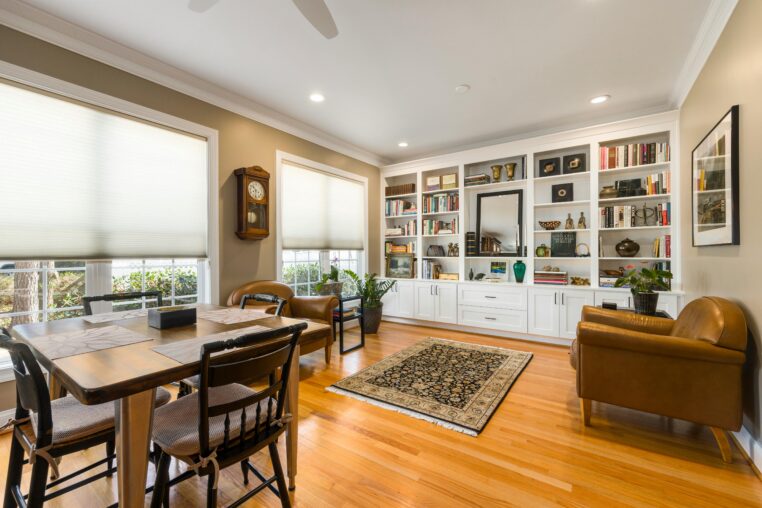
Many Menlo Park homes include dedicated libraries—not as decorative statements but as functional spaces for serious collections. Residents here often possess books accumulated over decades of academic and professional life. First editions. Signed copies. Reference works essential to their disciplines.
Library furniture must protect and display these collections appropriately:
- Floor-to-ceiling bookcases with proper support for heavy volumes
- Reading tables with adequate lighting for extended study
- Comfortable seating for hours of engaged reading
- Climate considerations that protect valuable books
Materials for Menlo Park Homes
Menlo Park home design favors materials that demonstrate quality without demanding attention. The goal is excellence that reveals itself through use rather than display.
Woods
Walnut predominates in Menlo Park interiors—warm enough to feel welcoming, refined enough to suit professional contexts. Mahogany appears in more formal spaces, particularly libraries and offices. Oak feels too casual for most applications, though it works in kitchens and casual family spaces.
Regardless of species, the wood should be solid, not veneer. Joints should be traditional—mortise and tenon, dovetails—not metal fasteners. Finishes should enhance grain rather than obscure it.
Leather
Leather in Menlo Park homes tends toward the refined end of the spectrum. Full-grain leather in sophisticated colors—deep burgundy, rich cognac, classic black. The leather should develop patina gracefully, improving with years of use. Avoid anything too rustic; this isn’t ranch country.
Leather seating works particularly well in home offices and libraries, where it conveys appropriate seriousness while providing genuine comfort for long working sessions.
Metals
Brass and bronze appear in hardware and accents throughout Menlo Park interiors. These metals age gracefully, developing character that complements the timeless aesthetic residents prefer. Chrome feels too modern for most applications; polished nickel offers similar brightness with more warmth.
Textiles
Natural fibers predominate—wool, cotton, linen. Rugs in traditional patterns or subtle solids. Throws that invite use rather than just decoration. Upholstery in fabrics that can withstand real life while maintaining their appearance.
Menlo Park Neighborhoods
Each Menlo Park neighborhood has its own character, and furniture selections should acknowledge these distinctions.
Allied Arts
This neighborhood near downtown combines walkability with substantial homes. Interiors tend toward the traditional, with rooms sized for family life. Furniture should feel established, comfortable, appropriate for homes that have housed families for generations.
Sharon Heights
The estates of Sharon Heights require furniture scaled to larger rooms. Many homes here feature formal living and dining rooms alongside more casual family spaces. Traditional pieces work well, though with slightly more formality than other neighborhoods.
West Menlo Park
Technically unincorporated, this area combines Menlo Park aesthetics with larger lots. Homes here often bridge the gap between Menlo Park’s intellectual character and Woodside’s connection to nature. Furniture can reflect this hybrid identity—refined but not precious, substantial but not rustic.

The Art of Understated Quality
Menlo Park residents understand something that escapes many wealthy communities: true quality doesn’t require announcement. A well-made piece speaks through its construction, its materials, its proportions—not through logos or obvious luxury signifiers.
This principle aligns with what design experts call quiet luxury. The furniture should be exceptional without being exceptional about it. Guests should recognize quality through experience—the comfort of a well-designed chair, the smooth operation of a dovetailed drawer—rather than through visual signals.
For guidance on achieving this aesthetic, see our article on mixing antiques with modern furniture.
Designing for Intellectual Life
Menlo Park home design must accommodate the intellectual lives of its residents. This means spaces that support concentration, collections that require proper housing, and furniture arrangements that facilitate the exchange of ideas.
Consider how rooms will be used across a typical day:
- Morning quiet time before the day’s demands begin
- Focused work requiring concentration and proper support
- Casual meetings that happen around kitchen tables
- Formal dinners where relationships deepen
- Evening reading that restores after intense days
Furniture should serve each of these modes without requiring constant reconfiguration.
Indoor-Outdoor Considerations
Menlo Park’s climate permits year-round outdoor living, though the emphasis here differs from more rural Peninsula towns. Outdoor spaces serve as extensions of interior rooms—additional areas for conversation, work, or solitary reflection.
Furniture for these spaces should match interior quality standards. For comprehensive guidance, see our article on luxury indoor-outdoor furniture for Bay Area homes.
Working With Menlo Park Architecture
Menlo Park’s housing stock spans multiple eras and styles. Furniture selections should complement architectural character while serving contemporary needs.
Traditional Homes
Many Menlo Park homes date from the mid-twentieth century, with traditional proportions and layout. These homes pair naturally with classic furniture in traditional styles—pieces that could have been in place since the home was built.
Contemporary Renovations
Older homes often receive contemporary updates that preserve exterior character while modernizing interiors. Furniture in these spaces must bridge eras—traditional enough to suit the home’s history, clean-lined enough to work with updated finishes.
New Construction
Recent Menlo Park construction tends toward the contemporary, though rarely aggressively modern. Furniture for these homes can push toward cleaner lines while maintaining the quality and materials that define Menlo Park taste.
The Investment Perspective
Menlo Park home design represents significant investment, but quality furniture protects and enhances property value. In a market where homes routinely trade above $5 million, interiors matter. Buyers notice when furniture fails to match the home’s quality. Well-chosen pieces become selling points.
The venture capital mindset serves residents well here. View furniture as investment: consider quality, longevity, and long-term value rather than just immediate appeal. The best pieces appreciate over time while serving daily needs.
Privacy and Service
Menlo Park residents value their privacy. Many have public profiles that make discretion essential. Furniture acquisition should respect this reality—private appointments, confidential delivery, minimal disruption to daily life.
White-glove service is expected but should be efficient. Menlo Park residents are busy; they appreciate providers who respect their time while maintaining the highest service standards.
Connecting to Peninsula Traditions
While Menlo Park maintains its distinctive character, it shares design DNA with neighboring communities. Understanding these connections helps inform furniture selection.
For context on Peninsula design traditions, see our guides to Atherton interior design, Woodside estate furnishing, Los Altos Hills interior design, and Palo Alto home design.
Menlo Park sits at the intersection of these various influences—sharing Atherton’s appreciation for quality, Palo Alto’s academic heritage, and a more grounded sensibility all its own. The furniture should reflect this sophisticated blend.
Explore heritage furniture and artisan pieces for Menlo Park homes at Reeva Sethi Home. Specializing in Menlo Park home design, we understand the unique requirements of intellectual life in Silicon Valley. Based in Saratoga, serving Menlo Park and surrounding communities.