 Written by
 Woodside Estate Furnishing
Woodside estate furnishing requires a vocabulary found nowhere else on the Peninsula. Here, where equestrian life and modern capital share the same roads, interiors must honor both legacies. The convenient option is to buy a “finished look” from a large catalog. A true Woodside home, however, demands furniture that is grounded, substantial, and quietly individual, built to hold its place in rooms that open directly onto land.
Understanding Woodside estate furnishing
Woodside’s character emerged from California’s ranching heritage, where properties along Cañada Road and the foothills near Skyline Boulevard served working purposes long before Silicon Valley’s ascent. That history shapes everything about Woodside estate furnishing, from scale and material choices to the relationship between indoor rooms and outdoor life.
Estates here are not “staged.” They are lived in. Rooms need visual weight, honest materials, and a sense of permanence. Furniture should look as if it belongs to the property, not merely placed upon it.
Beyond the catalog
Why the uniform look falls flat
Many households begin with the obvious route: broad assortments, fast delivery, and a single-brand “complete room.” The result often reads as purchased, not collected. In a town defined by individuality, uniform furniture can make even a beautiful estate feel oddly anonymous.
Woodside is optimized for specificity. When layouts are idiosyncratic and rooms open to terraces, barns, and pasture, you need pieces with character, proportion, and material integrity. For the clearest filter, start here: heirloom furniture versus trend furniture.
The curated alternative
Large local showrooms can offer range, but volume often creates noise. Reeva Sethi Home offers a quieter, edited approach: fewer pieces, better construction, stronger materials, and guidance grounded in restraint.
The Woodside aesthetic
Where Atherton often leans formal and Palo Alto leans intellectual, Woodside communicates something different: a connection to land, to animals, to privacy, to air. The interior must support that life, not contradict it. The most successful rooms feel composed, not decorated.
Equestrian influence
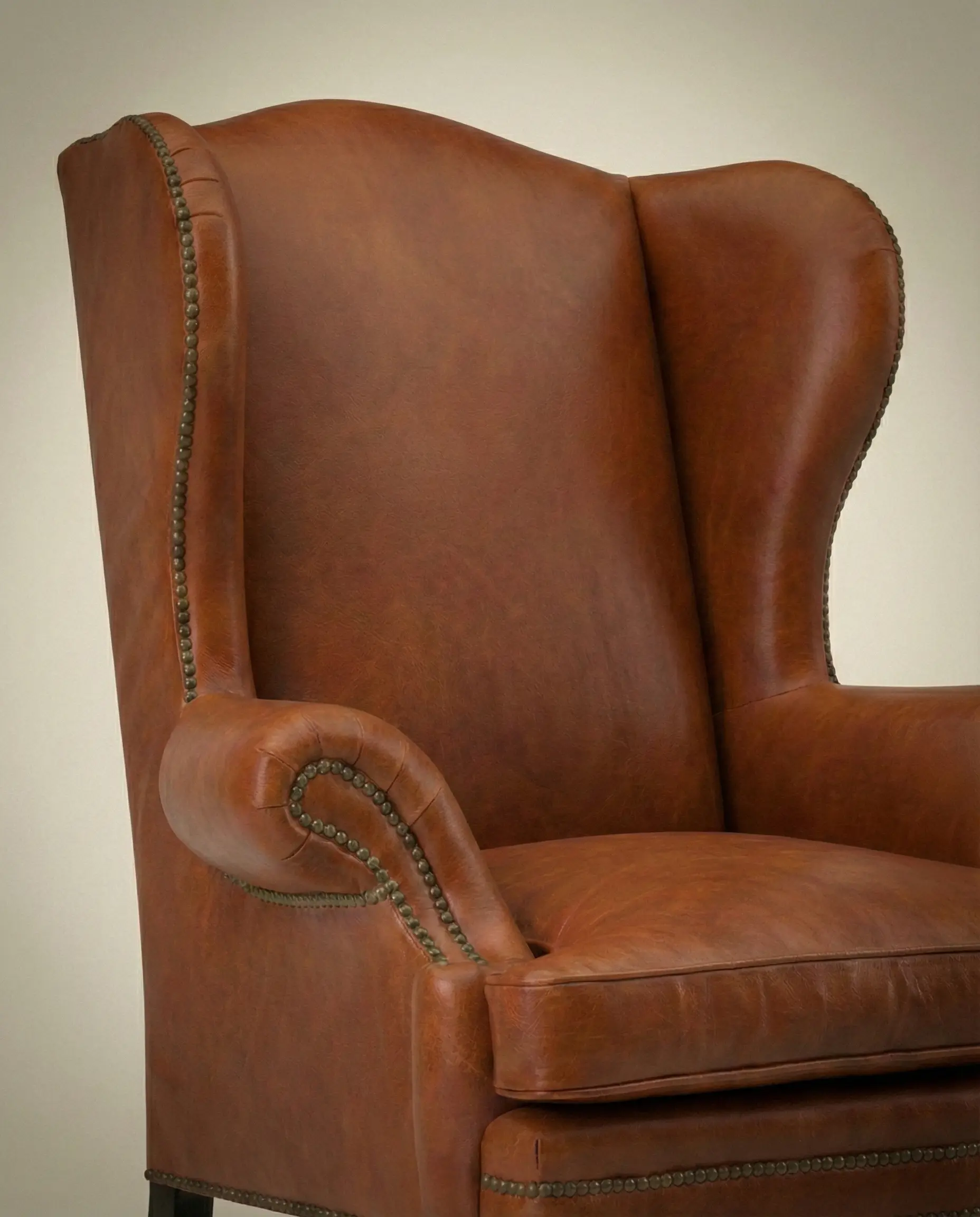
Leather appears prominently, but not the polished, urban kind. Think saddle leather and tack: richer, warmer, built to patina. Hardware cues often borrow from equestrian equipment. The palette favors stable tones: warm browns, deep greens, weathered brass. These references should be subtle, not theatrical.
A well-made leather chair can anchor a room and improve with use. For deeper guidance, see: the definitive leather club chair guide.
Natural materials
Woodside interiors demand materials that feel honest against redwoods and open sky. Synthetic surfaces feel wrong in this context. Favor solid woods, natural fibers, and leather that ages gracefully.
- Solid hardwood furniture with visible grain
- Full-grain leather that develops patina
- Natural fiber rugs in wool, jute, and sisal
- Woven textiles in cotton, linen, and wool
Room by room
The great room
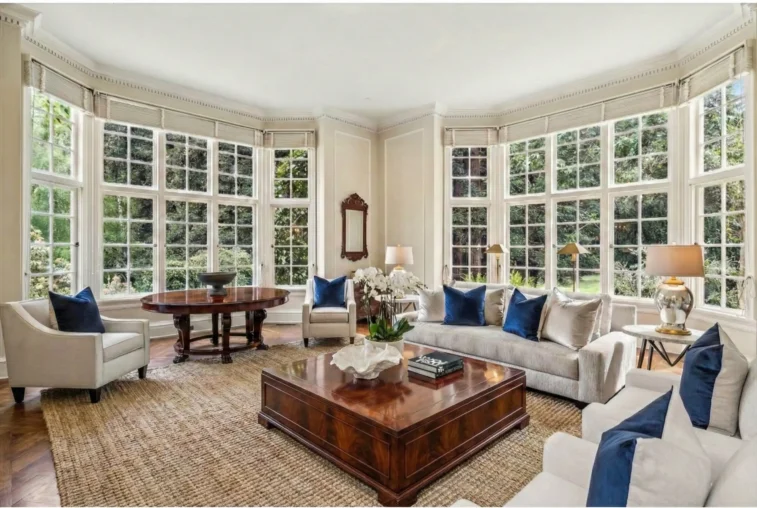
Great rooms in Woodside often combine living, dining, and kitchen functions within a single large volume. They demand furniture that can create intimacy without shrinking the architecture.
- Create conversation zones inside the larger space
- Use pieces with enough visual weight to anchor the room
- Maintain sightlines to views and stonework
- Support daily living and long dinners with guests
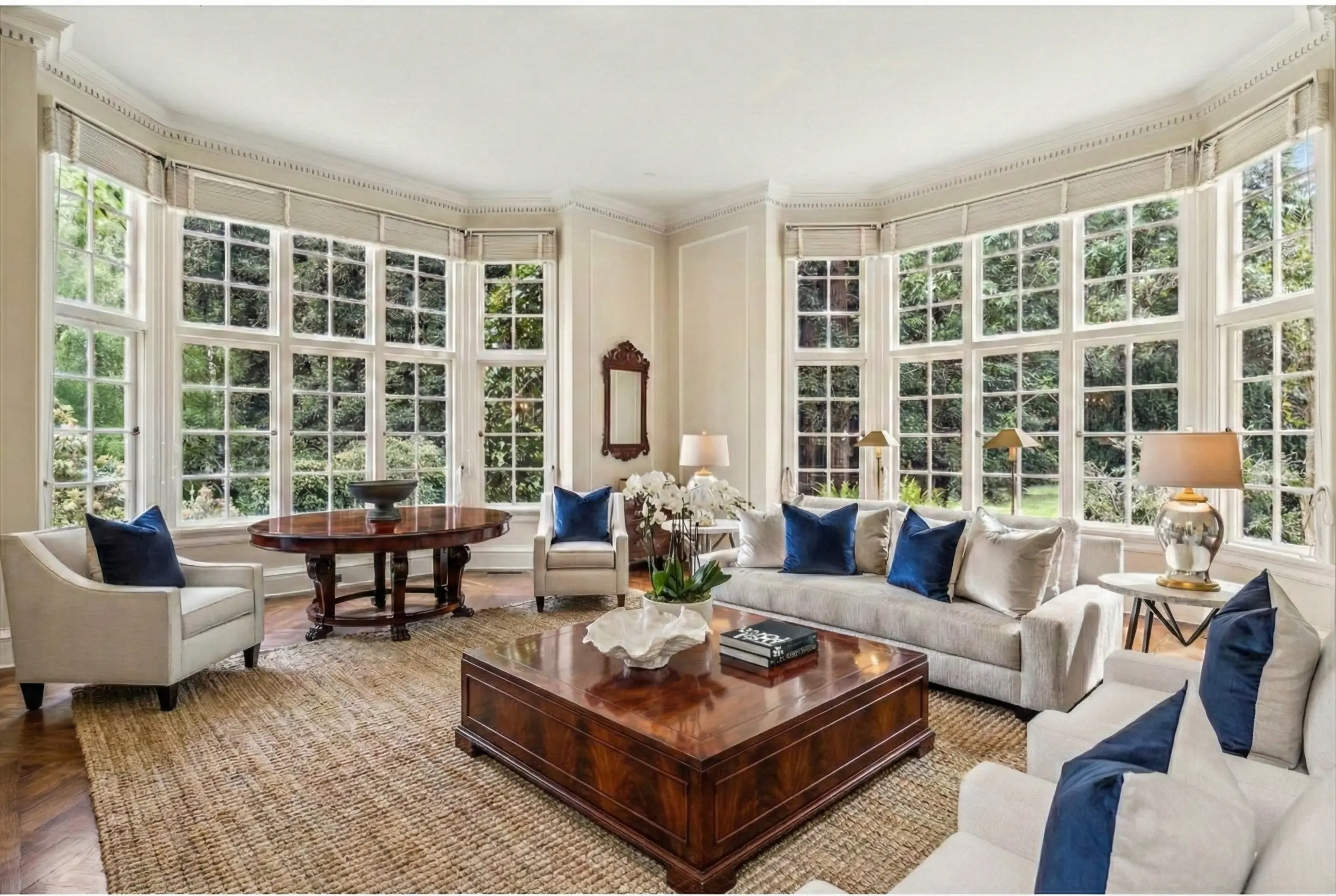
Start with a substantial center table: a cocktail table with weight. Then add vertical presence with seating such as a wingback chair. Use low storage to define zones without blocking views.
The entry hall
Woodside entries are true transition spaces. They need to handle muddy boots and riding gear while still feeling composed. Use: console tables for grand entries.
The study
Even the most outdoor-oriented homes need a private room for focused work. Studies often face the property, turning the landscape into a backdrop for reading and decision-making.
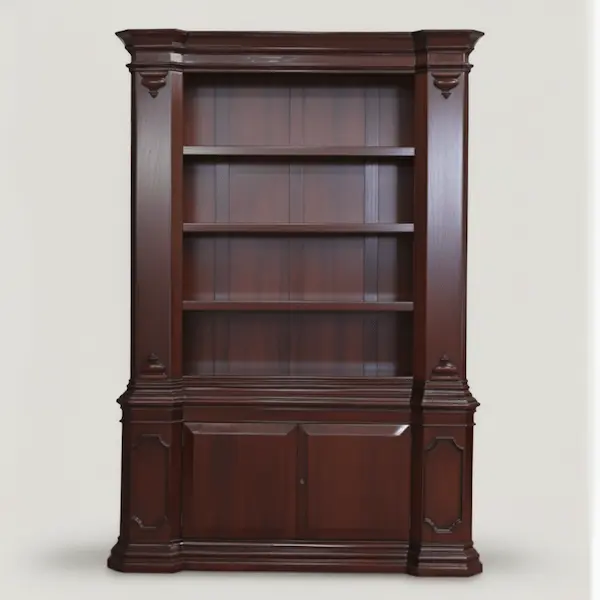
The Devonshire Grand Mahogany Library brings the architectural presence these rooms require. For the broader plan: designing a private study in Silicon Valley homes.
The dining room
Woodside entertaining often centers on long tables, family-style service, and dinners that go late. Furniture should feel substantial, practical, and comfortable for real use.
- Extension tables scaled for twelve or more
- Chairs designed for long, unhurried dinners
- Sideboards with serious storage
The primary suite
Primary suites often open to terraces or private grounds. Keep the room warm and grounded, with pieces that feel calm at scale.
- Headboards scaled to higher ceilings
- Reading chairs near windows
- Dressers and armoires in warm woods
- Writing desks for morning correspondence
Materials that age honestly
Woodside estate furnishing should improve with use. The goal is not “perfect forever,” but “better over time.” Choose leather that patinas and woods that gain depth, not finishes that look fragile the moment life happens.
Leather
Full-grain leather with minimal processing develops the right patina for Woodside. It should age like a saddle: gracefully, visibly, without apology.
Woods
Walnut brings warmth without stiffness. Oak brings robustness. Cherry deepens with time. Mahogany can work beautifully in studies and libraries where a more formal note makes sense.
Indoor-outdoor integration
Woodside living blurs the boundary between inside and out. Covered terraces, porches, and outdoor rooms function as extensions of the interior. For the full approach: luxury indoor-outdoor furniture for Bay Area homes.
The investment perspective
At this level, furniture is not decoration. It becomes part of a home’s impression and long-term value. The pieces that hold their value are the pieces built with real material integrity. Revisit: heirloom versus trend furniture.
Connecting to Peninsula heritage
Woodside shares DNA with neighboring Peninsula communities, but expresses it more earthily. For related contexts: Atherton, Menlo Park, Mountain View, Los Altos Hills, and Palo Alto.
Explore heritage furniture and artisan pieces for Woodside estates at Reeva Sethi Home. Based in Saratoga, serving Woodside and surrounding Peninsula communities.