Materials,
Memory,
and Making
A talk given at San José State University on why material choice is structural, not decorative — and why the question was never hand versus machine.
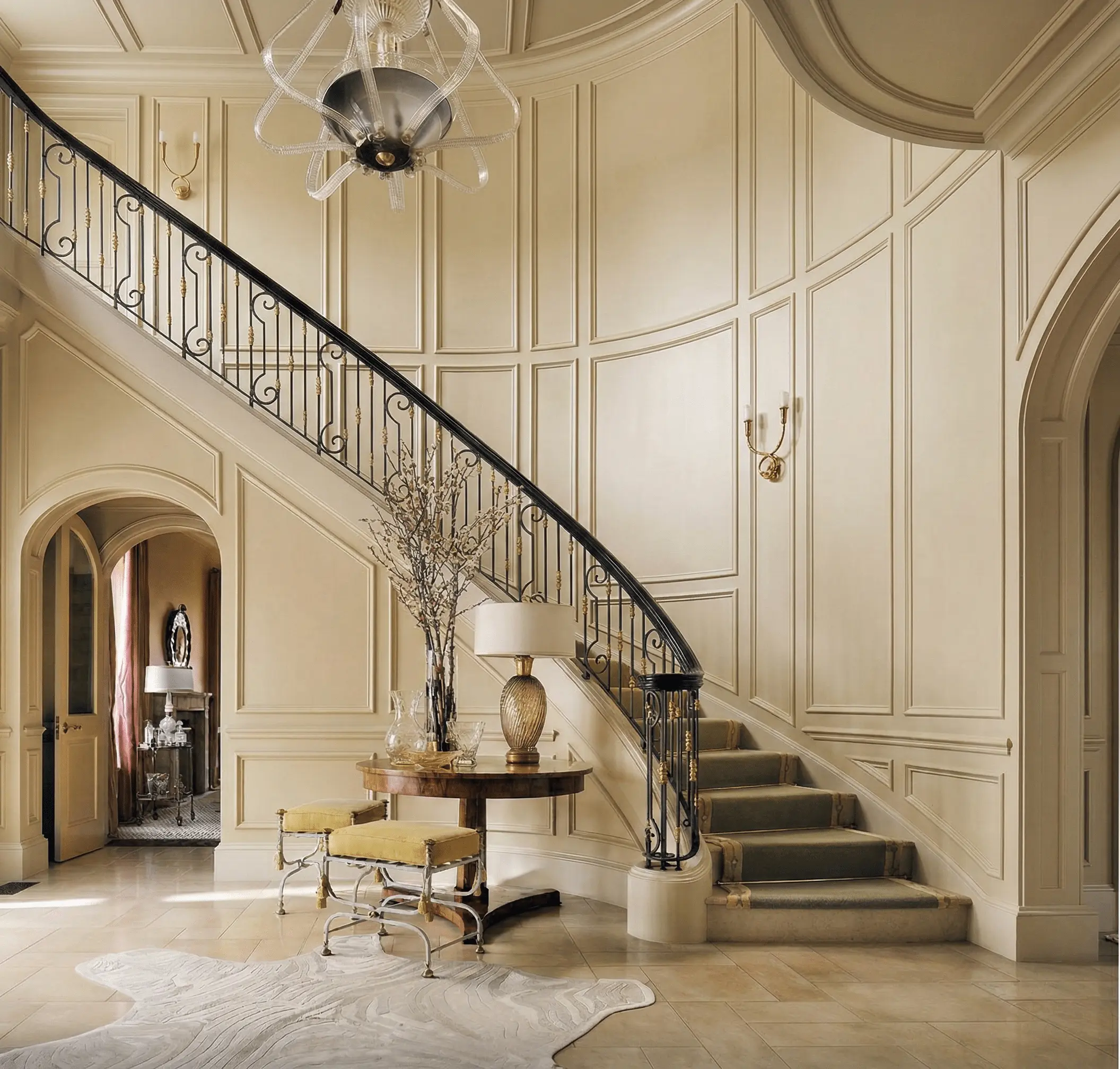
What I took to San José State was not a marketing presentation about furniture. It was a thesis: that taste, restraint, and durability are not luxuries. They are the foundation of any home worth living in. And that the attitude we bring to the objects we choose to live with is more consequential than most of us realise.
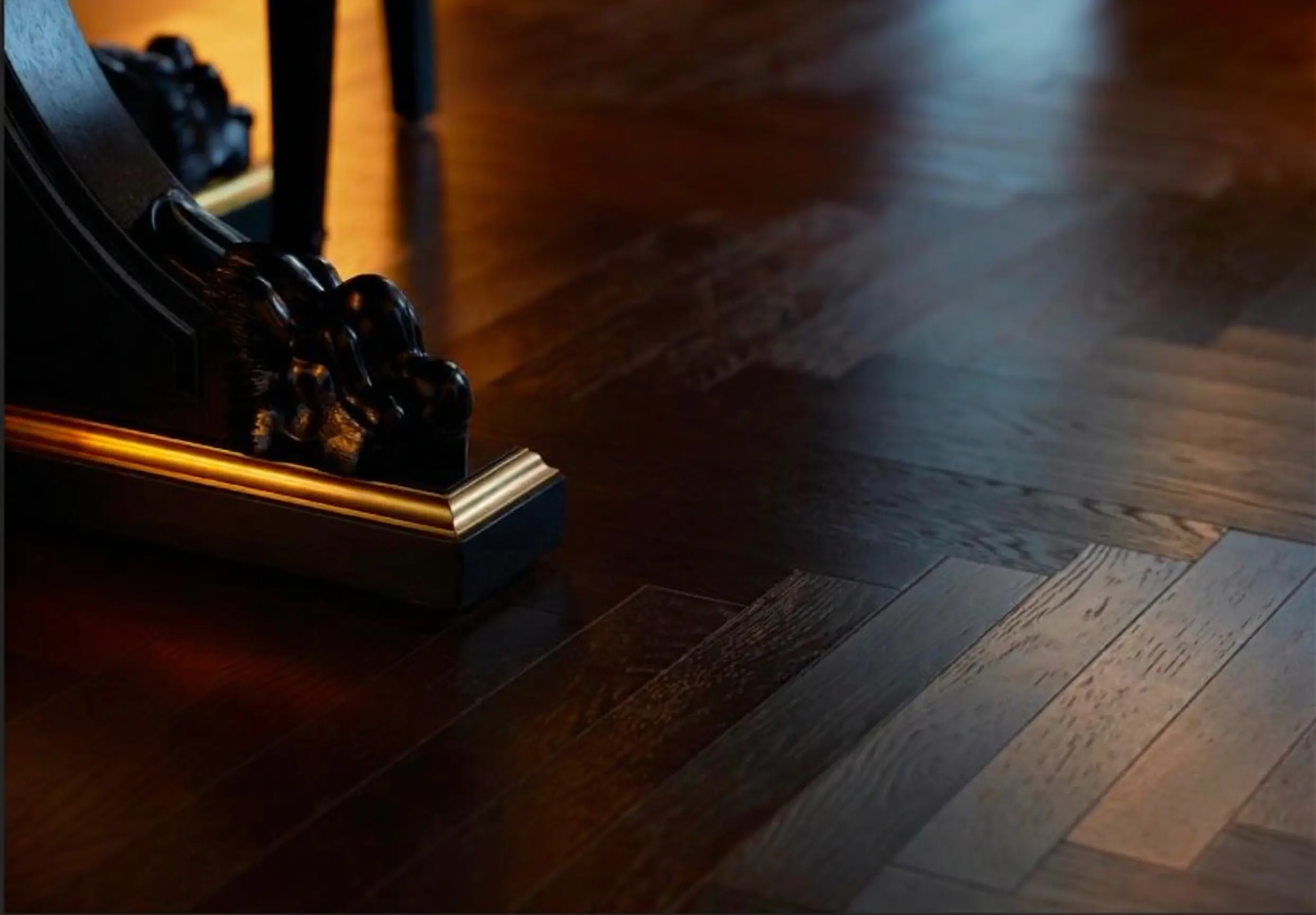
I want to be precise about something before anything else. The question is not hand versus machine. That is a false binary, and it leads to the wrong conclusions in both directions. The real question is how we use the tools available — including technology — in service of craft. In service of making beautiful objects affordable. In service of preserving knowledge in a modern economy.
If you are familiar with William Morris, I come from the same philosophical lineage. But with a full acceptance of modern technology, because the demands of the modern world are much higher than simple manual craftsmanship alone can meet at an affordable price.

What I Saw in the Workshops
Over the past two years I spent time in workshops across Indonesia, India, and Europe. Watching makers. Learning materials. Understanding techniques refined over 30, 40, sometimes generations.
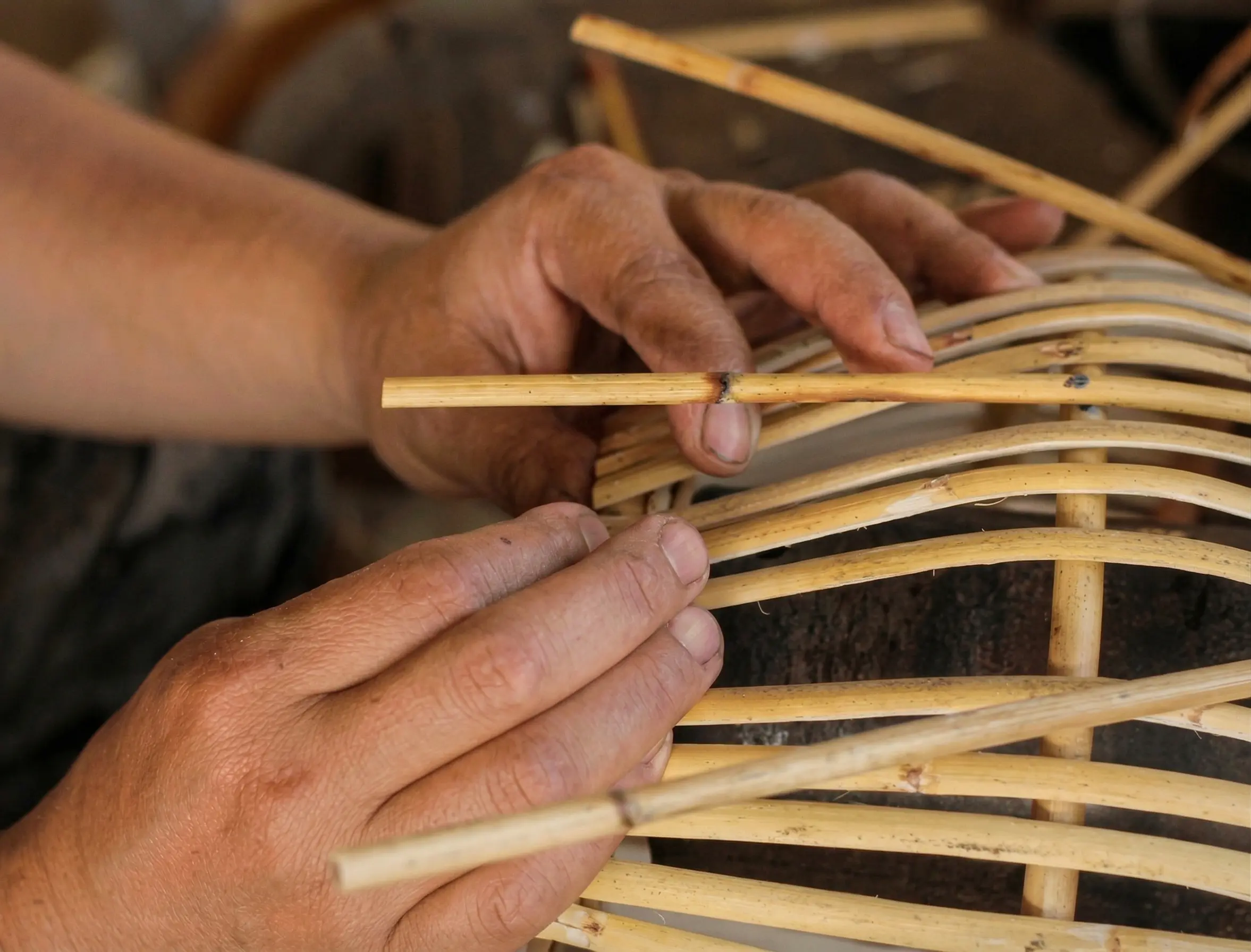
In Cirebon — in central Java — I watched a rattan weaver who can pick up a piece of cane and know, by touch alone, whether it will hold a curve or resist it. The knowledge is in his hands. But here is what struck me: the most sophisticated workshops I visited were not rejecting machinery. They were using it strategically. Machines to cut cane to precise dimensions. Steam equipment to bend rattan into curves. Then — and this is the point — human hands to weave, to tension, to finish. Because the weaving requires judgment that cannot be automated.
In Varanasi, I watched carpet weavers on traditional wooden looms — technology optimised over centuries. Each knot tied by hand. A single 6×9 carpet requires 400 to 800 hours of labour. Knot density so high that machines simply cannot replicate it.
In Rajasthan, embroidery workshops were using computers to generate patterns — not to replace the embroiderer, but to help her execute more complex designs faster. The computer creates the map. The hands create the beauty.
The workshops producing the best work are not Luddites. They are pragmatists. They use machinery to eliminate drudgery, so that human skill can focus on what matters. This is how craft survives in a modern economy.
The Numbers Behind the Craft
I find it useful to sit with the actual numbers, because they clarify what is really being asked of a maker — and what is really being offered when you buy something made with skill.
| Object | Labour |
|---|---|
| Varanasi hand-knotted carpet, 6×9 ft | 400–800 hours. Knot density 250–400 per square inch, against 40–80 by machine. |
| Hand-woven rattan chair, Cirebon | 2–3 weeks per chair by hand. 2–3 days by machine. Hand-woven ages into flexibility. Machine-woven becomes brittle after ten years. |
| Chikankari sari, Lucknow | 1,000+ hours for a complex piece. A 400-year tradition. Practitioner numbers declining. |
| Soumak rug, Rajasthan (hand-loomed, vegetable dyed) | 150–300 hours. Sells for $1,200–3,500. Machine-made synthetic equivalent: 4–6 hours, $150–400. |
A skilled Varanasi carpet weaver earns approximately $3–8 per day for work that sells for $5,000–15,000 in Western markets. I am not going to pretend this is not a tension. It is. Acknowledging it is part of what cultural stewardship actually means.
Handmade vs Machine-Made Furniture: What Actually Matters
There is a meaningful distinction between machinery that enables craft and machinery that replaces it. Understanding the difference is the practical work.
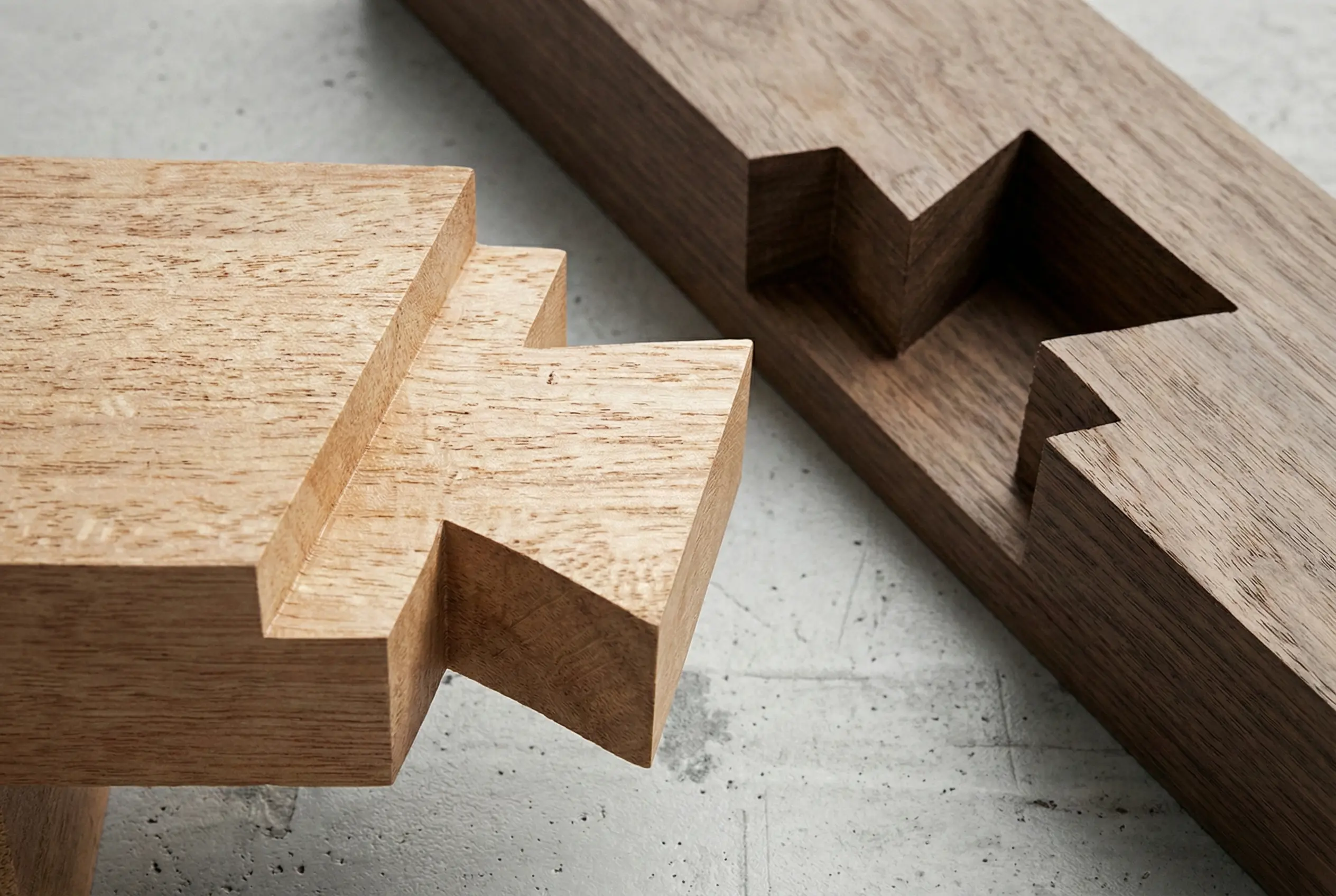
- 1CNC dovetail joints. The machine cuts the socket to precise dimensions. Human hands fit and finish. The joinery is more consistent and stronger than pure hand-cut, at roughly 40% of the cost. The skill is relocated, not eliminated.
- 2Computer-assisted embroidery. Designer creates the pattern in software in days, not weeks. Embroiderers follow the guide by hand. Quality is higher because the design is pre-tested. Cost drops because trial-and-error is removed.
- 3Steam-bending equipment. Historically, bending rattan and timber required high failure rates and years to train. Modern steam chambers apply heat and pressure precisely. Human hands still do the final bending and fastening, but waste drops significantly.
- 4Precision timber milling. CNC mills cut timber to exact dimensions. Human craftspeople select wood for grain, oversee process, handle finishing. Wastage drops 40–50%.
- 5Electronic looms. The loom automates the heddle system. The weaver focuses on tension, colour, and monitoring quality. More consistent output. Weaver fatigue decreases. Skill is preserved in a healthier, more sustainable way.
How to Evaluate Quality in Furniture and Materials
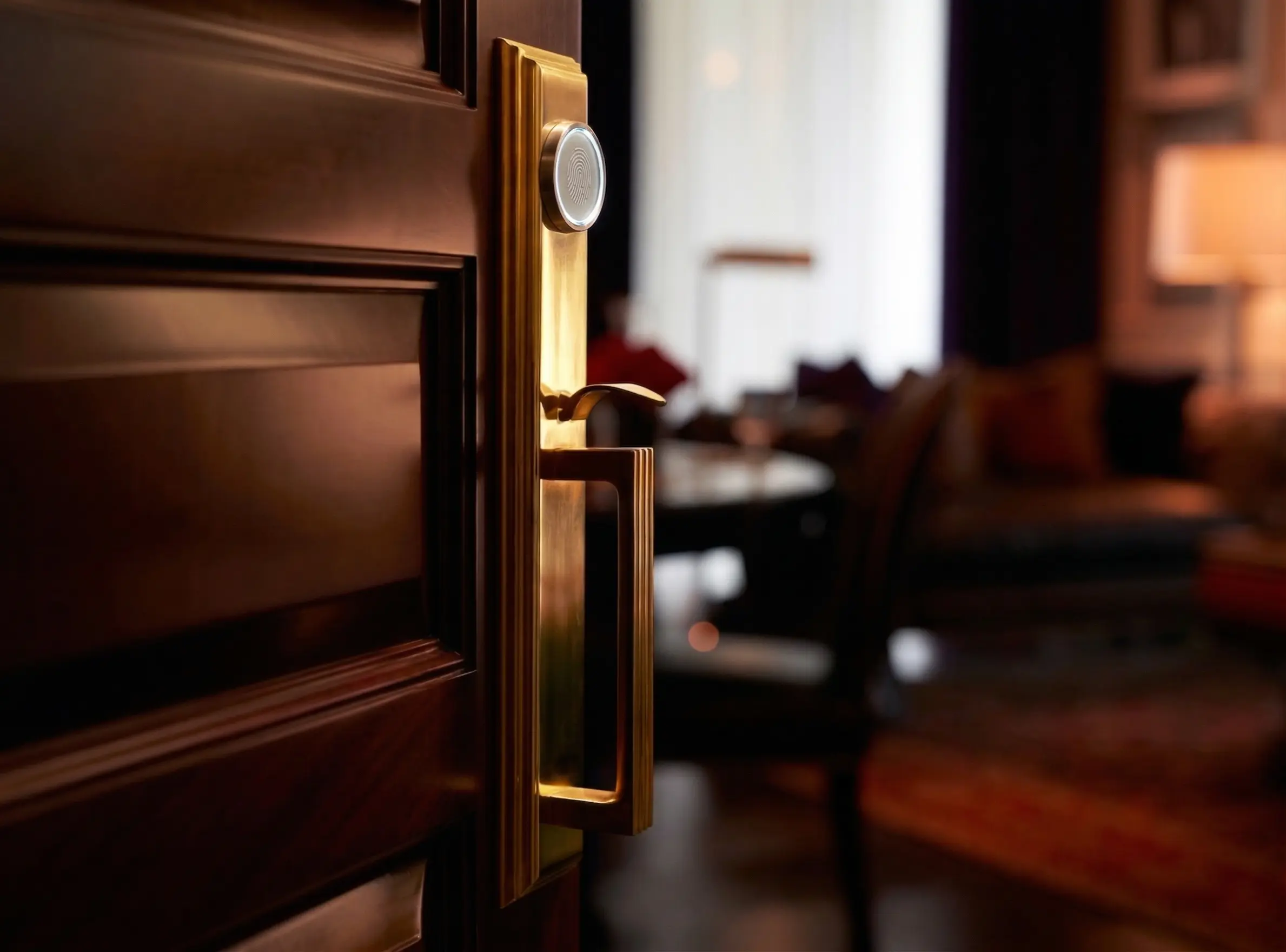
Five questions. Not whether machinery was involved. Not whether it carries a hand-made label:
- —Does the object improve with time, rather than degrade?
- —Does the material do what it is supposed to do — structurally, tactilely, visually?
- —Can it be repaired if damaged, or is it designed to be replaced?
- —Is the skill of the maker evident in the outcome?
- —Will someone still want this in twenty years?
Principles of Timeless Furniture Design and Material Integrity
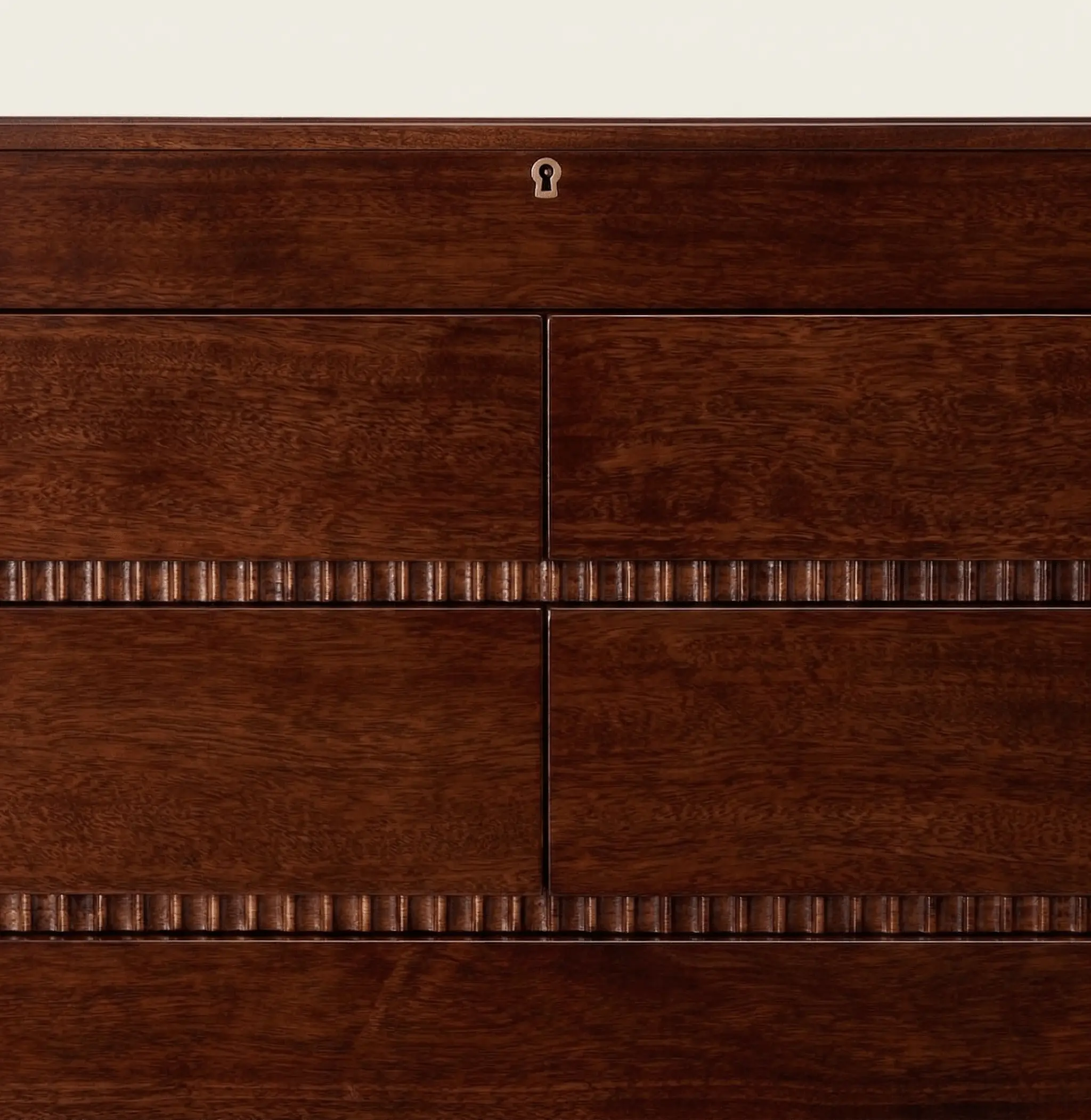
Everything at Reeva Sethi Home is filtered through five pillars. They are not a brand exercise. They are a sourcing filter, applied to every piece before it enters the collection.
- 01Material Integrity. The material is not decoration. It is the first structural decision the object makes. Veneer over particle board has already failed before anyone has sat in it.
- 02Craftsmanship. Skill that is evident in the outcome — not just in the surface finish, but in the joinery, the tension, the edge.
- 03Restraint. The discipline to remove rather than accumulate. More objects in a room is not more presence. The intelligence is knowing when to stop.
- 04Atmosphere. A room is not a collection of objects. It is a feeling. Atmosphere is built from material, proportion, light, and the quality of things at rest.
- 05Cultural Stewardship. We are accountable to the traditions we source from. The question is not only whether the price is fair — it is whether we are preserving the knowledge.
Gathered, Not Assembled
A room that is assembled is the result of a shopping trip. It looks coordinated, but it reads as a set. Nothing in it has a story. Nothing was chosen because of what it actually was — its material, its origin, its age.
A room that is gathered is the result of years of selective addition. Of someone saying: I want this particular thing because of what it is. Every object has been chosen. Not styled. Chosen. There is a difference, and you can feel it.
The goal is not to make a beautiful room on day one. The goal is to build a room that will be more beautiful in ten years than it is today. The most honest sustainability argument I know: a well-made object that has already existed for fifty years and will exist for another fifty has zero carbon cost of production at this point. The most sustainable furniture is the furniture that was made well enough to still be here.
You begin to understand that most clearly when you see it in a single object that resolves structure, proportion, and material without excess. The same logic carries through the broader furniture collection, where material-led choices are not decorative gestures but the basis of how a piece will live, age, and endure.
And that way of thinking does not end with wood. Material-led decisions extend into textiles as well, where surface, hand, and durability shape how a room settles over time. Even in smaller pieces, material choice defines how something ages and whether it deepens a room or merely fills it.
RUCHI SETHI is the founder of Reeva Sethi Home and RS Studio. She spent twenty years in technology before turning to furniture, materials, and craft. She has sourced work from workshops in Indonesia, India, Belgium, and the United Kingdom. Reeva Sethi Home is open in Saratoga, California. This piece is adapted from a talk given at San José State University in March 2026.
For rooms built from objects that were made to last.
Begin a Conversation20430 Saratoga–Los Gatos Road · Saratoga, CA · 408-797-5283